Locked Person Syndrome: What It Is, Symptoms, Treatment, Prognosis
Content
- What is locked-in person syndrome?
- Signs and symptoms
- Causes and risk factors
- Affected populations
- Symptomatic disorders
- Diagnostics
- Standard treatments
- Forecast
What is locked-in person syndrome?
Locked-in Syndrome (or isolation syndrome, de-effervescence syndrome) Is a rare neurological disease in which there is complete paralysis of all voluntary muscles, with the exception of those that control eye movement. People with locked-in syndrome are awake and awake, but unable to make movements (other than eye movements) or speak. The cognitive function of patients is usually not affected. Communication is possible through eye movements or blinking. Isolation syndrome is caused by damage to the bridge, the part of the brain stem that contains nerve fibers that transmit information to other areas of the brain.
The first description of the isolation syndrome can be found in The Count of Monte Cristo, authored by Alexandre Dumas. To describe a patient with locked-in syndrome, the author used the following words:
“Sight and hearing were the only remaining senses. However, only with the help of one of these feelings could he reveal the thoughts and feelings that still occupied his mind, and the look with which he expressed his inner state... In his eyes, shaded by thick black eyelashes, he was concentrated, as is often the case with an organ, which is used to exclude others, all activity, address, strength and intelligence that were previously spread throughout his body; and therefore, despite the fact that the movement of the hand, the sound of the voice and the mobility of the body were not enough, there were enough talking eyes for everything. "
Thus, he brilliantly highlighted the potential of these patients to maintain a fulfilling life despite their extreme disability.
Signs and symptoms
People with locked-in syndrome are classically unable to chew knowingly or voluntarily. swallowing, breathing, speaking, or making any movements other than those that involve the eyes or eyelids. Some people may move their eyes up and down (vertically), but not side to side (horizontally). Affected people are bedridden and completely dependent on caregivers. Despite the physical paralysis, the cognitive function of the patients is not affected.
Individuals with isolation syndrome are completely alert and aware of their surroundings. They can hear, see, and maintain sleep and wakefulness cycles. Affected people may communicate through targeted eye movements or blinking, or both. They can understand people speaking or reading to them.
People with the disorder are often comatose at first and then gradually regain consciousness, but remain paralyzed and unable to speak.
- Clinical forms.
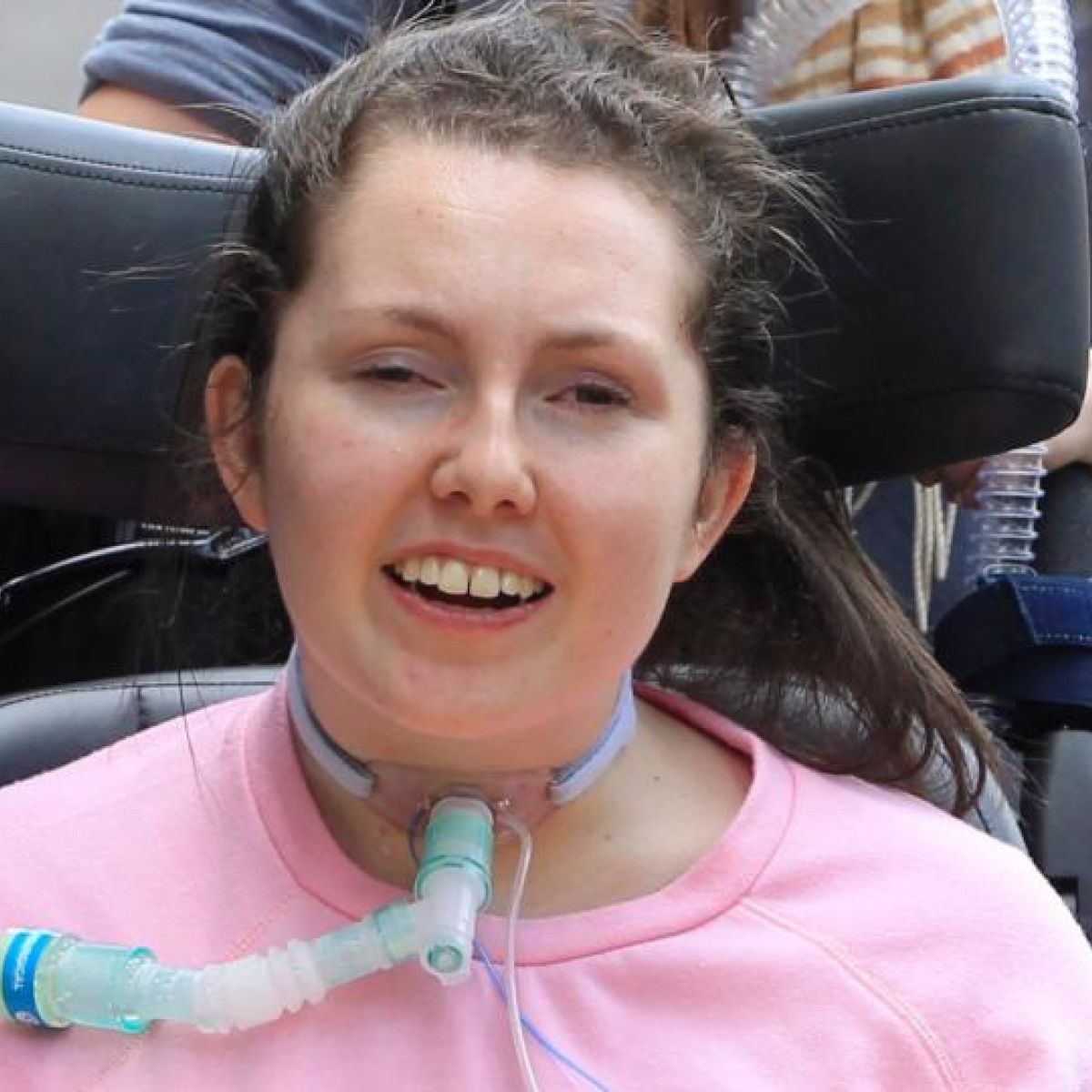
Isolation syndrome can be classified into three different clinical forms according to the traditional Bauer classification. This classification is based on the number of motor outputs that persist in patients. This speaks of pure form, when the patient loses control over all body movements, with the exception of blinking and vertical eye movements; incomplete formwhen some voluntary movements other than eye movement persist and general formwhen there is a complete loss of motor function. The latter form is especially dramatic as patients are completely unable to interact with their environment and express their needs and thoughts.
- The quality of life.
Despite the fact that the disease is the most dramatic form of motor disability one can imagine submit, some scientific reports indicate that patients' quality of life is not as bad as expected. A recent study examined the self-reported quality of life of chronic isolation syndrome patients and concluded that many patients live a happy and meaningful life, especially when appropriate social services help patients to play their normal roles both at home and in the community in the whole.
- Additional symptoms during the research.
Traditionally, patients with locked-in syndrome are considered cognitively intact because all cerebral structures, with the exception of the ventral part of the brain, appear to be intact. However, recent evidence suggests that patients may develop some non-motor symptoms, including defects in motor images, abnormal laughing and crying, and difficulty recognizing certain expressions faces. Interruption of the cortico-cerebellar pathways through the same injury causing isolation syndrome may be the cause of these clinical manifestations. However, these symptoms were not found in all victims and are currently under further investigation. Recognition of motor image defects deserves special attention because these symptoms, when present, can interfere with the successful implementation of rehabilitation strategies.
Causes and risk factors
Trapped person syndrome is most often caused by damage to a specific part of the brain stem known as a bridge. The bridge contains important neural pathways between the brain, spinal cord, and cerebellum. With locked-in syndrome, all motor fibers from the gray matter to the brain through the spinal cord to the muscles of the body, as well as damage to the centers of the brain stem important for the control of the face and speech.
Damage to the bridge is most often the result of tissue loss from lack of blood flow (heart attack) or bleeding (hemorrhage) - less often it can be caused by trauma. A heart attack can be caused by several different conditions, such as a blood clot (thrombosis) or stroke. Additional conditions that can cause isolation syndrome include infection in certain parts of the brain, tumors, loss of protective isolation (myelin) that surrounds nerve cells (myelinolysis), inflammation of the nerves (polymyositis) and certain disorders such as amyotrophic lateral sclerosis (BASS).
Affected populations
Isolation syndrome is a rare neurological disorder that affects men and women in equal numbers. The disorder can affect people of all ages, including children, but it is most commonly seen in adults who are more at risk for stroke and bleeding. Because cases of isolation syndrome can go unnoticed or misdiagnosed, it is difficult to determine the actual number of people who have had the disorder in the general population.
Symptomatic disorders
Symptoms of the following disorders may be similar to those of locked-in syndrome. Comparisons can be useful for differential diagnosis.
- Akinetic mutism - This is a rare neurological condition in which a sick person does not move (akinetic) and does not speak (mutism, i.e. mute), despite the fact that he is not sleeping. People with akinetic mutism have normal sleep / wake cycles, but (when awake) lie still and do not react, move or speak. Akinetic mutism is a form of minimally conscious state, often due to vascular or traumatic injury in the midline of the frontal gray matter.
Various conditions can also cause symptoms or clinical presentation similar to isolation syndrome. These disorders or conditions include Guillain-Barré syndrome, myasthenia gravis, poliomyelitis, polyneuritis, or bilateral brain stem tumors. Trapped person syndrome can be mistaken for a vegetative state that may occur secondary to injury or a myriad of different conditions, especially if the affected persons have vision or hearing loss that makes it difficult diagnostics.
Diagnostics
Isolation syndrome is usually diagnosed clinically. Various tests can be performed to rule out other conditions. Such tests include magnetic resonance imaging (MRI), which shows damage to bridges, and magnetic resonance angiography, which can show a blood clot (thrombi) in the arteries of the trunk brain. These tests can also rule out damage to other parts of the brain.
An electroencephalogram (EEG), a test that measures the electrical activity of the brain, can reveal normal brain activity and sleep-wake cycles in people with isolation syndrome.
Evoked potentials (EP), tests that average the EEG signal in response to stimulation (pain or hearing, or sight), allows you to look at the damaged responses in the brain stem and stored responses in brain.
Electromyography and nerve conduction studies can be used to rule out muscle and nerve damage.
MRI uses a magnetic field and radio waves to produce cross-sectional images of specific organs and tissues in the body, such as the brain. MR angiography uses a magnetic field and radio waves to produce cross-sectional images of blood vessels inside the body.
Electromyography is a test that records the electrical activity of skeletal (voluntary) muscles at rest and during muscle contraction.
Nerve conduction studies measure the ability of certain nerves to transmit nerve impulses to muscles.
Standard treatments
Treatment should first target the underlying cause of the disorder. For example, up to 6 hours after the onset of symptoms, an attempt may be made to reverse a basilar arterial clot (thrombosis) with intra-arterial thrombolytic therapy. Tumors can be treated with intravenous steroids or radiation.
Victims often require an artificial respiration aid and first undergo a tracheotomy (a tube is passed through the airway through a small opening in the throat).
Feeding and drinking will not be possible through the mouth (this can cause a respiratory infection if food enters the lungs rather than stomach), and therefore must be supplied through a small tube inserted into the stomach called gastrostomy.
It is important to establish communication with the eyes as soon as possible. Healthcare professionals, as well as their families and friends, should try to figure out which code is easiest for the victim, and therefore everyone uses the same code. The patient may “look up” and thus say “yes” and “look down” for “no” or whatever is the simplest movement for a particular case. In this case, communication is limited to closed questions "yes-no", then communication can be replaced lettering, such as saying a letter of the alphabet and looking down to select letters.
Further, treatment should focus on early rehabilitation of small voluntary movements that remain or recover (often in a toe or foot or during swallowing and sound flow). Rehabilitation and various supportive therapies are very helpful and should begin as early as possible, even if It must be emphasized that the restoration of almost normal motor control, speech, swallowing and walking is extremely unusual.
Communication aids and other assistive technologies have proven to be helpful and also enable people to become active members of society. Infrared eye tracking devices now allow affected people to use a computer with artificial voice, control your environment, surf the Internet and send electronic mail. On rare occasions, some people have regained limited motor ability, but most people do not. Those who regain control of motor abilities in the hands or in the head (as well as more half of patients), can use it to communicate with a computer and sometimes to control a disabled person chair.
Recent studies and articles in the medical literature indicate that despite significant motor disability, people can maintain a good quality of life. Moreover, quality of life is not related to the degree of physical impairment. Advances in care and assistive technology can help people with isolation syndrome become productive members of society.
Forecast
Whether a patient can recover depends on the cause and its severity, as in the examples below.
- If the cause is a microstroke and the patient is not completely paralyzed, there may be a full recovery or recovery sufficient to independently perform some daily activities, such as eating or speaking communication.
- If the stroke is extensive, most patients require ongoing nursing care.
- If Guillain-Barré syndrome is the cause, patients may improve after a few months, but complete recovery is rare.
- If the cause includes a progressive disease such as cancer, the patient usually dies.