Macroglossia: what is it, causes, symptoms, treatment
Content
- What is macroglossia?
- Signs and symptoms
- Causes and risk factors
- Affected populations
- Diagnostics
- Standard treatments
What is macroglossia?
Macroglossia Is an abnormal enlargement of the tongue. In rare cases, macroglossia occurs as a single abnormality that is present at birth (congenital). In many cases, macroglossia may occur secondary to the underlying disease, which may be congenital. (for example, Down syndrome or Beckwith-Wiedemann syndrome) or acquired (for example, as a result of trauma or malignant education). Symptoms and physical signs associated with macroglossia may include noisy, rapid breathing (stridor), snoring, and / or difficulty eating. In some cases, the tongue may protrude from the mouth. When inherited, macroglossia is transmitted as an autosomal dominant genetic disorder.
Signs and symptoms
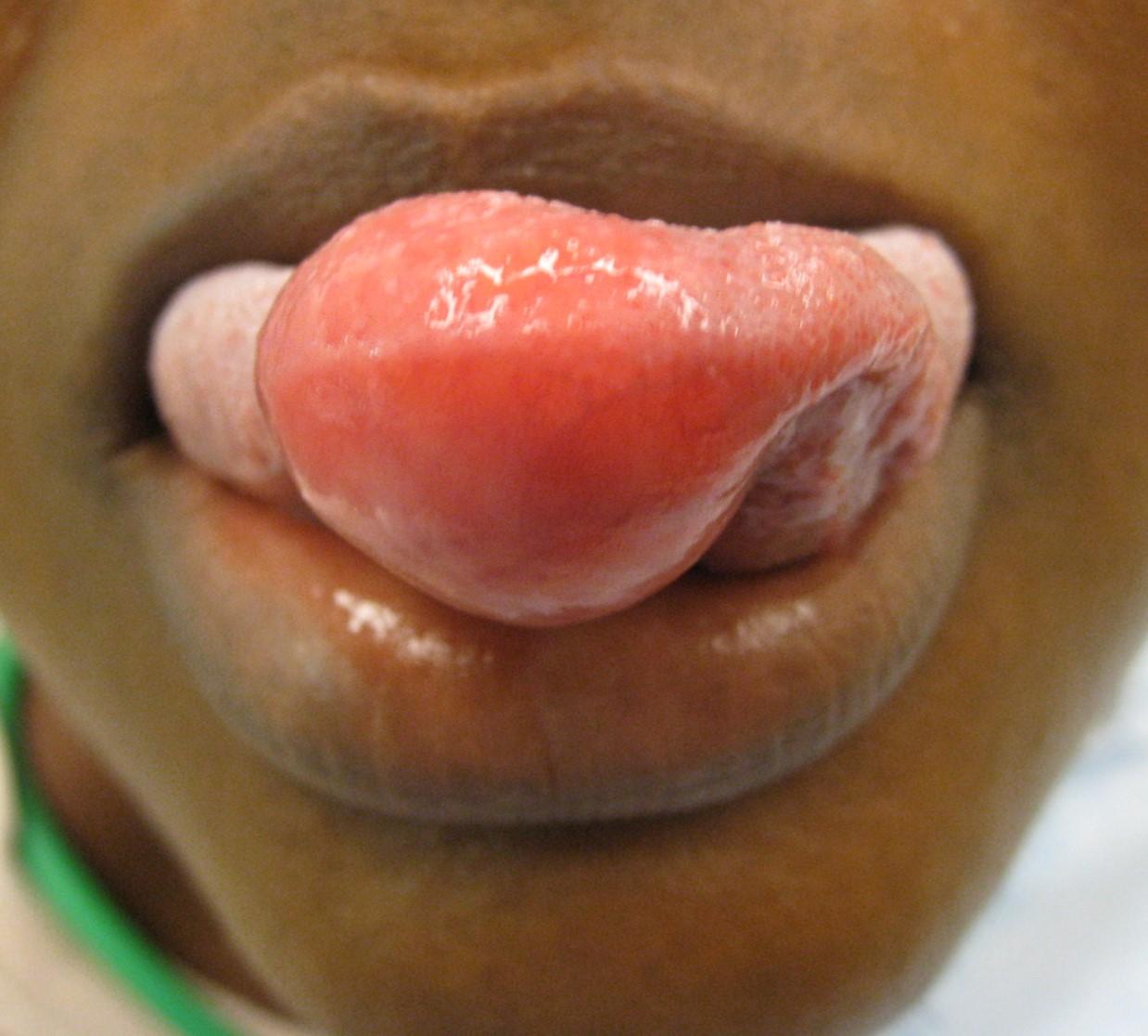
Macroglossia is a condition characterized by a large tongue compared to other structures in the mouth. In the congenital disorder, the protruding tongue from the mouth can interfere with feeding the baby. Later, may interfere with the conversation. The large size of the tongue can also cause abnormal development of the jaw and teeth, leading to misalignment or protrusion of the teeth. Ulceration and death of tissue at the tip of the tongue can be other symptoms of the disorder.
All major signs and symptoms include:
- shortness of breath - Difficulty, noisy breathing, obstructive sleep apnea or airway obstruction;
- dysphagia - Difficulty swallowing and eating;
- dysphonia - impaired speech, possibly manifested as a whisper;
- sialorrhea - salivation;
- angular cheilitis- ulcers in the corners of the mouth;
- scalloped tongue - dents on the lateral borders of the tongue caused by tooth pressure;
- open bite - a type of teeth bite;
- mandibular prognathism - expansion of the lower jaw;
- breathing through the mouth;
- orthodontic disorders, including diastema and distance between teeth.
A tongue that constantly sticks out of the mouth is prone to drying out, ulceration, infection, or even necrosis.
Causes and risk factors
Macroglossia can be found in people with certain inherited or congenital disorders, including:
- Beckwith-Wiedemann syndrome;
- acromegaly;
- primary amyloidosis;
- congenital hypothyroidism;
- Down syndrome;
- Apert's syndrome and many others.
Macroglossia can also be a sign of certain acquired disorders, including malignant neoplasms, metabolic / endocrine disorders and inflammatory or infectious diseases.
In rare cases, macroglossia is an inherited disorder that is not associated with any other cause, congenital or acquired. In such cases, the disorder is transmitted genetically as an autosomal dominant trait.
Dominant genetic disorders occur when only one copy of an abnormal gene is needed for a disease to appear. The abnormal gene can be inherited from either parent, or it can be the result of a new mutation (gene change) in the affected person. The risk of passing the abnormal gene from the affected parent to the offspring is 50% with every pregnancy, regardless of the sex of the child.
Affected populations
Isolated autosomal dominant macroglossia is very rare, with about 50 cases described in the medical literature. The prevalence in other cases depends on the underlying disorder for which macroglossia is secondary. For example, macroglossia occurs in most cases of Beckwith-Wiedemann syndrome, and the prevalence of this syndrome is estimated at 1 in 17,000 births.
Diagnostics
Babies born with isolated autosomal dominant macroglossia have obvious signs at birth. A family history and physical examination can confirm the diagnosis.
Standard treatments
The treatment and prognosis of macroglossia depend on its cause, as well as the severity of the enlarged tongue and the symptoms it causes. Mild cases or cases with minimal symptoms may not require treatment. Speech therapy or surgery to reduce the size of the tongue (glossectomy) may be helpful. Treatment may also include correcting orthodontic abnormalities that may have been caused by an enlarged tongue. Treatment for any underlying systemic disease, such as radiation therapy, may be required.
Andrey Zakirov/ article author
I am engaged in the prevention and treatment of coloproctological diseases. Higher medical education. On the site tvojajbolit.ru I will be responsible for the quality and literacy of articles.
Specialty: Phlebologist, Surgeon, Proctologist, Endoscopist.
More about the Author.