Melanoma of the eye: what is it, symptoms, causes, treatment, prognosis
Content
- What is eye melanoma?
- Signs and symptoms
- Causes and risk factors
- Affected populations
- Diagnostics
- Standard treatments
- Forecast
What is eye melanoma?
Melanoma of the eye - an extremely rare form of cancer that affects the eye. Although rare, this tumor is the most common primary eye cancer in adults. Primary means that the cancer started in the eye and has not spread there from another part of the body. In most people, this cancer occurs in a part of the eye known as the uveal tract. The uveal tract is a colored (pigmented) layer of tissue that sits under the white of the eye (sclera) and is made up of normal pigmented cells and blood vessels. In the front of the eye, the uveal layer consists of the colored part of the eye (iris) and a circle of muscle tissue (ciliary body), which secretes a clear fluid into the eye and helps control the shape lens. The largest area of the uveal tract is at the back of the eye (choroid), which is located under the retina, the visual sensory part of the eye. In most cases, ocular melanomas occur within the choroid. Eye melanoma arises from cells called melanocytes that produce pigment. Melanoma of the eye is a malignant (cancerous) tumor that can spread (metastasize) to other parts of the body, most commonly the liver. The exact cause of this disorder is unknown, but several risk factors have been identified.
Although choroidal melanocytes are similar to those skin cells that produce skin pigment when choroidal melanocytes turn into cancer cells, this is called choroidal (or uveal) melanoma. but melanoma of the skin and ocular (uveal) melanoma are different conditions that have the same name, but are biologically and genetically very different diseases. Melanoma of the skin very rarely spreads to the eye and is almost invisible when the melanoma of the eye spreads to the skin.
Signs and symptoms
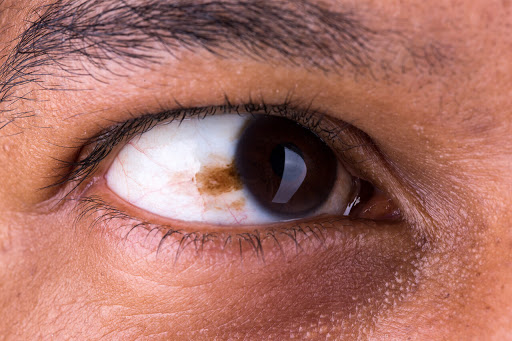
Melanoma of the eye may or may not cause symptoms. This generally depends on the exact location, the size of the tumor in the eye, and whether the tumor is causing secondary effects on the retina. Eye melanoma may not cause any symptoms for many years before symptoms begin. When symptoms develop, they may include:
- blurred vision;
- double vision (diplopia);
- irritation, pain in the eyes;
- the appearance in the field of vision of non-objective images: moving points, spots, figures, lightning (photopsy);
- decrease in the general field of vision and loss of vision;
- photophobia.
Additional symptoms that have been reported include:
- sensation of a foreign body in the eye, for example specks of dust, squeak;
- redness, bulging, or displacement of the eye (proptosis);
- change in the shape of the pupil;
- pressure in the eye.
Some people may develop metamorphopsia - a distorted perception of shape, size, color, rest or movement, the spatial arrangement of objects actually existing at a given time, or phenomena.
When ocular melanoma occurs in the choroid, it can lead to detachment of the retina, the nerve-rich membrane that lines the back of the eyes. When ocular melanoma occurs in the ciliary body, it can displace the lens of the eye, causing blurred vision due to cataracts or a quick change in the assignment of points (as a result astigmatisma).
Melanoma of the eye can spread (metastasize) to other areas of the body. Liver is the most common organ in the body affected by metastasis of ocular melanoma (in 80% of cases), but less often can affect the lungs, skin or soft tissues and bones. Some studies suggest that 40-50% of people with melanoma of the eye metastasize. Based on the aggressiveness of a specific tumor, determined by clinical and genetic characteristics, metastasis can be detected as early as 2-3 years after diagnosis and rarely after decades after treatment. Symptoms will depend on which part of the body is affected and how long the metastases have been present. Metastasis is a severe complication of the disease, characterized by high mortality, which is rare due to the lack of definitive treatments to eliminate all metastases, although recent advances in medicine are showing advances in some cases.
There are some differences in metastatic risk depending on where the melanoma develops in the uveal tract. For example, iris melanomas have a very low metastasis rate compared to ciliary body and choroidal melanomas. Advances in genetic testing of selected ocular melanoma tumors have helped to better tune a patient's risk of metastasis, regardless of location or size.
Causes and risk factors
As with many forms of cancer, the exact cause of ocular melanoma is unknown. Researchers suggest that many factors, including genetic and environmental factors, play a role in the development of the disorder. Modern research shows that abnormalities in DNA (deoxyribonucleic acid), which is the carrier of the body's genetic code, underlie malignant cellular transformation. In ocular melanoma, a tumor is caused by changes or errors in the DNA of cells called melanocytes (or pigment cells). Researchers are conducting ongoing basic research to learn more about the many factors that can lead to cancer.
Several risk factors have been identified in people with eye melanoma, including light eyes, fair skin, and an inability to sunburn or skin that tans easily. People who have another condition called dysplastic syndrome nevus (also called familial atypical nevus syndrome) are at greater risk of developing melanoma, including ocular melanoma, than people who do not have the disorder. Other conditions that increase the risk of developing ocular melanoma include atypical cutaneous nevi; common skin moles; freckles; mole on the iris.
Patients with a strong family history of systemic and ocular cancer may have a rare genetic mutation, called BAP1 tumor predisposition syndrome, which may increase the risk of developing ocular melanoma.
Melanoma of the skin has been linked to exposure to the sun's ultraviolet (UV) rays. However, studies on whether exposure to ultraviolet rays contributes to the development of melanoma of the eye is not working. If UV rays really affect the development of ocular melanoma, then their effect is much less than with the development of skin melanoma.
Affected populations
Melanoma of the eye is the most common primary cancer of the eye. However, it is a rare condition that is estimated to be diagnosed in approximately 2,500 people each year in the United States. The incidence in Russia is unknown, but according to one estimate, it is about 5-6 people for every 1,000,000 people in the general population. This cancer can affect men and women, as well as people of all ethnic or racial groups. The disease most often occurs in the elderly, with the highest incidence in the seventh and eighth decades of life. However, melanoma of the eye has also been reported in children. The disease is more common in people with fair skin and light eyes. The incidence in Caucasians is 8-10 times higher than in people of African descent.
Diagnostics
The diagnosis of ocular melanoma is based on the identification of characteristic symptoms, a detailed history of the patient, careful clinical evaluation, and various specialized tests. In many people, melanoma of the eye is detected during a routine eye examination by an ophthalmologist or general ophthalmologist without any symptoms, but confirmed by an ophthalmic oncologist who specializes in the diagnosis and treatment of cancer eyes.
An eye doctor may suspect eye melanoma after a routine eye exam. People may see an optometrist for vision problems or soreness in one eye. An ophthalmologist can detect melanoma using conventional equipment called an ophthalmoscope. a portable device that contains a perforated mirror and lens and allows the doctor to view structure of the eye. In other cases, special images are taken to assess the general condition of the eyes, which can reveal an asymptomatic lesion, which then requires further examination.
Standard treatments
Therapeutic treatment of individuals with ocular melanoma may require the coordinated efforts of a team of healthcare professionals such as diagnostic and treatment of eye diseases (ophthalmologists-oncologists who have undergone special ophthalmological training), eye surgeons, doctors specializing in the diagnosis and cancer treatment (oncologists), doctors who use radiation to treat cancer (radiation oncologists), and other specialists in the field medicine.
Specific therapeutic procedures and interventions can vary depending on many factors, such as the stage of the disease; the size of the tumor; the specific location of the tumor in the eye; the presence or absence of certain symptoms; age and general health of a person, etc. Decisions regarding the use of radiation therapy, experimental therapy and / or other treatments should accepted by doctors and other members of the medical team after careful consultation with the patient, taking into account the specifics of his case; detailed discussion of potential benefits and risks, including possible side and long-term effects; patient preferences; and other relevant factors.
Very small melanomas may not need treatment, and doctors may recommend monitoring. Watching and waiting is when doctors watch a patient with a slowly growing disease without giving treatment until the disease progresses. This allows some people to avoid treatment for years. However, there is a growing trend towards earlier treatment of even small melanomas in many centers around the world.
The two main therapeutic options are radiation therapy or surgical intervention. Procedures using topical radiation to destroy tissues and cancers are often prescribed. cells (radiation therapy), such as brachytherapy, especially for small to medium ocular melanomas size. Radiation therapy damages tumor cells, causing them to die and slowly shrink the tumor. The most common treatment for the eye with radiation therapy is a process called brachytherapy, which can also be known as contact radiation therapy or curie therapy. During brachytherapy, radioactive material (an implant) is placed on a small disc called a plaque. This disc is inserted into the eye socket near the base of the tumor and attached to the outside of the eye. The disc is left for several days and then removed. Sometimes, external beam therapy can be used with a special technique called proton beam radiation. This procedure uses a device outside the body that directs laser beams into the eye to kill cancer cells. There are various types of external beam radiation therapy. Both brachytherapy and proton therapy are effective treatments for ocular melanoma.
Other treatments that have been used to treat ocular melanoma include the use of intense focused light (such as laser therapy) to heat and destroy tissues and cancer cells (laser photocoagulation) or use another type of laser to heat and destroy fabrics. and cancer cells (transpupillary thermotherapy).
There are many surgical techniques that are also used to treat ocular melanoma. Sometimes doctors recommend surgical removal (resection) of the entire affected eye (enucleation). In other cases, doctors may recommend surgical removal of the affected tissue (local resection). For example, iris melanoma is often treated with surgical removal (resection) of the affected tissue.
Forecast
Depending on the stage of the disease, the prognosis for overcoming the five-year survival threshold with high-quality therapy is as follows:
- Stage 1 - more than 85%;
- Stage 2 - about 55%
- Stage 3 - about 28%
- Stage 4 - less than 12%.