Nonmaline myopathy: what is it, symptoms, treatment, prognosis
Content
- What is nonmaline myopathy?
- Signs and symptoms
- Causes
- Affected populations
- Related disorders
- Diagnostics
- Standard treatments
- Forecast
What is nonmaline myopathy?
Nonmaline myopathy Is a rare genetic muscle disease. Depending on the severity of the disease and the age of onset, six different clinical subtypes of nemaline myopathy have been identified, ranging from severe to congenital onset (at birth), which is usually fatal in the first few months of life, to less severe forms with onset in childhood or adulthood age.
Most affected people have a milder form of the disease, known as typical congenital nemaline myopathy, and can walk and be active. The type of inheritance varies depending on the underlying genetic cause. The characteristic symptoms of all forms of nemaline myopathy include muscle weakness, decreased muscle tone (hypotension), and decreased or absent reflexes. For most people, muscle weakness is static (not progressive) over time.
Nonmaline myopathy is characterized by muscle weakness and the presence of thin, filamentous, or rod-like structures called “nemaline bodies” when examined under a microscope from a muscle biopsy. The prefix "neme" comes from the Greek language and means "threadlike". Nonmaline bodies are made up of clumps of muscle proteins due to mutations in genes that code for the protein components of a fine muscle filament.
Signs and symptoms
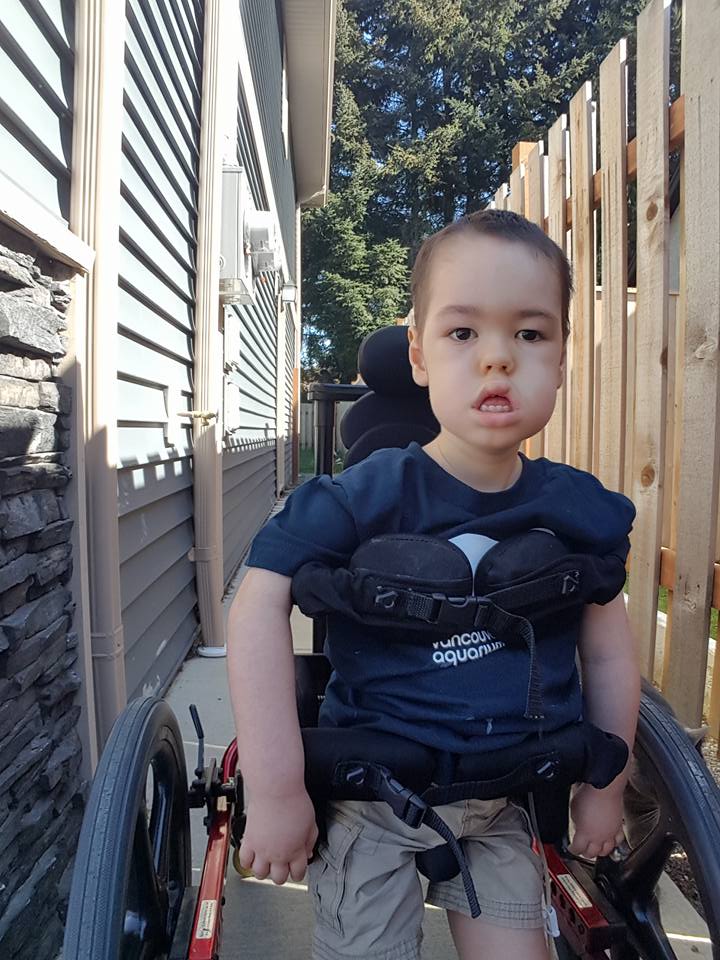
The age of onset and the severity of symptoms and signs associated with nonmaline myopathy vary greatly from patient to patient. Some patients with nonmaline myopathy are born immediately or develop the disease shortly after birth (congenital onset). Less commonly, the disease can develop in childhood or even less often in adulthood.
The main clinical manifestations of nemaline myopathy are muscle weakness, hypotension, and decreased or absent reflexes. Muscle weakness is usually most pronounced in the muscles of the face, neck, and proximal muscles. The proximal muscles are the muscles that are closest to the center of the body, such as the shoulder, pelvis, forearms, and legs.
Because the facial muscles are involved, affected individuals may develop distinctive facial features, including an elongated face, a displaced jaw that is farther back than usual (retrognathia), and severely curved palate of the mouth. Muscle weakness can also cause difficulty speaking (dysarthria) and swallowing, making feeding difficult. Some babies with nonmaline myopathy may need a feeding tube. Breathing (airway) problems can also occur due to muscle weakness.
Affected infants are often delayed in achieving motor skills such as head control, sitting or standing. Most babies have no other developmental problems and their intelligence is usually not affected.
As they age, patients may develop joint stiffness, which occurs when thickening and shortening of tissues, such as muscle fibers, cause deformation and restrict movement of the affected area (contractures), sunken chest, abnormal side-to-side movements, curvature spine (scoliosis) or abnormal rigidity of the spine.
Six different clinical manifestations of nemaline myopathy have been identified.
- Typical congenital nemaline myopathy.
It is the most common form of nemaline myopathy, accounting for about half of all cases. This form is present during or shortly after birth, or somewhere during the first year of life. Affected infants may have muscle weakness, hypotension resulting in abnormal "lethargy", and difficulty feeding. Muscle weakness is less pronounced in the typical congenital form than in severe congenital or intermediate congenital forms. Some babies with this form may have significant muscle weakness at birth, which improves with age.
Weakness of the respiratory muscles is common and can cause breathing difficulties and nocturnal hypoventilation - a condition in which insufficient breathing during sleep leads to an increase in the level of carbon dioxide in the blood (hypercarbia). Some babies may have an abnormal waddling gait, difficulty swallowing (dysphagia), difficulty speaking (dysarthria), and nasal tone of voice. Affected infants may also experience a delay in reaching basic motor skills such as lifting the head, sitting, or standing. In rare cases, a delay in reaching motor milestones may be the first sign of a disorder.
Read also:Adrenoleukodystrophy
Muscle weakness in infants with typical congenital disease usually affects the proximal muscles, but in rare cases can spread and infect the distal muscles, that is, muscles located further from the center of the body and including the muscles of the arms and legs, as well as the hands hands and feet. The muscle weakness associated with the typical form usually does not progress. However, during puberty-related growth spikes, some people experience progressive worsening of muscle weakness, which may eventually require use wheelchair. Most people with typical congenital nemaline myopathy end up walking on their own.
- Severe congenital (neonatal) nemaline myopathy.
This form of myopathy manifests itself at birth and accounts for approximately 16 percent of cases. Affected infants have severe muscle weakness and severe hypotension. Babies with this form of nemaline myopathy have difficulty sucking and swallowing, which leads to difficulty in feeding, small spontaneous movements and causes respiratory failure. Some babies may have a passage or backflow (reflux) of stomach or small intestine contents into the esophagus (gastroesophageal reflux).
In rare cases, this form of nemaline myopathy has been associated with heart muscle disease (cardiomyopathy) and the presence of multiple contractures (congenital multiple arthrogryposis). Fractures may also occur. Severe damage to the respiratory muscles often leads to life-threatening respiratory failure, and weakness of the bulbar (swallowing) muscles increases the risk of aspiration. pneumonia (in which liquid or food is inhaled into the lungs).
- Intermediate congenital nemaline myopathy.
This form of nemaline myopathy is less severe than the severe congenital form and more severe than the typical congenital form. It accounts for approximately 20 percent of cases. This form of the disorder is characterized by the early development of contractures. As affected children age, they are often delayed in reaching motor skills or unable to sit or walk on their own. Children with intermediate congenital disorder often require a wheelchair or continuous breathing support (ventilation) during childhood.
- Nonmaline myopathy with childhood onset.
This form of nemaline myopathy usually appears between the ages of 10 and 20 and accounts for approximately 13 percent of cases. It usually does not affect the development of early motor skills. Sometimes in adolescence or early twenties, affected people develop slowly progressive muscle weakness. People who are sick may not be able to bend the foot up towards the leg (lowering the foot). Ultimately, all the muscles of the ankle and lower leg are involved. In one family with this form of nemaline myopathy, two members required wheelchairs by age 40.
- Nonmaline myopathy in adults.
The onset and severity of this form of nemaline myopathy vary. It is extremely rare, accounting for only 4 percent of cases. The adult form occurs in people between the ages of 20 and 50 who develop general muscle weakness that can progress rapidly. Muscle pain (myalgia) may also occur. Involving certain muscles in the neck can make it difficult to hold the head and cause it to sink.
Although this is rare, some people can develop respiratory or cardiac complications, often in conjunction with increasing muscle weakness. This form of nemaline myopathy may differ from the genetic or hereditary form of the disease.
Read also:Netherton's syndrome
- Amish nonmaline myopathy.
This form of myopathy has been identified in several related families in the Amish community. Onset occurs shortly after birth, and affected infants may have hypotension, multiple contractures, and tremorwhich usually decrease during the first few months of life. Affected infants have progressive muscle weakness, severely deformed chest a cage with a protruding sternum, muscle wasting (atrophy) and life-threatening respiratory failure.
Severe neonatal respiratory disease and the presence of congenital multiple arthrogryposis (contractures joints, which represent constant muscle shortening) often lead to death in the second year life.
Causes
Ten genes have been found to cause nemaline myopathy. The disease can be inherited in an autosomal recessive or dominant manner. At least 50% of cases of the disorder occur in an autosomal recessive inheritance, and the rest are inherited in an autosomal dominant pattern or are sporadic (new dominant cases - first appearance in family).
Genetic disorders are determined by a combination of genes for a particular trait, which are located on chromosomes received from the father and mother.
Recessive genetic disorders occur when a person inherits the same abnormal gene for the same trait from each parent. If a person receives one normal gene and one gene for the disease, they will be a carrier of the disease, but usually asymptomatic. The risk for two carrier parents of passing on the defective gene and therefore having a sick child is 25 percent with each pregnancy. The risk of having a child who will be a carrier, like the parents, is 50 percent with every pregnancy. The chance that a child will receive normal genes from both parents and be genetically normal for that particular trait is 25 percent. The risk is the same for men and women.
Dominant genetic disorders occur when only one copy of the abnormal gene is needed for a disease to appear. The abnormal gene can be inherited from either parent, or it can be the result of a new mutation (gene change) in an affected person. The risk of passing the abnormal gene from the affected parent to the offspring is 50 percent with every pregnancy, regardless of the gender of the child born.
In some people, the disease occurs due to a spontaneous (new) genetic mutation that occurs in an egg or sperm cell. In such situations, the disorder is not inherited from the parents.
Found that mutations in the gene ACTA1 cause about 15-25% of the disease. Most mutations ACTA1 are a spontaneous genetic change (new mutation) and are not inherited. However, some cases result from autosomal dominant and, less commonly, autosomal recessive inheritance. Gene mutations ACTA1 can cause severe, intermediate, or typical congenital forms of nemaline myopathy.
Gene mutations NEB have been identified as the cause of about 50% of nonmaline myopathy. Mutations in this gene can cause any form of disease, but most people with the mutation NEB have a typical congenital form. Gene mutations NEB are inherited as an autosomal recessive trait.
Gene mutations TPM2, TPM3, TNNT1, CFL2, KBTBD13, KLHL40, KLHL41 and LMOD3 are rarer causes of nemaline myopathy and only fewer affected families have been reported to date.
The genes involved in the disorder contain instructions for creating (coding) certain proteins that play an important role in the normal structure and function of the contractile apparatus skeletal muscle. Mutations in these genes result in a deficiency or dysfunction of these proteins. These proteins work together to form structures known as thin filaments, which are basically long chains of proteins. Fine fibers are found in the sarcomere, the main structural and functional unit of the striated muscle, and they play a role in the formation and contractile function of skeletal muscle fibers. Consequently, if these proteins are insufficient or damaged, the strength of muscle contraction and, in some cases, the development of normal muscle structure is impaired.
Read also:Amauroz Leber
Affected populations
Nonmaline myopathy is a rare disease that affects men and women. The incidence is unknown, although two studies (one in Finland and one among the Ashkenazi Jewish population in America) estimated the incidence as 1 in 50,000 live births. A reported incidence of 1/500 in the Amish community.
Related disorders
- Congenital myopathy Is a general term for a group of muscle diseases (myopathies) that are present at birth (congenital). These disorders are characterized by muscle weakness, hypotension, decreased reflexes, and a delay in reaching motor milestones (eg, walking). In some conditions, muscle weakness progresses and can lead to life-threatening complications. This group of diseases includes central heart disease, central myopathy, congenital fiber imbalance, and minimal nucleus myopathy. Congenital myopathies usually appear during the neonatal (neonatal) period, but may appear much later, even in adulthood. In most cases, these disorders are inherited in an autosomal recessive or autosomal dominant pattern.
Secondary nemaline myopathy refers to cases where nemaline bodies, which characterize the muscle fibers of people with nemaline myopathy, have been observed in other diseases. These disorders include mitochondrial myopathies, type I myotonic dystrophy, and Hodgkin's disease.
Diagnostics
Nemaline myopathy is suspected based on careful clinical assessment, a detailed history of the patient and family, and identification of characteristic signs. The diagnosis can be confirmed by the presence of filamentous or rod-like structures (nonmaline bodies) on muscle biopsy stained with Gomori trichrome. A biopsy is the surgical removal and microscopic examination of the affected tissue. Increasingly, diagnosis is made or confirmed by molecular genetic testing for mutations in genes known to cause the disorder.
Standard treatments
There is no specific treatment for nemaline myopathy. Treatment is supportive and directed at the specific symptoms that each person experiences. Infants with the disease may benefit from a program of light to moderate, low-intensity exercise, massage, and stretching techniques. This therapy is aimed at maintaining muscle strength and function and preventing the development of contractures.
In addition, respiratory support may be required, possibly including mechanical ventilation to prevent nocturnal hypoventilation. Careful monitoring of breathing is essential because even people with minimal muscle weakness in the arms and legs may have difficulty breathing, especially during sleep.
Lower respiratory tract infections need to be treated quickly and aggressively to avoid complications. Because some people may have difficulty feeding, tube feeding may be necessary to ensure proper intake of calories and nutrients. Speech therapy may be necessary for people with difficult speech or nasal speech.
In some cases, various orthopedic techniques, such as the use of special braces, other devices and / or surgical measures, may be recommended to help prevent and / or treat certain musculoskeletal disorders such as scoliosis and contracture joints. People with significant leg muscle weakness may eventually need a wheelchair.
Victims should be evaluated for cardiac function as there is a risk of heart abnormalities, although this is a rare complication.
Genetic counseling is recommended for patients and their families.
Forecast
The prognosis depends on the type of disease, and life expectancy ranges from a few months to almost normal life expectancy.