Morris syndrome: what is it, causes, symptoms, photos, treatment, prognosis
Content
- What is Morris Syndrome?
- Signs and symptoms
- Causes
- Affected populations
- Symptomatic disorders
- Diagnostics
- Standard treatments
- Forecast
What is Morris Syndrome?
Morris Syndrome (testicular feminization, partial androgen insensitivity syndrome (SCHNKA)) Is a genetic disease that affects the sexual development of a male fetus. During pregnancy, a male fetus with partial androgen insensitivity syndrome cannot respond properly to male sex hormones (androgens). As a result, this affects the development of the genitals.
The appearance of the genitals may differ from person to person. Some men have an unusually small penis (micropenia), undescended testes (cryptorchidism), hypospadias (the urethra is located on the underside of the penis), and / or a bifurcated scrotum (the scrotum is split in two). Others may have more feminine genitals and physical features, including a large clitoris (clitoromegaly), breast enlargement (gynecomastia), undescended testicles and / or labia fusion. People with Morris syndrome usually suffer from infertility.
Morris syndrome is caused by a gene change ARwhich is located on the X chromosome. It is inherited in an X-linked recessive pattern and usually affects males. It is recommended that parents and guardians of a child with Morris Syndrome work with an experienced medical team before gender assignment. If a person is raised as a man, testosterone therapy may be prescribed to improve fertility and surgery to restore the structures of the penis and reduce the size of the male breast. If a person is growing as a woman, they may be offered surgery to remove the male reproductive organs after puberty, followed by estrogen (female sex hormone) therapy.
Androgen insensitivity occurs when a person's body fails to respond properly to male sex hormones (androgens) during pregnancy. Partial androgen insensitivity syndrome (PASA) belongs to a group of disorders that include insensitivity to androgens, including complete androgen insensitivity syndrome (CAS) and mild androgen insensitivity syndrome (SLNKA). In 1953, American gynecologist John Morris gave the first complete description of androgen insensitivity syndromes, calling them "testicular feminization" based on the appearance of the genitals. However, as the group of diseases varies from person to person depending on the response to androgens, it is now increasingly referred to as "androgen insensitivity."
Signs and symptoms
The symptoms of Morris syndrome vary from person to person. Everyone with androgen insensitivity syndrome is unique and may not share the same traits.
Some people with Morris syndrome have more feminine facial features. For example, some people may be born with female genitals but have an enlarged clitoris (clitoromegaly) or fusion of certain areas of the labia. In addition, some people may be born with the openings of the female urethra (the duct that carries urine from the bladder outside the body) and the vagina. However, they will not have female genital organs such as the uterus and ovaries. Some people with this condition may be born with cryptorchidism (undescended testicle into the scrotum) when the testicles are located outside the scrotum (in the abdomen or in the groin). Because sufferers do not have ovaries and may have problems with testicular development, many with androgen insensitivity syndrome are infertile because they do not produce sperm or produce very little sperm. Also, some people with the syndrome have an enlarged breast with hypertrophy of the glands and adipose tissue (gynecomastia) during puberty.
Read also:Hereditary angioedema
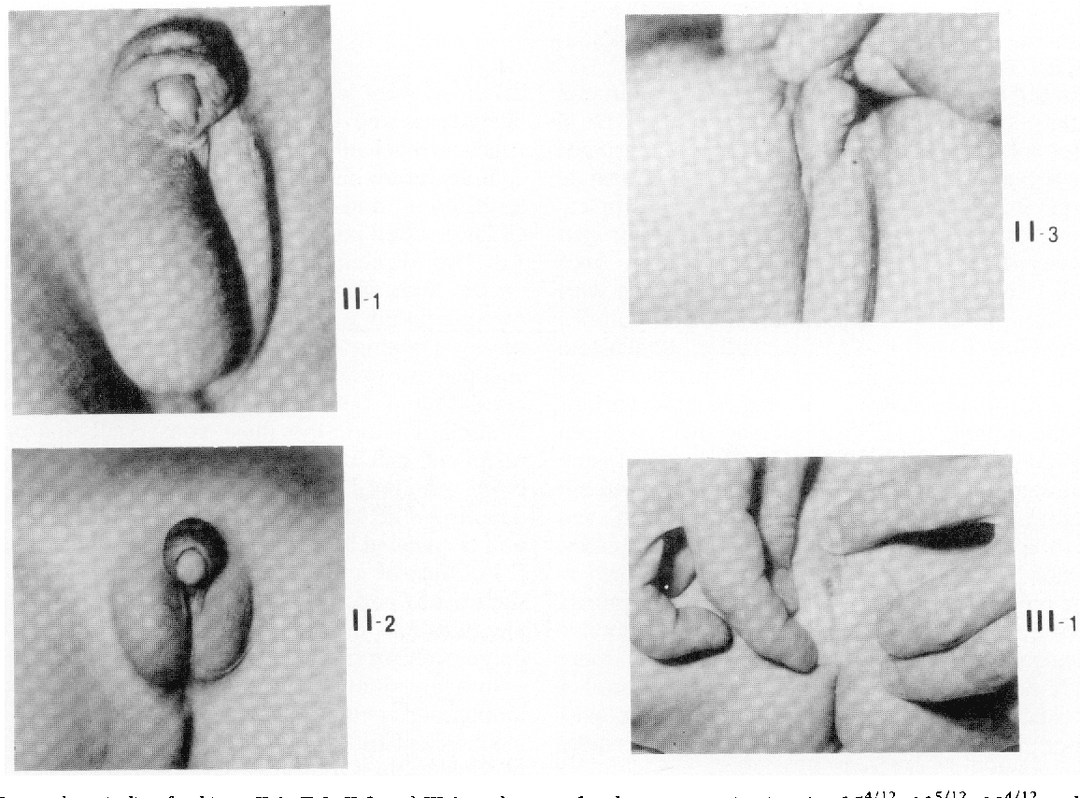
Other people with the disorder may have more masculine features. For example, some may develop a penis. Some affected men may be born with a small penis, which is usually less than 1 cm, and may look like a clitoris (see picture). photo above). Those who develop a penis may be born with a feature called hypospadias, in which the opening of the penis is on the underside. As a result, boys with hypospadias may have trouble urinating in certain directions. During puberty, people with Morris syndrome may develop a bifurcation of the scrotum, in which the area of the scrotum can be split in two by a groove.
Causes
Partial androgen insensitivity syndrome is a genetic disorder inherited in an X-linked recessive pattern. The genome associated with partial androgen insensitivity syndrome is the gene ARlocated on the X chromosome. When a gene change (mutation) occurs in humans AR, their body may have problems with the production of androgen receptors, which are structures in cells that allow the body to respond correctly to androgens (male reproductive hormones). Because of problems with androgen receptors, people with gene changes AR have signs of Morris syndrome.
Chromosomes are located in the nucleus of human cells and carry the genetic information (DNA) of each person. The cells of the human body usually have 46 chromosomes. Pairs of human chromosomes, numbered 1 through 22, are called autosomes, and the sex chromosomes are designated X and Y. Men have one X and one Y chromosome, while women have two X chromosomes.
X-linked genetic disorders are conditions caused by an abnormal gene on the X chromosome and occur primarily in males. Women who have an altered gene on one of their X chromosomes are carriers of the disease. Carrier females usually show no symptoms as females have two X chromosomes and only one carries the altered gene. Men have one X chromosome inherited from their mother, and if a man inherits an X chromosome containing the altered gene, he will develop the disease.
Read also:Netherton's syndrome
Women who are carriers of X-linked disorder have a 25% risk of having a carrier daughter like themselves in every pregnancy, 25% chance of having a healthy daughter, 25% chance of having a son affected by the disease, and 25% chance of having a healthy son.
If a man with an X-linked disease is capable of reproduction, he will pass on the altered gene to all of his daughters who will be carriers. A man cannot pass on an X-linked gene to his sons, as men always pass on their Y chromosome instead of their X chromosome to male offspring.
Affected populations
Partial androgen insensitivity syndrome is very rare in the general population. 1 in 99,000 male newborns are born with one of several types of androgen insensitivity, including Morris syndrome. Morris syndrome affects only men, but women can be carriers of this genetic disorder.
Symptomatic disorders
Symptoms of the following diseases may be similar to those of partial androgen insensitivity syndrome (PAS). Comparisons can be useful for differential diagnosis.
- Slight androgen insensitivity syndrome (SLNA) is a genetic disorder that is also caused by changes in the gene AR. Men with this condition have normal male genitals. They may have some breast enlargement during puberty, and may also have sparse body hair and a small penis.
- Androgen insensitivity syndrome (SPNCA) is a genetic disorder also caused by changes in the gene AR. However, when compared to SCNAA, fetuses with SCNAA do not respond at all to androgens during pregnancy. Men born with SNA appear more feminine and have female genitalia, but do not have female internal genitalia, such as the uterus or ovaries.
- Congenital hyperplasia adrenal glands (VGN) is a group of rare hereditary autosomal recessive diseases characterized by a deficiency of one of the enzymes required for the production of certain hormones. Women with this condition may be born with genitals that look neither male nor female.
- Mayer-Rokitansky-Kuester-Hauser syndrome (MRKH) is a rare disease characterized by abnormal development of the uterus and vagina. Affected women have normal ovarian function and normal external genitals. Women with the condition develop normal secondary sexual characteristics (such as breast growth and pubic hair) during puberty but do not have menstrual cycle.
Read also:Meloreostosis
Diagnostics
Because the signs of Morris syndrome may differ from person to person, there are no standard diagnostic procedures for making a diagnosis of the disorder. Suspicion of Morris syndrome can be based on clinical signs such as the presence of female genitalia, absence of female genital organs (ovary and uterus), and problems with sperm production. Some additional research, such as genetic testing, can help in making the diagnosis. For example, if the patient has some of the physical features of Partial Numbness Syndrome to androgens using genetic testing, you can additionally confirm the presence of XY chromosomes. Some other lab results that can help diagnose include high levels of testosterone (produced by the testes) and luteinizing hormone (produced by the pituitary gland).
To further confirm the diagnosis of Morris syndrome, genetic testing may be done to look for a mutation in the gene. AR. Sometimes genetic testing cannot detect any changes in a gene AR. In this case, an androgen binding assay can be performed to measure androgen receptors. This test can also confirm the diagnosis of Morris syndrome.
- Clinical research and diagnostics.
Once a patient is diagnosed with SCNA, it is important to be evaluated by a healthcare professional who specializes in puberty. Some of these specialists may be from urology, gynecology, clinical genetics, psychiatry, psychology, and endocrinology.
Standard treatments
Determining gender is one of the main tasks that is performed after the diagnosis of Morris syndrome. Parents should work with their health care team (doctors) to make an informed decision on whether to assign a sex status. If the patient is brought up as a woman, she may undergo surgery to remove the male genital organs. She may also be prescribed estrogen (female sex hormone) therapy after puberty. If the patient is brought up as a man, he will be prescribed testosterone therapy and surgery to restore the male genital organs and remove gynecomastia.
Some people with Morris syndrome are sexually determined at birth, others after puberty. This decision is usually based on the circumstances and opinions of the family, patient, and healthcare providers.
Genetic counseling is recommended for patients and their families.
Forecast
Androgens are most important early in development in the womb. Children with partial androgen insensitivity syndrome become infertile in adulthood. However, with psychological support and hormone replacement therapy, patients can otherwise lead a normal life.