Gangrenous pyoderma: what is it, symptoms, treatment, prognosis
Content
- What is pyoderma gangrenosum?
- Signs and symptoms
- Causes and risk factors
- Affected populations
- Symptomatic disorders
- Diagnostics
- Standard treatments
- Forecast
What is pyoderma gangrenosum?
Gangrenous pyoderma Is an inflammatory skin disorder characterized by small red bumps or blisters (papules or nodules) that eventually break down to form swollen open ulcers. The size and depth of the ulcer varies greatly and is often very painful. In about 50% of cases, the disorder occurs secondary to another disorder, such as inflammatory bowel disease. The exact cause of the disease is unknown (idiopathic). Some researchers believe that it may be autoimmune disease.
Signs and symptoms
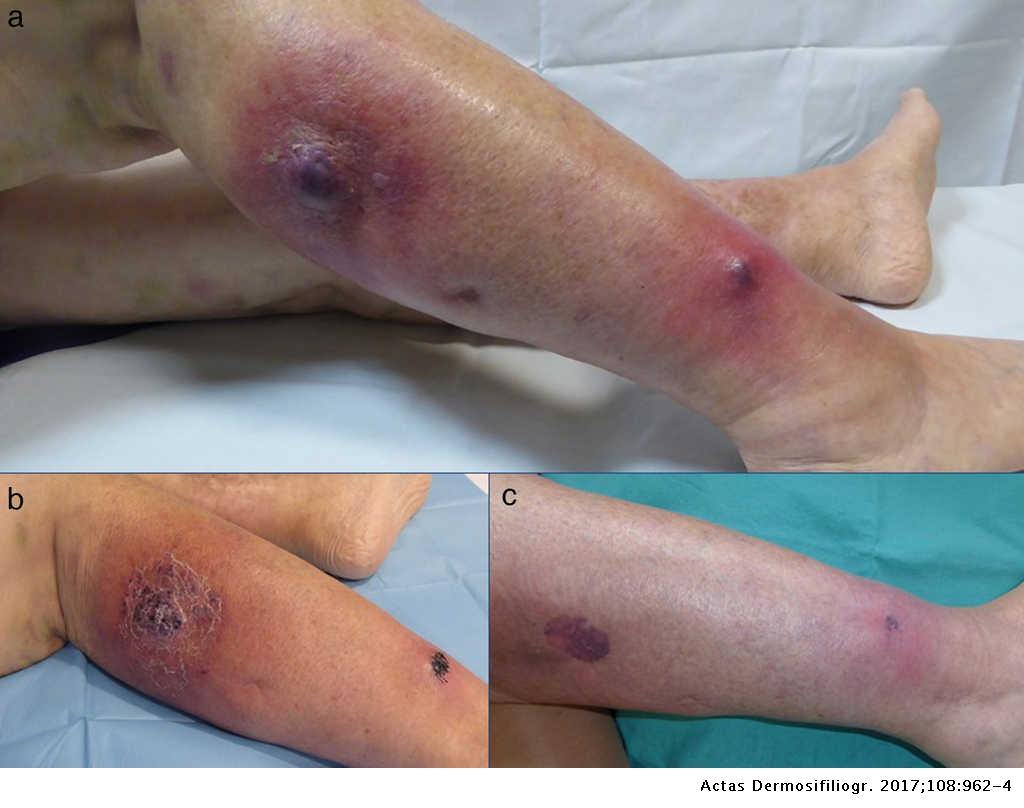
Pyoderma gangrenosum often begins with small, rapidly spreading bumps or blisters that are reddish or purple in color (see Table). Photo). These small growths eventually develop into swollen, open sores with a distinct blue or purple border. The size and depth of the ulcers vary. Ulcers can spread, widen and deepen and become extremely painful. In some cases, ulcers may continue to spread, remain unchanged, or heal without treatment.
Ulceration can affect any part of the body and is classified into four varieties: classic, atypical / bullous, pustular, and vegetative.
Classical pyoderma gangrenosum most often occurs on the legs and is characterized by deep ulceration. These lesions often begin as small pus-filled bumps (pustules) that quickly enlarge and spread. This form of the disease is often very painful and can also affect the trunk, penis, head and neck.
The classic form of the disease also occurs near surgical holes (stoma sites) in the body. This condition is called gangrenous peristomal pyoderma.
Atypical or bullous pyoderma gangrenous characterized by superficial blisters (bullae). This form of the disease most often affects the hands and is often associated with an underlying disease, especially hematologic malignancies such as leukemia. Some cases, called atypical pyoderma gangrenous, are actually Sweet's syndrome.
Classical pyoderma gangrenosum is often characterized by the presence of pus and may begin with pustules. Pustular pyoderma gangrenosum characterized by painful bumps (pustules) that are most commonly found on the arms and legs. These lesions eventually develop into ulcers. This form of the disease is often associated with inflammatory bowel disease.
Read also:Impetigo
Vegetative gangrenous pyoderma characterized by chronic ulceration, usually painless.
Additional signs sometimes associated with the disease include fever, localized tenderness, joint pain (arthralgia) and general ill health (malaise). The disease can occur as a secondary symptom of another disease, most often ulcerative colitis or Crohn's disease.
Causes and risk factors
The exact cause of pyoderma gangrenosum is unknown (idiopathic), although it is suspected to be autoimmune disease. Autoimmune disorders occur when the body's natural defenses (such as antibodies) against foreign or invading organisms begin to attack healthy tissue for unknown reasons.
Approximately 50 percent of pyoderma gangrenosum cases are associated with other diseases, especially with inflammatory bowel disease, ulcerative colitis, or Crohn's disease. Additional disorders associated with the disease include rheumatoid arthritis, acute and chronic myelogenous leukemia, myeloid metaplasia and paraproteinemia.
Some people develop the disease after surgery or injury. This condition is known as patergy.
Affected populations
Pyoderma gangrenosum occurs in women more often than in men. The disease most often occurs between the ages of 20-50. Babies or adolescents make up less than 4 percent of cases. According to one study in the United States, the incidence is 1 in every 100,000 people.
Symptomatic disorders
Symptoms of the following diseases may be similar to those of pyoderma gangrenosum. Comparisons can be useful for differential diagnosis:
- Sweet's syndrome (acute febrile neutrophilic dermatosis) is a rare skin disorder characterized by fever, joint inflammation (arthritis), and a sudden onset of rash. The rash consists of bluish-red, painful papules that usually occur on the arms, legs, face, or neck, most often on one side of the body (asymmetric). In many cases, Sweet's syndrome occurs on its own for an unknown reason (idiopathic). In some cases, the disease is associated with an underlying malignant neoplasm, usually a hematologic malignant neoplasm, such as certain types of leukemia. The exact cause of Sweet's syndrome is unknown.
- Sporotrichosis - a chronic subcutaneous fungal infection that spreads through the lymph nodes and is caused by a fungus known as Sporothrix schenckii. The disease may remain localized or may become generalized, affecting bones, joints, lungs, and the central nervous system. Lesions may be grainy, purulent, ulcerative, or draining.
Read also:Actinic keratosis
The development of pyoderma gangrenosum may be preceded by the following disorders. They can be helpful in identifying the underlying cause of some forms of this disorder:
- Ulcerative colitis - nonspecific inflammatory bowel disease characterized by chronic ulceration. The main symptom of the disorder is bloody diarrhea. The cause of the disease is unknown. Ulcerative colitis usually begins in the rectal area but can affect the entire colon. Ulcerative colitis is usually chronic, with acute inflammation of the colon. It is characterized by multiple, irregular superficial ulcerations, thickening of the colon wall with scar tissue, and pseudopolyps.
- Crohn's disease - a form of inflammatory bowel diseasecharacterized by severe chronic inflammation of the wall of the small intestine, but can affect any part of the gastrointestinal tract. Symptoms include tiredness, lack of appetite, anorexiaweight loss, abdominal pain and chronic diarrhea. Less commonly, inflammation of the lining of the mouth, esophagus, or stomach occurs. Regional lymph nodes may be involved. In the acute stage of the disease, a hard mass may be felt in the abdomen.
Diagnostics
There are no specific diagnostic tests for diagnosing the disease. The diagnosis is made by excluding such diseases based on careful clinical assessment, detailed the patient's history and various tests, such as surgical removal and microscopic evaluation of the affected tissue (biopsy).
Standard treatments
Treatment consists of open wet dressings on the ulcers and topical application of anti-inflammatory creams and ointments such as corticosteroids. The skin must be protected from any other damage that could lead to the development of additional ulcers. In some cases, grafting new skin to the wound may be recommended after the inflammation has been relieved.
Additional treatment includes corticosteroid medications such as methylprednisolone and prednisone. Corticosteroids can be injected intramuscularly, orally, or intralesionally directly into pyoderma gangrenosum.
According to some researchers, people with a past history of illness should receive preventive treatment with corticosteroids before surgery, as surgery may cause a relapse diseases.
Read also:Leucoderma
Immunosuppressive therapy (drugs that suppress the immune system) are sometimes used to treat people with pyoderma gangrenosum. Cyclosporine is effective in many patients. Azathioprine and cyclophosphamide are also immunosuppressive drugs that have been used to treat the disease. In recent years, drugs known as tumor necrosis factor inhibitors have been very successfully used to treat pyoderma gangrenosum. Infliximab and adalimumab have proven to be the most successful.
You can also enter antibacterial agents such as dapsone. In some people, surgical treatment of an underlying condition, such as ulcerative colitis, relieves the symptoms of pyoderma gangrenosum.
Additional treatment is symptomatic and supportive.
Forecast
The prognosis for pyoderma gangrenosum is generally favorable; however, the disease can recur and residual scarring is common. One study found that 16% of 103 patients died during the 8-year study period. Pain is a common complaint of patients and may require pain relievers to control.
Most patients with the disease improve after initial immunosuppressive therapy, after which minimal care is required. However, many patients follow a refractory course and several treatments may not be successful. These patients present a complex clinical problem requiring frequent follow-up and long-term care.
Some patients show patergia or development of pyoderma gangrenosum at the site of skin injury; in such cases, protecting the skin from injury can prevent recurrence of the disease. Patergy can cause problems with wound healing, especially after surgical procedures (eg, breast reconstruction, transplant).
Death from pyoderma gangrenosum is rare, but can occur due to a concomitant illness or as a result of therapy.