Sickle cell anemia: what is it, symptoms, causes, treatment, prognosis
Content
- What is sickle cell disease?
- Signs and symptoms
- Causes
- Affected populations
- Diagnostics
- Standard treatments
- Forecast
What is sickle cell disease?
Sickle cell anemia (SKA) is a rare blood disorder transmitted in an autosomal recessive manner. SCA is characterized by the presence of sickle-shaped erythrocytes (red blood cells) in the bloodstream. These crescent-shaped cells are tough and sticky and interact with other cells and the blood clotting system to block blood flow in very tiny blood vessels (capillaries) of the peripheral circulatory system (blood vessels outside hearts). This interferes with the normal flow of nutrients and oxygen (since red blood cells are responsible for carrying oxygen throughout the body).
Common symptoms associated with SCA include excruciating bone pain, chest pain, severe infections (mostly in children), low circulating red blood cells (anemia), and yellowing of the skin (jaundice). Blocked circulation can also cause serious organ damage, including stroke. The disease has several recognized forms, including sickle cell disease, hemoglobin C sickle cell disease, and sickle cell beta thalassemia.
Signs and symptoms
Hemoglobin is an iron-rich protein found in red blood cells that is responsible for carrying oxygen from the lungs to the rest of the body. In SCA, the symptoms are due to a disorder in the structure of the hemoglobin protein in erythrocytes (red blood cells). The hemoglobin disorder causes the red blood cells to become sickle-shaped, which triggers a series of events leading to brittle red blood cells and blockage blood flow.
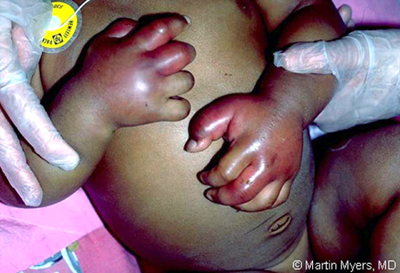
The most common signs and symptoms of sickle cell disease are associated with low red blood cell counts and pain. The most common symptom anemia there is a feeling of tiredness and weakness (fatigue). Pain episodes can occur suddenly and usually appear in the bones and abdomen, but can occur almost anywhere. The attacks of pain last from a few days to a week (acute) or last for a long time (chronic pain). Damage can occur in most parts of the body, including the brain, lungs, kidneys, and joints. SKA can cause yellowing of the sclera of the eyes and skin (jaundice) due to the breakdown of blood. Signs in infants may include swollen and painful hands and / or feet (dactylitis), irritability, crying, and severe infections.
In patients with SCA, it may enlarge the spleen (splenomegaly) because it traps red blood cells that are present in the bloodstream. The spleen filters abnormal red blood cells and fights off certain infections, such as bacteria that cause strep throat. Damage to the spleen results in decreased ability to fight off some of the typically mild infections that can be life-threatening in SCD.
Acute chest syndrome can occur if infection or sickle cells damage the lungs. This is a life-threatening complication of SCA. Sometimes patients have no symptoms of acute chest syndrome, but in most cases, patients experience chest pain, shortness of breath, or fever. Additional complications of SCA include stroke, which can occur in children aged 2 years and older. Boys and men with sickle cell disease can experience prolonged painful erections (priapism) at any age.
Read also:Homocystinuria
The signs and symptoms of SCA vary from patient to patient, and some patients have milder symptoms, while others may have more severe symptoms requiring hospitalization. SKA is present at birth; however, most infants do not develop any symptoms until about four months of age, and many do not develop symptoms until several years of age. Symptoms usually appear in the first three years of life. Sometimes the first sign of SCA is painful swelling of the baby's arms or legs (dactylitis). Episodes of severe pain are often triggered by something like colds, dehydration, infection, overwork, or injury. Children with SCA may grow up slowly and reach puberty later.
With age, patients with SCA are more likely to experience other additional complications. Pulmonary hypertension can develop due to damage to small blood vessels and air sacs in the lungs. It leads to decreased ability to exercise, shortness of breath and fatigue. May form leg ulcersthat are often difficult to heal; damage to the retina can cause eye problems. Joint damage (avascular necrosis) and bone loss can cause joint pain when walking, standing, and / or lifting. Kidney damage may occur and are often present gallstones.
There are many forms of SKA. The most common severe form is S / S, which is simply called sickle cell disease. Some forms, such as beta thalassemia sickle, are as severe as the S / S form. Sickle beta thalassemia and hemoglobin C sickle cell disease are usually less severe. It is important to determine exactly what form of SCA a patient has, and there is a lot of confusion regarding the different forms.
Causes
Sickle cell anemia is caused by mutations in a gene beta hemoglobin (HBB) and is inherited in an autosomal recessive manner. Genetic diseases are determined by two genes: one for the father and the other for the mother. Recessive genetic disorders occur when a person inherits the same altered gene for the same trait from each parent. If a person receives one normal gene and one gene for the disease, they will be a carrier of the disease, but usually asymptomatic. The risk for two carrier parents of passing on the altered gene and therefore having a sick child is 25% with each pregnancy. The risk of having a child who will carry the disease, like the parents, is 50% with every pregnancy. The probability that a child will receive normal genes from both parents and be genetically normal for this trait is 25%.
With SKA everything is more complicated. People who receive the sickle mutation from each parent (S / S) suffer from this condition. Some people with SKA get the mutation from only one parent, but have a mutation that is different from that of the other parent. This can lead to forms of SCD such as beta thalassemia sickle and hemoglobin C sickle cell disease.
It is said that people who have inherited only one gene mutation HBB, have a "sickle cell trait". These people are usually asymptomatic carriers who can pass the gene on to their offspring. Some people with sickle cell disease may have some medical complications and some symptoms.
Read also:Canavan's disease
Affected populations
Sickle cell anemia is very common in regions of the world that are endemic malaria, and patients with sickle cell anemia have increased (although not absolute) innate resistance to infection with various strains of Plasmodium malaria. SKA affects 0.6% of the African American population in the United States (approximately 100,000 cases in the United States). The disease is also common in people of Hispanic origin from India, Central America, and the Arabian Peninsula, but can occur in people of all backgrounds. SKA affects about one in every 300–500 African American newborns. Sickle cell disease is present in about 40 percent of the population in parts of Africa. The incidence of sickle cell disease in African Americans is 9 percent.
Gene mutations HBB common in people of African, Mediterranean, Middle Eastern, and Indian descent, as well as humans from the Caribbean and parts of Central and South America, but they can be found in people of any nationality.
Diagnostics
Doctors regard anemia, stomach pain, bone pain, and nausea in young blacks as possible signs of a sickle cell crisis. If sickle cell disease is suspected, they do blood tests. Sickle red blood cells and fragments of destroyed red blood cells can be detected by examining a blood sample under a microscope.
Another blood test is also done, called hemoglobin electrophoresis. In electrophoresis, an electric current is used to separate different types of hemoglobin, allowing abnormal hemoglobin to be detected.
Additional testing may be done depending on the specific symptoms the person experiences during the crisis. For example, if a person has shortness of breath or fever, a chest x-ray may be done.
Molecular genetic testing for gene mutations is also available HBB.
Standard treatments
Prevention is the best treatment. Patient and family information, medications such as hydroxycarbamide, trigger prevention, early intervention and screening for early detection of developing complications so that they can be treated before they become serious can significantly improve outcomes treatment.
Although very few SCA patients are cured, early referral of newborns to specialized centers can provide education and resources to help control symptoms and significantly improve quality of life patients. Patients with SCA should undergo regular medical check-ups, where training in preventing complications has tremendous health benefits. Teaching families how to closely monitor children for fever at home, give low-dose penicillin and immunize, and also ensure that families have information and the ability to get to the hospital when they get sick, dramatically reduces severe infections and death.
Many simple lifestyle activities can be done to maintain health and minimize pain and other complications. These include:
- maintaining hydration;
- no excessive heat or cold;
- doing exercise;
- deep breathing;
- prevention of fatigue;
- avoidance of injury.
As mentioned above, it is important to avoid pain. Once pain occurs, it is important to use a variety of approaches to treat severe sickle cell pain, not just medications. Eliminating pain triggers is key, so hydration, staying warm, walking, and deep breathing are essential. Distraction can be of great help, as can approaches such as massage, acupuncture, and hypnosis. Pain relievers such as non-steroidal anti-inflammatory drugs and opiate analgesics.
Read also:Maple syrup disease
Blood transfusion can be used for many reasons, such as very severe anemia, preparation for surgery, and to reduce the risk or treat stroke. Some people may need surgery because of damage to certain organs, such as gallbladder surgery (cholecystectomy) to remove gallstones.
Stem cell transplantation can cure patients, but the chances of success and potential risks depend on many factors.
Hydroxycarbamide (hydroxyurea) has been approved by the US Food and Drug Administration (FDA) for the treatment of sickle cell disease and is recommended for most patients with S / S and sickle beta-zero thalassemias. It should be offered to children with these forms up to 9 months of age. Hydroxyurea helps stimulate the body to produce fetal hemoglobin, a type of hemoglobin found in newborns, and reduces the number of white blood cells that slow blood flow. As a result, hydroxycarbamide can reduce pain, improve anemia, decrease hospital admissions and lung problems, and increase life expectancy.
In 2017, the FDA approved the drug Endari (L-Glutamine) for patients aged 5 years and older with SCA to reduce serious complications associated with the disease.
In 2019, the FDA approved two drugs for the treatment of SCA. Oxbrita (voxelotor) has been approved for the treatment of SCA in adults and children 12 years of age and older, and Adakveo (crizanlizumab) has been approved as a treatment for reducing the incidence of vaso-occlusive crises in patients with SCA aged 16 years of age or older.
Folic acid is used to ensure that the body can produce enough red blood cells.
Genetic counseling is recommended for patients and their families.
Forecast
The life expectancy of people with sickle cell disease is reduced. However, some patients may remain asymptomatic for many years, while others may not survive infancy or early childhood. However, with optimal treatment, patients can now survive beyond their fourth decade.
Most patients suffer from recurrent pain crises, fatigue, bacterial infections, and progressive tissue and organ damage. Growth and developmental impairments are the result of physical and emotional trauma experienced by children with sickle cell disease.
Causes of death include bacterial infection (the most common cause), stroke or cerebral hemorrhage as well as renal, cardiac, or liver failure. The risk of bacterial infections decreases after the age of three. However, bacterial infections are the most common cause of death at any age. Therefore, any signs of infection in a person with sickle cell disease must be reviewed by a doctor to prevent damage and save lives.