Spring catarrh: what is it, causes, symptoms, treatment, prognosis
Content
- What is Spring Qatar?
- Signs and symptoms
- Causes and risk factors
- Affected populations
- Symptomatic disorders
- Diagnostics
- Standard treatments
- Forecast
What is Spring Qatar?
Spring Qatar (vernal keratoconjunctivitis [VKK]) is a chronic, non-communicable allergic disease with seasonal relapses, usually occurring in spring or warm weather. Spring keratoconjunctivitis is caused by hypersensitivity to airborne allergens. It usually affects younger people between the ages of 3 and 25, and the majority of patients are men. The main symptoms of vernal catarrh include itching, sensitivity to light (photophobia) and redness. Signs include inflammation of the mucous membrane lining the inside of the eyelid (conjunctiva) and the outer lining of the eyeball (sclera); Hard, lumpy bumps (papillae) on the upper eyelid and viscous or slimy discharge.
Signs and symptoms
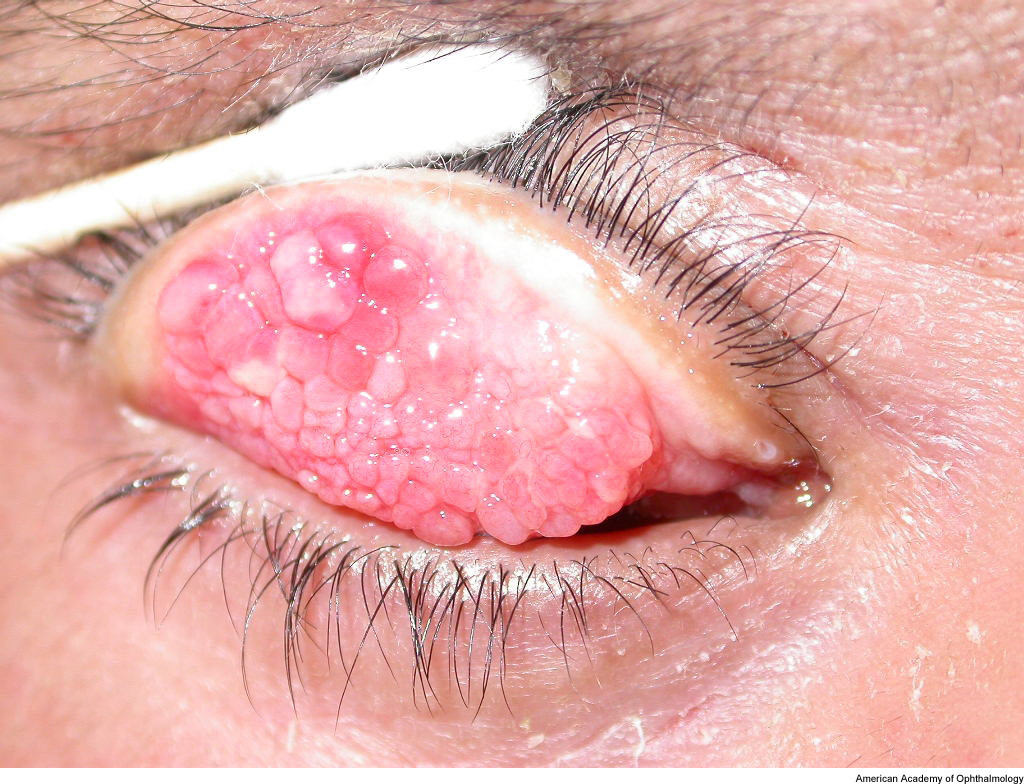
Symptoms of VCC include inflammation of the outer lining of the eye. This leads to reddening of the eyes and can cause blurred vision. The eyes become sensitive to light and itch a lot. Usually both eyes are affected, and bump-like changes appear on the lining of the upper eyelid (fundus conjunctiva). Photo). In other patients, a yellowish nodule may develop in the tissues adjacent to the cornea (limbus). In very severe cases, scars (protective ulcers) or clouding of the lens may appear on the cornea (
cataract), which will lead to temporary or irreversible deterioration of vision.Causes and risk factors
The cause of spring catarrh is hypersensitivity or allergic reaction airborne allergens. Pathogenesis eye allergies associated with a complex exchange of information between tissues through intercellular communication, chemical mediators, cytokines and adhesion molecules. It is also possible that the nervous and endocrine systems can influence ocular allergic reactions.
Read also:Anisocoria: what is it, causes, symptoms, treatment
The longer the patient suffers from seasonal VKK, the higher the likelihood of chronic development of the disease. That is why it is important to diagnose as soon as possible and cure the disease as soon as possible.
Affected populations
Onset of vernal keratoconjunctivitis usually occurs around 11 years of age, but can appear between 3 and 25 years of age. The disease affects more men than women. Typically, patients with vernal catarrh have a family history of atopic diseases such as asthma, eczema, or rhinitis. Most often, the disease occurs in spring or summer, but in 60% of patients it recurs periodically in winter. WCC occurs more in dry and warm climates.
Symptomatic disorders
Symptoms of the following disease may be similar to those of vernal keratoconjunctivitis. Comparisons can be useful for differential diagnosis.
Conjunctivitis or red eye syndrome is caused by an infection of the outer lining of the eye and eyelids, as a result of bacteria or viruses. The eyes become red and irritated, and there is a gritty or burning sensation. The disease may follow cold or sore throat and is most common in children. You can see sticky pus in the eye, which can cause the eyelids to stick together. Red eye syndrome is highly contagious.
Diagnostics
Diagnosis of vernal keratoconjunctivitis is usually straightforward and almost always the disease can be diagnosed based on signs and symptoms. However, atypical patients or patients with incomplete VKK can be more difficult to diagnose. Have asthma or dermatitis also helps to confirm the diagnosis of VKK.
Complex cases of VKK can be diagnosed and treated with conjunctival scraping, demonstrating the presence of infiltrating eosinophils.
Standard treatments
Spring catarrh usually resolves early in puberty and treatment is prophylactic and therapeutic. To prevent flare-ups, the allergic agent should be avoided whenever possible. It is also recommended to wear dark sunglasses during the daytime, to avoid getting dust and not to go outside on hot days. Mast cell stabilizing eye drops can be used early in the season or at the first sign of a flare-up to prevent severe symptoms.
Read also:Iridocyclitis
Topical eye drops are generally preferred as the first treatment. Cold compresses, artificial tears, and ointments can also soothe, lubricate, and dilute the antigen. Topical antihistamines, which cause narrowing of the blood vessels and ducts, may help. Mast cell stabilizers may prevent further flare-ups of the disease or may help control flare-ups, but do little to reduce the symptoms of vernal catarrh. Non-steroidal anti-inflammatory drugs (NSAIDs) can relieve symptoms in mild cases, but topical steroids should be used in more severe cases. Topical steroid drugs are the most effective therapy for moderate to severe vernal keratoconjunctivitis; however, their use should be carefully monitored as prolonged use may cause glaucoma. Cyclosporine eye drops may also be helpful.
It is important to start VKK treatment immediately after receiving the diagnosis, as the longer the patient suffers disease, the worse the visual function and the likelihood of developing cataracts or permanent blindness.
Several prescription medications are also available to treat vernal keratoconjunctivitis, such as the orphan drug cromolyn sodium. Cromoline reduces the signs and symptoms of VKK.
Lodoxamide tromethamine (alomid ophthalmic solution) and levocabastine have been approved by the US Food and Drug Administration (FDA) for the treatment of VKK.
Oral administration of montelukast (Singular), a drug commonly prescribed for asthma, has been shown to be an effective treatment for VKK.
Forecast
Spring keratoconjunctivitis (VKK) usually resolves spontaneously after puberty without any additional symptoms or visual complications. However, the development of corneal ulcers (in about 9.7% of patients), cataracts or glaucoma can potentially cause irreversible loss of vision. Complications usually arise from accidental scarring of the cornea and uncontrolled use of topical corticosteroids. In some patients, symptoms may persist beyond childhood, which in some cases may mean a transition to the adult form of atopic keratoconjunctivitis. This endurance reaches 12% in adulthood.
Read also:Eales disease
It is very important to start treatment immediately after the diagnosis of VKK, because the longer a person has complications caused by this disease are observed, the higher the likelihood of developing cataracts or constant blindness.
Lilia Khabibulina/ article author
Higher education (Cardiology). Cardiologist, therapist, functional diagnostics doctor. I am well versed in the diagnosis and treatment of diseases of the respiratory system, gastrointestinal tract and cardiovascular system. She graduated from the academy (full-time), she has a wide experience of work.
Specialty: Cardiologist, Therapist, Physician of functional diagnostics.
More about the Author.