Williams syndrome: what is it, symptoms, photos, treatment, prognosis
Content
- What is Williams Syndrome?
- Signs and symptoms
- Causes
- Affected populations
- Symptomatic disorders
- Diagnostics
- Standard treatments
- Forecast
What is Williams Syndrome?
Williams syndrome (Williams), also known as Williams-Beuren syndrome, elf face syndrome is a rare genetic disorder characterized by growth retardation before and after birth (delayed intrauterine and postpartum height), short stature, varying degrees of mental retardation and characteristic facial features, which, as a rule, become more pronounced with age. Such facial features may include a round face, full cheeks, thick lips, a large mouth that is usually kept open, and a wide nose bridge with nostrils widened forward. Patients may also have unusually short eyelid folds (palpebral fissures), wide eyebrows, a small lower jaw, and protruding ears. Dental abnormalities can also occur, including abnormally small, underdeveloped teeth (hypodontia) with small, thin roots.
Williams syndrome can also be associated with heart disease, abnormally elevated blood calcium levels in early childhood (infantile hypercalcemia), musculoskeletal disorders and other defects. Cardiac disorders can include disruption of normal blood flow from the lower right chamber (ventricle) of the heart to the lungs (stenosis pulmonary artery) or abnormal narrowing over a valve in the heart between the left ventricle and the main body artery (supraclavicular stenosis aorta). Musculoskeletal disorders associated with Williams syndrome may include funnel-shaped deformity of the chest skeleton (sunken chest or "shoemaker's chest"), abnormal bending of the spine from side to side or front to back (scoliosis or kyphosis), or awkward gait. In addition, most affected individuals have mild to moderate mental retardation; weak visual-motor integration skills; friendly, sociable, talkative manner of speech; short attention span; and easy distraction.
In most people with Williams syndrome, the disease occurs spontaneously for unknown reasons (sporadically). However, familial cases have also been reported. Sporadic and familial cases are thought to result from the deletion of genetic material from adjacent genes (contiguous genes) in a specific region of chromosome 7 (7q11.23).
Signs and symptoms
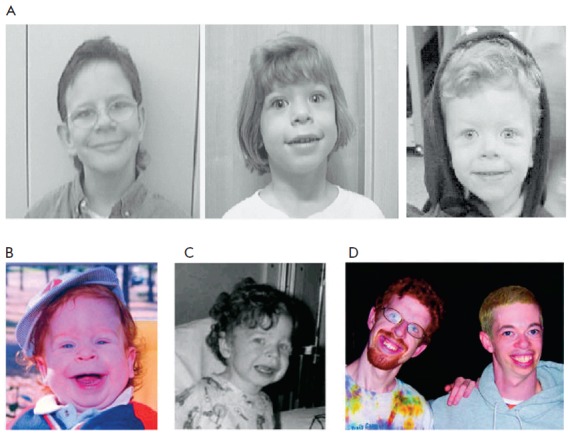
Williams syndrome is characterized by a wide range of symptoms and physical characteristics that vary greatly in range and severity, even among members of the same family. People with Williams syndrome will not have all of the symptoms listed below. Some patients have no heart abnormalities; others may not have elevated levels of calcium in the body (hypercalcemia). In addition, the severity of these symptoms often varies greatly from case to case.
Some babies with Williams syndrome may be low birth weight, have poor nutrition, and may not gain weight or grow at the expected rate (inability to develop). Symptoms such as nausea, vomiting, diarrhea and constipationare often found in infancy. Some affected infants may have elevated blood calcium levels (hypercalcemia), resulting in loss of appetite, irritability, confusion, weakness, easy fatigue, and / or abdominal and muscle pain. Calcium levels usually return to normal around 12 months of age. However, in some cases, hypercalcemia can last until adulthood. Linear growth may be delayed during the first four years of life. However, growth spurt usually occurs between the ages of 5 and 10. Most patients with Williams syndrome are shorter than average in adulthood.

Babies with Williams syndrome have characteristic "elven" facial features, including:
- an unusually small head (microcephaly);
- full cheeks;
- unusually wide forehead;
- puffiness around the eyes and lips;
- depressed bridge of the nose;
- wide nose and / or unusually wide eyebrows;
- puffiness around the eyes and lips;
- wide and pronounced open mouth (see. photo above).
Additional features may include a vertical fold of skin at the inner corners of the eyes (epicantal folds), a small, pointed chin, protruding ears, and / or an unusually long vertical groove in the center of the upper lip (groove). Some babies with Williams syndrome may have dental abnormalities, including tooth deformities (such as hypoplasia enamel), small teeth (microdontia), and upper and lower teeth that do not meet properly (incorrect bite).
Read also:Kawasaki disease (syndrome)
A star-shaped (star-shaped) pattern on the iris of the eye may be evident in about 50 percent of children with this condition. It is most pronounced in babies with blue or green eyes. This pattern may be more difficult to see in children with dark eyes, or it may be missing. Infants who are ill may also have inward deviation of the eyes (esotropia) and hyperopia (hyperopia).
Children with Williams syndrome are extremely sensitive to sound and may overreact to unusually loud or high-pitched sounds (hyperacusis). Chronic middle ear infections (otitis media).
Motor development (eg, sitting and walking) and / or gross and fine motor skills (eg, lifting an object) may be delayed. The development of secondary sexual characteristics (for example, pubic and armpit hair) may occur prematurely (premature puberty) in children with this disease. In women with Williams syndrome, breast development and menstruation may occur earlier than expected. People with this disorder may also have an unusually hoarse voice.
Congenital heart defects (CHD) occur in about 75 percent of children with Williams syndrome. The most common defect is supravalvular aortic stenosis, a condition characterized by narrowing of the aorta over the aortic valve. The aorta is the main artery of the vascular system. Blood flows from the left ventricle of the heart through the aortic valve to the aorta. In supravalvular aortic stenosis, the area above the aortic valve becomes unusually narrow. Symptoms may include:
- dizziness;
- fatigue;
- chest pain;
- unusual heart tones (heart murmur)
- temporary loss of consciousness (fainting).
The degree of narrowing of the aorta can vary from person to person.
Additional congenital heart defects associated with Williams syndrome may include pulmonary stenosis and / or septal defects. Abnormally high blood pressure (arterial hypertension) is also common in adults with this condition.
Children with Williams syndrome are usually friendly, outgoing, and / or talkative. Some children with this disorder use words correctly and have unusually rich vocabulary. Mild to moderate mental retardation is possible. However, some children are of average intelligence with severe learning disabilities. Also common hyperactivity and attention deficit disorder, although most patients have good long-term memory. Some people affected may have vision problems; they can see the image in parts rather than the whole.
Older children and adults with Williams syndrome may develop progressive joint problems that limit their range of motion. Skeletal abnormalities such as back curvature of the spine (lordosis), front to back (kyphosis) and from side to side (scoliosis). Some people may have a funnel-shaped deformity of the chest skeleton (sunken chest) and an outward deviation of the big toe (hallux valgus). Skeletal and articular abnormalities can lead to abnormal gait (awkward gait). Skeletal abnormalities can worsen with age.
Some people with Williams syndrome may have additional abnormalities, including renal abnormalities, chronic urinary tract infections, an underdeveloped (hypoplastic) thyroid gland, and umbilical or inguinal hernia.
Causes
Most cases of Williams syndrome occur spontaneously (sporadically) for unknown reasons. However, some familial cases of the disease have also been reported. Current research indicates that sporadic and familial Williams syndrome results from deletions genetic material from adjacent genes (contiguous genes) located on the long arm (q) of chromosome 7 (7q11.23). This chromosomal region has been designated "Williams-Beuren syndrome chromosomal region 1" (WBSCR1).
Chromosomes present in the nucleus of human cells carry genetic information for each person. Pairs of human chromosomes are numbered 1 through 22, and an additional 23rd pair of sex chromosomes includes one X chromosome and one Y chromosome in males and two X chromosomes in females. Each chromosome has a short arm, indicated by the letter "p", and a long arm, indicated by the letter "q". Chromosomes are further subdivided into many numbered bands. For example, "chromosome 11p13" refers to lane 13 on the short arm of chromosome 11. The numbered stripes indicate the location of the thousands of genes present on each chromosome.
Read also:Lesch-Nihan syndrome
According to the researchers, 28 genes in chromosomal region 7q11.23 may play a causal role in Williams syndrome, including those known as the gene ELN (elastin), gene LIMK1 (or LIM-kinase-1) and gene RFC2 (replication factor C subunit 2). It is believed that the gene LIMK1 associated with visual-spatial problems associated with Williams syndrome.
In familial cases, Williams syndrome is inherited in an autosomal dominant manner. Genetic diseases are determined by two genes: one from the father and the other from the mother. Dominant genetic disorders occur when only one copy of an abnormal gene is needed for a disease to appear. The abnormal gene can be inherited from either parent, or it can be the result of a new mutation (gene change) in an affected person. The risk of passing the abnormal gene from the affected parent to the offspring is 50% with every pregnancy, regardless of the gender of the child born.
Hypercalcemia, which is associated with some cases of Williams syndrome, may result from abnormal sensitivity to vitamin D.
Affected populations
Williams syndrome is a rare condition that affects men and women in equal numbers, and children of any race can be affected. The prevalence of the disorder is approximately 1 in 10,000–20,000 births.
Symptomatic disorders
Symptoms of the following conditions may be similar to those of Williams syndrome. Comparisons can be useful for differential diagnosis:
- Noonan syndrome - a rare genetic disorder that usually manifests itself at birth (congenital). The disorder can have a wide range of symptoms and physical characteristics that vary greatly in range and severity. In many affected individuals, associated abnormalities include a characteristic facial appearance; wide or webbed neck; low hairline at the back of the head; and short stature. Characteristic head and facial (craniofacial) abnormalities may include wide-set eyes (ocular hypertelorism); Vertical folds of skin that can cover the inner corners of the eyes (epicantal folds) drooping of the upper eyelids (ptosis); small jaw (micrognathia); low bridge of the nose; and low-set, protruding, mis-angled ears. Characteristic skeletal malformations such as chest abnormalities and curvature of the spine (kyphosis and / or scoliosis) are also commonly present. Many babies with Noonan syndrome also have heart defects, such as an impaired flow of blood from the lower right heart chamber to the lungs (pulmonary valve stenosis). Additional abnormalities may include malformations of certain blood and lymph vessels, blood clotting and platelet deficiency, moderate mental retardation, inability of the testicles to descend into scrotum (cryptorchidism) by the first year of life in male patients and / or other symptoms and signs.
- Idiopathic infantile hypercalcemia characterized by an increase in blood calcium levels in a newborn for which there is no obvious cause (idiopathic). Symptoms may include loss of appetite (anorexia), irritability, confusion, weakness, easy fatigue and / or pain in the abdomen and muscles. Some studies in the medical literature question whether idiopathic infantile hypercalcemia as a separate disorder from Williams syndrome or a variant of the same diseases. Babies with this form of the disease do not have the characteristic facial features or heart defects associated with Williams syndrome.
- Leprehaunism (Donahue syndrome) is a rare progressive hereditary endocrine disorder characterized by overgrowth (hyperplasia) pancreas, failure to use correctly insulin (insulin resistance) and excessive amounts of estrogen. Growth retardation begins during intrauterine development of the fetus. Symptoms of Donahue syndrome can include short arms and legs, large arms, an elven face, sunken cheeks, a pointed chin, a flat wide nose, low-set ears, and wide-set eyes. Children with leprechaunism usually have low circulating glucose levels (hypoglycemia) and increased insulin levels (hyperinsulinemia). People with this condition cannot use insulin effectively.
The following disorders may be associated with Williams syndrome as secondary diseases. They are not needed for differential diagnosis:
- Pulmonary artery stenosis - A rare congenital heart disease characterized by an unusual narrowing of the vessel that carries blood from the right ventricle of the heart to the lungs (pulmonary artery). This defect usually occurs in association with other heart defects such as septal defects and / or supravalvular aortic stenosis. Symptoms may include unusual heart sounds (murmurs), difficulty breathing, chest pain, and, in severe cases, congestive heart failure.
- Ventricular septal defects - heart defects that are present at birth (congenital) and can occur in any part of the interventricular septum. The size and location of the defect determines the severity of the symptoms. Small defects of the interventricular septum may disappear on their own or become less significant over time. Medium-sized defects can cause congestive heart failure, resulting in abnormally high breathing rates (tachypnea), wheezing, unusually rapid heart rate (tachycardia), liver enlargement and / or developmental delay. Large ventricular defects can cause life-threatening complications in infancy.
- Attention Deficit Hyperactivity Disorder - childhood behavioral disorder characterized by short attention span, excessive impulsivity, and inappropriate hyperactivity. This disorder usually occurs before the child is 4 years old. In some cases, the diagnosis cannot be diagnosed until the child starts school. Symptoms can vary with environmental factors and usually get worse when constant attention is required. Symptoms usually improve with frequent reinforcement in a structured environment without distractions.
Read also:XYY syndrome
Diagnostics
The diagnosis of Williams syndrome can be confirmed by careful clinical evaluation, which includes detailed the patient's history and specialized blood tests that may reveal elevated calcium levels in blood. Another test, known as fluorescence in situ hybridization [FISH method], can be used to determine if there is a deletion of one elastin gene on chromosome 7. It is believed that this deletion occurs in the majority of patients with Williams syndrome.
Standard treatments
Infants with Williams Syndrome who have elevated blood calcium levels may be switched to a restrictive diet vitamin D. Calcium intake can also be limited. Children with severe hypercalcemia can be treated temporarily corticosteroids (for example, prednisone). By about 12 months of age, calcium levels usually return to normal, even in untreated infants. It is recommended that children with Williams syndrome also be evaluated by an endocrine specialist (endocrinologist).
Affected children with symptoms associated with heart defects should undergo a comprehensive examination at a hospital familiar with these rare congenital heart defects. Specialized examinations (eg, ECG, echocardiogram, or cardiac catheterization) may be done to determine the severity and exact location of congenital heart defects. Some children with the syndrome who have severe heart defects may need surgery to correct the defects.
Centers for children with developmental disabilities and special education services in schools can be helpful for children with Williams Syndrome in unleashing their personal potential. A supportive team approach can also be helpful, including speech and language therapy, occupational and physical therapy, social services, and / or vocational training. Music therapy has been promoted, although it has not been proven to provide improved learning and anxiety relief in people with Williams syndrome.
Genetic counseling can be beneficial for people with the syndrome and their families. Other treatments are symptomatic and supportive.
Forecast
Williams (Williams) syndrome cannot be cured, but many symptoms can be managed. It is important to seek medical attention if someone suspects Williams syndrome. Some patients with may have a short life expectancy due to complications of the disease (for example, cardiovascular disease). There are no specific studies on life expectancy, although patients have been reported to live up to 60 years of age.