Kallman syndrome: what is it, symptoms, treatment, prognosis
Content
- What is Kallman Syndrome?
- Signs and symptoms
- Causes and risk factors
- Epidemiology
- Pathophysiology
- Diagnostics
- Treatment
- Forecast
- Complications
What is Kallman Syndrome?
Kallman syndrome (Kalman syndrome, SK) is a congenital form of hypogonadotropic hypogonadism (HH), which is manifested by hyposmia (decreased sense of smell) or anosmia (complete loss of smell). This decrease in gonadal function is due to a failure in the differentiation or migration of neurons that arise embryologically in the olfactory mucosa, transferred to the hypothalamus, acting as neurons of gonadotropin-releasing hormone (GnRG). Deficiency of the hormone GnRH leads to a decrease in the level of sex steroids, which leads to insufficient puberty and the absence of secondary sexual characteristics. The typical diagnosis is when a child's puberty is delayed. The disease, first described in 1944, is a rare pediatric genetic disorder that affects an estimated 1 in 48,000 people. Treatment includes lifelong hormone replacement therapy. However, treatment for male infants may include early hormone therapy or surgery to correct undescended testes (
cryptorchidism). Unfortunately, these patients have an increased risk of developing osteoporosis due to decreased production of sex hormones and are often prescribed supplements vitamin D and bisphosphonates.Kallman syndrome, like other conditions of hypogonadotropic hypogonadism (HH), is characterized by reproductive characteristics focused on insufficient puberty during puberty period. These signs may include insufficient testicular development due to testicular volume in men and an inability to start menstruation (amenorrhea) among women. Poorly defined secondary sex characteristics can include lack of pubic hair and underdeveloped breasts. Micropenis may also be present in a small proportion of males, whereas cryptorchidism may be present at birth. All of these traits are associated with low luteinizing hormone (LH) levels and follicle-stimulating hormone (FSH), which, as a result, leads to low testosterone in men and estrogen and progesterone in women.
In addition to the reproductive deficits characteristic of hypogonadotropic hypogonadism, there will also be other non-reproductive signs are present, which are often defects of the embryological origin. Kallman's syndrome is defined by an additional manifestation of anosmia or hyposmia. Approximately 60% of patients with GnRH deficiency have a sense of smell impairment and can be identified as having KS. cleft palate and lip, hypodontia, and cleft hands or feet, and unilateral renal agenesis is also common. Cerebral disorders may also be present, including central auditory disorders, mirror hand movements (synkinesis), and ataxia. Color blindness and eye glass defects were also observed.
Read also:Werner's syndrome
Signs and symptoms
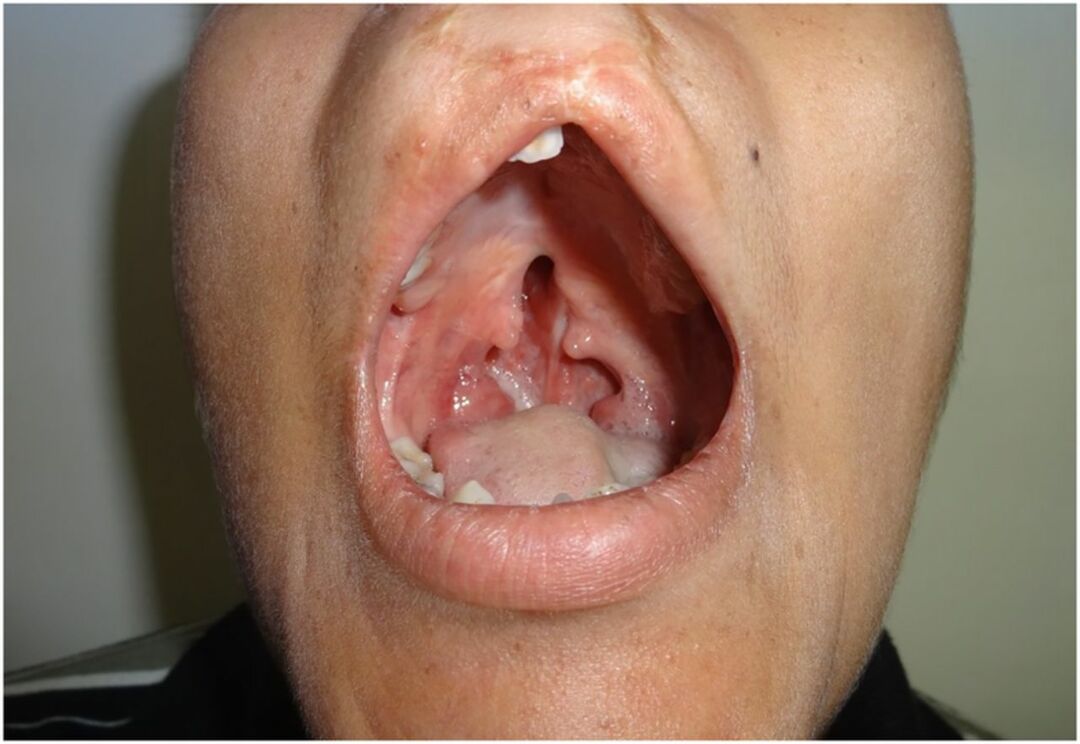
Most cases are diagnosed during puberty due to lack of puberty, but it is also possible suspect Kalman syndrome in infancy in men with cryptorchidism, micropenis or related non-reproductive signs. The main clinical signs are the absence of complete spontaneous puberty and partial or complete impairment of the sense of smell (anosmia) in both sexes. Untreated adult males typically have decreased bone density and muscle mass, decreased testicular volume (<4 ml), erectile disfunction, decreased libido and infertility. Untreated adult women almost always experience primary amenorrhea with absence, weak or normal breast development. Rare manifestations include unilateral (sometimes bilateral and fatal at birth) renal agenesis, hearing impairment, cleft lip or palate, bimanual synkinesis, agenesis of the teeth, persisting after childhood.
Causes and risk factors
In fact, Kalman syndrome is the result of a defect in the hypothalamic GnRH neurons or their differentiation and migration into the hypothalamus during embryonic development. The cause of this condition is hereditary, but can be the result of many different genetic mutations. Mutations in about 40 different genes have been reported to be associated with hypogonadotropic hypogonadism (HH), including Kalman syndrome, and have little variation in secondary traits. The most common defects associated with SC are in genes ANOS1 and FGFR1, but approximately 35 to 45% of cases are not explained by currently identified genetic abnormalities. Clinical genetic testing can be used to identify specific genes involved in an individual patient.
Of particular interest is the gene KISS1, encoding the kisspeptin signaling molecule. Kisspeptin is a potent initiator of gonadoliberin (GnRH) production in the hypothalamus and is known to be influenced by environmental factors.
Epidemiology
One study of Kallman syndrome in Finland estimated the incidence of KS in that country as 1 in 48,000. The condition is hereditary and has an X-linked recessive inheritance, which leads to an increase in its prevalence in men. This disease affects approximately 1 in 30,000 men and 1 in 125,000 women.
Read also:Parathyroid adenoma
Pathophysiology
The KISS1 / Kiss1 gene, which encodes the hormone kisspeptin, is a well-known reproductive hormone regulator that specifically acts upstream of GnRH. Studies show that in some cases of HH patients have deletions and point mutations in KISS1R. The kisspeptin neural network is located in the preoptic and infundibular nuclei of the hypothalamus, respectively. This elegant neural circuit regulates human puberty and reproductive functions by signaling the secretion of GnRH, subsequently controlling FSH and LH. The null nerve (nerve 0, terminal nerve) is described in the literature as a harmless neuroanatomical structure, associated with gonadoliberin and potentially involved in the regulation of reproductive functions and behavior person. Perhaps nerve null GnRH axons not only play a critical role in development and differentiation hypothalamic-pituitary-adrenal axis, but can also trigger conceptually disturbing endocrinological responses independently or together with the neural circuit of kisspeptin.
Diagnostics
Medical history and genetic testing often reveal many of the underlying reproductive characteristics of hypogonadotropic hypogonadism (HH). described above, along with non-reproductive features that help differentiate forms of HH, such as Kallman syndrome with a characteristic deficiency smell.
Treatment
Standard forms of treatment include hormone replacement therapy, which is usually tailored to the clinical needs of patients. As a rule, after diagnosis in both sexes, treatment is aimed at stimulating puberty and maintaining normal hormonal levels. Subsequently, treatment may be required to stimulate fertility in order to achieve pregnancy.
In men, puberty usually begins with testosterone therapy, and various testosterone preparations are currently available for this purpose. The most commonly used treatments include testosterone injections given intramuscularly every 2 or 3 weeks depending on the specific injection) or topical testosterone preparations (patches, gels, liquids, etc.) etc.). After the onset of puberty, testosterone therapy is continued to maintain secondary sexual characteristics, as well as to normalize the biochemical levels of testosterone in the blood. When fertility is desired, gonadotropin therapy (HCG and human menopausal gonadotropin [hMG] or recombinant FSH [rFSH]) to stimulate testicular growth and initiate sperm production (spermatogenesis). Usually, semen is rarely found in semen analysis until the volume of the testicles reaches at least 8 ml. Most individuals with isolated gonadotropin-releasing hormone (GnRH) deficiency without a history of cryptorchidism testes), sperm function is usually normal, and conception can occur even with a relatively low number sperm.
Read also:Metachromatic leukodystrophy
In women, estrogen and progestin therapy is used to induce secondary sexual characteristics, while therapy gonadotropins or pulsatile gonadoliberin can be used to stimulate the production of mature eggs (folliculogenesis). If spontaneous pregnancy has not occurred despite normal folliculogenesis, may be considered the possibility of in vitro fertilization, while the rate of conception is approximately 30% per ovulatory cycle.
Besides treatment hypogonadismAttention should be paid to possible deterioration in bone health that could result from periods of low circulating sex hormones. Depending on the history (time of puberty, duration of hypogonadism, and other risk factors for osteoporosis (eg, excess glucocorticoids, smoking) and bone mineral density measurements, specific treatment for bone loss should be considered. masses.
Finally, it is really important to recall that since ~ 10-15% of male patients had a change hypogonadism, patients with isolated GnRH deficiency should be evaluated sequentially to prove reversibility of the state. Signs indicating reversibility include: an increase in testicular volume despite testosterone therapy, and a normalization of testosterone levels without adequate hormone replacement.
Forecast
Kallman syndrome by itself is not associated with decreased life expectancy, but a possible link with heart disease, osteoporosis and decreased fertility can separately affect the health and life expectancy of the patient.
Complications
In a small group of patients with Kallman syndrome, various congenital heart defects have been reported along with osteoporosis. It is also possible a malformation of the bones, which is found at birth, for example, a cleft palate. Dry skin is also a potential complication of hypogonadal conditions such as Kalman syndrome. Insufficiency of the adrenal cortex also occurs in infancy or childhood.