
Temperature with hemorrhoids: can it be and what to do
Hemorrhoids are a dangerous vascular disease. Represents varicose vascular plexus in the small pelvis. Blood stagnation occurs. The patient feels pain, itching in the anus. Bleeding from varicose veins develops. The temperature for hemorrhoids rises to 40 degrees Celsius.
Content
-
1 Why does the temperature rise
- 1.1 Chronic temperature
- 1.2 Body temperature in acute hemorrhoids
- 1.3 Temperature with complications
- 2 Features of temperature rise in acute hemorrhoids
- 3 Elevated temperature in a chronic form of the disease
- 4 Fever with complications of hemorrhoids
- 5 Increased temperature in the postoperative period
Why does the temperature rise
Is the temperature acceptable for hemorrhoids is a complex nuance that requires a deep approach. Hemorrhoids in uncomplicated form occurs with normal body temperature. The reasons for the rise in temperature are the development of complications. To determine the tactics of patient management, the proctologist prescribes a full examination.
Chronic temperature
If the patient has a chronic form of the course of the disease, the temperature remains normal. The increase accompanies acute, complicated forms of the disease.

Body temperature in acute hemorrhoids
The acute form of the disease is accompanied by the development of edema in the perineal region, the formation of cones of considerable size. In the first days, the general body temperature may increase, the basal temperature in women. Pain, swelling, redness develops in the perineal area. An infection can quickly join - leads to the development of proctitis, paraproctitis.
Conditions increase with signs of intoxication. When examining a patient with a temperature, changes in laboratory and clinical analyzes are recorded. The number of leukocytes in the blood increases, and biochemical parameters change. In the analysis of feces, traces of blood are found.
Temperature with complications
Paraproctitis (pararectal abscess) develops as a complication. It is accompanied by an increased temperature. It is required to seek help from doctors-proctologists. Doctors clarify the patient's condition, answer whether the temperature is permissible.
Features of temperature rise in acute hemorrhoids
- The temperature of hemorrhoids rises in different stages of the disease. With a complicated form of the course of the disease, sepsis develops.
- With purulent inflammatory processes, the temperature rises to 38 degrees and above. There are pronounced signs of local inflammation. Treatment of processes is allowed surgically. In the postoperative period, treatment with antibiotics, anti-inflammatory drugs is required.
- If cracks have formed in the mucous membrane in the anal area, an infection enters the body through them. The development of the inflammatory process leads to the formation of thrombosis of the venous plexuses of the rectum. In this case, the patient's temperature rises above 38 degrees.
- The inflammatory process can be aggravated when the patient neglects the diet, has bad habits. The deterioration of the condition occurs after increased physical exertion - lifting weights, hard work. Temperatures rise above 39 degrees Celsius.
- At acute hemorrhoids the person feels acute pain. Increased when going to the toilet. With constipation, it becomes painful.
- The first signs of exacerbation in hemorrhoids are accompanied by an increase in temperature to 37 degrees. Chills in the body, headache, malaise join. The rise in temperature depends on the condition of the patient.
If you do not seek help, microcracks and ulcerations form on the hemorrhoids. A secondary infection quickly joins, a purulent-inflammatory process, thrombosis develops.
In advanced cases, thrombosis of hemorrhoidal veins can cause necrosis of individual sections of the vascular plexus.
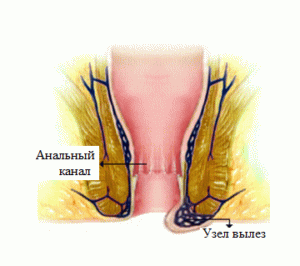
Hemorrhoidal vein thrombosis
Heavy complication of hemorrhoids - a purulent-inflammatory process in the tissue surrounding the rectal area. The disease is accompanied by an increase in temperature to high numbers. If you do not start treatment, the resulting pus will drain into the pelvic cavity. Will lead to the development of peritonitis, sepsis. Complications are caused by a neglected untreated form of the disease.
Complication requires immediate surgical intervention, general detoxification measures. Intensive detoxification therapy, broad-spectrum antibiotics are prescribed. Otherwise, it will be fatal.
Elevated temperature in a chronic form of the disease
The chronic form is characterized by a sluggish course with a small number of symptoms. The deterioration of the condition is accompanied by an increase in temperature. In case of violation of the diet, the use of spicy, salty food, alcohol, heavy physical exertion, men develop acute pain, edema in the perineal region. If you adhere to the recommendations of the proctologist, avoid overexertion - deterioration will be prevented.
Fever with complications of hemorrhoids
With an exacerbation of the disease, sepsis often develops. The temperature reaches 40 degrees. Symptoms of intoxication are noted. Local changes due to hemorrhoids consist in the formation of a focus of hyperemia, edema in the perineal region. The skin becomes hot, tense. The spread of pathogens with blood through organs and tissues is rapidly occurring. The disease requires immediate surgical intervention. An experienced proctologist will decide how to stop the development of the pathological process quickly.
Dangerous complication of hemorrhoids paraproctitis is considered. The inflammatory process begins to spread to adjacent organs, tissues, and affects the pelvic tissue. Purulent inflammation develops rapidly. The normal intestinal microflora is replaced by pathogenic flora - staphylococci, streptococci.
Hot flashes are followed by chills. Fever is accompanied by general symptoms of malaise - weakness, headache, profuse sweating. The disease is treated by surgery. Attempts to self-medicate, the use of folk remedies will not lead to the desired result. Prompt removal of pus from the affected area is required. Treatment is carried out with antibiotics, detoxification solutions.
If pus enters the lumen of varicose vessels of the pelvic cavity through cracks, there is a high probability of developing acute thrombophlebitis, thrombosis. In the inflamed vessels, damage to the wall occurs, blood stagnation. Leads to the formation of blood clots. Detachment of a blood clot from the vessel wall poses a serious threat to human health and life. Treatment is allowed by surgery.
Increased temperature in the postoperative period
Conservative treatment for hemorrhoids can only bring results in the early stages of the disease. The doctor prescribes ointments, suppositories with anti-inflammatory, local anesthetic action. In some cases, the treatment of hemorrhoids is effectively an operative way.

Removal of hemorrhoids surgically
During surgery, hemorrhoids of different sizes are removed. Treatment allows you to get rid of the problem of hemorrhoids. In the postoperative period, an increase in temperature is possible for a short time.
During the operation after hemorrhoids, on the first day, the products of tissue decay are resorbed into the blood. Causes a rise in temperature when the patient has had an uncomplicated operation.
Complications develop against the background of surgery for hemorrhoids. With insufficient observance of the rules of asepsis, antiseptics, massive inflammation of the soft tissues develops. Leads to the development of bleeding from the operated vessels. Re-suturing is required. In parallel, antibacterial, anti-inflammatory drugs are prescribed.
The recovery period after surgery requires careful monitoring by proctologists. It is important to identify the reasons for the rise in temperature in order to provide effective assistance. The supervision of an experienced physician can prevent the development of complications of the disease.
If the removal operation was successful, without complications, the fever after removal of the hemorrhoid appears for a short time, does not require additional serious intervention.


