
Dysbacteriosis after antibiotics: why does the disease occur and how to restore the body?
The human body and internal microflora is a highly organized system that self-regulates in case of unforeseen circumstances. It continuously maintains homeostasis, the equilibrium constancy of the environment in motion. Regulation occurs at the metabolic, molecular genetic and cellular levels. Dysbacteriosis after taking antibiotics occurs when pathogenic external factors exceed the threshold adaptive capacity. Minor disturbances and invasions into the body are eliminated spontaneously, without requiring intervention, large invasions force treatment to be started.
System disturbances are most common with antibiotics. Broad-spectrum antibacterial drugs cause irreparable damage to cultured intestinal strains. Against the background of taking antibiotics, the qualitative and quantitative composition of the microflora changes. The consequences affect the cells of the body, change the metabolism. In adults, in 5–25% of cases, diarrhea caused by... the drug is recorded. This is called the antibiotic associated diarrhea. Antibiotics for dysbiosis are also used for treatment, just the therapeutic effect of drugs is directed to other types of bacteria.
Content
-
1 What is an antibiotic
- 1.1 From the history
- 1.2 The first antibiotic
-
2 Why an antibiotic leads to the development of dysbiosis
- 2.1 Natural protection
- 2.2 Experiments on mice
- 2.3 Prevention with lactobacilli
- 3 How an antibiotic treats dysbiosis
- 4 How a doctor chooses a medicine
- 5 What you need to know about dysbiosis
What is an antibiotic
Many patients have encountered antibiotics during treatment; adults sometimes have difficulties understanding the composition and mode of action of these agents. Let's consider the issue in detail. Antibiotics have become an evolutionary measure of defense against microorganisms. Produced by molds from the genus penicilli, other fungi, representatives of the kingdoms of nature. For example, quinine, which made it possible to defeat malaria, is isolated from the plant organism. Antibiotics are produced by individual animals.
From the history
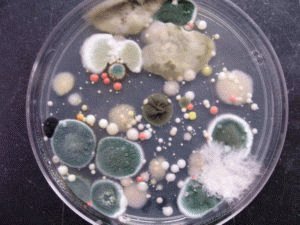
The first to notice the beneficial properties of mold was Potebnov, the grandfather of Russian dermatology. The scientist possessed remarkable knowledge about skin defects, performed the experience:
- He took spores or mold (from penicilli).
- Mixed with oil.
- Smeared with the composition of the ulcer.
- Skin defects healed much faster.
Professor Polotebnov was firmly convinced that bacteria are the product of mold. Microbiology, at the suggestion of Pasteur, took the first timid steps, such delusions are quite forgivable at that time.
Polotebnov explained the acceleration of ulcer healing by the positive activity of mold, arguing that the bacteria produced by mold are not harmful. The experiments of the Russian opponent were repeated by Manassein, proving that mold does not produce bacteria, but he could not explain the positive changes in the treatment of skin diseases.
Polotebnov's experience
In 1877, Louis Pasteur dropped the catch phrase: “Life interferes with life,” implying the struggle of microbes for their habitat. On the basis of such ideas, under the guidance of a scientist, the first drug was developed that acts by combating the metabolites of certain strains with the population of others. It is now unknown who was the first to isolate the waste product of the pathogenic Pseudomonas aeruginosa piacenase, which today causes intestinal dysbiosis, stating that the substance fights against:
- Anthrax.
- Typhoid.
- Diphtheria.
When the drug worked, it would have entered the class of probiotics and antibiotics, but piacinase did not meet the stated criteria. Due to failure, when Gozio obtained the first antibiotic in the modern sense from green mold words - mycophenolic acid - the event went unnoticed, even was criticized by the public. Following Gozio, other people made discoveries, not finding recognition. So, due to a stupid mistake, antibiotics were forgotten for almost half a century.
The first antibiotic
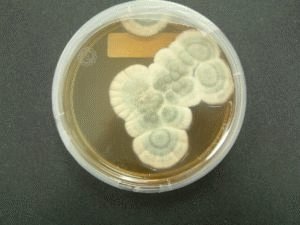
It remains to be wondered how many lives would have been saved during the First World War, had states in their hands such a powerful medicine against bacteria. It is now customary to give the honor of the discovery of the first antibiotic not to Polotebnov, but to the quick-witted Alexander Fleming. In the laboratory, Fleming was researching the culture of staphylococcus for writing a scientific note, unexpectedly noticing the death of a culture near a mold from the genus Penicillium.
Mold of the genus Penicillium
Humanity owes a happy coincidence to this discovery. Many, including Polotebnov, saw a similar result without comprehending the great meaning of what was happening. Think about it - at least 70 years from the history of medicine are lost. Researchers distinguish two eras:
- Until the 40s of the 20th century.
- After the 40s of the 20th century.
The synthesis (in the USSR) of the first penicillin took place. The technique was far from perfect, but already in 1942 it saved the lives of many Soviet soldiers. The meaning of the discovery was Fleming's work with secretions of the nasopharyngeal mucosa, saturated with lysozyme. The scientist observed pictures of suppression of selected relatively harmless cultures by the indicated human antibiotic. There was no great practical sense in such a phenomenon, lysozyme was weak, and powerless against pathogenic flora.
To write a scientific work, very dangerous strains of staphylococcus were grown. Green mold overwhelmed them. Fleming saw a repetition of the picture with lysozyme, seen perhaps hundreds of times, but now a tremendous opportunity opened up for the scientist to fight really dangerous infections. Ironically, the bacteriologist's report again did not arouse interest in the world community. Humanity continued to ignore its own salvation. In fairness, we note that the reason for such a cold reception was the antiseptic - red streptocide - which attracted the attention of scientists.
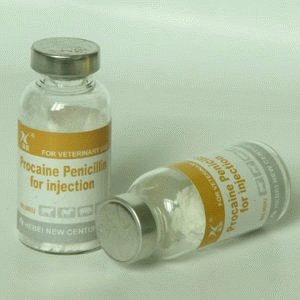
Penicillin owes its birth to World War II. When a raging staphylococcus aureus caused sepsis, the streptocide was only suitable for release, the effect produced was so small. In Britain, then in the USSR, they remembered the experiments with the cultures of Fleming's staphylococcus, having received the first strains of mold that release the necessary medicine. After the war, artificial mutations in the mold population were able to enhance the beneficial qualities hundreds of times. The composition of the medium has changed (the addition of the infusion of sprouted grains of corn sharply accelerated the production process).
The world learned about antibiotics, Fleming received recognition, blood poisoning ceased to lead to high mortality of patients.
Why an antibiotic leads to the development of dysbiosis
It turned out that penicillin destroyed the strains against which streptocide was powerless. Both are antibiotic. How can you explain the difference in action?
Natural protection
Mushrooms are the best way to deal with the threat that they are used to seeing in nature. Apparently, Penicillium fungi in the process of evolution were often annoyed by staphylococci. The effect caused is amazing - getting rid of a person from most of the staphylococci.
Fleming tested a penicillin solution (very weak at the time) on a coworker with sinusitis. The drug managed to cause the death of staphylococci in the sinuses, and Pfeifer's sticks survived. Sinusitis was relieved, but not completely gone. Periodically, strains appear that are resistant to the action of a particular drug.
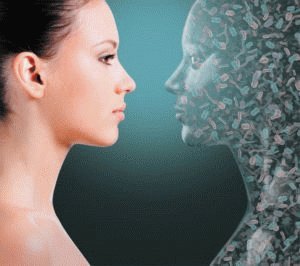
This prompted a search by physicians for means with a maximum spectrum of action, destroying, figuratively speaking, all living things in the microflora. The described group of drugs also causes dysbiosis after antibiotics in a child and an adult. The composition suppresses all bacteria found on the way, even beneficial ones. After this, the mucous membrane is no longer able to recover on its own, it is required to take medicine for dysbiosis.
Experiments on mice
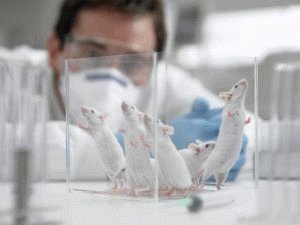
In order not to be unfounded, we will give a description of the experiment staged in the USSR on rats. Were selected 36 white sexually mature specimens. The experiments were divided into three series, three groups of 4 pieces each. The animals were injected with metronidazole and ampicillin for three days, followed by a period of restoration of gastrointestinal tract functions using milk and bacterial strains. The population had clinical manifestations of dysbiosis:
- Constipation.
- Decreased appetite.
- Weight loss.
- Diarrhea.
- Stool change.
The group, regularly eating a sourdough made from special bacteria, got rid of symptoms much faster (up to two days). Animals treated with broad-spectrum antibiotics lost up to 30 g in weight. Bacterial studies have shown the predominance of Klebsiella, Escherichia, Proteus, Clostridia, fungi and other pathogenic and opportunistic flora in the microflora. The introduction of probiotics is marked by the elimination of harmful representatives of the microworld.
Prevention with lactobacilli
Bifidobacteria and lactobacilli create conditions that are unbearable for the existence of pathogenic flora. Taking bifidok during the recovery period after a course of antibiotics has a positive role. A study carried out on rats indicates that in parallel with broad-spectrum antibiotics, it is recommended to take lactobacilli to prevent the state of dysbiosis.
How an antibiotic treats dysbiosis
Most patients are shocked to learn that the pills prescribed by a doctor for dysbiosis are... antibiotics. From this group of drugs just and there were troubles.
The symptoms of dysbiosis are not caused by the disappearance of microflora, but by replacement with a pathogenic one. The vacated space is gladly assimilated by staphylococcus or Proteus. In this case, it is necessary to treat dysbiosis. Until the moment of treatment (subject to simple rules), there is a hope that the flora will be able to recover on its own.
Take a baby, for example. The intestine of a newborn is not as densely populated as that of an adult. The formation of flora occurs through:
- Mother's milk.
- A population of strains on the skin around the nipple.
- Adapted mixtures.
For the reasons listed above, the risk group includes infants with impaired childbirth, early adopters of artificial feeding, who have not seen their mother's breast. A child has nowhere to get a normal microflora. If the baby does not drink the mother's milk, the formation of strains in the intestine is completely disrupted.
Adults in such a case consume kefir, other lactic acid products, yoghurts. After taking antibiotics, it is recommended to supplement the diet with Colibacterin, Bifiform, and other probiotics. Natural food is healthier, its microflora is more resistant to the action of gastric juice. One hundredth of a percent of the number of consumed bacteria reaches the intestines, if you use simple medicines.
If we talk about an antibiotic as a remedy for dysbiosis, we are talking about specific substances aimed at combating Proteus, staphylococcus, Klebsiella and other pathogens dysbiosis. Such drugs have a narrow spectrum of action that does not harm other bacteria in the body.
How a doctor chooses a medicine
Treatment dysbiosis is produced by drugs with directional action. The tool is designed to kill exclusively pathogenic flora. The doctor does not prescribe drugs arbitrarily. Before the treatment of dysbiosis, a bacteriological study of the flora is carried out. In the laboratory, sowing is carried out, identifying the causative agent of the infection, and the resistance of the strain to certain antibiotics is checked. Similar to Fleming's experiments a century ago.
The medicine that better than others coped with the pathogenic flora is prescribed by a doctor. The doctor knows that an antibiotic is not the only component of complex therapy. At the same time, sorbents and probiotics are taken. The diet is being adjusted.
Probiotics are an effective treatment. With the use of drugs, dysbacteriosis is prevented. Probiotic preparations contain microorganisms that form a normal flora (lactobacilli, bifidobacteria). The favorites are found in common foods or dietary supplements. The above microorganisms inhibit the reproduction of pathogenic flora, enhance immunity, stimulate tissue regeneration, and restore the absorption of lipids and carbohydrates. The formation of vitamins begins and the sign of a gastrointestinal tract disorder in a person disappears.
What you need to know about dysbiosis
Prevention of dysbiosis during the period of taking antibiotics consists in the parallel introduction of bifidobacteria and lactobacilli into the diet. Sources can be any, from kefir to specialized preparations. The intake of these cultures significantly reduces the ability of broad-spectrum antibiotics to induce a state of dysbiosis.
After completing the course, taking probiotics accelerates the body's return to normal. Consequently, the use of fermented milk products - which Mechnikov considered a source of youth - normalizes the functions of the gastrointestinal tract.


