Enterofuril with dysbiosis: how to take, will it help?
Should I take Enterofuril for dysbiosis? Mothers of babies are looking for information, because in France, the homeland of medicine, the drug was banned for a certain time. The situation was explained by the opinion of doctors about the drug. Mucous membranes are full of bacteria, they are permanent inhabitants of human tissues. Enterofuril refers to antiseptics, does not penetrate into the bloodstream, it is not recommended to be taken during lactation. The drug is effective against a number of gram-positive and gram-negative bacteria. The harm lies in the fact that not every bacillus on the target list is pathogenic. Some are needed by the body as symbionts or commensals.
Over millions of years, the human body has adapted to the environment of existence, changes in the bacterial background are not required. If the intestines are deprived of one strain, another immediately comes to the empty place. And the process is not always harmless. According to modern recommendations, Enterofuril is not prescribed for children under 2 years of age (in Italy - up to 6 months), is used as a means to fight intestinal infection, which can be
a consequence of neglected dysbiosis. Whether to take Enterofuril, the doctor will decide.Content
-
1 What is Enterofuril
- 1.1 Definition
- 1.2 Chemical and physical properties, pharmacokinetics
- 1.3 Side effects
- 1.4 How to use
- 1.5 Contraindications
- 2 Historical excursion
- 3 True or Fiction?
- 4 Is it necessary, or still not worth it?
What is Enterofuril
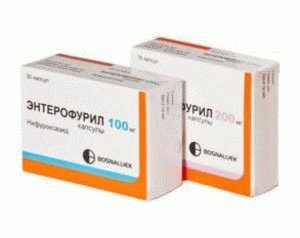
Enterofuril is a bactericidal drug from the nitrofuran class.
Definition
Enterofuril belongs to the antibiotics of the nitrofuran family, made for oral administration. The named group stabilizes the microflora, suppresses individual strains in bulk doses, actively fights against chlamydia, Trichomonas and lamblia. It is used for intestinal colitis, diarrhea.
Chemical and physical properties, pharmacokinetics
Powder of bright yellow color, poorly soluble in water, dichlomethane and alcohol. After ingestion, the gastrointestinal tract is not absorbed. The concentration in the blood reaches 2 μg per 1 ml with an initial amount of 400 mg. If we assume that the amount of blood is 5 liters, 10 mg of the drug is dissolved in the medium. The concentration does not change for 8 hours, then the substance is excreted in the feces.
The toxic threshold is 5 g per kg of body when taken orally. Used to treat and prevent diarrhea.
Side effects
Side effects noticed when taking:
- Dyspepsia.
- Nausea.
- Vomit.
- Stomach ache.
- Allergic reactions (before asthma, Quincke's edema, anaphylactic shock).
- Cases of pancreatitis have been reported.

Published studies have shown that taking large doses of the drug stains feces yellow.
How to use
The therapeutic dose in adults is 200 mg of the drug 4 times a day, up to a week of admission. For children, give 220 mg (equivalent to 5 ml of suspension) every 8 hours.
Contraindications
- Lack of glucose-6-phosphate dehydrogenase.
- Hypersensitivity to nitrofuran or other substances that make up the drug.
- Age restrictions according to the instructions (according to the region, from 3 months to 2 years).
- Breastfeeding and carrying a baby (clinical trials have not indicated a potential hazard, but it is not recommended to use Enterofuril).
- Taking alcohol, drugs (monoamine oxidase).
Historical excursion
A drug called Ercefuril (S-nitrofurfurylidine hydrazide 4-hydroxy-benzoic acid) entered the French market in 1964. After the expiration of the protection period of the product by the US patent US3290213 A (1966 in the name of Morris Ernest Claude Carron), a number of copies appeared under different names. Enterofuril is a Bosnian generic. Other options are available, they are little known in Russia:
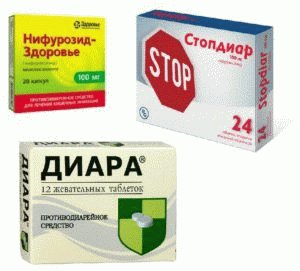
- Stopdiar (Hungary).
- Ersefuril, Antinal, Batsifurna, Ambatrol, Diafuril (France).
- Erfuzid (Thailand).
- Deaks (Egypt).
- Nifroside (Czech Republic, Romania, Russia).
- Endieks (Slovakia).
- Pentofuril (Germany).
- Topron, Enterovid (South America).
- Escapar (Mexico).
- Enterokolin (Bolivia).
- Apazid (Morocco).
- Diarre (Italy).
- Septidiaril.
Since 2000, the use of nifuroxazide has been sharply limited by the scope of rehydration therapy associated with replenishing moisture in a sick body. Some doctors believe that the effectiveness of the drug (more precisely, the ratio between benefits and harms) has not been proven.
It is interesting! Germano Cagliero patented nifuroxazide for raising livestock for slaughter. The use of the drug in the form of an additive allowed calves to grow meat faster with less forage.
True or Fiction?
According to Wikipedia, in 1997 the Ivory Coast (a state in West Africa) was once bombarded with leaflets saying that the drug - Ambatrol - helps from:
- salmonella;
- staphylococci;
- Yersinia (a subspecies of plague pathogens);
- Klebsiella (with excessive reproduction lead to acute gastritis);
- colibacillus;
- shigella (bacterial dysentery).
Organization of Healthy Skepticism Healthy Skepticism) did not find confirmation of the specified information. But those who wish can find the aforementioned patent in the Google repository and see the description of experiments with strains of bacteria at a temperature of 37 degrees Celsius. According to the text, they claim that the new drug in this case is up to 50 times more effective than enteroseptol (it is not recommended to use it in the treatment of infants under the age of 2 years).
According to the organization, the death rate of children on the planet from intestinal infections is estimated at millions of cases every year. Despite the opposition of WHO, in selected countries, mainly developing ones, the promotion of drugs with dubious effectiveness continues. Healthy Skepticism also brought in the popular Russian Smecta (healthyskepticism.org/global/malam/int/mi1997-05_06/), a metronidazole advertised in Pakistan. Enterofuril, thus, is placed in a row with the above drugs.
Is it necessary, or still not worth it?
The prescription is written by a doctor, no one else. In France, the cost of the drug is compensated, there is no reason for doubt. At a price of 300 rubles per package, Russians have doubts. In children, the effect on treatment is ambiguous. The lack of statistical data affects. In France, 10% of diarrhea cases are due to a bacterial cause, there is no reason to assume a medicinal panacea.
An accurate forecast is made on the basis of the bacterial background. The doctor analyzes if there is an excess of strains against which the drug is effective. Otherwise, the reception will cause additional imbalance. A complete analysis of the situation can only be carried out by a doctor. Therefore, for example, a child needs close supervision of adults after the start of treatment with Enterofuril.