Diagnosis of intestinal dysbiosis: how the disease is detected
In domestic practice, diagnostics and microbiology are inseparable from each other. Stool analysis gives an idea of the composition of the flora in the colon. This is where the diagnosis of dysbiosis usually ends. Mothers collect feces from the baby, the doctor makes a diagnosis, a diet is drawn up, mixtures are selected. Anyone who feels itching in the anus can try a similar algorithm of actions. However, dysbiosis has a total effect not only on the gastrointestinal tract. Alopecia, seborrhea sometimes serve as symptoms or are a direct consequence of dysbiosis.
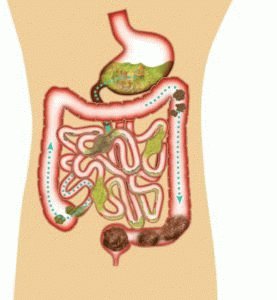
Not every educated person understands that the causes of selected diseases originate in the gastrointestinal tract. Severe dysbiosis is the cause of cancer and other diseases, with the exception of AIDS. For decades, Western schools of medicine have argued that the diagnosis of one colon has no practical meaning. This condition is perceived as a consequence of other diseases. In the Russian Federation, it was proved that dysbiosis in a nursing mother leads to an immediate replenishment of the list of sick with newborn babies (maximum on the third day).
Content
- 1 Microflora
- 2 Research methods
-
3 Bacteriological analysis
- 3.1 Difficult to maintain ideal conditions
- 3.2 The result is inaccurate
- 3.3 Method essence
-
4 GC-MS
- 4.1 Method essence
- 5 PCR diagnostics
- 6 Which analysis to choose
- 7 How to avoid
Microflora
It has been established that the total number of microbes (500 species) in a person reaches ten to the 14th degree, which is an order of magnitude more than the number of cells that make up the body. The overwhelming part of the flora lives in the intestines, with a total weight of 1-2 kg. Traditional bacteriological analysis involves 10-15 species from the mass. The real picture of what is happening in the intestine differs from the analysis result.
Typical signs accompanying the disease, for example, staphylococcal dysbiosis of the intestine, are clearly described. Many diseases are not well understood. Flatulence with dysbiosis is observed in a large number of patients. But the release of gases occurs regularly, a person at any stage of development constantly releases hydrogen and methane. Diagnostics shows that strains that are not part of the normal microflora provoke extensive gas formation, compared with the norm. The mechanism of swelling is poorly understood, the strains causing it have not been determined to date.
It turns out that a person, exploring the ocean and the moon, does not know much about his own body. Not every mother will be able to explain the need to latch on the baby to the breast as early as 2 hours after birth. Thus, there is a transition to the formation of normal intestinal microflora of the newborn.
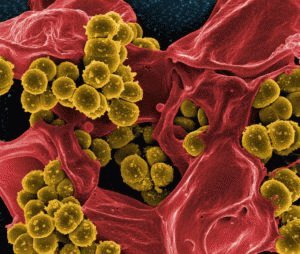
Intestinal microflora
Not surprisingly, diagnostics are poor. When analyzing, it is necessary to take into account the difference in indicators in children under one year old and older children. Ignoring the information will lead to a misdiagnosis. The complete formation of microflora ends at 2 years.
Many reasons for imbalance have been studied. For example, taking antibiotics after surgery. Only one in ten is recognized as absolutely healthy in such conditions.
Research methods
New research methods are constantly emerging. For example, in 2001, Hopkins suggested using a molecular genetic method for hybridizing 16 SrRNAs. The types are determined with high accuracy (which is important), but the laboriousness and complexity of the selection of reagents complicate the research. The molecular method is based on the identification of DNA regions of interacting species using electrophoresis (or in a different way).
The GC-MS method has a lot in common with the above, focuses on a number of fatty acids, the production of which is closely related to the structure of DNA. The set of LCDs is similar to the “fingerprints” of the bacterium under study. It is possible in this way to identify several thousand strains; there are about 500 types of crops in the body. In the last decade, equipment in this area has been serially produced. It remains to draw up a map of the presence of fatty acids in the waste products of certain bacteria.
Today, GC / MS provides information on hundreds of species. Much more than any technique. Accurate identification of pathogens is important for the choice of treatment. As a result, pathologies are revealed: hair loss, excess weight, dermatitis, burning sensation in the anus. A set of strains is recognized that affect the development of pathological conditions. In such cases, accurate diagnosis is important to prevent the development of the disease.
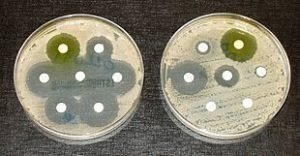
Phage sensitivity study
Phage sensitivity data using GC-MS is extremely difficult to obtain. The collection of readings depends on the sensitivity of the equipment. Under normal conditions, the culture is germinated, destroyed in a certain way (for example, with the help of mushrooms). The study includes the capture of specific substances that are the result of a successful fight, it allows you to make a prognosis of the disease, and provides information whether an influencing factor is effective.
Bacteriological analysis
A smear is taken from the throat when diseases of the respiratory system are detected, blood is donated to assess biochemical parameters, which directly show whether a person is healthy or sick. Diagnosis of intestinal dysbiosis is based on the study of feces. It is difficult to check what is going on in the bowels of the digestive tract in another way. In the west, sowing on nutrient media is considered an unreliable method for the reasons listed.
Difficult to maintain ideal conditions
The correct method for diagnostic stool sampling.
- You need sealed glassware, otherwise the air will kill anaerobic bacteria (an obligate part of the flora).
- Small dishes - the air under the lid will destroy bifidobacteria and lactobacilli.
- Immediately after collecting at least 1 gram of stool, the vessel should be tightly sealed.
- The analysis should be stored at a temperature of +4 degrees for four hours. It turns out that in order to fulfill the condition, the bank must be on the table in the laboratory immediately.
In the west, they soberly assess the capabilities of laboratory assistants. It is known: the discovery of penicillin was due to a similar violation. Alexander Fleming could not stand the ideal conditions for growing the dangerous staphylococcus. Together with the strain, penicillin settled on the nutrient medium.
The result is inaccurate
Stool sampling provides information about the microflora of a specific part of the colon. It is advisable to analyze the mucosal part of the flora, which is not cavity, as is often the case in the case of feces examination. The processes of the formation of vitamins and the absorption of trace elements take place directly in the mucous membrane. Among other things, the bacteria in the feces are predominantly dead.
For these reasons, traditional fecal seeding is not the best method.
Method essence
The bottom line is sowing excrement on a nutrient medium. There are many bacteria, for each species the environment is individual. According to the growth rate of the strain, conclusions are drawn about the initial number, operating in tables of norms. Checking the data, a diagnosis is made (deviations of the population to a smaller or larger side).
In conclusion, the detected opportunistic flora is analyzed for sensitivity to antibiotics, and an effective course of treatment is prescribed. In the complex, such activities are limited to bacteriological diagnosis of intestinal dysbiosis.
GC-MS
Gas chromatography combined with mass spectrometry provides a diagnostic advantage of up to 5 hours. It happens ten times faster than growing excrement. The technique does not search for live bacteria, it is aimed at detecting microflora metabolites, which simplifies the process of collecting analyzes. The operation itself becomes cheaper, since there is no need to purchase expensive (mainly pathogenic) microflora. The difficulty drops dramatically.
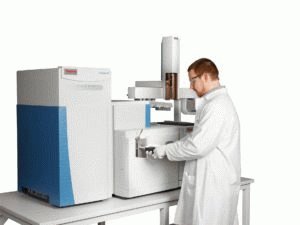
Doctors have long believed that there are traces of the vital activity of microorganisms released into the environment. An excessive proportion of results in feces indicates the development of a certain condition. The result is interesting: cavity flora is present in excrement, and a full range of metabolites! Consequently, the species of bacteria (and fungi) living inside the body will be determined by the traces of metabolism.
Talking about the death of Dyatlov's group, Rakitin said: by the set of isotopes, you can learn a lot about the working substance of the reactor. The analogy is observed in the case of microorganisms. Waste products are very different from each other, it is difficult to confuse. The genus is determined with accuracy, the definition of the species allows a small error.
Georgy Osipov speaks flatteringly about GC / MS. First of all, he argues in favor of the cost of equipment, mentions the cheapness of consumables. Doesn't forget about the accuracy of the method (up to 2%). The final argument is the wide range of microorganisms that can be identified. In fact, a complete coprogram is being drawn up, extremely complex and costly to obtain by traditional methods.
An integral part of the technique is the constancy of metabolites. Proven - over the past 2.5 billion for years, the process of vital activity of bacteria practically did not change. It is a mistake to believe that the technique is new. Mentions are found since the 70s of the XX century, the first serious research was carried out on the basis of the Russian Academy of Medical Sciences in the 90s.
Method essence
A chemical reaction is carried out (for example, methanolysis) to isolate the desired components from the sample. The conversion of fatty acids to methyl esters is at the heart of the analysis. For the specified, the necessary conditions are met, the preparation of the sample takes a certain time. The ester composition is either a liquid or a gas introduced into the apparatus. Separation is performed on a capillary column.
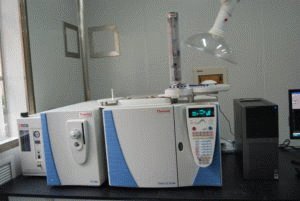
It turns out a histogram, where the markers are separated by distance. The peak areas are integrated, serving as the initial data for further calculations. For any molecule, signs are formed that are used for identification. The database is purchased separately, research costs money. The capabilities of the method depend a lot on the availability of information. The lack of substances in the database makes identification impossible.
The spectrum of action of GC / MS is extremely wide. A typical database contains features of 1000 or more species. According to the data presented, the population density of the strains is calculated.
PCR diagnostics
Laboratory diagnostics of dysbiosis is not limited to two methods. Because doctors should always have a choice. When there is no competition, there is no progress. The polymerase chain reaction works with DNA. Invented in 1983 by Carey Mullis.
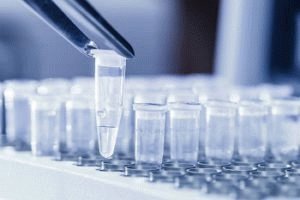
Under the specified conditions, the existing part of the molecule is copied. The reaction takes place in a test tube under the action of special enzymes. Knowing the nucleotide sequence makes it easy to predict the result. Gradually, methods have been discovered that minimize the number of mutations, the result of the analysis becomes reliable.
The length of the copied section is limited to 3000 links. For comparison, the human genome is encoded using 3 billion. steam. In science, the PCR method is often used to introduce deliberate mutations in the DNA code. This is a proven way for forensic scientists to deliver a verdict that strongly influences a court's decision. The similarity of genes is a reliable proof of guilt or innocence.
Which analysis to choose
The clinic patient has no choice. Today, diagnostics are carried out exclusively bacteriological. Against the background of dysbiosis, complicated by diarrhea, waiting for 1 week is unbearable. How to eat a sick child? What should an adult do?
We strongly recommend that you carefully collect the necessary information about the symptoms. If an allergy occurs due to dysbiosis, record the location of the defect. For example, an allergic look in the wings of the nose indicates a vitamin B deficiency. Redness in the scalp is a symptom of seborrhea.
How to avoid
Diagnosis based on clinical signs is difficult. Information about the consistency of feces, color, smell will help. If fungal dysbiosis caused stomatitis, few people know where to start treatment. Along the way, with the drugs typical in such cases, the balance of the intestinal microflora is diagnosed. At the same time, help is provided to the stomach.
The site provides comprehensive information on dysbiosis, which can provide significant assistance. It is useful to eat fiber, oligosaccharides. The role of folk remedies was mentioned: drink herbs. The growth of pathogenic flora is suppressed with berries:
- strawberries, chokeberry, blueberries, raspberries, black currants help against salmonella and staphylococcus;
- apricots, cranberries destroy rotting microbes;
- blueberries, lingonberries fight Candida.
Include these foods in the diet, practice the introduction of complementary foods for dysbiosis to children, forming immunity. Young children are given squeezed juices. In case of lactase deficiency, focus on bifidobacteria growing on milk sugar, playing the role of a source of lactase (or a substitute). Buy enzymes separately at the pharmacy.
Continue breastfeeding infants (not bottle feeds) persistently to build the baby's gut properly. For constipation, focus on food:
- Black bread.
- Jam.
- Honey.
- Syrup.
- Vegetables.
- Sugar.
Diarrhea is eliminated by well-known folk remedies. They use products with tannin: tea leaves (washed down with water), dried blueberries, lemon and pomegranate peels, black peppercorns, a tablespoon of starch. It is useful to eat cheese, cottage cheese, add calcium to the daily diet.