Herbs for constipation in adults: laxative herbs and fees
Constipation is an unpleasant ailment that negatively affects the work of internal organs, the emotional state of a person. Stools stuck in the intestines poison the body, creating all the conditions for the occurrence of more severe consequences. In the natural pharmacy, you can find the necessary recipes to combat stool disorder. Medicinal herbs, fees - everything you need to maintain health.
On the shelves of pharmacies, herbs are sold for constipation in dry form, in the form of oil, fees. It is necessary to understand what the therapeutic effects of the various herbs used to normalize the bowel movement can have.
Content
-
1 Laxative plants
- 1.1 Senna holly
- 1.2 Buckthorn alder, bark
- 1.3 Althea officinalis
- 1.4 Aloe
- 1.5 Linen
- 1.6 Dandelion
-
2 Fees
- 2.1 Collection number 1
- 2.2 Collection number 2
- 2.3 Collection number 3
- 3 Rules for taking medicinal herbs
Laxative plants
Laxative herbs for constipation act on the gastrointestinal tract gently and naturally, forcing the body to independently perform its functions, with only slightly helping. Unlike medications, natural remedies do not have negative effects on other internal organs and do not interfere with the functioning of the body's systems.
Senna holly
The leaves of this plant are good for the intestines. Under the action of the remedy, fecal masses soften, bowel movements return to normal, the digestive system is restored. Appointed when constipation in adults. For children who have impaired stool, senna comes first.
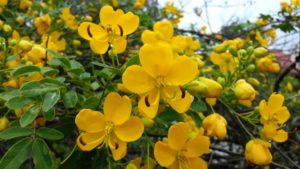
Senna holly
Today, hay can be found not only in the form of dry raw materials, but also sold in the form of tablets.
- The substances contained in the dry leaves of the plant have an irritating effect on the mucous membrane of the digestive tract. As a result, all organs responsible for digesting food begin to activate, and the food lump moves along the channel. The intestines are emptied naturally, without creating an uncomfortable state. It is recommended to use hay for adults for the treatment of atonic-type constipation. Doctors warn patients against treatment spastic constipation, without first consulting, since the therapy of disorders of the motor activity of the colon requires constant medical supervision. However, senna is non-toxic and can treat constipation, hemorrhoids and bleeding.
- The herb, produced in tablets, has a beneficial effect on the gallbladder and liver, cleanses the body of slagging and toxins. The person notes the return of appetite, the normalization of metabolism. If it is necessary to affect only the digestive system, small doses of the herb are sufficient. If a person is faced with the task of cleansing the intestines, you will need to undergo a therapeutic course with an increased dose.
Pregnant women should take senna very carefully, after talking with the doctor. It is believed that the herb helps cleanse the intestines before childbirth, helps to cope with constipation. But there is a danger of side effects: spasmodic phenomena in the intestines and contraction of the uterus.
Despite the medicinal properties of senna, there is a list of contraindications when the intake is strictly prohibited:
- The lack of potassium in the body becomes a serious obstacle to the use of the herb. Treatment does not lead to the desired result, worsens the patient's condition.
- When signs of dehydration appear, taking Senna for constipation will aggravate the situation.
- Diseases of the gastrointestinal tract. Gastritis, colitis. Problems in the intestines associated with obstruction and internal bleeding, disturbances in the work of the gastrointestinal tract should be discussed with a doctor.
- Damage to the cardiovascular system, dysfunction of the genitourinary system, cystitis.
Side effects arising from non-compliance with the recommendations of doctors:
- Pain and spasmodic phenomena in the intestines. In this regard, there is a ban on the use of senna during pregnancy due to the threat of miscarriage.
- Unfortunately, long-term use leads to an addiction of the body. Independent work of the stomach will not be possible without the next dose of the herb.
Buckthorn alder, bark
Buckthorn tree, another name is wolf berries. Grows in the central zone of Russia, Ukraine, Crimea, Kazakhstan. In pharmacies, it is presented in various forms of release:
- Pills. Offered in bottles of 50 pills.
- Shredded bark. Sold in cartons weighing 50 and 75 g.
- Brewing bags 1.5-2 g - also in a cardboard box.
Buckthorn preparation has a lot of useful properties:
- Sedative. Soothes, relieves irritability, has a mild hypnotic effect.
- Laxative. Helps in gently cleansing the intestines from stagnant feces.
- Antiviral. Once in the body, it helps fight viruses.

Viruses attack the cell
- Antibacterial. Assists the intestines in the fight against pathogenic microflora.
- Antispasmodic. Relieves spasms of the digestive tract and helps food pass the channels unhindered on its way to the exit.
- Antihelminthic. Promotes the elimination of various parasites, worms from the body.
- Anti-inflammatory. Once in the intestine, it envelops the mucous membrane of the organ, preventing the negative effects of irritants. Reduces the effect of inflammatory processes.
Althea officinalis
In the treatment of constipation in children, the root of the herb is used. It contains mucus, which helps to soften the fecal matter and remove it from the body, relieves the symptoms of bloating.
Aloe
The Aloe plant or yarrow is able to help restore the functions of the intestines, its motor activity, and relieves constipation.
The action that the drug has on the digestive organ:
- Restoration of motor activity. By creating an irritant effect, aloe makes the intestines work faster and propels the food bolus towards the exit.
- Feces are becoming more rare. Thanks to the beneficial substances in the plant, the feces become more plastic, liquefied and easier to leave through the anus.
- The inflammatory process in the intestines is reduced. Creating a positive effect on the digestive tract, it is prescribed for patients with colitis.
Linen
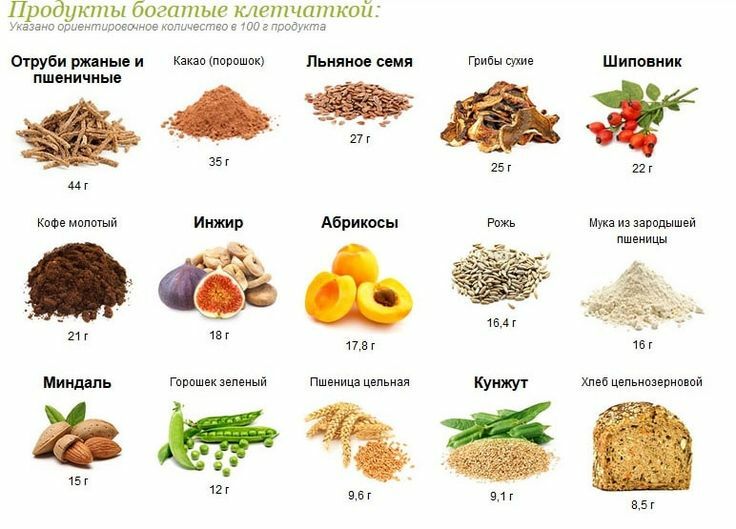
Flax seeds are used for constipation. They create a protective layer on the intestinal mucosa, gently acting, remove feces through the anus. Flax takes part in the treatment of digestive tract ulcers, gastritis, esophagitis.
Dandelion
Traditional medicine uses dandelion root to treat defecation disorders. He copes with feces stuck in the intestines. The reason is the poor functioning of the rectum. The medicine is indicated for those suffering from gastritis, constipation, atony of the large intestine.
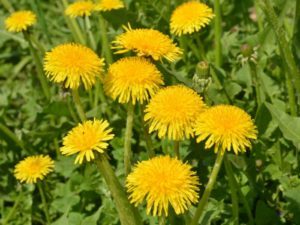
Patients with high acidity, stone disease of the kidneys and gallbladder should be very careful to take a decoction of dandelion root.
Fees
The herbs alone bring relief to the patient, but there is another method. For an enhanced laxative effect, herbal preparations are used. They include herbs that have the desired effect on the intestines, and raw materials with opposite functions.
Collection number 1
You will need: joster, fennel, dill. Medicinal plants in the same amount are added to a container, water is added (1 glass). The mixture is put on fire, brought to a boil and then boiled over low heat for another 15 minutes. The broth cools down, filtered. Drink at night, the whole volume. After waking up, there will be the desired effect.
Collection number 2
For the broth, you will need a collection of buckthorn, senna, zhoster, chamomile. Everything is taken in the same proportions. Prepare one portion at a time. A single dose is 250-300 ml of liquid with 2 tablespoons. herbal mixture. The collection and water are mixed in the required amount, put on low heat. Within 15 minutes, the broth is on the stove, then it cools. Drink the entire volume before bed. This is an effective way to relieve constipation.
Collection number 3
Dandelion root and centaury. The mixture is filled with hot water and infused for 8 hours. After it is filtered and taken before bedtime. This infusion helps, including getting rid of constipation, and also normalizes bowel function, forcing the organ to work.
Rules for taking medicinal herbs
The folk method, like the medication, cannot be used uncontrollably. You should consult a doctor who will tell you the right choice.

- Medicinal preparations, decoctions, infusions should be used only in cases where the natural way of excreting feces is impossible. Intestinal cramps, lack of nutrients.
- Therapy for constipation does not depend on the amount of herbs used in the collection. The effect can be obtained from one component and not obtained from 10. It is advisable to opt for one drug and use only it. Or you can make a collection of herbs of different functionalities: laxative - carminative, laxative - antidiarrheal.
- The use of natural medicines should not be prolonged. Ideally 2-3 days. The organism should not be allowed to get used to the work of medicinal herbs. The result is a complete refusal of internal organs from work.
- Having stopped your choice on a certain drug, you need to find out all the nuances of its use: indications, contraindications, side effects.