Constipation after cesarean section: what to do with breastfeeding
Difficulties accompany women who have had a greater number of cesarean sections than have given birth on their own. The main focus is on the digestive system. Internal organs do not work as actively, therefore, an uncomfortable state arises. After surgery, bowel discomfort becomes common: constipation, muscle spasm, pain. To endure discomfort is harmful for a young mother and for a newborn. After a cesarean section while breastfeeding, it is possible to get toxins that poison the mother's body.
Content
- 1 Constipation symptoms after cesarean
- 2 Spastic stool disorder
- 3 Atonic constipation
- 4 Causes of the problem
- 5 Constipation treatment
-
6 Medications for Stool Disorder
- 6.1 Duphalac
- 6.2 Fortrans
- 6.3 Ferrolax
- 6.4 Glycelax
-
7 ethnoscience
- 7.1 Fig
- 7.2 Herbal mixture
- 7.3 Fennel, anise and cumin
- 8 Prevention of bowel ailments after surgery
Constipation symptoms after cesarean
When a baby is born, the hassle grows. Mom's diet is becoming irregular. Defecation is less common. But not all symptoms can be attributed to non-compliance with the diet. There are certain signs of constipation:
- Stool missing for 2 days.
- In the process of defecation, soreness, difficulty in exiting feces, is manifested. Feces come out in small portions or, conversely, increased.
- Painful sensations on the left side of the abdomen, possibly spreading discomfort throughout the abdominal region.
- Appetite is disturbed, belching appears, the woman is sick.

- Excessive gas formation provokes a feeling of excess filling of the intestines. This state persists after emptying.
- The woman becomes irritable, indifferent, gets tired quickly.
- Painful sensations appear in the anus. Anal fissures form. Emptying can take place with bloody discharge.
The presence of one or two signs indicates the development of serious lesions in the body. The symptoms that arise depend on the mechanism of constipation: spastic or atonic.
Spastic stool disorder
Appears as a result of the acceleration of intestinal motor activity. Food passes the digestive tract too quickly. Enzymes do not have time to digest and assimilate nutrients. As a result, food stops. Spasmodic phenomena in the intestines do not allow the remains to come out.
The woman is afraid that the stitches will come apart during bowel movements. Strong stress is transmitted to the intestines. The urge to go to the toilet creates the opposite effect when the entrance of the rectum (anal) is compressed. This leads to stagnant fecal masses.
Atonic constipation
It arises due to the relaxation of the rectal muscles and the inability to actively promote the digested residues to the exit. Atonic type of stool disorder passes with rare urge to use the toilet. Long-term presence of feces in the intestines leads to their compaction, hardening. As a consequence - the impossibility of emptying the rectum, and if the process of defecation is obtained, it is accompanied by pain.
Causes of the problem
What causes constipation after a cesarean section:
- After pregnancy, the abdominal muscles are stretched, and were damaged during the operation. As a result, the muscles in the abdomen are weakened.
- As the fetus grew, the uterus enlarged. In the process of growth, the internal organs were displaced in different directions. The intestines are no exception. A change in the position of an organ relative to the original is the cause of constipation.
- The activity of intestinal motility is reduced.
- Sedentary lifestyle of a young mother.

- Non-observance of the diet or the absence in the menu of substances necessary for the normal functioning of the digestive tract.
- The presence of physical damage to certain parts of the organ.
- Haemorrhoids.
- Violation of the drinking regime. The required daily dose of liquid for an adult is 2 liters.
- Stress caused by fear of bowel movements. After surgery, there are stitches on the uterus and on the abdomen. At a subconscious level, a woman has a fear that they will disperse, as soon as she slightly tense her muscles.
- Instability of hormonal levels during pregnancy.
Constipation treatment
Constipation after childbirth surgery is not overlooked. Not only the doctor and appointments will help, important importance is attached to the woman's desire to get rid of the disease. Feces, stagnating in the intestines, produce the release of toxic substances - toxins. Intoxication of the body sets in. As a result of constant stress and discomfort, breast milk can be lost. Without treatment, the situation is exacerbated.
The approach to therapy from constipation after surgery performed carefully due to breastfeeding.
Medications for Stool Disorder
Not all medicines for the treatment of constipation are allowed for nursing mothers. A consultation with a specialist will help you make the right choice.
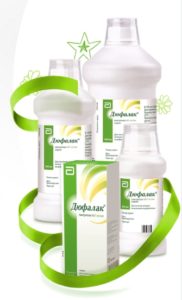
Duphalac
The drug contains lactulose. Pharmacological release form: syrup. The drug is safe for mom and baby. It is worth remembering: the property of the drug is ensured by observing the correct intake. Duphalac is prescribed by a doctor, he also determines the dose and frequency of admission. The active active ingredient acts only inside the mother's intestines, not being absorbed into the bloodstream. Thanks to this, the drug does not pass into milk and does not get to the baby.
The action of the medication is aimed at attracting moisture into the intestinal canals. There is a laxative effect. Under the influence of acids, into which lactulose breaks down in the digestive tract, an increase in feces occurs, and intraintestinal pressure rises. What happens contributes to the natural way to get rid of feces, removing them outside without pain and additional tension in the muscles of the abdominal region.
Fortrans
It is produced in powder for preparation of suspensions. The active ingredient is macrogol 4000. It is located in the digestive tract and acts exclusively locally. It is not absorbed into the bloodstream and does not pass into infant milk. Safe for babies. In the large intestine, it increases the volume of fecal masses, makes them elastic, soft. Pressure is applied to push the stool outward.
Ferrolax
Pharmacological release form: rectal suppositories. The drug provokes excessive gas formation in the intestine, thereby removing the symptoms of spastic disorder. The spasmodic phenomenon disappears, the permeability of the channel increases, the contents leave the organ.
Glycelax
Glycerin suppositories are indispensable for the treatment of constipation as a result of cesarean section. They have a simultaneous effect on the motor function of the intestines and help the feces to become softer. The emptying process is easy, without a painful sensation. Using suppositories: 1 suppository is injected through the anus into the rectum the morning after a meal. They try to push the candle deeper into the intestines, about an extended finger.
ethnoscience
The folk pharmacy has the necessary medicines to treat constipation as a result of caesarean section. In this case, drugs affect only the large intestine, without affecting breast milk.
Fig
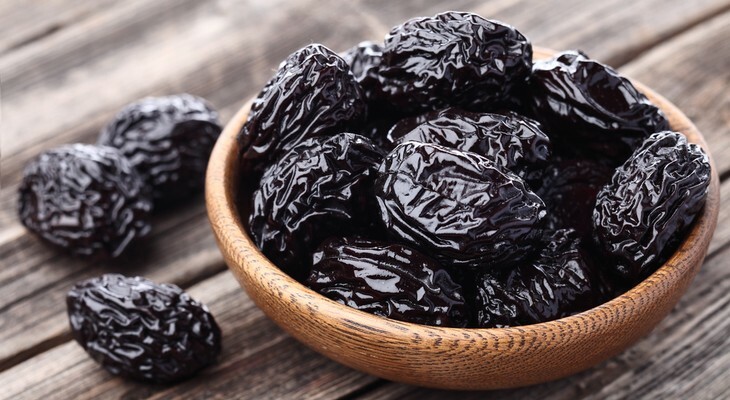
A decoction is made from the fruit. The berries are pre-crushed. 2 tbsp poured into a glass of milk or water. Aged over low heat (20 minutes). Drink the broth throughout the day, before meals. Taking 1 tablespoon of the drug helps the intestines perform their functions.

Herbal mixture
The main component is valerian, anise, nettle. The mixture includes strawberries and chamomile officinalis. The ingredients are mixed and placed in a thermos. Pour a glass of boiling water over. 2 h the broth is infused. You need to drink the entire volume at once. Helps well with constipation of a spastic nature.
Fennel, anise and cumin
An infusion of medicinal herbs is made as follows. An equal amount of each drug is poured with hot water, infused in a thermos. After drinking throughout the day. Divide the volume into three equal parts.
Prevention of bowel ailments after surgery
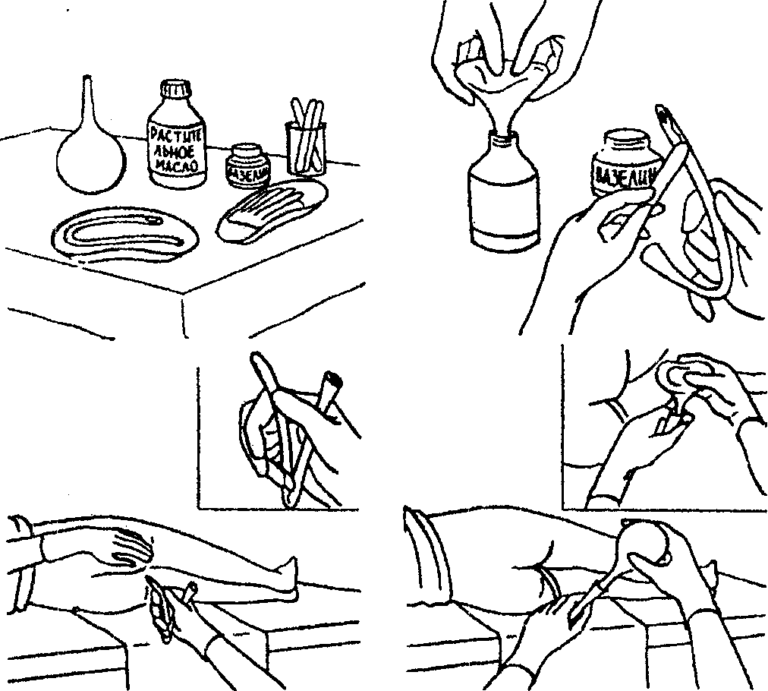
A woman should think about the need to improve bowel function immediately after the operation. The hospital will be able to provide assistance in the form of enemas and medicines. Subsequently, care for intestinal health falls on the young mother.
- Food. Divide food into portions and time. The diet contains healthy foods with fiber and vitamins.
- Drink. Do not break the drinking regime. Consume a daily dose of 2 liters.
- Activity. Try to get up after surgery despite weakness. Don't stop and relax. For the full healthy functioning of the intestines, the muscles of the peritoneum must be kept in good shape.
- Charger. To activate the work of the digestive tract, it is necessary to do an exercise: while lying on the right side, try to pull the left limb (leg) to the stomach. The right one is extended at this time. Performing 3-5 approaches - pressure is exerted on the intestines, it begins to work.