
Colitis of the intestine: symptoms, treatment in adults and children
This is a disease in which pathological inflammatory changes occur in the mucous membrane of the large intestine. The large intestine is responsible for the absorption of water and the formation of normal feces from the chyme. With colitis, the normal functioning of this organ is disrupted, the mucous membrane is affected. With this disease, patients develop pain, dyspeptic disorders (flatulence and nausea may occur). This disease of the large intestine affects adults and children.
Content
- 1 Description and factors causing the development of this disease
- 2 Clinical symptoms of the disease
- 3 The tactics of treating this disease
-
4 Herbal medicine for bowel diseases
- 4.1 An old recipe for getting rid of intestinal ailments
Description and factors causing the development of this disease
Distinguish between an acute type and chronic colitis. In acute cases, pain occurs in the lower abdomen, the presence of mucous secretions and blood spots in the stool of a person, lack of appetite, diarrhea are noted.
The disease can proceed in a chronic form with ulcerative lesions of the intestinal walls (mucous layer), intracavitary bleeding, and a sharp weight loss in the patient. In this type, inflammation processes affect the stomach (gastroenterocolitis). Subsequently, the physiological functions of the stomach are disrupted. Because of this, the body cannot synthesize gastric juice in the required amount. The chronic form of gastroenterocolitis in diseases of the gastrointestinal tract is 15%.
During chronic colitis, pathological changes occur in the structures of the mucous membrane in the body due to the effects of inflammatory and pathological processes and atrophy of organ tissues.
The disease develops slowly. With a prolonged course of the disease, the basic physiological functions of the colon are disrupted. During the year, inflammatory changes in the tissues of the large intestine occur in the human body, then they pass to the mucous membranes of the small intestine and symptoms of enterocolitis appear. Enterocolitis (diffuse) is a disease in which the lining of the intestines becomes inflamed.
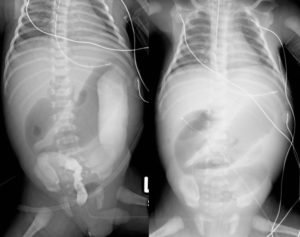
Disease enterocolitis
Factors affecting the development of this disease:
- Intestinal toxoinfections of various nature (giardiasis, amebiasis, ersiniosis).
- Dysbacteriosis.
- Weakening of immunity.
- Psychosomatics. Constant emotional stress, stress.
- Inadequate, unhealthy food.
- Therapeutic fasting.
- The presence of chronic gastrointestinal diseases (pancreatitis, cholecystitis).
- Toxic poisoning (salts of mercury, arsenic);
- Drug overdose factor. The small intestine also suffers.
- Allergic reactions (especially food, medication).
- Other. With the frequent use of cleansing enemas or the abuse of laxatives.
According to the factors influencing the development of colitis, the following types of the disease are distinguished:
- infectious (salmonellosis, intestinal flu, helminthiasis). A common subspecies is membranous colitis (inflammatory processes provoke the vital activity of E. coli);
- alimentary (malnutrition);
- ulcerative (this species is capable of representing the interaction of genetic factors, heredity and the external environment);
- toxic;
- allergic (due to a prolonged or one-time allergic reaction to food). It occurs in 65% of cases in infants;
- medicinal (with abuse of laxatives, antibiotics);
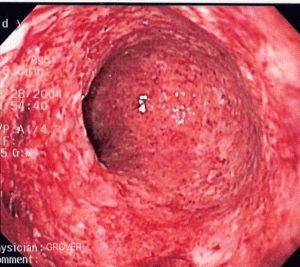
Colitis in the intestines
- radiation (post-radiation) - an inflammatory process of the descending intestine, which develops during radiation treatment of cancer of the pelvic organs;
- ischemic (pathological disorders of blood supply). This type is dangerous by the development of intestinal obstruction syndrome;
- necrotic (with intestinal perforation) - severe, pathological intestinal damage. Occurs in newborns due to intestinal infarction.
Clinical symptoms of the disease
Main clinical symptoms acute colitis: the presence of pain in the abdomen and lower back, irregular bowel movements, dyspeptic disorders of various nature, lack of appetite, weight loss. During the illness, the patient experiences dull and aching pain in the lower and lateral abdomen, or complains of pain attacks over the entire surface of the abdomen and lower back (spreading pain).
After going to the toilet and passing gas from the intestines, it becomes less intense. A specific symptom manifests itself in 25% of cases in men and 35% in women. Walking, running, cleansing enemas can increase pain in the patient. Rare clinical manifestations are the following: feeling of heaviness, bloating, flatulence.
Inflammatory and necrotic tissue changes occur in the following sections of the large intestine: the sigmoid colon, sections of the rectum in some patients.
This indicates that the reason is infection with pathogenic microorganisms (bacteria, protozoa). The patient's feces are irregular, prone to hard lumps, in the form of sheep feces, with an unpleasant odor containing a large amount of mucous secretions and other impurities (pus, pathogenic microorganisms).
When probing the lower abdomen, the doctor establishes a spasm of smooth muscles, swelling of the descending intestines, soreness in the lower third of the abdomen. When examining a patient, a proctologist reveals an accessory loop of the descending sigmoid colon in 35% of patients (congenital malformation).
Inflammation of the cecum, its section - diverticula - is accompanied by acute, severe pain in the right third of the abdomen; constant nausea and vomiting; the temperature is increased to 38 ° C; there is also nausea. Complications include symptoms such as bleeding, perforation, intestinal obstruction, and abscess.
Inflammation in the colon is characterized by acute pain in the right hypochondrium, nausea, weakness. The stool is irregular, like a sheep's.
An adult patient is more difficult to tolerate this type of disease than a child. In children, the clinical picture of colitis differs from the manifestations of the disease in adults.
The main types of symptoms of the disease:
- signs of general intoxication of the body: fever, weakness;
- the child complains of a dull pain in the ileum;
- persistent and painful tenesmus;
- diarrhea: feces have a liquid appearance with a foam, greenish or yellow, with an admixture of mucous secretions and blotches of blood. The child shows a sign of dehydration: dry mucous membranes and skin, especially the oral cavity.
- lack of appetite, nausea.

Acute colitis in children becomes chronic. The clinical signs of chronic colitis in children are: pain (in the navel, rectum; right or left iliac colon) and irregular diarrhea.
The occurrence of acute colitis during pregnancy is associated with a decrease in the immune system and hormonal changes in a woman's body. Symptoms are similar to those of acute colitis.
The tactics of treating this disease
Instrumental and laboratory methods for the diagnosis of colitis in patients:
- taking a general blood test from a finger with a leukocyte count and ESR (to determine inflammatory changes in the body, to establish anemia due to a violation of iron metabolism in the intestine - hemorrhagic syndrome colitis);
- blood biochemistry (C-reactive protein, gamma globulins);
- colonoscopy method with taking a biopsy of a fragment of the mucous membrane of the large intestine (this method allows you to detect ulcerative-necrotic changes);
- irrigoscopy (examination of an organ using X-ray radiation by introducing a contrast agent into it);
- ultrasound diagnostics of the abdominal cavity (if ischemia is suspected - with dopplerography);
- examination of the patient's stool (coprogram, occult blood tests, the presence of infectious microorganisms in the feces, dysbiosis analysis).
After collecting anamnesis, receiving test results, the doctor will make a final diagnosis and write out a treatment regimen. In severe cases, a person is hospitalized in a hospital. Treatment tactics depend on the factors causing colitis; damage to the stomach and other organs of the gastrointestinal tract.
In colitis caused by pathogenic bacteria, drugs are prescribed that inhibit their growth and development or completely destroy them. Alpha Normix is a drug for curing colitis of bacterial genesis. Cifran (fluoroquinols) and chloramphenicol are used much less frequently in the pharmacotherapy of the disease due to pronounced side effects. In more severe cases of the disease, a complex treatment is prescribed, consisting of a combination of antibiotics and antibacterial drugs of synthetic origin - furazolidone.
For colitis caused by pathogenic microorganisms, antiparasitic agents are prescribed. They are of two types:
- anthelmintic drugs - vermox, levamisole, decaris;
- antiprotozoal drugs - metronidazole, ornidazole.
In case of severe pain in the patient, the doctor prescribes duspatalin, sparex, aprofen.
In case of lesions of the mucous membrane and inflammatory processes in the lower parts of the large intestine, it is necessary to do procedures involving the introduction of a candle and washing with decoctions of calendula or chamomile.
In addition to the main pharmacotherapy for colitis of various origins, the doctor recommends taking enterosorbents (polypefan, enterosgel, smecta, activated carbon), enzymes - Creon 25000, unienzyme (to improve digestion food). To improve the microflora, after a course of treatment, hilak forte and prebiotics are prescribed.
With colitis of various origins, the doctor prescribes a strict therapeutic diet; its main principles:
- eat food fractionally, up to 5-6 times a day;
- exclude spicy, fried, smoked foods;
- food should be mashed or finely chopped;
- remove milk, legumes, cabbage, white bread from the diet;
- there is only yesterday's dried bread, crackers, biscuits, crispbread;
- use meat and fish products only of low-fat varieties, steamed or cook;
- boiled vegetables, baked fruits;
- vegetable oil in moderation;
- exclude alcohol, alcohol, energy drinks;
- drinking regime - up to 2 liters.
The diet aims to improve the digestive functions in the body. A detailed nutritional regimen is selected by a doctor - nutritionist or gastroenterologist.
After an exacerbation of colitis, it is important to restore the lost supply of fluid with minerals dissolved in it. Therefore, doctors advise to drink for three days, 2-3 packets of rehydron per day.
Herbal medicine for bowel diseases
During non-exacerbated chronic colitis, herbs are used in combination with drug therapy.
An old recipe for getting rid of intestinal ailments
Ingredients: one tablespoon of valerian (dry herb), seven teaspoons of chamomile, one teaspoon of dill and three teaspoons of lemon balm. They are poured into a spice jar and mixed.
After that, take one dessert spoon of the mixture and brew it with 200 ml of water. Close with a tight lid and put in a warm place for half an hour. The broth must be filtered through cheesecloth. They drink it according to the following scheme: 2 times a day - in the morning and in the evening, the field of food intake.
Timely treatment of colitis leads to a successful outcome of the disease. The human body is fully restored within 2-3 months. But subsequently, the patient comes for preventive examinations 2-3 times a year to the proctologist and closely monitors his diet.
Preventive measures for chronic colitis:
- Balanced, rational nutrition. Lack of fast food, alcohol.
- Daily regimen (food intake is mandatory for patients).
- Preventive examinations by doctors - proctologist and gastroenterologist to identify clinical manifestations of gastrointestinal diseases.
- It is necessary to treat the disease in a timely manner. This will help avoid complications.
- Compliance with the rules of personal hygiene (washing hands and vegetables before eating). 7 out of 10 children develop colitis due to lack of hygiene.
- Eliminate stressors.
- Regular exercise, running, swimming.


