Ischemic colitis is a disease of the large intestine
Ischemic colitis is a disease in which blood circulation in the vessels of the large intestine is disturbed.
As a result of problems with the movement of blood, the diseased area receives insufficient blood volume to perform its basic function and maintain the integrity of the structure.
Inflammatory processes often occur in the affected areas of the intestine, which lead to a decrease in local immunity, dysbiosis and other serious problems.
What is this disease, what are its causes and symptoms, how is the treatment of ischemic colitis undergoing?
What causes the disease?
Contents:
- What causes the disease?
- How is it manifested?
- Study of the disease
- Treatment of the disease
Specialists call the most diverse causes that can cause bowel disease.
Most often, ischemic colitis is found in people over 60 who already have a certain "bouquet" of diseases, so the causes of the disease are often not entirely clear.
The following conditions can provoke bowel disease:
- atherosclerosis of vessels, in which fatty compounds are deposited;
- decreased intestinal blood supply;
- formation of blood clots in the vessels;
- inflammation in the intestinal vessels;
- blood coagulation in vessels of different thickness;
- aortic dissection;
- sickle cell anemia, when hemoglobin does not fulfill its basic function of transporting oxygen;
- liver transplant;
- intestinal obstruction, partial or complete;
- a variety of neoplasms in the intestine;
- idiopathic colitis;
Also frequent causes of colitis of the intestine - is the intake of various medications, in particular, oral contraceptives.

How does it manifest itself?
Symptoms of the disease are often mild and develop slowly enough.
The most common symptoms of bowel disease are pain in the lower left corner of the abdomen and bleeding from the rectum.
In addition, experts call such symptoms of the disease:
- pain in the abdomen, which is especially pronounced 15 to 20 minutes after eating and lasts 1 to 3 hours. Pain can be either subtle or very strong, with the progression of the disease and the formation of fibrous structures in the organ, when unpleasant sensations increase. The physical load can also provoke suffering - walking, lifting heaviness, hard work;
- about half of all patients suffer from decreased appetite, bloating, nausea, sometimes eating belching or air;
- in almost all cases, patients feel problems with the stool - constipation, diarrhea and their alternation with each other;
- very often patients with ischemic colitis lose weight, which is due to a decrease in dietary volumes, as well as impaired absorption in the intestine;
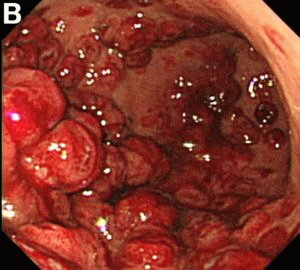
- in most patients ischemic colitis is accompanied by bleeding from the rectum of varying intensity, which are caused by erosions and ulcers on the mucous membrane of the large intestine;
- often ischemic colitis is accompanied by irritation of the peritoneum, muscle tension on the abdomen. At palpation the patient feels pain and hypersensitivity.
If the symptoms of irritation of the peritoneum persist for several hours, the doctor may suspect bowel necrosis.
In addition to these symptoms, patients also often complain of disturbance of sleep and rest, headaches and dizziness, fever, chills, increased sweating.
Video:
Diagnosis of the disease
Diagnosis of the disease includes examining the patient's complaints of pain in the abdomen, blood clots in the stool, problems with stools, and also analyzes how long it all originated and whether it is related to the patient's diet and loads.
The doctor pays special attention to anamnesis of the patient - whether in his life before the disease of the digestive system, neoplasms, surgery, long-term use of medications.
The doctor then measures the patient's body temperature and blood pressure to determine the severity of his condition.
Diagnosis also includes a general examination of the patient, which will enable the doctor to determine whether the patient has problems with metabolism, anemia, blood loss.
To confirm the diagnosis, the doctor instructs the patient to undergo laboratory diagnostics. The general analysis of urine will help the doctor to detect anemia and hemoglobin level, as well as signs of inflammation in the organs by the number of leukocytes.
In addition, urinalysis is prescribed if there is a suspicion of improper kidney function and infection in these organs. The analysis of blood reveals coagulability of blood, the composition of blood serum, the ratio of fat cells.
Fecal analysis will help the doctor to find blood extracts or undigested food fibers that may indicate certain disorders.

Diagnostics is supplemented by instrumental methods. Most often with this disease doctors prescribe ECG of the heart, ultrasound of the peritoneum and abdominal aorta, which shows the state of the vessels.
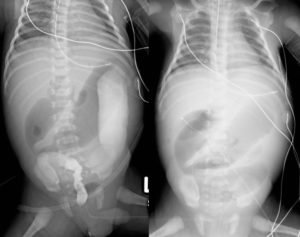
Doppler diagnostics of abdominal vessels, functional tests, X-rays, colonoscopy and laparoscopy the doctor can also appoint if the results of the first studies did not enable to confirm the diagnosis accurately.
Treatment of the disease
Treatment of bowel disease consists of drug therapy, dietary nutrition and bed rest.
If ischemic colitis develops against a background of another disease( most often it happens), then doctors pay attention to the main disease, but its therapy must take into account colitis.
Itself ischemic colitis specialists treat spasmolytics and holinoliticheskimi medicines, which improve the movement of blood in the large intestine.
Video:
During the period of acute illness, doctors prescribe a short course of antibiotics, after which the prescription of bacterial preparations is mandatory.
In addition, the treatment of colitis is also supplemented by correction of the amount of lipids in the body, decreasing blood viscosity, dilating blood vessels, lowering blood sugar levels, relieving pain, improving liver function, improving the process of food processing, and controlling the weight of the patient.
Medication for ailment should always take into account the general condition of the patient and the presence of other diseases.
For example, patients with hypertension can not sharply reduce blood pressure, as a result of ischemic colitis can further aggravate.
If the patient's ischemic colitis has complications or standard treatment has been found to be ineffective and does not cope with the disease, the doctors choose a different treatment route.
In complicated cases, as well as colitis of gangrenous type, doctors hospitalize the patient in a hospital urgently.
In these cases, urgent surgical treatment and further monitoring of the patient in the hospital is required.
Treatment of bowel disease must necessarily be accompanied by dietary nutrition of the patient, which involves reducing the amount of consumed fats, fried and spicy foods.
Animal fats should be replaced by vegetable fats. Also, the patient should be removed from the diet pastry, sweet pastry, cooking oils and lard, first dishes based on meat and fish broths, aggressive organ vegetables( onions, spinach, sorrel), fish and meat with the fat, fried eggs, spicy seasonings( mustard, Pepper, horseradish), berries and fruits with a sour taste, alcohol, coffee drinks, a variety of confectionery.
Video:
At the same time, a patient with bowel disease can eat bread and nesdobnoe cookies, cottage cheese and sour cream without fat, vegetable soups with cereals and pasta, lean meats, boiled porridge, vegetables, sour fruits and berries, juices from them, As well as honey, jam, sugar.
Nutrition in colitis of the intestine should be fractional( portions of 200-300 g) and frequent( 5-6 times).The amount of salt in the diet should be reduced to a minimum.
It should be noted that timely access to specialists and proper treatment in combination with a diet will significantly increase the chances of a patient recovering.