Stool with pancreatitis: stool and stool color
The modern rhythm of life is so impetuous and hectic that people completely do not pay attention to the signals that the body gives.
Very often he begs for help, but no one wants to notice it, and there is simply no time. One of the signals is discolored stool in pancreatitis.
But why does such a phenomenon occur, and which doctor should be consulted with such symptoms?
This article will answer these questions and explore the root causes of major deviations from the norm.

Content:
- 1 Signs of the development of pathology
- 2 Types of feces
- 3 Optimal feces rates
- 4 Nutritional standards
- 5 Drug influence
- 6 Pathology of the digestive tract
- 7 In order to prevent
- 8 How to normalize stool with pancreatitis
- 9 Traditional medicine for stool normalization
- 10 Useful video
Signs of the development of pathology
The main reason why the color of feces with pancreatitis began to fade or acquire a bright color on the contrary will be what a person eats and how well the food is digested by the gastrointestinal tract.
In the case when there is a violation of the production of bilirubin, feces with pancreatitis becomes colorless.
Bilirubin travels from the liver to the intestinal area along with bile. There it becomes a different substance, acquires the pigment stercobilin.
This substance has a golden brown hue. In the event that the supply of bilirubin stops, the pigment is not produced and the feces become colorless, losing their brown tint.
The main sign of a pathology associated with inflammation of the pancreas will be the appearance of a painful sensation in the area under the ribs.
As a rule, a similar symptom occurs an hour after the consumption of salty, fatty, spicy or sweet foods. After that, the development of symptoms such as loose stools with pancreatitis can be observed, it is really difficult to stop diarrhea.
Bloating, the accumulation of gases, which provoke intoxication of the body, is not excluded.
The contents in the intestine enter into the fermentation process, and if proper measures are not taken, pathology will lead to the death of a person.
As you can see, we cannot hesitate. It is worth paying close attention to what the color and stool are in chronic pancreatitis, its consistency and substances are very important.
Types of feces
If pancreatitis develops, then feces will be presented in the form of gruel. Their appearance will be diluted with a liquid state.
Feces can leave the body in portions, finely and cause discomfort to a person. Cases are not excluded when the feces will contain fibers of meat, fats and other components.
Undigested food is an indication that there is a deficiency in food enzymes.
It is worth recalling that they are very important for the absorption and digestion of food in the human body.
In cases where poorly digested fats are formed in feces, an increase in bowel movements is observed.
It is possible that the stool may be accompanied by foam and a liquid consistency. Desires for defecation can occur 3-4 times a day, which is already beyond the accepted norms.
It is recommended to pay attention to the condition of the feces. It can be ribbon-like. If such a phenomenon was noticed, then most likely pathological changes occurred in the body in the region of the sigmoid intestine.
Also, this fact speaks of the development of a tumor-like process and the presence of spasms in the sphincter.
Feces can be cylindrical in shape, which confirms the presence of the required volume of consumed animals and plant products that are contained in the intestinal cavity.
If the feces are small and spherical, which look like goat or sheep feces, it is possible that an ulcerative lesion or the development of a pathology such as constipation.
In cases of shapeless bowel movements, we can say that a person eats a lot of fiber. As a rule, such excrement speaks of a vegetarian diet.
Optimal feces rates
If a person is not sick with anything, his feces substances correspond to similar ratios: 20 percent are dense fractions and 80 percent water.
If we talk about such a norm as stool frequency, then the general indicator is 1 time in 48 hours, a maximum of 2 times in 24 hours.
All other cases are contrary to medical standards, and therefore it is worth conducting a complete examination of the body.
If during the bowel movement there is a feeling of relief, but there is no discomfort and pain, then everything is normal.
As for the volumes, 400 grams can be produced per day. calculi. If a person eats a large amount of plant foods, then the amount of stool can be increased.
In cases where the volume is less, it means that fatty foods are more present in the diet.
The most optimal option would be an easy state of fecal emptying. If the calculi smoothly sink to the bottom, then there should be no problems with digestion.
Nutritional standards
If, with pancreatitis, a person records the presence of colorless feces, then you should pay attention to nutrition. Often times, this phenomenon can be completely harmless.
The reason may be coming to the village for a summer vacation. Starting to eat local fatty cottage cheese, sour cream or cream, a healthy person has a deviation from the norm.
But here you should not forget about the presence of a pathology of inflammation of the pancreas, because such products are contraindicated, preference should be given to a fat-free composition.
Drug influence
Medications can also change the color of the stool. Some of them deal a serious blow to the liver, and this organ plays an important role in the digestion process.
There may also be such a phenomenon when the liver does not withstand the negative influence of drugs, gradually collapsing under their influence.
In this case, you should pay attention to those groups of drugs that can cause discoloration of fecal calculi.
These include:
- antibiotics;
- non-steroidal anti-inflammatory;
- antifungal;
- remedies for gout, tuberculosis, epileptic seizures;
- oral contraceptives;
- aspirin, as well as formulations with acetylsalicylic acid.
When a person takes funds from these drug groups, the stool may be discolored. Let the reason be clear, but you should not delay a visit to the doctor.
It is necessary to carry out a course of treatment on time, and therefore it is important to check the condition of a vital organ - the liver.
It is especially worthwhile to hurry up if you have stopped taking funds and the feces have not yet acquired a new shade.
Pathology of the digestive tract
The most serious reason for the loss of fecal masses of color will be deviations in the state of health. First of all, this concerns liver ailments.
If, simultaneously with feces without color, pain is observed in the area of the right hypochondrium, an increase in body temperature, and the urine has become darker, then cases of infection with hepatitis or the development of problems with the biliary tract are not excluded, or cholecystitis.
In such a situation, it is worth contacting a doctor. Feces without color is one of the signs of serious health problems. It can also be pancreatitis.
In this case, it is worth undergoing an examination and establishing an accurate diagnosis. Efforts must be made to bring the pancreas back to normal.
Inflammation of the organ is possible if a person does not eat properly, often drinks alcohol, or takes certain medications for a long time. Pancreatitis is also possible with an infection in the body.
The symptomatology of the pathology is an exacerbation of cutting pain in the abdomen or bouts of vomiting, persistent diarrhea.
Please note that a one-time discoloration of feces is not a sign of a disorder in the body. Don't worry if the masses bounce back quickly.
Perhaps something was not eaten. But in cases of recurrence of the phenomenon, accompanied by symptoms of pathology, you need to consult a doctor as soon as possible and find out the cause of discoloration and discomfort.
Remember that at an early stage, treating pathologies is much more effective than dealing with a seriously spread disease.
In order to prevent
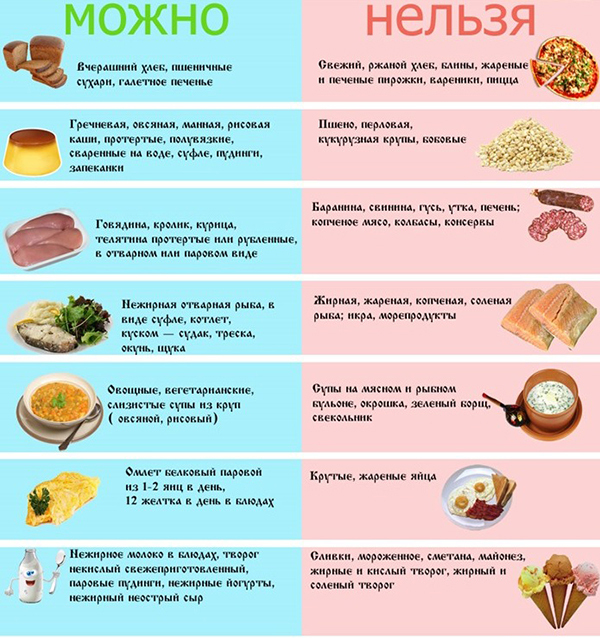
In order for the stool with pancreatitis to return to normal, first of all, it is worth revising your diet.
You need to include in the menu cereals, dried bread, fresh fruits and vegetables. As for sweets, sometimes you can pamper yourself with marshmallows or marshmallows.
You just need to take into account that all the features of dietary nutrition must be accurately developed by a specialist, taking into account the individual state of the human body.
There are some cases where pancreatitis leads not only to discoloration, but also mucus masses in the stool.
Only with the help of medicines prescribed by a professional doctor can the problem be solved.
If you delay the visit to the doctor, a person may face a more sad fate when the patient will need to be hospitalized and performed surgery.
In fact, it is impossible to accurately diagnose the patient by the color of the bowel movement. It is important to undergo an examination, pass laboratory tests, tell the gastroenterologist about your symptoms or the presence of changes in the stool.
How to normalize stool with pancreatitis
Adults with pancreatitis should follow all of the doctor's orders. Treatment is complex, and therefore, even if one of the measures is violated, it is possible that serious complications will arise in the future, which will entail a problem with defecation.
You should definitely take medications with food enzymes that will stimulate the tract.
If the pain persists, the doctor may prescribe special antispasmodics or analgesics.
In fact, the specialist takes into account the nature of pain when prescribing medication. Vitamin complexes can be connected to the treatment, you should not deviate from their intake.
But the most important measure for stool normalization is the correct diet and adherence to all dietary recommendations.
You should ask the doctor about all the nuances of the diet, if necessary, you can make an appointment with a nutritionist who make up a diet and explain why it is important to eat fractionally, eat certain foods and give up harmful habits.
Traditional medicine for stool normalization
To date, the effectiveness of herbal medicine has been proven in practice. Diarrhea and discolored feces can be counteracted by using certain herbal teas.
Their goal is to relieve pain, restore digestion and remove inflammation of the pancreas.
Do not think that folk methods are used only by healers, for a long time natural remedies have been used by traditional medicine.
One of the most popular recipes for stool normalization today is the use of corn stigmas in the composition with calendula and chamomile.
To make a broth, you need to take 1 tbsp. of these plants and 1 tbsp. boiling water. It is worth mixing the herbs together, pre-crushing them thoroughly. After taking only 1 tbsp. mixture and pour 250 ml of boiling water over it.
For an hour, the tincture should be in a warm place. Then you need to strain it and drink it 15 minutes before the start of the meal.
You need to take 3 times 1 tbsp a day. tinctures. The course of treatment can be carried out until the symptoms of digestive problems are completely eliminated.