Pancreatic lipomatosis: life expectancy prognosis
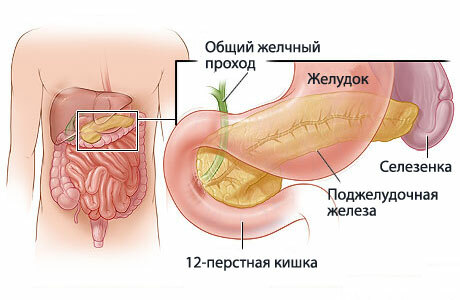
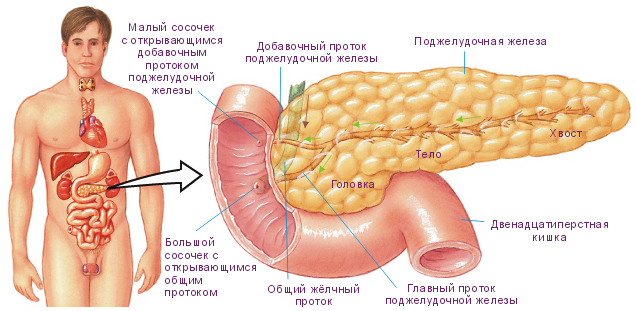
The main role of the pancreas is to process food that travels through the esophagus to the stomach. It is a very sensitive organ.
An irreversible process that leads to the replacement of adipose tissue is called pancreatic lipomatosis.
This is a serious pathology that requires timely treatment. Its second name is fatty degeneration.
In this article, we will consider in detail the specifics of lipomatosis, we will tell you how to treat it, the prognosis of therapy.
We will also look at the life expectancy of a person who has been diagnosed with this disease.

Content:
- 1 Lipomatosis - general information
- 2 Provoking factors
- 3 Symptoms of lipomatosis
- 4 Stages of development of lipomatosis
- 5 Diagnostics and treatment
- 6 Useful video
Lipomatosis - general information
Any atrophic processes leading to dysfunction of the pancreas develop gradually.
When, due to certain circumstances, for example, an infectious liver injury, healthy cells of this organ die, they are replaced by fatty clots.
The process of such a rebirth is irreversible. However, diffuse changes in the pancreas, such as lipomatosis, can be stopped during treatment.
The process of replacing healthy cells of the gland with fat cells has a benign etymology. Therefore, there is no connection between this pathology and cancer.
Important! You can get rid of the disease if you start treatment in a timely manner, because the pathological process of cell replacement on the tissue surface of the organ is slow.
Simply put, a lipoma is a cellular wen. The presence of such neoplasms on the walls of the pancreas always leads to its dysfunction.
Inflammation and trauma to internal organs are not the only factors that provoke the appearance of lipomas. Fats can occur as a result of hormonal disruption.
Why is it important to prevent the progress of the disease in a timely manner? The fact is that the growth process of lipomas, although slow, can lead to such a complication as the germination of neoplasms into the organ.
The presence of small nodules on the body of an organ is not as dangerous as large fat clots. Nevertheless, even their "presence" is important to warn.
Ignoring the manifestation of the symptoms of lipomitosis is fraught with the germination of neoplasms into healthy areas of the pancreas.
Provoking factors
Lipomatosis of the pancreas is considered a serious ailment. It never arises without a reason. Modern medical specialists have not yet fully studied the causes of this pathology.
Pancreatic lipoma can be caused both by the development of the underlying disease and by the wrong way of life of a person.
Proven fact! There is a direct relationship between the presence of wen on the body of the pancreas and in the subcutaneous layer of the organ.
An important role in the appearance of the disease is a hereditary predisposition.
If there were those in your family who suffered from lipomatosis or fatty degeneration of internal organs, then the likelihood of such a pathology will be higher for you.
Despite not fully studied information regarding the causes of the appearance of wen on the surface internal organs of the gastrointestinal tract, it is possible to identify the main factors that provoke the appearance of this pathology:
- Overweight, obesity. Overweight people are more likely to experience fatty degeneration of the gastrointestinal tract.
- The presence of pancreatitis and other chronic diseases of the gastrointestinal tract. In this case, pancreatic lipomatosis is a complication.
- Bad habits. We are talking about smoking and alcohol abuse. Alcoholics often have diffuse changes in the pancreas like lipomatosis.
- Viral lesion of the pancreas.
- Deterioration of metabolic processes in the body, poor metabolism.
- Diseases of endocrine etymology, for example, diabetes mellitus.
- Tendency to tissue degeneration. It is observed in patients over 70 years old.
- The presence of a cancerous tumor in the area of the respiratory tract.
Thus, elderly patients who are overweight and suffer from respiratory diseases or pathologies of the gastrointestinal tract are at risk.
Of course, pancreatic lipoma can make itself felt in other "patient groups". The likelihood of its occurrence is higher in the presence of a hereditary factor.
How does this disease affect the quality of human life? It cannot be said that the presence of lipomas on the body of the gland becomes the cause of a person's loss of working capacity.
However, such a pathology requires timely diagnosis, a professional approach to treatment and adherence to the rules of a strict diet.
Moreover, the need for the above arises regardless of the cause of lipomitosis.
Symptoms of lipomatosis
At the beginning of development, this pathology is almost asymptomatic. Doctors call this course of the disease - latent.
As it progresses, the disease becomes more noticeable. In the second stage, pancreatic lipomatosis is clearly manifested.
The person understands that he is sick. If there are single small wen on the body of the organ, then there are practically no problems with digestion and assimilation of food.
Nevertheless, if large lipomas have penetrated into the tissue surface of the organ, then the patient's body will not accept food that enters the stomach through the esophagus.
When a person suffering from this ailment eats something "wrong", they vomit. The manifestation of this symptom indicates gland dysfunction.
So, the main clinical manifestations of lipomatosis (at the beginning of its development):
- Nausea that occurs at different times of the day. Her appearance is preceded by a meal.
- Intestinal flatulence is excessive. This sign of pathology manifests itself in connection with impaired digestion.
- Discomfort in the stomach area. The pain is localized mainly in the central part of the abdomen. May be given to the side or chest. The discomfort is worse at night.
- Violent belching after every meal. It has a very unpleasant aftertaste.
These are not the only signs of lipomatosis. As the disease progresses, a person is faced with other unpleasant phenomena.
Further, in the absence of timely medical care, a person with pancreatic wen on the body is faced with the manifestation of other symptoms:
- Vomit. May be present after every meal.
- Severe pain in the stomach area. Has a regular character.
- Dysuric disorder.
- Stomach malfunction: diarrhea or constipation. The symptom is manifested due to impaired digestion.
- Loss of elasticity of the epidermis, drying out.
- Increased appetite, resulting in weight gain.
Against the background of the development of this pathology, diabetes mellitus often occurs. Its occurrence is the result of intrasecretory dysfunction of the pancreas.
Fatty degeneration of the organ provokes insufficient production of insulin by the body, and the lack of this hormone is the trigger for the onset of diabetes mellitus.
Attention! Symptoms of lipomatosis are similar to those of pancreatitis (chronic form). For this reason, it is often difficult to make a diagnosis. However, at an early stage, lipomatosis can be diagnosed without complications, so it is important to undergo a timely medical examination at the first signs of malaise.
Feeling unwell is a constant companion of a person suffering from this ailment. It is associated with the manifestation of symptoms of lyomitosis, namely: diarrhea, difficulty digestion, nausea, nausea and severe stomach pain.
Stages of development of lipomatosis
Like any medical pathology, pancreatic lipomitosis occurs in several stages in terms of severity. We propose to consider them in more detail.
- First stage. The number of pathological cells does not exceed 30%. It is a fatty layer that replaces healthy cells of an organ. The first phase of the development of the disease is rarely characterized by specific signs. In most patients, it is asymptomatic. Sometimes patients complain of unpleasant stomach sensations, nothing more.
- Second stage. The number of abnormal fat cells exceeds 50%, that is, more than half of the organ's surface is covered with wen. Lipomas can penetrate into the organ, which provokes the appearance of severe pain, which intensifies after eating. As for the functional changes in the organ, they are absent at this phase of the pathology.
- Third stage. The last phase of the progression of lipomatosis. It is considered the most severe, because wen covers about 60-70% of the surface of the gland. Symptoms are evident. Pain, nausea, diarrhea and vomiting are constant companions of the patient. He is clearly aware that he is sick. There are severe disorders in the body.
The sooner you start lipomitosis therapy, the more chances you have for a quick recovery. Timely diagnosis is almost a 100% guarantee that the disease can be cured without the appearance of its complications.
Diagnostics and treatment
Before prescribing an appropriate therapy for a patient, the doctor must diagnose lipomitosis.
The specialist will be able to make an accurate diagnosis only after an ultrasound examination.
So, the patient needs to do an ultrasound of the abdominal organs. This event will allow us to assess and analyze the state of the tissue surface of the organ and detect lipomas on it - small neoplasms that are wen.
After the ultrasound examination, the doctor will have a clear idea of the form of the lesion of the gland, as well as the methods of normalizing the work of this organ.
However, in some cases, ultrasound does not give a clear idea of the form of damage to the pancreas. Then there is a need for a biopsy.
This diagnostic measure with 100% accuracy will be able to confirm or deny the presence of lipomitosis.
After the patient has been diagnosed with lipomitosis, therapy can be started. The main task of the treatment of this pathology is to stop the growth of pathological cells.
The patient should not count on a complete recovery, because the presence of wen on the tissue surface is a serious pathological phenomenon that does not disappear without a trace.
One of the main tasks of treatment, in this case, is to restore the normal functioning of the gland. For this, conservative treatment methods are used.
- A strict diet must be followed. The overgrowth of the adipose tissue of the pancreas should not be allowed, as this will become an obstacle to recovery. Also, the patient needs a diet to reduce body weight.
- With the manifestation of such a symptom of lipomitosis as severe stomach pain, it is recommended to take an antispasmodic agent, for example, No-shpu, Baralgin or Spazmolgon. After taking one pill, the discomfort should recede. If this does not happen, an antispasmodic injection should be given. The positive effect will be felt instantly.
- Every day, the patient must take enzymes that facilitate digestive work. Natural enzymes are produced in the body by the pancreas, however, with its dysfunction, it becomes necessary to artificially provide the stomach with help. For example, you can take Pancreatin or Creon.
- The patient must completely abandon bad habits, such as drinking and smoking.
- It will be possible to remove dyspeptic signs of pathology by taking drugs such as Loperamide or Domperidone. The latter medication is used medicinally to relieve symptoms of pathology such as nausea and vomiting.
Such therapy is indicated at stages 1 and 2 of the development of the disease. As for the most dangerous, third stage, then, in most cases, doctors advise resorting to an operative method of treatment, that is, to remove the gland.
At the last stage of development, the disease leads to complete dysfunction of this organ. Its presence in the body makes it difficult for the digestive system.
The body needs a different mechanism for the assimilation and digestion of food. Together with the dysfunctional gland, surgeons also remove its ducts.
Patients who have undergone such an operation must follow the rules of a therapeutic diet for life. What is the reason for the need to remove the gland when its tissue surface is damaged by a lipoma of more than 60%?
The thing is that this pathology is irreversible. If the process of replacing healthy cells of an organ with adipose tissue was not prevented in time, lipomas penetrate deep into the gland, thereby provoking its dysfunction and deformation.
The basis of the patient's dietary nutrition should be fractional nutrition. It is recommended to sit down at the table at least 6 times a day. For 1 meal, a person should eat up to 300 grams of food.
Heavy food should be completely avoided. We are talking about fried, salted, smoked and fatty. Pastries, marmalade and chocolate are subject to restrictions.
To maintain performance, a person who is overcoming limpomatosis. Must follow all medical advice.