Pancreas: Symptoms and Medication in Adults
The pancreas plays a large and important role in the human body.
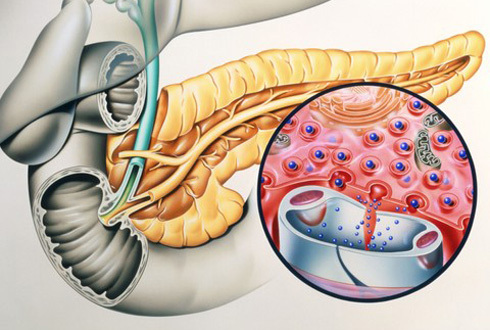
This organ is necessary to regulate metabolic processes, allows the digestive system to work normally. system, and also digests proteins, controls the rate of sugar in the blood, participates in other important processes.
With inflammation of the organ, serious complications may develop, including diabetes or tissue and cell necrosis. It is important to understand the symptoms of the disease and the treatments for the organ.

Content:
-
1 The main signs of inflammation
- 1.1 Acute form
- 1.2 Chronic form
-
2 Localization of inflammation
- 2.1 Inflammation of the head of the gland
- 2.2 Inflammation of the tail gland
- 3 Causes
- 4 Diagnostics and analyzes
-
5 Treatment and elimination of inflammation
- 5.1 Treatment of the acute form
- 5.2 Treatment of the chronic form
- 6 Useful video
The main signs of inflammation
The pancreas is located at the back of the stomach and close to the gallbladder.
When pains appear in the gallbladder, they begin to spread to the gland.
At the very beginning of the development of the disease, the symptoms are general in nature, and the inflammatory process can be recognized by the characteristic signs:
- The development of pain syndrome, which has a shingles.
- Severe pain under the ribs in the back.
- Decreased appetite.
- The appearance of nausea and vomiting.
- Reducing pain with inclined movements.
- In some cases, a rise in temperature is possible.
The symptoms described can develop in adults and children, regardless of gender. Often the described signs are confused not with pancreatitis, but with osteochondrosis, other pathologies.
Therefore, only a doctor can accurately establish the diagnosis, and with inflammation of the pancreas, this does not cause any particular difficulties.
The onset of pancreatitis is always accompanied by an acute course and severe pain.
It is enough to palpate so that the doctor can understand that it is not the back or the spine that hurts.
Acute form
If the course of pancreatitis is acute, then for such a disease, medication treatment is mandatory, and it is carried out in a hospital.
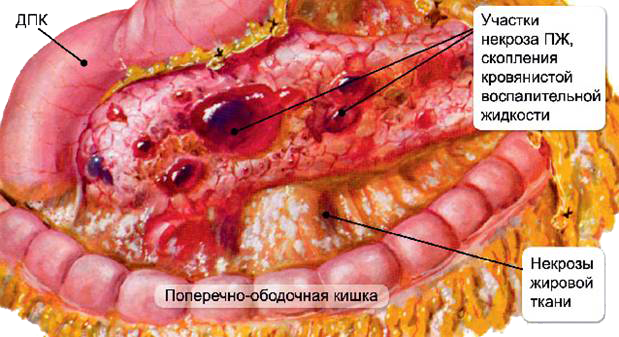
First of all, the goal of treatment will be to calm the pancreas, reduce the load on it. Otherwise, the inflammatory process can turn into tissue necrosis, which causes undesirable consequences and even death.
When the first pains and other characteristic symptoms appear, you should immediately consult a doctor.
In acute pancreatitis, approximately 15% of patients die, and this happens due to late treatment to doctors.
The main symptoms of the disease are as follows:
- Tachycardia develops.
- Frequent vomiting appears.
- The pain is localized around the navel.
- The temperature rises.
- Disorders with stool begin, diarrhea appears.
It is important to quickly stop the main symptoms, and for this, not only medicines are used, but also proper nutrition, adherence to the daily regimen.
In some cases, folk remedies can help, which improve the effect of the pills, as well as relieve symptoms of the disease and strengthen the immune system.
Chronic form
After the acute form, the appearance of the chronic phase of the disease follows. In this state, the inflammation will be prolonged, the symptoms are less pronounced, and the patient may develop additional diseases of the gastrointestinal tract, for example, inflammation of the liver, gallbladder and other disorders.
Among the main symptoms of the chronic phase of pancreatitis are:
- Aversion from eating fatty foods.
- With exertion or stress, pain appears under the ribs on the left or right.
- Stool is disturbed.
- Decreased appetite.
- The patient's weight decreases.
Based on the main symptoms and complaints, doctors can determine the form of the chronic phase of the disease. It happens:
- Asymptomatic - the patient has no symptoms or their severity is so weak that the person simply does not notice the disorder.
- Painful - pain of varying strength, character and intensity develops from time to time. The symptom is localized under the ribs.
- Recurrent - pain often manifests itself with the disease, but if you undergo treatment and follow the recommendations of the doctors, the symptoms disappear. There is a possibility of their re-development in the future.
- Pseudotumor - begins with an increase in the head of the pancreas, as well as infection of the organ with fibrous tissues.
After establishing an accurate diagnosis, specialists can determine the correct therapy regimen.
It is also important to understand the place of inflammation of the pancreas, because the organ has several parts, on which the symptoms and methods of therapy depend.
Localization of inflammation
With inflammation of the gland, pain can be of a different nature and manifests itself in different places.
Patients may have aching, stabbing or cutting sensations, often appearing under the ribs, but may radiate to the abdomen, back, or groin. The type of pain depends on the site of the inflammation.
The pancreas itself has:
- Head.
- Body.
- Tail.
All parts described can be inflamed, but often the problem occurs in the tail or head.
Inflammation of the head of the gland
The general growth of the pancreas with inflammation is safer than the defeat of individual parts. The head of the organ has an unusual shape and structure.
This part is located in adults near the first 2 vertebrae, in children it is slightly higher.
In an adult, its normal size is considered to be no more than 3.5 cm, and in case of deviations from the indicator, we can assume that there is a pathology.
Inflammation of the head can be determined using ultrasound, and the disease itself is very dangerous.
It can be benign and malignant, and when diagnosed, prompt surgical treatment should be carried out.
Pathology often develops from the age of 60. Even a visually experienced doctor can determine such a localization of inflammation. The patient's skin color changes, the eyes turn yellow. Treatment is possible only in a hospital setting.
Inflammation of the tail gland
The tail of the organ has a curved top that resembles a pear; this part fits snugly against the spleen.
The normal tail width is considered to be 20-30 mm, and the length is up to 15 cm. With inflammation, obstruction of the splenic vein and other complications can develop.
The growth of the tail of the gland is a rather rare disease, but when detected, the disease is immediately regarded as malignant and almost impossible to cure.
The reason for the complexity of the treatment lies in the late detection, when the sizes become very large.
During surgery, doctors often have to remove some organs or parts of them.
Causes
The main causes of pancreatic diseases are alcohol consumption and poor nutrition.
In addition, it is necessary to highlight some of the possible factors that cause the inflammatory process:
- Diseases of the gallbladder and excretory tract.
- Gallstone disease.
- Pathology of the stomach and duodenum.
- Hypertension, pregnancy, diabetes.
- Poisoning the body with chemicals or food.
- Improper or prolonged use of medications.
- Binge eating.
- Mechanical damage to the organ, abdominal cavity.
- Infectious contamination.
- Genetic predisposition.
The described reasons negatively affect the gland and the entire digestive system, therefore each of the factors can cause an inflammatory process.
People at risk need to be especially vigilant to prevent the development of pancreatitis.
Diagnostics and analyzes
If there are characteristic symptoms, after the examination, the doctor suggests the development of pancreatitis, then the patient needs to undergo a set of examinations, which includes:
- Abdominal ultrasound.
- X-ray examination.
- CT and MRI.
- Laparotomy.
After the diagnosis is established, patients need to monitor the condition of the affected organ all the time.
To do this, you should often take tests and undergo routine examinations with a doctor. Basic analyzes for assessing the condition:
- General and biochemical blood test.
- Analysis of feces and urine.
- Saliva analysis.
Treatment and elimination of inflammation
When a pain syndrome appears in the gastrointestinal tract, you should immediately seek help from a doctor.
Often, pancreatitis is treated in a hospital setting, doctors immediately administer anesthesia and suppress the secretion and activity of enzymes.
In addition, the spasm of the ducts is eliminated by medical methods, antibiotics are prescribed to exclude the addition of a secondary infection.
It is imperative that during the treatment and after it, the patient must use a strict diet, which consists in the correct use of products, the selection of the correct heat treatment of dishes.
Nutrition with medicines makes it possible to restore the work of the gland, the secretion of enzymes is normalized and blocks the active ones, which can lead to undesirable consequences.
Treatment of the acute form
In the acute course of the disease, patients must be quickly sent to the hospital for treatment.
The first step is to use fasting for 3 days, which allows you to relieve the load on the inflamed parts and improve the condition of the pancreas.
Only water is allowed, and nutrition is carried out by the drip method, using nutrient solutions.
To reduce inflammation, eliminate symptoms of intoxication and reduce the activity of enzymes, analgesics are used, which are initially administered by drip methods.
Additionally, cold compresses are used, which are applied in the area of the inflamed organ.
When infected with pathogenic bacteria, patients are prescribed antibacterial treatment. In the most difficult situations, surgical treatment may be required.
Treatment with acute medicines includes several main goals, depending on which different drugs are used:
- To restore the water-salt balance, with severe dehydration due to diarrhea and vomiting, physiological solutions are used.
- In acute cases, powerful pain relievers must be used.
- To remove toxins and harmful substances, diuretics are prescribed, including Lasix or Diacarb.
- Antispasmodic tablets and solutions, for example, Papaverine, Drotaverin, allow to reduce the tone of the ducts of the organ.
- Anti-vomiting drugs help stop nausea, namely Cerucal and its analogues.
- It is possible to reduce the secretion of enzymes by using Lansoprazole and antisecretory drugs.
- With high acidity in the stomach, antacids are prescribed.
The described drugs are used for exacerbation of the chronic phase of the disease. During remission, you can use enzyme drugs, including Pancreatin or Mezim.
Pancreatitis can have different prognosis, especially in adults. With timely treatment, they will be favorable, but the patient needs to change his usual diet and lifestyle, even if there are no signs of illness.
Treatment of the chronic form
In the chronic phase of pancreatitis, the main symptoms may appear, and pills may be required to eliminate them.
If pain develops, then it is imperative to use medications. In addition, the restoration of the gland itself should be addressed, so it is important to take medications to maintain basic functions and improve the functioning of the digestive system.
The chronic phase diet is used until the end of life. At home, it is allowed to use only 2 groups of medicines:
- Pain relievers.
- Enzymes.
The pain syndrome with inflammation of the pancreas can become so severe that it cannot be compared with the sensation during a heart attack.
An increase in the symptom develops after a meal, exertion and in a supine position. For relief, you can use cold and ice compresses, as well as drink special pills.
This is the only way to achieve a rapid decrease in intensity. As a rule, they begin to use antispasmodic drugs that eliminate mild and moderate pain:
- No-shpa.
- Drotaverinum.
- Papaverine.
Additionally, you can use analgesics that stop severe pain. Among them, it is allowed to use Paracetamol or Aspirin.
Treatment consists not only in removing the main signs of the disease, but also in improving the work, maintaining the functions of the organ.
For this, enzymes are used that must be drunk after meals in order to normalize the digestive processes.
The exact dose is determined by the doctor for each patient personally. Often, pills from this group have to be drunk all their lives.
Among the most famous and effective enzymes, Pancreatin and Mezim can be distinguished, but the name of the drugs may differ, they are chosen individually.
Some medicines can cause allergies, it is best to use products based on natural ingredients.
In the most severe cases, doctors prescribe insulin. This need arises due to a severe malfunction of the gland, which cannot fully work, for this reason diabetes develops.