Diffuse changes in the pancreas
Each organ during ultrasound examination can reflect ultrasound waves.
Diffuse changes in the pancreas are signs of a pathological process that are detected through this diagnosis.
Echoes of diffuse changes in the pancreas concern the entire organ or a specific part of it.
Such symptoms indicate a past or acute inflammation, and also signal disorders in the bloodstream of the organ in question.
Some changes in the pancreas are observed over the course of life, therefore it is necessary to take into account this circumstance.

Content:
-
1 What are diffuse changes
- 1.1 Minor changes
- 1.2 Moderate changes
- 1.3 Unexpressed changes
- 1.4 Pronounced diffuse changes
- 2 Diagnostics
- 3 Symptoms
- 4 Treatment
- 5 Diet
- 6 Prophylaxis
- 7 Forecast
- 8 Useful video
What are diffuse changes
Pronounced diffuse changes in the pancreas are the process of mutual penetration of various types of cells in one tissue, in the process of mixing healthy and pathological areas.
When not all parenchyma is involved in the process, it will be called focal, not diffuse.
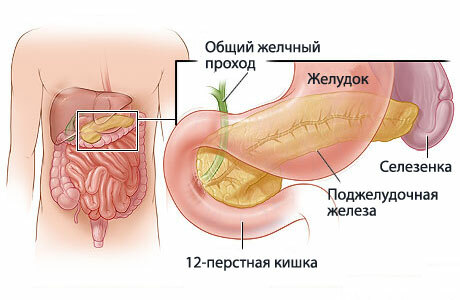
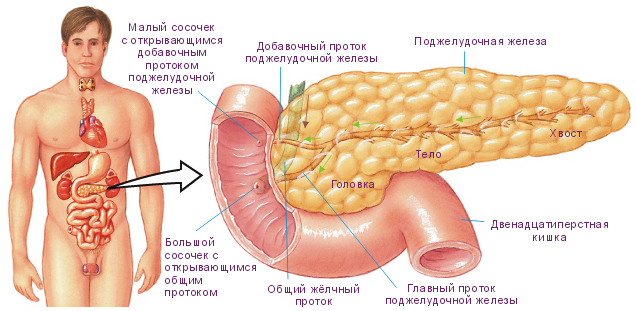
The pancreas directly affects the digestive process. The gland has 3 main parts - the head, body and tail.
The cells of which it consists are characteristic only of this organ and have a certain structure.
Due to various circumstances, including age-related changes, tissue necrosis begins, and instead of them, fatty infiltration is formed or a connecting layer is formed.
Due to the structural features of various types of cells, ultrasound reveals echographic signs of diffuse changes, while the main dimensions of the pancreas are not disturbed.
These pathological changes are caused by pathologies of the hepatobiliary system, endocrine disorders, and insufficient blood supply.
The risk of cell transformation suggests that the process will affect the glandular part, which performs the main functions of the pancreas.
This means that diffuse changes are not a diagnosis, but a sign of a pathological process that can be detected by ultrasound.
Minor changes
If the degree of tissue degeneration is not expressed clearly, then there will be no symptoms, and a violation of the functioning of the gland will not appear. This condition can lead to:
- Unbalanced diet.
- Postponed inflammatory pathology.
- An increase or decrease in secretory function, provoking psychoemotional shocks and depressive states.
- Certain medications.
Often, such changes are temporary and will not cause alarm, since they do not entail complications.
Moderate changes
With an average severity of changes within the parenchyma, symptoms are also absent.
But with ultrasound, edema is additionally detected, indicating more dangerous provoking factors of the pathological process. This condition can be caused by:
- Inflammation.
- Exacerbation of pancreatitis.
- Malfunction of the gallbladder.
- Failure in the functioning of the duodenum.
- Hepatomegaly.
If a moderate degree of this disease is diagnosed, additional diagnosis is required in order to establish the original cause of the disease.
Unexpressed changes
Often, the problem is detected randomly or if the patient undergoes a comprehensive diagnosis of the entire digestive tract.
There are no specific symptoms of functional impairment, but other complaints may be noted.
They arise due to the fact that malfunctions in the functioning of the liver or other organs can act as a provoking factor.
A similar condition is the result of a past viral disease or a consequence of a hereditary disposition.
Usually, unexpressed changes do not affect the functioning of the gland.
Pronounced diffuse changes
A rather complex degree of damage to the parenchyma is noted in the inflammatory process in the pancreas - pancreatitis.
With an acute course, they are more pronounced than with a chronic one.
Replacing a large area with other cells leads to disturbances in the functioning of the pancreas and the emergence of symptoms of discomfort in the patient.
Usually, it is a very unpleasant sensation that the patient turns to a specialist.
Diagnostics
Diagnostic measures of diffuse changes in the organ in question are carried out by ultrasound.
Thanks to this method, the specialist detects an increase or decrease in the density of the tissues of the pancreas, changes in its structure, and detects inflammatory foci.
However, confirmation of such a pathological process is possible only through auxiliary examinations.
The patient undergoes a biochemical blood test and endoscopic diagnostics. This makes it possible to identify inflammation and give a complete picture of the state of the tissues of the gland.
In addition to research, the specialist collects anamnesis, starting from the patient's complaints.
Probing the pancreas and instrumental diagnostics will become mandatory. The study of diffuse changes in the organ under consideration suggests:
- Revealing the content of pancreatic enzymes and glucose in the bloodstream.
- Performing a general blood test.
- Identification of pancreatic enzymes in urine and the ratio of inhibitor and trypsin.
- Ultrasound of the pancreas (dimensions of the gland, seals and edema, tone of the viral duct).
- Implementation of CT and ERPHG.
Symptoms
Clinical manifestations and symptoms vary from the underlying pathological process that triggered the restructuring of the gland.
The patient is able to feel heaviness in the stomach, pain in the epigastric on the left side, belching, heartburn and difficulty in emptying.
Diseases and their manifestations, accompanied by this symptom:
- Loss of appetite.
- Constipation.
- Diarrhea.
- Feeling of heaviness inside the stomach and discomfort.
In addition, the disease is manifested by other signs of diffuse changes in the pancreas:
- Severe discomfort, poisoning, gag reflex. This can occur as a result of the penetration of digestive enzymes through the tissues beyond the borders of the pancreas. Often, this condition is associated with a rapid heart rate and a decrease in blood pressure. The provoking factor will be the acute form of pancreatitis. Only intensive therapy or surgery improves the patient's condition.
- Pronounced, but not critical, painful discomfort. This is observed with a protracted course of pancreatitis. At this time, damage to the pancreas leads to a failure in the production of digestive enzymes. On the gland, areas with swelling and minor hemorrhages may be found.
- Mild and gradual changes within the body. With fibrosis, specific symptoms are not expressed intensively, but, over time, they increase. A decrease in the functional ability of the gland leads to hormonal disruption and metabolic disturbances, noticeable in digestive disorders, sudden weight loss, and diarrhea. Dystrophic processes of a chronic nature cause a lack of protein and activation of autoimmune reactions and allergies. Diabetes is considered a dangerous consequence of the pathological process.
When the cells of the gland have been replaced by the fatty tissue of the pancreas, restoration of its structure is not possible.
An irreversible process over time leads to damage to new healthy areas.
The digestive glands will become much smaller, the functioning of the organ in question will be disrupted, which affects the work of the whole organism.
The symptoms of lipomatosis vary from the area of the pathological process. With its uncontrolled progression, the patient experiences discomfort and complaints about the functioning of the digestive tract.
Treatment
Often, patients turn to specialists with the question of how to treat pathology.
With diffuse changes in the pancreas, treatment is carried out only in the situation when they are pathological.
Very often, such changes signal a past illness or probable organ damage.
Directly therefore, when unpleasant symptoms are detected, it is required to consult a specialist for the purpose of an appropriate diagnosis and implementation of effective therapy.
- When diffuse changes are provoked by the chronic course of pancreatitis, then in order to confirm the pathological process, the patient undergoes additional tests. The emphasis should be on accompanying symptoms. Sudden weight loss, painful discomfort, and dyspepsia confirm the condition. For the treatment of these deviations, the patient is prescribed dietary food and physiotherapy.
- When diffuse changes in the structure of the pancreas have formed due to diabetes, then treatment is aimed at maintaining the sugar content in the bloodstream and following the diet. Most experts advise patients to use certain recipes for alternative therapy, for example, herbal treatment.
- When unpleasant symptoms appear at an advanced age, such processes do not need therapy. To support the body, patients are advised to have a diet and an active lifestyle.
Based on what has been said, it is possible to conclude that diffuse changes in the organ under consideration do not pass independently.
The specialist diagnoses the provoking factor of disorders in the functioning of the gland, eliminates it and prescribes restorative treatment.
Diffuse changes occur as a result of an unbalanced diet, addictions.
Therefore, in order to get rid of the pathological process, it is required to fully reconsider the lifestyle.
A properly qualified specialist should treat diffuse changes in the pancreas, starting from the individual characteristics of the organism.
Diet
The dietary food for the pathology under consideration varies from the final diagnosis.
Changes are triggered by pancreatitis, diabetes or other dangerous diseases, the therapy of which is long-lasting and needs to be followed by a special diet.
However, regardless of the pathological process, a patient with diffuse changes in the organ in question should know that the gland does not perceive alcoholic beverages.
Drinking alcohol provokes an exacerbation of unpleasant symptoms and a deterioration in well-being.
All patients with diffuse changes adhere to a low-calorie diet, which will be based on food products of plant origin, cereals and dairy products.
At this stage, it is required to completely exclude smoked, salted and spices that enhance taste and appetite. You should not overeat, you need to prevent the intense release of pancreatic juices, since this can cause attacks of pancreatitis.
Diffuse changes signal the onset of diabetes. Fast-digesting carbohydrates must be completely removed from the menu: sweets, fruits.
The diet should contain grains. In the presence of unpleasant symptoms in the organ in question, dietary food is prescribed right there.
Nutrition is adjusted according to the disease that led to the change.
Prohibited products:
- Any alcoholic beverages, even in small quantities.
- Spicy, fatty, sweet, salty, fried, smoked food.
- Packaged juices, canned goods, spices, sausages.
Approved products:
- Vegetables and fruits (it is optimal to exclude the consumption of citruses, since they contain a large amount of sugar).
- Low-fat meat and fish products.
- Fermented milk products.
- Porridge.
The portions should not be large, it is recommended to eat 5-6 times. Food must be steamed and overeating is prohibited.
Reception of salty products leads to the deposition of salts, therefore it is optimal to get rid of it, the same applies to sugar. It is forbidden to eat dry food, but you should not drink too much.
Prophylaxis
Preventive measures of pathology in the organ in question mean following certain prescriptions:
- Alcoholic drinks, smoking, unbalanced diet - negatively affect the work of the pancreas.
- The constant consumption of herbal teas will be an excellent prevention of unpleasant symptoms. With initial pain, it is required to give up fatty, salty and sweet foods.
- Nutrition needs to be varied. It is required to eat fractionally - 5-6 times a day, but in small portions. Moderation in food must be followed.
- If there are any pathologies of the digestive tract, it is required to constantly be examined and consult a specialist.
Following all of the above preventive measures prevents diffuse changes and allows the gland to work properly.
Forecast
The prognosis of the pathological process under consideration varies from diagnostic data.
So, when the patient has minor, unexpressed or moderate diffuse changes in the pancreas, then they do not need special therapy.
When they are expressed, special treatment will be required. The disease can be treated both medically and surgically.
On the whole, the forecast will be favorable. Timely therapy and adherence to preventive measures will make it possible to maintain the working capacity of the pancreas.