Pancreas: disease symptoms and signs of disease
Each organ of the abdominal cavity performs a number of functions assigned to it. The pancreas is one of them.
For various reasons, it can be negatively affected by external factors.
The pancreas, the symptoms of a disease of this organ, are inextricably linked with the work of the liver.
The pain in the pancreas is very severe. At the time of an attack, a person may even lose consciousness. Why does the pancreas hurt?
What are the main signs of pancreatic disease in women? Symptoms in the presence of a pathological process in the body appear in patients depending on their gender, age and severity of the disease.
In this article we will talk about how the pancreas hurts, what drugs should be taken take to relieve discomfort in the left hypochondrium, what to do at the time of pain attack, etc.
But first you need to understand the functional features of this organ.

Content:
- 1 Pancreas - general information
-
2 Severe pain in the left hypochondrium - which indicates
- 2.1 Pancreatic cyst
- 2.2 Acute and chronic pancreatitis
-
3 What provokes the appearance of pancreatitis
- 3.1 Cancer of the gland
- 4 How to recognize an ailment of the gland to a woman
- 5 What to do at the moment of a painful attack
- 6 Factors negatively affecting the gland
- 7 Therapy of pancreatic ailments
- 8 Useful video
Pancreas - general information
Without a doubt, it is one of the most important organs of the gastrointestinal tract. It is PZhZh that is responsible for the production and synthesis of enzymes, without which digestion is impossible.
Pancreatic disease is a serious problem that should be addressed in a timely manner.
In case of pain in the pancreas, you should immediately go to the hospital, because the earlier doctors diagnose the disease, the higher the likelihood that it will be possible to get rid of it without complications.
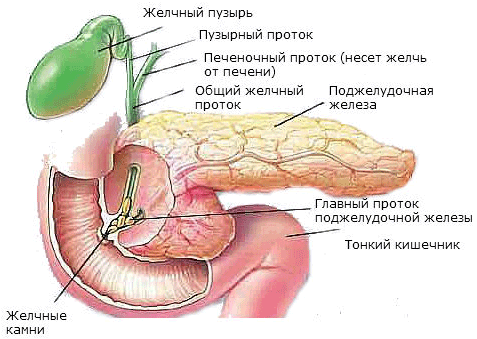
The pancreas is located in the depths of the abdominal zone. Its shape is oblong. Sometimes the organ bends; in childhood, such a problem is not considered a pathology.
However, if the bending of the gland leads to its dysfunction, it is likely that the problem requires the intervention of a specialist. In this case, severe pain in the pancreas may be felt.
Important! The pancreas is essential for the body to break down important substances such as carbohydrates, fats and proteins. People who are faced with dysfunction of this organ are often overweight.
As for the mechanism of the movement of enzymes that facilitate the work of digestion, then after sitting in gastric juice, they enter the duodenum.
The symptoms of pancreatic disease in women are manifested in different ways. One of them is loose stools.
The reason for its appearance with gland dysfunction is insufficient enzymatic activity. But if the work of the organ is stable, then the enzymes and hormones produced by it act on food right in the intestine.
One of the main hormones synthesized by the pancreas is insulin. Once in the bloodstream, this chemical compound regulates sugar metabolism in the body.
With pain in the pancreas, dysfunction is often observed. As a result, there is a high likelihood that a person will develop diabetes mellitus.
According to the anatomical structure, the pancreas is divided into 3 parts: tail, head and body. Such a structure takes place already at the 5th week of a person's life.
That is, RLJ is formed in the fetus in the womb. Now let's look at the signs of pancreatic disease.
Severe pain in the left hypochondrium - which indicates
When a person's pancreas hurts, it is always unpleasant. Coping with acute, stomach-wide pain is not easy. When it is difficult to tolerate it, it is important to start therapy.
If the pancreas hurts, it is likely that a pathological process develops in the body.
You should know the signs of pancreatic diseases in women, so that in case of pancreatic dysfunction, therapeutic measures can be taken in time.
But this is where the problem arises. The fact is that many ailments of the gland in their symptoms are very similar to the pathology of the gastrointestinal tract.
Therefore, even experienced gastroenterologists often have difficulties in making the correct diagnosis.
However, the symptoms and treatment of pathology leading to glandular dysfunction is a studied issue.
So, pain in the pancreas may indicate:
- Pancreatitis (acute form).
- Oncology.
- Diabetes.
- The presence of a cyst.
- Cystic fibrosis.
- Pancreatic necrosis.
- Inflammation of the gland.
- Presence of stones in the pancreas, etc.
This is not a complete list of diseases that are characterized by the appearance of unpleasant sensations in the left hypochondrium.
We propose to consider in more detail the specifics of a pain attack for various ailments.
Pancreatic cyst
A cavity limited capsule in which fluid accumulates is a cyst. This is a serious disease of the pancreas, ignoring the symptoms of which can lead to its dysfunction.
Where does the cyst spread? A neoplasm filled with fluid can be spread both on the body of the organ and near it.
Symptoms of pancreatic disease in women with cysts are more severe than in men.
For example, in the presence of this ailment, girls often have diarrhea or constipation. The manifestation of these symptoms is a clear sign of gland dysfunction.
Some people are born with a cyst. In this case, the presence of small watery neoplasms on the body of the organ does not lead to its dysfunction.
But the acquired cyst is always accompanied by a pathological process in the gastrointestinal tract.
Interesting! In medicine, there is a diagnosis - "false cyst". It is characterized by the presence of a small neoplasm on the pancreas body that has arisen during an exacerbation of pancreatitis. Inside such a cyst, in addition to fluid, there is necrotic tissue.
If the cyst is "false", then its location on the body of the gland can be anything. How does the pancreas hurt in the presence of this pathology?
The discomfort is stabbing. It usually gets worse after a meal. But a cyst is not the only reason that provokes its appearance.
Acute and chronic pancreatitis
Regardless of the form of pancreatitis, the patient suffering from it will regularly encounter severe pain in the left hypochondrium.
The chronic form of this pathology, in contrast to the acute form, lasts a long time.
This means that a person will face the symptoms of chronic pancreatitis regularly, of course, until the end of treatment.
At the beginning of development, the disease may be accompanied by hemorrhage, which cannot but be alarming. At first, the pain is dull in nature, it intensifies after eating.
What provokes the appearance of pancreatitis
- Alcoholism.
- Abuse of fatty foods.
- Cholelithiasis.
- Duodenal ulcer and stomach.
It is not always possible to get anesthesia with the help of analgesics in the presence of pancreatitis. However, patients who have been diagnosed with it cannot help but resort to the use of analgesics.
Advice! With an exacerbation of pancreatitis, you can take Nurofen, Analgin, Spazmalgon or No-shpa. Before you drink one of these pills, carefully read the instructions that came with it.
One of the most dangerous signs of this disease is a decrease in the enzyme activity of the gland.
When a complex of enzymes is produced in the human body at a slow rate, the stomach malfunction.
The result is constipation followed by diarrhea. Periodically, the disease worsens.
A common cause of exacerbation of pancreatitis is the lack of timely treatment. The main characteristic of this pathology is severe pain that occurs in the area of the left hypochondrium, that is, exactly where the gland is located.
With an exacerbation of this form of pathology, the process of digestion by the pancreas of its own cells is observed.
He is of a pathological nature.
Cancer of the gland
When the cells of the tissue surface of an organ divide rapidly, a neoplasm forms on its body. Most often, with such a division, a malignant tumor appears.
As it grows, the pancreas deforms, and this, in turn, leads to its dysfunction.
As a result of disruption of the organ, a person regularly experiences severe pain in the upper left side of the stomach.
There are also other pathological phenomena, for example, insufficient enzymatic activity, difficult digestion and delayed breakdown of nutrients that enter the body along with food.
The manifestation of the symptoms of cancer of the gland depends on the localization of the malignant neoplasm. For example, if it is on the head, the patient will have jaundice.
This sign indicates that the common bile duct is compressed. But if a cancerous tumor is located on the body of an organ, the patient will be faced with a slow production of insulin by the gland.
As a result, he will develop diabetes mellitus. It is also worth noting that doctors distinguish a separate type of pancreatic tumors - hormone-active.
They can have not only malignant, but also benign etymology.
How to recognize an ailment of the gland to a woman
Despite the fact that each of the ailments we have considered is characterized by the manifestation of individual symptoms, they are united by the fact that the development of each of them becomes the result of a difficult work of the gland.
The development of any disease of this organ disrupts its normal operation. As a result, a sick person is faced with the manifestation:
- Nausea rarely accompanied by vomiting. Such an unpleasant attack can appear after eating a large amount of food eaten in 1 meal. It is worth noting that at a late stage of the development of the disease, a feeling of faintness appears even when remembering a particular product.
- Feeling unwell. Weakness and malaise are constant companions of the patient with problems with the pancreas. The manifestation of this symptom is the result of a slow breakdown of nutrients in the body.
- Severe pain that makes it impossible for the patient to maintain normal performance. A painful attack occurs at different times of the day. Most often, its appearance is the result of nutritional errors.
- Bad taste of metal in the mouth.
- Drying of the skin.
- Disrupted work of the gastrointestinal tract. Constipation is regularly observed in patients who are faced with a deformation of the gland. Intestinal obstruction occurs due to insufficient activity of the enzymatic production of the organ. Discomfort occurs at the location of the gland, that is, in the left hypochondrium, as well as in the back and shoulder blades.
- Oily shine of feces.
- An increase in body temperature.
Advice! In order not to provoke the appearance of a feeling of lightheadedness with dysfunction of the gland, refuse to eat foods that contain foods that have a pungent smell and taste. "Contact" with such a dish will surely provoke vomiting.
The manifestation of the above symptoms indicates dysfunction of the pancreas. To restore its normal operation, it is required to take remedial measures.
In some cases, delaying treatment may lead to the need for an operative method.
What to do at the moment of a painful attack
First, remember that panic is a bad helper. Yes, severe discomfort is an alarming, but nonetheless solvable problem.
So, step-by-step instructions for assisting a patient in violation of the normal functioning of this organ:
- First of all, make sure that there is access to fresh air in the room where the sick person is. Open all windows in the house. This is important, because at the time of a painful attack, a person may experience difficulty breathing.
- Call an ambulance. If it is not possible to endure pain, you should not count on its extinction on its own. Trust the experts! Be sure to tell your doctor why your pancreas hurts, based on your earlier diagnosis, what symptoms arise with this, etc.
- While the ambulance is on the move, try to help the person get pain relief. He needs to take an antispasmodic, because such discomfort is spastic in nature. If everything is done correctly, the pancreas will cease to bother. Symptoms of a pain attack quickly stop after taking Spazmolgon, No-shpa, Baralgin, or another drug of the antispasmodic group.
- Do not feed the patient under any circumstances! This will greatly increase the pain. If the signs of pancreatic disease clearly make themselves felt, it becomes necessary to follow the rules of a therapeutic diet.
- Sit down the patient so that his body is slightly tilted forward. In this position, the discomfort is felt less.
- Put cold on the area of the left hypochondrium, this will help partially or completely stop the discomfort in the gland area. For this purpose, you need to use a heating pad filled with ice. To avoid frostbite. Wrap the heating pad with a cloth.
- Do not take enzymes during a painful attack. In the presence of severe pain, they will not have a medicinal effect.
Advice! If taking the pain pill does not give the desired results, an injection must be given. In this case, intravenous administration of an analgesic and antispasmodic drug is recommended. For example, a patient can be injected with an ampoule of Kitanov and No-shpa.
Factors negatively affecting the gland
It is more difficult for people prone to obesity or obesity to resist negative factors that negatively affect the functioning of the pancreas.
This is due to their wrong lifestyle. First of all, women are under threat.
Yes, the beautiful half of humanity is more often faced with dysfunction of this organ.
Let's consider the main factors contributing to the deterioration of the work of the pancreas:
- Cholecystitis and cholelithiasis. These are dangerous diseases, ignoring the treatment of which can lead to serious consequences. Since the work of internal organs in the human body is interconnected, and the gland is connected to the liver ducts through which bile moves, then disruption of the liver will certainly affect the functioning PJJ.
- Alcohol abuse. Every child knows that drinking alcohol is harmful. However, not everyone knows what effect it has on the tissue surface of the gland. The answer is destructive. Do not forget that the liver has the ability to recover. The pancreas cannot "boast" of such a property, therefore, using ethyl alcohol, you need to be prepared for pain in the left hypochondrium.
- Non-compliance with dietary rules. First of all, we are talking about low intake of vitamins. A person, neglecting his health, can eat a large amount of fried and fatty foods per day, without even knowing what harm he is doing to his body. Abuse of fatty foods is one of the main factors in the onset of pancreatitis.
- Negligence of the surgeon. This is a specific factor that cannot be ignored in this list. Sometimes, during the abdominal operation, it is possible to make a medical error, due to which pancreatitis will develop - an ailment, the development of which always leads to gland dysfunction.
- Food poisoning. When a disease-causing toxin enters a person's stomach, the tissue of his pancreas can be destroyed. Some chemical compounds have a pathological etymology and can destroy the tissue surface of internal organs. First of all, we are talking about food poisons. To prevent food poisoning, you should only eat fresh and high quality food.
- Autoimmune ailments. This is a specific type of disease, during the development of which the human body perceives its cells as foreign. That is, there is a process of tissue rejection. This affects the work of internal organs, including the pancreas.
Therapy of pancreatic ailments
To begin with, it should be noted that if the dysfunction of the gland is a complication of a disease, then its work can be normalized only by stopping its symptoms.
That is, if a malfunction of this organ is one of the symptoms of acute pancreatitis, the gastroenterologist must inform the patient about the rules for taking medication, diet and correction lifestyle.
Speaking of diet. You cannot count on recovery without it. Diet is one of the most important stages in the treatment of the gland.
To normalize digestion, the patient must follow these rules:
- Meals should be fractional. It is advisable to sit down at the table at least 6 times a day. In case of impaired work of the pancreas, the use of a large amount of food at a time is unacceptable. Otherwise, vomiting and severe pain can be provoked.
- All portions that the patient previously ate should be reduced by 1.5 times. This will help minimize the load on the gland.
- Salty, smoked, fried and fatty foods are completely excluded from the menu. The patient should forget about its existence during the diet.
- To restore the functioning of the pancreas, it is recommended to include in the diet foods rich in fiber. These are buckwheat, celery, persimmon, bell pepper. Eating these foods every day is not worth it, since a large amount of fiber will be difficult for the stomach to absorb.
- Sour fruits and berries are excluded from the menu.
- The consumption of canned food and salt should be minimized. Slight salting of dishes is allowed. However, vegetables should not be salted before eating.
- The food that the patient eats should be at room temperature. Do not eat food that is too cold or too hot.
These are the basic rules of the diet, following which will help to establish the functioning of the gland and restore the normal digestive work of the body.