What to do in case of pancreatic insufficiency?
Symptoms of pancreatic insufficiency( hereinafter abbreviated as pancreas) include a feeling of heaviness in the stomach( usually it lasts a few hours after eating fatty foods), as well as frequent heartbeats, bony aches and many other symptoms that will be discussed later in the article.
The pancreas plays an important role in the human body, and similar symptoms suggest that it stops functioning normally.
This can cause all body systems to fail.
Pancreas failure
Content:
- Pancreatic failure
- External and exocrine insufficiency
- Enzyme and endocrine deficiency
Like all other pathologies, pancreatic insufficiency has its own causes.
This organ of the digestive system is the largest gland of the body, which can function "for wear" for a long time, without giving any signs of congestion.
The pancreas is endowed with intrasecretory and exocrine functions.
With their help, the body can regulate metabolic processes in the body and produce digestive enzymes that promote the splitting of complex components of food in the intestine.
If the pancreas for some reason ceases to release pancreatic juice containing digestive enzymes, then pancreatic insufficiency occurs.
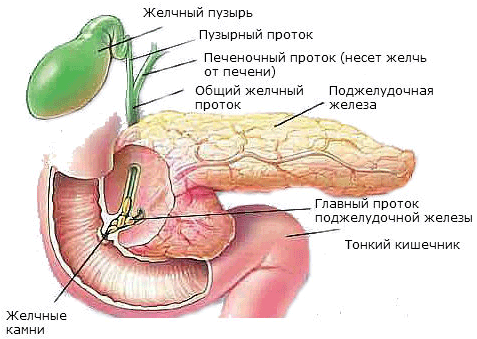
In the list of the main reasons for which there may be irregularities in the digestive organ, there are:
- pathological changes in the cells of the organ;
- deficiency of vitamins of group B, vitamins C and E, nicotinic acid;
- low protein and hemoglobin levels in the blood;
- food is fatty, too sharp and salty dishes.
The cellular structure of the pancreas can undergo pathological changes due to the consumption of alcoholic beverages. As a result, the tissues of the organ are replaced with a connective tissue, which disrupts the work of the whole organism.
For example, iron may stop producing insulin, which the body needs to absorb glucose. As is known, as a result of such a violation a person becomes a diabetic.
In addition, the gland tissue can infect the infection, helminthic invasion and collagen diseases.
But the most common pathologies that have a significant effect on the structure of the tissues of the digestive organs are acute and chronic pancreatitis.
In the process of synthesis of digestive enzymes, vitamins of group B actively participate, without which the liver ceases to function normally.
If the release of enzymes and bile into the 12-colon is going to happen in violation, then the digestion process will not be successful.
With the failure of the prostate, vitamins of this group are included in therapy. Deficiency of nicotinic acid( B3 or PP) causes a decrease in the production of trypsin, amylase and lipase.
The lack of vitamins C and E causes the formation of stones in the bile.
Video:
Among the main reasons why a person has a disruption in the operation of the pancreas, there is a hereditary predisposition.
In this case, even an exemplary lifestyle and diet can not be a guarantee that the disease does not appear.
Pancreatic insufficiency is of four types: exocrine, exocrine, enzyme and endocrine.
Each type of pathology has its causes of appearance, symptoms of the onset and peculiarities of the treatment, which will be discussed later.
External and exocrine insufficiencies
The term exocrine insufficiency of the pancreas is used in medical practice with a reduced secretion of the secretion of the secretion, which facilitates the splitting of complex components of food into useful substances, which are then easily absorbed by the body.
The decrease in the production of such a digestive enzyme is explained by the decrease in the number of cells in the pancreas that are responsible for its production.
Symptoms of exocrine insufficiency can be attributed to specific signs, because with their help it is possible to diagnose this type of pathology.
In this case, a person simply can not tolerate spicy and fatty foods, since after eating, a stool is broken and a heaviness in the abdomen is felt for a long time.
In some people with exocrine pancreatic insufficiency, colic and bloating occur.
Often, these symptoms are accompanied by the appearance of pain in the bones and cramps, the appearance of dyspnoea and rapid heartbeat.
All these symptoms appear due to a deficit of fats that can not be absorbed by the body, but are very important for its normal functioning.
Among the common causes of exocrine disorders are a decrease in the functioning exocrine cell mass and the release of secretion into the 12-colon.
Video:
Treatment of this form of RV deficiency involves dietary intake and taking medications that contribute to the operation of the pancreas( Mezim, Pancreatin).
Exocrine pancreatic insufficiency occurs when pancreatic juice is deficient, which contributes to the normal and stable functioning of the gastrointestinal tract.
Symptoms of exocrine insufficiency are reduced to poor gastrointestinal digestion, the appearance of nausea and a feeling of heaviness in the stomach. All these factors are accompanied by a disturbance of the stool and flatulence.
The reasons why an exocrine pancreatic insufficiency may appear in a person can be reduced to the malfunction of the stomach, gallbladder and duodenum.
In turn, the failure of the functioning of these digestive organs can occur against fasting, frequent use of alcoholic beverages and malnutrition.
It is possible to diagnose exocrine insufficiency by using the results of medical blood tests.
It should be noted that people with this form of pathology have a high risk of developing diabetes, so they are regularly recommended to take blood for sugar.
Treatment of exocrine insufficiency reduces to eliminating the cause, which caused the disease, diet, intake of vitamins and drugs that contribute to the development of pancreatic juice.
Enzyme and endocrine deficiency
Enzymatic deficiency of the prostate is diagnosed with a deficiency in the gastric juice of a certain type of digestive enzyme, which promotes digestion of food.
Among the main causes of the occurrence of enzyme deficiency, it is necessary to distinguish:
- pathological changes in pancreatic organ cells, which can occur due to prolonged exposure to antibiotics and other medications;
- lesion of the prostatic canal( widening of the Virpsong duct);
- natural pathology of the digestive organ;
- infection with infection.
Symptoms of a person having an enzymatic pathology of the prostate are manifested by signs similar to those that arise from a malfunction in the intestine.
First of all, this is a violation of the stool, which is most often manifested by diarrhea, which is characterized by a fetid odor.
Against the background of prolonged diarrhea, some people experience dehydration and general weakness. Lack of appetite and the appearance of nausea are accompanied by increased gas formation and often painful sensations in the abdomen.
Video:
Diagnosis of enzymatic deficiency with the help of general and biochemical blood test results, urine and feces analysis, with the use of tomography and ultrasound.
Treatment of this form of pathology requires adherence to a prescribed diet and taking medications that can provide the necessary support to the pancreas.
Endocrine( intrasecretory) insufficiency of the prostate is characterized by a decrease in the production of hormones, among them insulin, glucagon and lipocaine.
This form of pathology is the most dangerous, since it can cause irreversible processes in the human body.
The main reason for the decline in the production of these hormones is to damage those pancreatic sites that are responsible for their production.
Symptoms of intrasecretory disorders manifest themselves as a deviation of hormone levels in the results of blood tests.
This condition is accompanied by frequent liquid defecation and flatulence, in which the fetid odor is maintained.
Video:
Against the background of an increase in the number of defecations, dehydration of the body occurs, which causes a general weakness.
Endocrine pathology of the prostate is diagnosed in the same way as enzymatic deficiency.
The treatment involves a diet aimed at controlling blood sugar levels and taking medications that are administered specifically to each patient.