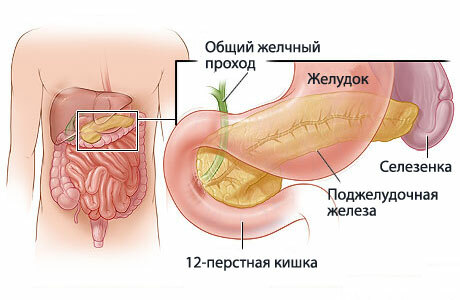
Diseases of the pancreas: symptoms and signs of the disease, diagnosis and treatment
The pancreas gets its name from the Latin word "páncreas", so the term "pancreas" is a less common designation for an organ. It is one of the largest endocrine glands involved in the synthesis of hormones (primarily - insulin), metabolic processes and producing pancreatic juice / secretion necessary for normal digestion of food. The pancreas has an elongated, slightly curved, gray-pink color and consists of small lobules that compose the tail, body and head of the organ. The length of a healthy gland can reach 20-22 cm, and the mass of a healthy organ is about 80 g.

Diseases of the pancreas: symptoms and signs of the disease
The pancreas performs the most important functions in the body, therefore it is important to monitor its health and seek help in a timely manner if violations appear in the work of the organ. Symptoms of pancreatic diseases are quite typical, although they can have a vague course, which makes it difficult to make a correct diagnosis. To identify the exact cause of pathological changes, the patient needs to undergo hardware and instrumental diagnostics, as well as take a blood test. If treatment is started at an early stage, the prognosis for later life will be favorable in almost 75% of patients, so people from the group risk, it is important to know the symptoms and signs of pancreatic disease and be able to recognize them among other clinical manifestations.

Pancreas
Content
- 1 Who is at risk?
-
2 Pancreatitis: acute and chronic inflammation of the pancreas
- 2.1 How to treat?
- 3 Diabetes mellitus: signs and initial symptoms
-
4 Malignant tumor of the pancreas
- 4.1 Can pancreatic cancer be recognized at an early stage?
-
5 Pancreatic necrosis: a verdict or not?
- 5.1 The clinical picture with necrosis of the pancreas
- 5.2 Video - Signs of pancreatic disease
Who is at risk?
The rudiments of the organ begin to lay in the third week of embryo development, when most women do not yet know about their pregnancy. The risk group for the development of chronic diseases of the pancreas includes children whose mothers led an asocial lifestyle during pregnancy, used toxic substances and products (tobacco, wine alcohol), and also took potent drugs without prescription and control specialist. In children of the middle and older age group, the main risk factor is heredity, as well as errors in nutrition, therefore, to compile the child's diet must be approached very responsibly and use not only general recommendations, but also individual advice from a pediatrician observing child.

Improper nutrition
In adults, the risk of pancreatic diseases increases if they consume large amounts of sugar, since simple carbohydrates create an increased load on the cells of the organ. Bad habits, stress, a sedentary lifestyle that negatively affects blood circulation and metabolic processes are all factors risk, therefore, compliance with recommendations for a healthy lifestyle and nutrition is of great importance in the prevention of pancreatic pathologies.
Pancreatitis: acute and chronic inflammation of the pancreas
Pancreatitis is one of the most serious diseases of the pancreas, characterized by inflammation of the parenchymal tissue organ and its destruction, which develops as a result of stagnation of proteolytic enzymes in the cells of the gland and their self-digestion. Treatment of the acute form of the disease, especially if the patient is diagnosed with acute recurrent pancreatitis, should be carried out in a hospital setting. Enzymes and toxic products can enter the systemic bloodstream and cause not only acute intoxication and poisoning, but also damage other vital organs: the brain and spinal cord, liver, pulmonary system.

What is pancreatitis
To avoid the severe consequences of toxin poisoning, it is important to know the symptoms of the disease and seek help in time. An acute inflammatory process can be recognized by its characteristic symptoms, including:
- incessant vomiting mixed with bile and bile acids and an unpleasant odor;
- sudden pain syndrome of high intensity, the main localization of which is the epigastric region with possible irradiation to the left half of the abdomen (pain with pancreatitis is permanent and does not go away when changing provisions);
- temperature rise to 38 ° and above;
- clarification of feces (white or pale yellow feces);
- darkening of urine caused by the accumulation of bile pigments in the blood and damaged tissues;
- yellowing of the skin, developing against the background of a violation of the outflow of bile.
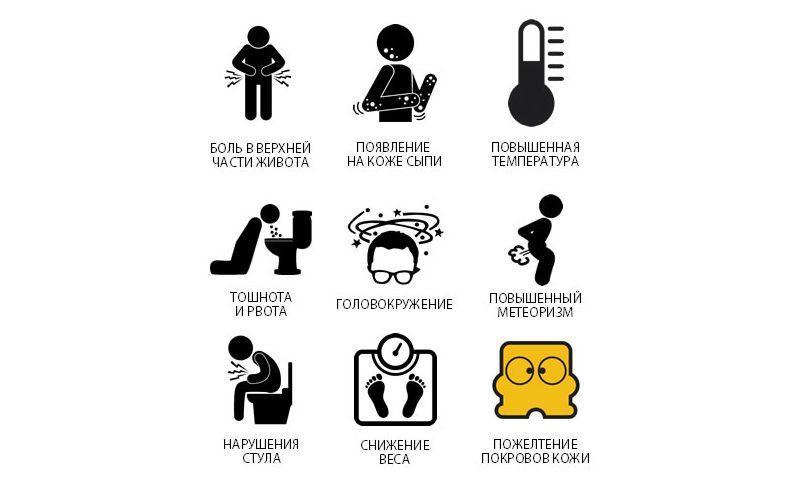
Pancreatitis symptoms
Important! Such symptoms are always a reason to call an ambulance. Before her arrival, the patient must be put to bed and placed on the upper abdomen with a heating pad with ice or a bottle of cold water, previously wrapped in a towel. On palpation, the doctor can detect an increase in the organ in the head region - this is an alarming symptom that requires urgent hospitalization of the patient in the surgery department.
How to treat?
For any form of pancreatitis, the patient is shown fasting for 2-3 days. This is necessary to reduce the functional load on the inflamed organ. Starting from the fourth day, the patient is transferred to the treatment table No. 5, which implies a complete rejection of fried, spicy, smoked and pickled products, as well as the use of the method of mechanical sparing (all food should be served in the form of cereals, mashed potatoes, mousses or puddings). Of the drinks, the treatment plan necessarily includes sulphate-hydrocarbonate mineral waters with a high content of calcium, sodium and magnesium, for example, "Narzan", "Essentuki" No. 4 and No. 17.
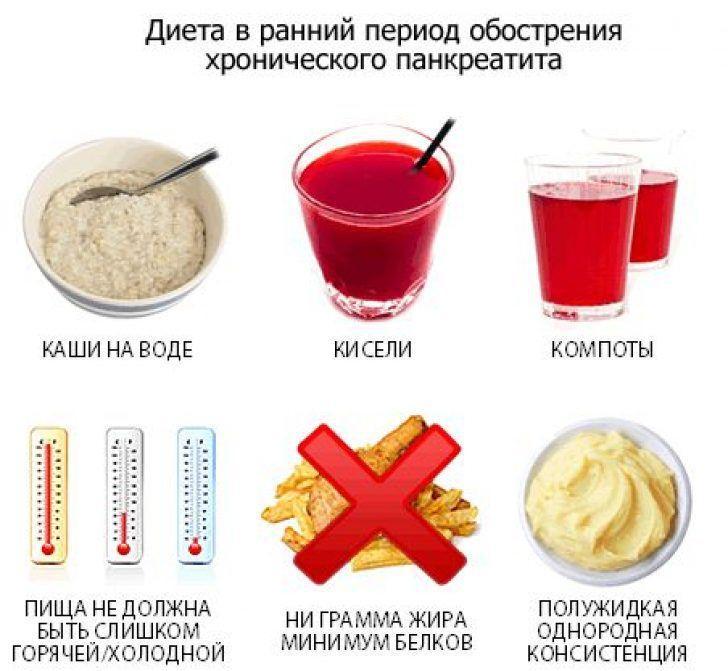
Diet for pancreatitis
From medicines, digestive enzymes can be prescribed ("Pancreatin», «Creon"), As well as sorbents. Therapy is always selected individually, so it is better not to self-medicate with this diagnosis.

Creon drug
Diabetes mellitus: signs and initial symptoms
A very dangerous disease with a fairly high (about 28%) mortality rate, characterized by chronic metabolic disorders and insulin deficiency. There are two types of diabetes:
- Type 1 (insulin dependent);
- Type 2 (non-insulin dependent).
In 40% of cases, the cause of diabetes is unhealthy diet with increased consumption of sugars, confectionery and other products, which contain a lot of simple carbohydrates. The hereditary factor is also important: if there are cases of diabetes in the history of the next of kin, the risk of the disease in the unborn child will be about 50%.

Signs of diabetes
With diabetes mellitus, the patient develops stable hyperglycemia - an increased level of glucose in the peripheral blood. Sugar surges are accompanied by headaches, dizziness, in severe cases, a person may fall into a coma or lose consciousness. Patients with any form of diabetes are almost always overweight, which appears against the background of a disorder of carbohydrate and lipid metabolism.
In the initial stages, a person does not notice any symptoms of pathology. Occasionally, he may be thirsty, an increased appetite appears, the skin on the elbows becomes rough and begins to peel off.
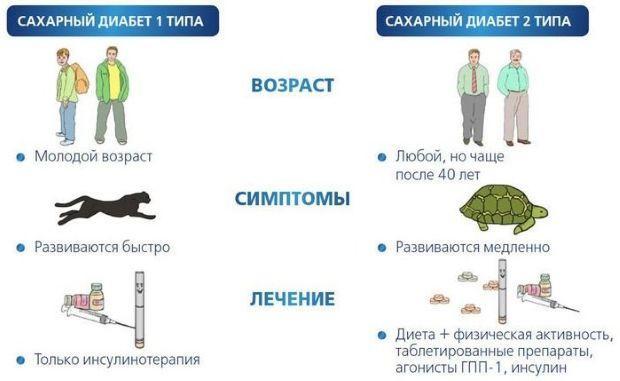
Signs of type 1 and type 2 diabetes
As the pathology progresses, other symptoms appear, for example:
- dry lips and constant thirst;
- increase in daily urine output;
- cracks in the skin of the legs and arms;
- increased sweating, while sweat has a very strong, repulsive odor;
- decreased performance.
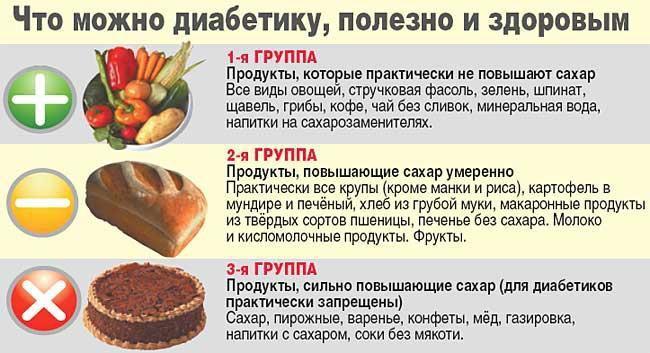
Nutrition for diabetes
Another manifestation of diabetes mellitus is diabetic foot syndrome - functional changes in the anatomy of the foot that develop as a result of damage to blood vessels and diabetic neuropathy.
Important! For early detection of diabetes mellitus, it is necessary to regularly take a blood test to determine the level of glucose. It must be done at least 2 times a year, in the morning, on an empty stomach.
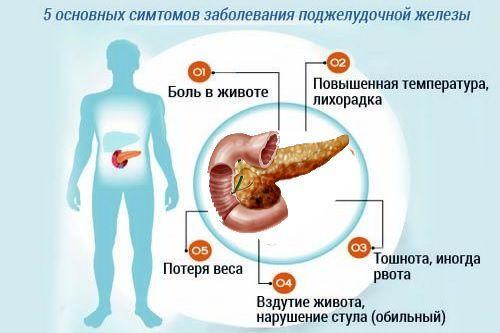
The main symptoms of pancreatic disease
Malignant tumor of the pancreas
Pancreatic cancer is a rapidly progressive oncological disease, which ranks fourth among all cancers in terms of the number of deaths. Treatment is complicated by the fact that it is almost impossible to diagnose a cancerous tumor at an early stage due to the washed away symptoms and delay in the time to see a doctor. Most of the signs of cancer appear as symptoms characteristic of chronic pancreatitis or other diseases of the digestive system. Despite the fact that most often elderly people become patients with this diagnosis, the risk of pathology in young age is also quite high and amounts to about 1.5% for each resident of large populations points.

Pancreas cancer
Doctors cannot say for sure what exactly is the cause of the malignant process in the epithelial structures of glandular tissue or organ ducts, but factors have been identified that significantly increase the risk tumor formation. These include:
- long-term smoking (more than 5 years);
- lack of treatment for chronic pancreatitis (or recurrent forms of the disease);
- violation of the diet, increased consumption of foods high in fat and spices;
- alcohol addiction;
- diseases of the endocrine and hepatobiliary system (hepatitis, bile duct atresia, diabetes mellitus, hypothyroidism, cirrhosis).

Pancreatic cancer symptoms
Metastasis in cancer of the pancreas is very fast and has 4 stages. The chances of recovery from grade 3-4 pathology is less than 5%, therefore, timely detection of the symptoms of the disease and an appeal to a doctor is of great importance.
Can pancreatic cancer be recognized at an early stage?
Diagnosis of the disease at stages 1-2 is a difficult task that even specialists cannot always cope with without application of additional methods, so you should not try to diagnose yourself at home conditions.
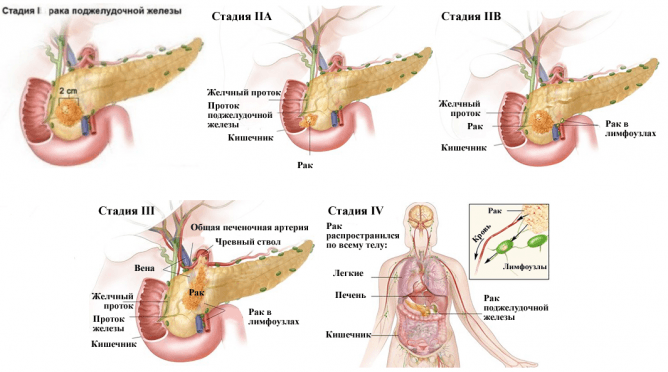
Pancreatic cancer stages
It is necessary to seek medical help when at least two symptoms from this list appear:
- wanton vomiting;
- weight loss;
- loss of appetite or complete refusal to eat;
- yellowing of the skin or eye sclera;
- aching pain of moderate intensity in the epigastric region (irradiation to the lumbar and coccyx area is possible);
- internal bleeding;
- an increase in the gallbladder on palpation.
As the disease progresses, the patient develops chronic fatigue syndrome, constant drowsiness appears, and performance decreases. One of the signs typical for all cancerous tumors is a periodic increase in body temperature (not higher than subfebrile boundaries).
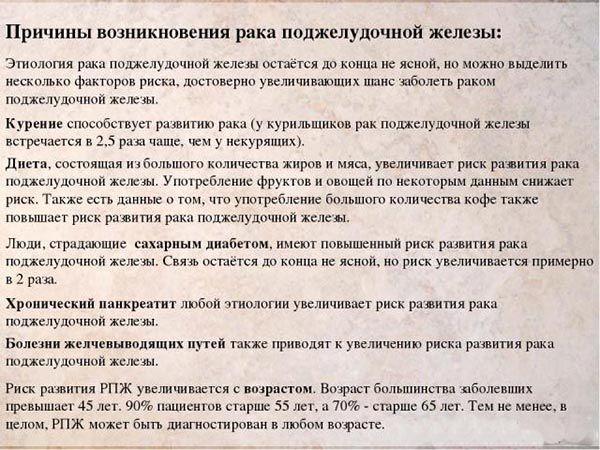
What causes pancreatic cancer?
Treatment of pancreatic cancer is surgical in most cases. After removal of the formation and surrounding tissues, the patient is prescribed radio and chemotherapy. Radiation exposure for this diagnosis is rarely used. To eliminate pain, analgesics are used (with severe pain syndrome - narcotic). Therapy can also be supplemented with hormonal correction, but all drugs, as well as their dosage, must be selected by the doctor.
Pancreatic necrosis: a verdict or not?
Pancreatic necrosis is a destructive disease of the pancreas, in which the tissue of the organ dies. Pathology is often a complication of acute inflammation of the pancreas and is characterized by intense pain and acute abdominal syndrome. The survival rate even with timely emergency care is no more than 30% of the total number of patients (provided that it is possible to preserve most of the organ). If a patient develops global pancreatic necrosis, the chance of death will be almost 98%.

Types of pancreatic necrosis
To avoid serious complications and consequences, it is important to know the clinical picture of the disease and call the emergency team after the first signs appear.
The clinical picture with necrosis of the pancreas
| Symptom | Description |
|---|---|
| Pain syndrome | This is the main sign of pancreatic necrosis, which develops against the background of severe intoxication. First, the pain appears in the left side of the abdomen, gradually taking on a diffuse or encircling character and intensifying during the first 2-6 hours after the onset of the attack. Most sufferers experience slight relief from lying on their side with bent legs, therefore, it is important to correctly diagnose and carry out differential diagnostics with appendicitis, using special tests |
| Acute dehydration | The syndrome is characterized by abundant and rare urination, increased dryness of the skin, lips and mucous membranes. A white or creamy coating appears on the surface of the tongue. Fluid consumption with this diagnosis can reach 4-5 liters per day. |
| Digestive disorders | They develop against the background of a lack of enzymes necessary for complete digestion and breakdown of food. Most often, patients are diagnosed with constipation, flatulence, heaviness and bloating, provoked by the processes of decay and fermentation of sugars. Defecation becomes painful, with straining, the pain in the epigastric space intensifies and gives cuts to the rectal region |
| Acute intoxication | Intoxication is accompanied by fever, vomiting, nausea, pallor of the skin, redness of the facial skin |
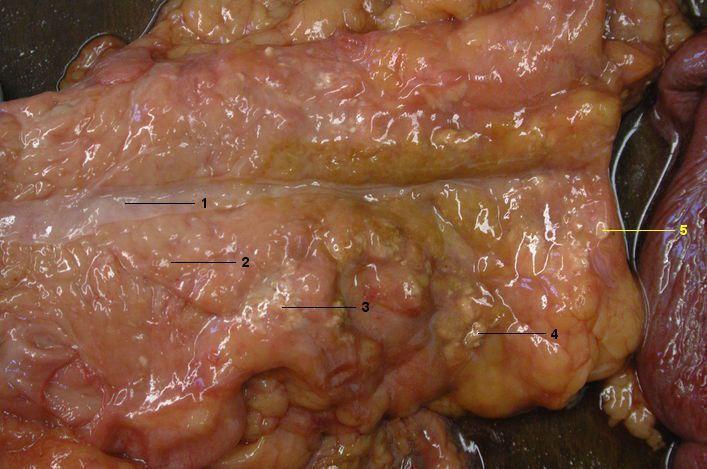
Pancreas with pancreatic necrosis
Pathological changes can also be observed from other organs and systems. In some patients, a sharp drop in blood pressure may occur. The pulse quickens, cold sweat of a sticky consistency appears on the surface of the face and palms. Some patients complained of shortness of breath, poor orientation in space, difficulty and painful breathing.
In about 30% of cases, patients had internal bleeding. In the absence of timely emergency assistance, a coma and death of the patient may develop.

Symptoms of acute pancreatic necrosis
Important! The gradual weakening of pain and its cessation with pancreatic necrosis is an alarming sign indicating the death of nerve endings. A temporary improvement in well-being can be critical for a person who believes that everything is gone. A repeated increase in symptoms is observed approximately 6-18 hours after the cessation of pain, while the general well-being of the patient remains unsatisfactory. In no case should you stay at home if there is a sudden pain in the abdomen, which lasted several hours and went away on its own: this can be fraught with complete destruction of the pancreas and death of a person from acute intoxication, as well as painful or infectious toxic shock.
Diseases of the pancreas are not a sufficiently extensive group of pathologies, but this does not mean that one should be frivolous about the health of the organ. Some diseases of the pancreas can cause disability and even death of a person, therefore, if detected any symptoms that may be manifestations of violations on the part of this organ, you must immediately contact to the doctor. Biochemical tests, magnetic resonance imaging and computed tomography, ultrasound diagnostics, as well as radiography and angiography are used to diagnose possible problems. If necessary, the patient will undergo laparoscopy - an examination of the abdominal space using a laparoscope, which is inserted through the holes in the abdomen.