Which side of the pancreas: organ anatomy, functions
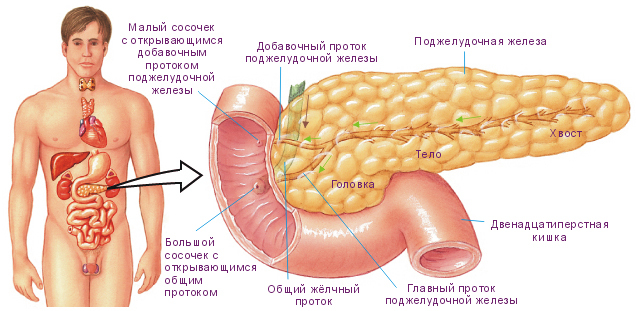
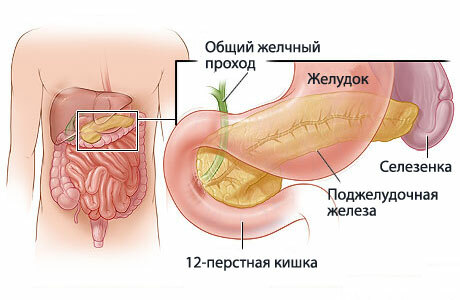
The pancreas plays a huge role in the human digestive system. It is located behind the stomach on the posterior abdominal wall. At the level of the 1st lumbar vertebra it passes through the vertebral column. The peritoneum covers it in front. Adjacent to the back wall of the stomach. Visually located 5 cm above the navel, from the back, i.e. located in the middle.
Pancreas
Content
- 1 Organ structure
- 2 The role of the gland in the body
- 3 Features of the organ in children
- 4 Congenital anomalies
- 5 Why can there be pain in the organ?
- 6 What diseases can be associated with the pancreas
- 7 Diagnostic methods
-
8 What pains are and what do they talk about
- 8.1 Video - Symptoms of inflammation of the pancreas
-
9 What foods should be avoided for pain in the pancreas
- 9.1 Video - Signs of pancreatic disease
Organ structure
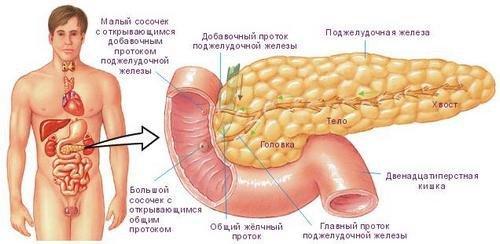
The pancreas is elastic and soft in consistency, has a yellowish tint. The length is up to 20 cm, the width does not exceed 5 cm, and the thickness is only 2-3 cm. The mass of an adult is 80-120 g.
The pancreas consists of:
- heads;
- body;
- tail.
The head is covered by the duodenum in the form of a semicircle, through which the common bile duct passes. Pointed down and to the right.

Organ structure
The body consists of 3 surfaces - front, back and bottom, reminiscent of a triangle. Separated by edges. Lies anterior to the place where the aorta and large arteries originate. They supply blood to the gland itself, as well as the liver, stomach, spleen and intestines.
The first surface is adjacent to the wall of the stomach, the back of it and is directed upward and forward. The bottom is bounded by the front edge, and the top is bounded by the top.
The structure of the pancreas
The posterior surface is adjacent to the spinal column, as well as the inferior vena cava, left renal vein, celiac plexus, and abdominal aorta. The splenic vessels are located on it. Between it and the front there is an upper edge that delimits them.
The lower surface goes down and forward. Separated from the back surface by the back edge. Located below the colon and mesenteric root.
The tail is located to the left and up and rests against the gate of the spleen. It has an oval-pear-shaped shape.

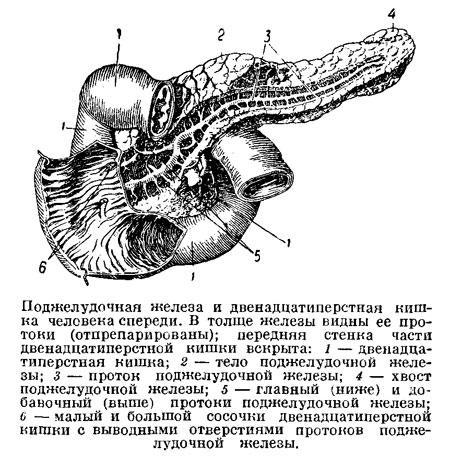
The pancreas with its main vessels and ducts
The excretory duct begins in the head, passes through the entire body, and is paired with the bile duct into the duodenum.
The role of the gland in the body
The pancreas belongs to the mixed type, since it performs internal and external functions. It breaks down foods into particles that are easier for the body to assimilate. Forms gastric juice and digestive enzymes.

Functions
The endocrine function is the production of insulin and other hormones. The secreted insulin from the gland immediately enters the bloodstream, with the help of which it is carried throughout the body. With a lack or absence of insulin, a disease such as diabetes mellitus develops.
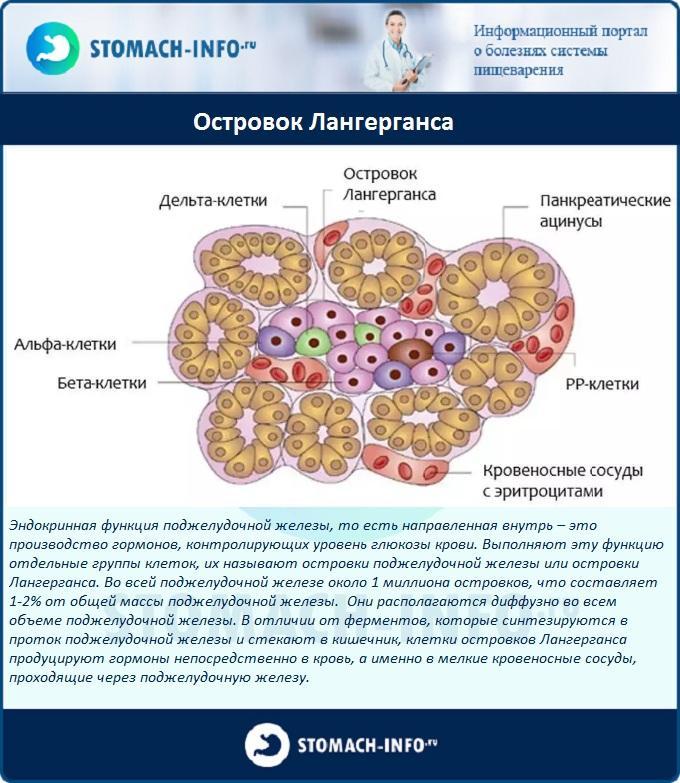
Islet of Langerhans
Another vital hormone is glucagon. By its functions, it is opposite to insulin. When there is a critical decrease in glucose in the body, it releases it from reserve reserves.

Hormones produced by the pancreas
Features of the organ in children
The newborn has a small size. The length does not exceed 5 cm, and by weight - up to 3 g. Is higher than that of an adult. In children, it is more mobile, since it does not immediately attach to the abdominal wall. It takes on a characteristic appearance and location as in adults by the age of 5-6 years.

Embryonic development of the pancreas

Pancreas location
Congenital anomalies
If the fetus did not develop correctly or there is a genetic predisposition, then the following anomalies of the pancreas may develop in utero.
- Agenesis, i.e. complete absence of an organ. This pathology is incompatible with life.
- Hypoplasia - underdevelopment of the organ also leads to the death of the baby.
- Doubling. Does not affect the body. It is rarely found, usually by accident when passing an ultrasound scan of nearby organs. It has no symptoms and does not require surgery.
- Accessory pancreas is extremely rare. In addition to the classic location, there is also in the stomach, duodenum or in other nearby organs. The second gland has the same structure, i.e. there is also an excretory duct, only it enters the organ, causing irritation and inflammation in it (stomach bleeding, ulcers). Surgical removal is required.
- Split pancreas. In this case, the ducts merge and 2 immediately flow into the duodenum. Symptoms are usually absent. Signs appear only if the narrow opening that is responsible for secretion can lead to pancreatitis.
- The pancreas is in the form of a ring. Formed in the early stages of development. Leads to narrowing of the lumen and disruption of the passage of food. It is accompanied by vomiting, jaundice, pain. Leads to the development of chronic pancreatitis. Surgical treatment only.

"Annular" pancreas
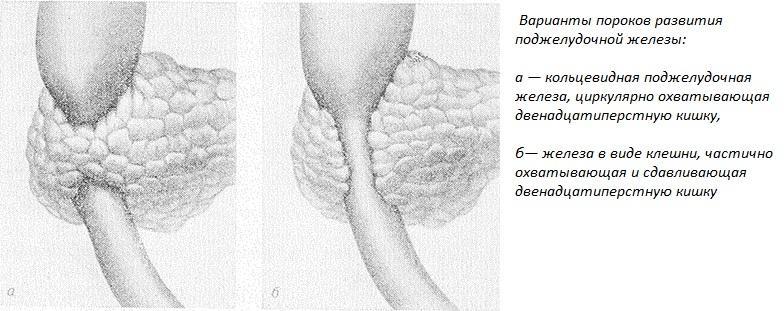
Pancreatic malformations
Why can there be pain in the organ?
There are many diseases associated with this organ, but even more causes of pain. If you are experiencing persistent pain in the pancreas, then you should see a doctor as soon as possible. If the phenomenon is isolated, you should not pay attention to it - perhaps the day before there was just overeating.
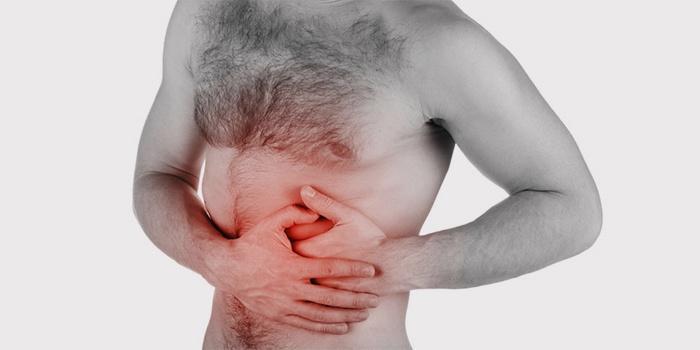
There may be several reasons for pain.
Causes of pain in the pancreas.
- Disturbance in the diet. Fried, too salty food, semi-finished products and canned food can disrupt the functioning of the organ and lead to severe pain.
- Psychosomatic causes that appear against the background of lack of sleep, constant irritation, and stress should not be ruled out.
- Excessive alcohol consumption leads to pancreatitis.
- Pain can be a complication of biliary tract or gallbladder disease.
- Uncontrolled intake of hormones.
- Age-related changes and heredity.

Pain may occur after overeating
What diseases can be associated with the pancreas
In addition to congenital anomalies, during life you can acquire acquired diseases of the pancreas, the main problem lies in the wrong diet.
- Pancreatitis is an inflammation of the gland. In addition to pain, a person experiences nausea, loss of appetite, loose stools, and vomiting are possible.
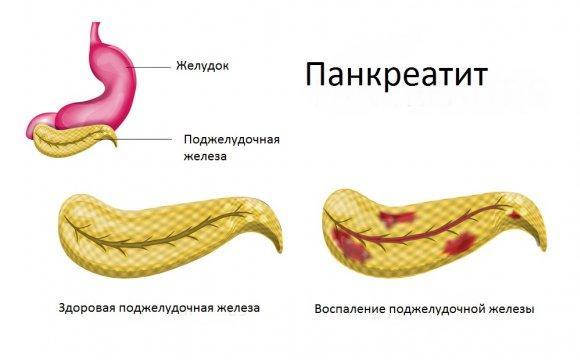
Pancreatitis
- Lack of enzymes. It mainly manifests itself in intolerance to dairy products.
- Tumors. They can be both benign and malignant. They are able to grow in an organ for a long time without causing symptoms.
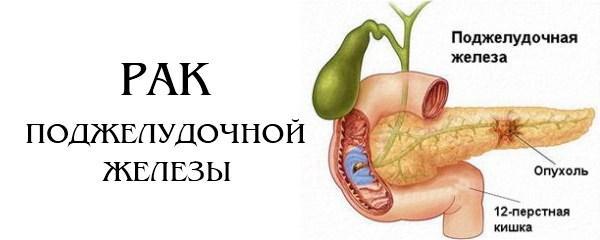
Malignant tumor of the pancreas
- Diabetes mellitus is the scourge of the 21st century, manifested by constant thirst, itching in the groin area and frequent urination.
- Cyst. The pain can be described as dull and weak, and appear infrequently. They intensify only with the growth of the cyst, when it begins to squeeze the organ.

Types of pancreatic cysts
Each of these diseases is accompanied by certain symptoms, diagnosed and treated in different ways. All these stages are prescribed by the attending physician.
Diagnostic methods
Based on the patient's complaints and objective research, the doctor may suspect a pancreatic disease. It is necessary to either confirm or deny these suspicions. In this case, laboratory tests and other diagnostic methods are prescribed.
Blood, urine and feces are donated for analysis. First of all, pancreatic enzymes are determined, their decrease leads to a partial resolution of the gland, and an increase leads to an inflammatory process or speaks of a tumor.
To assess the correct functioning of the endocrine function, the patient is given a glass of sweet water, and after 60-120 minutes a glucose tolerance test is performed. Helps to identify diabetes mellitus and predisposition to it.

Oral glucose tolerance test
The most accessible and widespread instrumental method is Abdominal ultrasound. On the basis of the data obtained, changes in the organ are revealed. The study is carried out on an empty stomach. If you are taking medications, consult your doctor if you can drink them before an ultrasound scan.
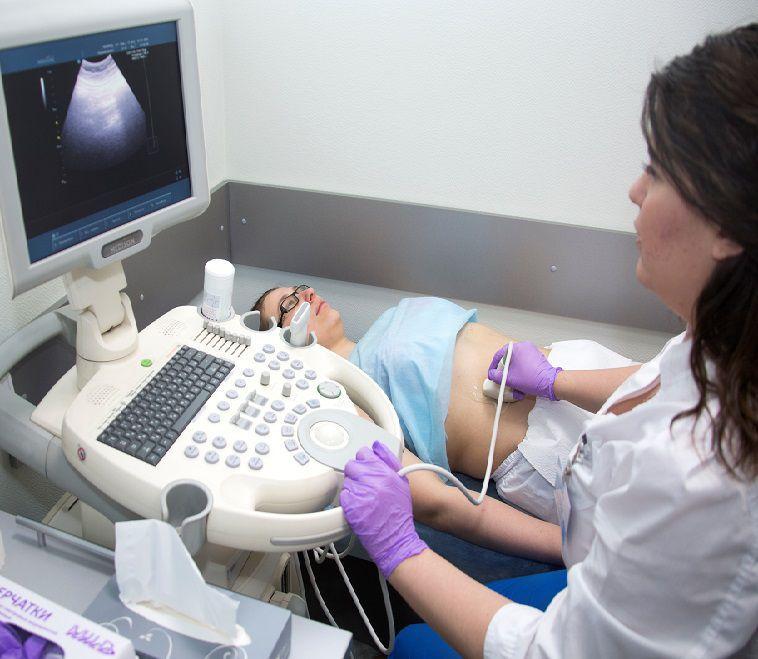
Abdominal ultrasound
Computed tomography (CT) is one of the best diagnostic methods. Based on X-ray radiation, transverse "slices" are made, which are projected onto a computer. A detailed view of the pancreas can be seen. Most often, it is carried out with contrast, it allows you to identify all pathologies. It is administered intravenously or a special solution is given to drink in 30 minutes.

CT scan of the pancreas
MRI (magnetic resonance imaging) is similar in effect to CT. The main difference is that not X-rays are used, but magnetic fields. The state of the bile ducts is clearly visible. Not suitable for claustrophobic people. If there are metal prostheses in your body, you must inform your doctor, as they can move inside the body under the influence of the magnetic field.

Pancreas MRI
Esophagogastroduodenoscopy and fibrocolonoscopy are endoscopic methods performed using flexible probes on which there is a small camera. Diseases of the stomach, colon and pancreas can be detected.

Endoscopic examinations. Esophagogastroduodenoscopy
Endo-ultrasound is a method that allows not only to diagnose the disease as accurately as possible, but also to pinch off a piece of an organ for further research. It is mainly used for tumors and cysts.

Endo ultrasound
ERCP (endoscopic retrograde cholangiopancreatography) - helps diagnose the condition bile ducts, as well as dissection when the duct is narrowed, crushing stones and installing stents.
- ERCP

- Endoscopic retrograde cholangiopancreatography for calcific pancreatitis
What pains are and what do they talk about
The symptoms below do not always indicate a 100% presence of the disease, therefore, medical institutions carry out a full diagnosis in order to compose a picture of the disease. But more often the disease is characterized by precisely these signs.
- Inflammatory process in the organ. The pain is given to the back. May increase regardless of food intake. The organ swells and presses on the nerve endings that transmit pain.
- Pancreatic neuritis. Side pain radiates to the back, and if you bend forward and clasp your knees, it will weaken.
- Cyst or tumor. Pain after eating, nausea and vomiting.
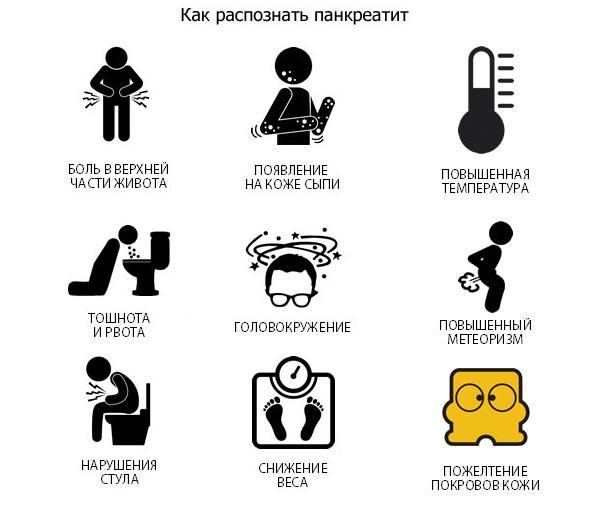
Pancreatitis symptoms
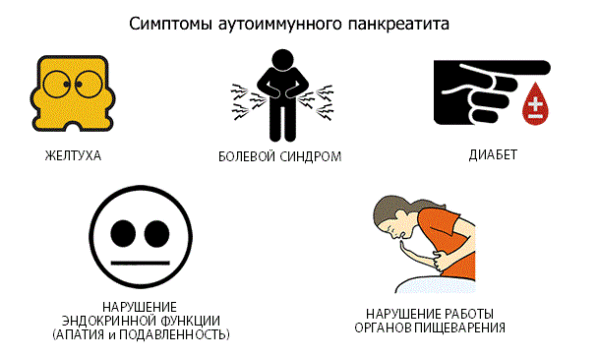
Autoimmune pancreatitis
It is often difficult to determine what exactly the pancreas hurts. A person who is not associated with medicine is able to think on the stomach, since pain can be given to the epigastrium, or to problems with the back, kidneys. Sometimes the pain is not expressed at all clearly and is localized throughout the abdominal cavity.

Differential diagnosis for severe pain
Video - Symptoms of inflammation of the pancreas
What foods should be avoided for pain in the pancreas
In 80% of cases, improper nutrition leads to unpleasant sensations in the organ. Not all people run to the hospital at the first sign. You can try to normalize nutrition and observe the sensations: if the pain persists within 5-7 days, then you should consult a doctor.
Attention! If you have severe and acute pain that does not let go, then do not self-medicate, but immediately call an ambulance.
Table. Foods allowed and prohibited
| It is categorically impossible | It is possible in a small amount |
|---|---|
| Alcohol | Soups: mushroom, tomato, pea |
| Sweet soda | Milk |
| Coffee | Peaches |
| Cocoa | Apricots |
| Smoked meats | Tangerines |
| Potatoes in any kind of preparation | Kiwi |
| White bread | Pumpkin |
| Sweets: candy, chocolate, ice cream, etc. | Lentils |
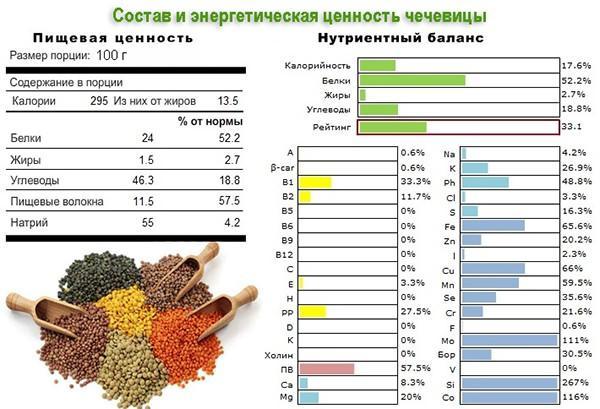
Lentils

Pumpkin

Apricots
If you cannot normalize your nutrition on your own, see your doctor. He will make a gentle diet, which will not only facilitate the work of the pancreas, but also have a positive effect on the entire digestive tract.

Diet for pancreatitis
In the first 7 days of the disease - a strict diet, if you are in the hospital, then you are assigned a table number 5.
The pancreas is not a large, but an important organ in our body, which should not be forgotten, because it performs irreplaceable functions. Timely treatment and prevention will allow you to never know about organ diseases.