
Diffuse changes in the pancreas by the type of lipomatosis
Pathology that leads to diffuse changes in the pancreas is called "lipomatosis" ("fatty degeneration", "steatosis"). This process is irreparable and is characterized by the replacement of glandular cells with adipose tissue cells - adipocytes - in order to preserve the volume and integrity of the organ. Such pathological changes cause the gland to stop working normally. This is due to the fact that adipose tissue is not able to perform the functions assigned to the pancreas. Alas, after serious lesions, the organ will no longer be able to function normally (independently).
The process of cell degeneration is triggered due to the influence of certain factors - injuries, chronic pathologies, previous inflammatory diseases, obesity.
It is possible to stop these changes and prevent compression of neighboring organs if you adhere to a strict nutritious diet, give up addictions and take enzyme medications drugs.
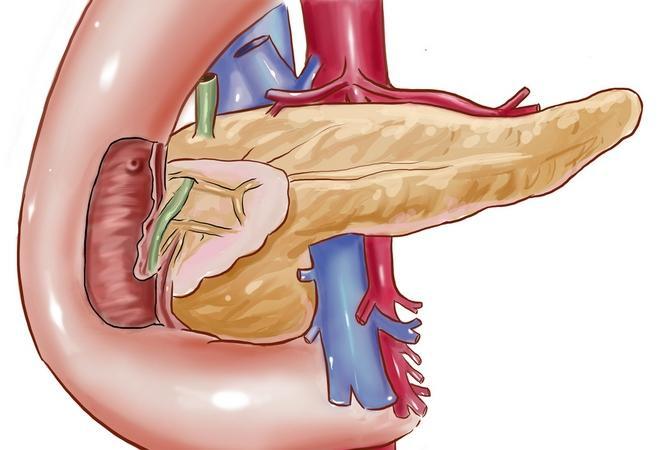
Diffuse changes in the pancreas by the type of lipomatosis
Read more about the disease, its clinical picture, treatment further.
Content
- 1 What is pathology
- 2 What causes a person to develop lipomatosis
- 3 What are the symptoms of the disease
-
4 Stages of development of diffuse changes occurring in the pancreas, lipomatous type
- 4.1 Video - Diffuse changes in the pancreas
- 5 Is there a treatment and is it possible to permanently cure the disease
- 6 Healing infusions that help with lipomatosis
What is pathology
In order to maintain the integrity of the pancreas and maintain its shape, the body activates the so-called "defense reaction". Dead cells are replaced by adipocytes, or fat cells. Here lipomatosis, or obesity of the pancreas, develops.

The structure of the pancreas
Unfortunately, the overgrown tissue cannot properly perform the work of the "old" one. Gradually, the organ loses more and more native cells and becomes overgrown with fat. This becomes the reason for the disruption of normal processes in the body:
- material metabolism and the process of food digestion are disrupted;
- the general state of health of a sick person worsens;
- the synthesis of enzymes decreases, which takes an active part in carbohydrate, fat and protein breakdown, etc.
Attention! If the changes in the gland are insignificant, that is, a small number of cells are replaced, then the person is unlikely to experience any discomfort. With such changes, he can live his whole life and not even know about the presence of a problem. However, the process of replacing normal cells with fat often gets out of control. New tissues begin to grow gradually, forming large fat areas in the process.

Pancreatic lipomatosis
What causes a person to develop lipomatosis
The basis of diffuse lipomatosis-type changes occurring in the pancreas is the destruction of glandular tissues and their replacement with fatty ones. The following reasons lead to this dangerous process:
- inflammatory process in the pancreas, or in another way - pancreatitis, in an exacerbated or chronic stage;
- heredity;
- age - at an older age, there is an increase in fat in the gland;
- obesity;
- viral infections, AIDS;
- restructuring of the body in adolescence;
- pathology of the liver and kidneys, various organs of the gastrointestinal tract;
- intoxication, poisoning with medicines, alcohol decomposition products, industrial toxins;
- cirrhosis of the liver, hepatitis B.
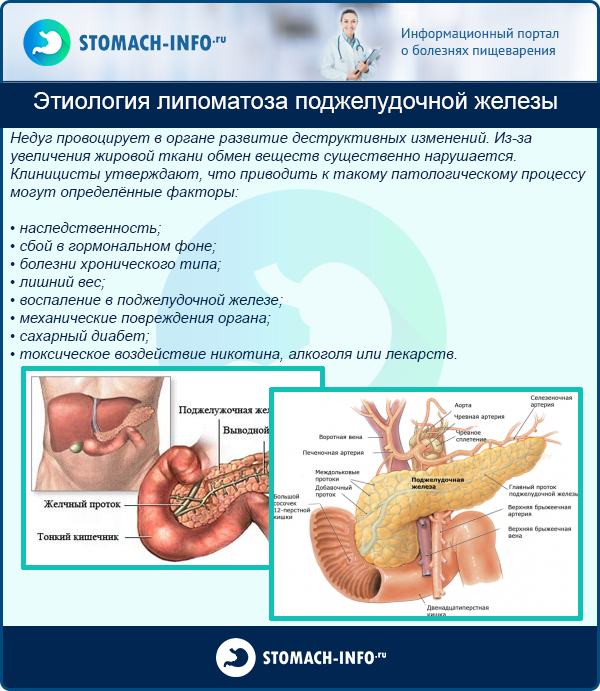
Etiology of pancreatic lipomatosis
Important! Fibrolipomatosis is considered a more serious disease. In this case, fatty degenerative processes develop in the gland, in which connective tissue gradually and unevenly grows between the fat cells. This happens, as a rule, with frequent exacerbations of pancreatitis, diabetes, diseases of the endocrine system.
It is worth noting that neither one nor the second pathology almost never develops in children. Most often, these diseases are diagnosed in people over the age of 30.
What are the symptoms of the disease
If we talk about the primary stages, then at this stage there are no symptoms. This is especially true when adipocytes grow in different parts of the gland and are concentrated in the form of small foci. Such diffuse changes do not interfere with the normal functioning of the pancreas, since they do not lead to tissue compression.

Symptoms of pancreatic lipomatosis
Attention! Unfortunately, the clinical picture of lipomatosis is very similar to the signs of chronic pancreatitis. Therefore, a person is in no hurry to go to a doctor with these symptoms, which leads to late diagnosis and difficulties in treatment.
The disease is detected, as a rule, by chance, during an ultrasound of the abdominal cavity, CT, MRI on another issue.
So, usually the patient complains about:
- feeling unwell, malaise, rapid fatigue, unreasonable weakness;
- in isolated cases - a depressive state;
- constant heaviness in the abdomen, mainly in its upper part;
- belching, feeling of nausea, sometimes - gagging;
- unwillingness to eat;
- drying out of the mucous membranes in the oral cavity;
- soreness in the abdomen from above after each meal;
- a stool disorder with diarrhea or constipation;
- bloating, feeling of bubbling in the abdomen, flatulence.

Signs of exacerbation of chronic pancreatitis
Often, patients with obesity of the gland have small, rounded reddish spots in the upper abdomen and body, which do not disappear with pressure.
When the pancreas is more and more affected, more serious symptoms join in the form:
- weakening of immunity (with protein deficiency) and frequent incidence of diseases of infectious origin;
- pathological changes in the tissues of the liver, kidneys, glands of the endocrine system;
- sharp weight loss;
- dystrophic changes in the myocardium.
In addition, the pancreas is responsible for hormonal production. Disorders in the endocrine system can become a source of dangerous disruptions in the form of impaired absorption of carbohydrates in the body. In this case, the patient has an increased glucose level in the blood test. In advanced stages, the patient is diagnosed with diabetes mellitus.
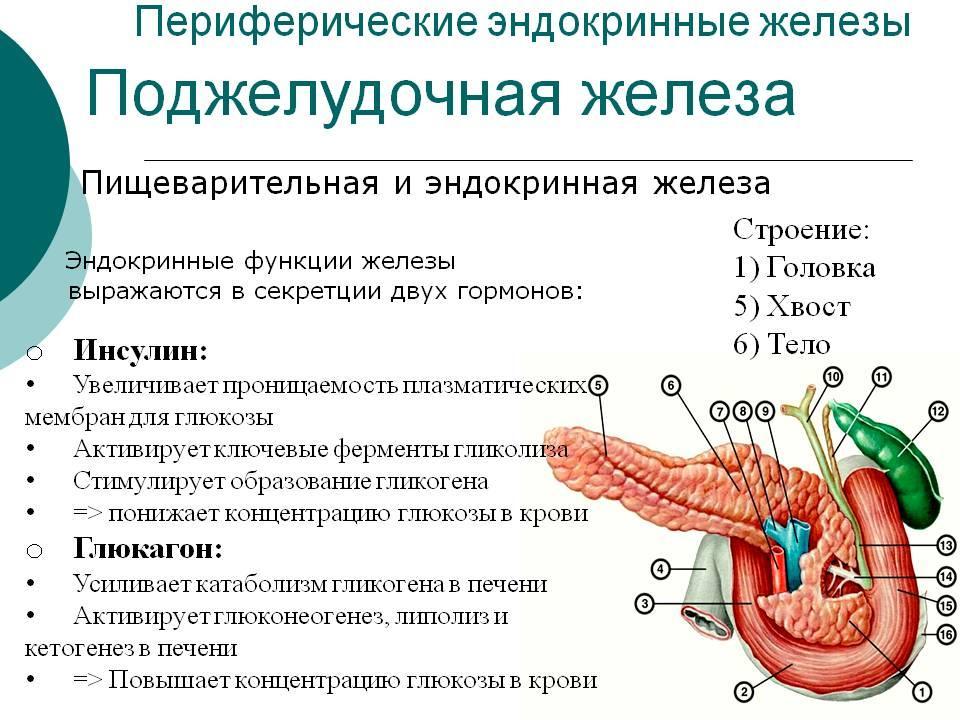
Pancreas functions
If adipocytes are localized in one area, then a lipoma is formed. This formation is benign. However, it interferes with the normal functioning of the gland and leads to squeezing of adjacent organs. In this case, there is abdominal discomfort, indigestion, bloating, etc.
Attention! If complex forms of lipomatosis and fibrolipomatosis are not treated, then this can lead to the development of malignant processes in the pancreas.
Stages of development of diffuse changes occurring in the pancreas, lipomatous type

Diffuse pancreatic lipomatosis
Depending on the degree of progression of the pathology, lipomatosis is divided into 3 stages.
| Stages of the disease | Characteristic |
|---|---|
| The first | Adipose tissue replaces normal tissue by less than 30%. The primary stage is practically asymptomatic. Only in some cases there is mild abdominal discomfort. |
| The second | Glandular cells are replaced by fat cells by almost half, that is, from 30% to 60%. This degree is characterized by the manifestation of the corresponding signs, but without significant functional changes in the gland. |
| Third | The last and most severe degree, when adipose tissue occupies more than 60% of the total volume of the gland. At the third stage, a severe clinical picture is observed, which manifests itself in the form of glandular insufficiency and severe disorders in the body. |
Video - Diffuse changes in the pancreas
Is there a treatment and is it possible to permanently cure the disease
Diffuse changes in the pancreas, lipomatous type, can be treated with conservative and surgical methods. The first option is possible only in the case of small lesions, which are spread throughout the entire area of the organ and do not lead to its compression.
Surgical intervention is indicated when adipose tissues are concentrated in large islets, compressing nearby organs and ducts of the gland.

Diagnosis of pancreatic lipomatosis
The conservative method consists in carrying out such mandatory measures:
- following a strict nutritious diet;
- weight loss, since in most cases, pancreatic lipomatosis is diagnosed in obese people.
Attention! The defeat of the gland by fat cells is an irreversible process. However, if the diet is followed, further growth of adipose tissue is prevented with one hundred percent probability. By strictly adhering to a strict nutritious diet, surgery can also be avoided.
The basis of the diet is the fragmentation of nutrition (although this rule has long become relevant in principle, many perceive it as an exception). So, it is recommended to take food at least 4-5, or even 6 times a day.

Nutrition with diffuse changes in the pancreas by the type of lipomatosis
Doctors recommend that all patients with lipomatosis adhere to diet No. 5. It is this diet that helps to improve the functioning of the digestive system, resists the process of obesity, equips the body with easily digestible and digestible food.
Patients with lipomatosis must be excluded from the menu:
- alcohol;
- sweets;
- rich dishes;
- smoked products, salted foods;
- fried, high-calorie and fatty dishes;
- chocolate.

Nutrition for pancreatic lipomatosis
Food processing is also important in this case. It must be steam. Low-fat meat. Be sure to include in the diet:
- vegetables - cauliflower, pumpkin, zucchini, Jerusalem artichoke (earthen pear), potatoes;
- croup;
- dairy dishes;
- salads.
A patient suffering from lipomatosis should receive at least 2800 Kcal per day.
With the manifestation of symptoms in the form of pain, nausea, vomiting, indigestion, such drugs are prescribed.
- Ibuprofen, Spazmalgon, No-shpa - relieve pain.
- Metoclopramide, Cerucal - relieves the feeling of nausea, vomiting.
- Imodium, Loperamide - treats diarrhea.
- Mezim, Pancreatin - help to digest food.
- Mebeverine - relieves intestinal spasms.

Mebeverin drug
Important! Before using these drugs, you should consult a doctor.
In some cases, the patient is prescribed hormonal therapy to achieve stabilization of the hormonal background.
The surgical method is used as a last resort, when adipose tissues press on nearby organs, a lipoma is diagnosed, or the proliferation occurs quite rapidly.
Unfortunately, it will not be possible to completely overcome the pathology with the help of surgical intervention. In this case, it is possible to improve the patient's condition only temporarily.
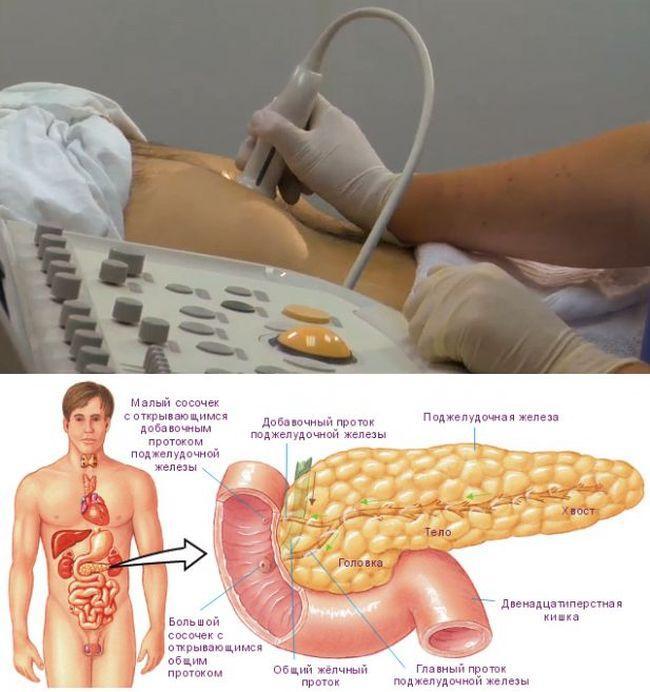
Pancreas ultrasound
Healing infusions that help with lipomatosis
This recipe is used in traditional medicine. This method is not used as an independent medicine in the treatment of lipomatosis., but only allows you to get rid of the manifestations of the disease, improve digestion. So, to prepare this infusion, you need to take:
- St. John's wort -1 part;
- immortelle - 1 part;
- chamomile - 1 part.
The plants are mixed. In total, you will need 2 tbsp. l. and 1.5 cups of boiling water. The herbs are filled with water and left to saturate for 1 hour. Then the infusion is thoroughly filtered several times. The indicated dosage is divided into three doses, that is, half a glass each before eating.

Healing infusion allows you to get rid of the manifestations of the disease and improve digestion
You should drink the prepared medicine during the day. Every day a new infusion is being prepared.
Attention! It will be useful to daily use tea with mint, linden, lemon balm, rose hips, oregano.
Also, with lipomatosis of the thyroid gland, it is recommended to take hemlock tincture. Start on the first day of treatment with one drop, then increase the dosage by one drop daily until it reaches 40. After that, the treatment continues, but with a dose reduction in the same way.
Diffuse changes in the pancreas by the type of lipomatosis are irreversible. However, this does not mean that you should give up. Taking medication prescribed by your doctor and following a strict nutritious diet can significantly improve your quality of life. The main thing when characteristic symptoms occur is to consult a doctor in time. This will make it possible to diagnose the disease at an early stage of development and facilitate the treatment process.


