
Pancreatic oncology: symptoms, causes, treatment methods
The pancreas is an organ of the digestive system, one of the largest glands in the human body. Pancreatic cells synthesize hormones that affect carbohydrate-lipid metabolism and metabolic processes (the most important of them is insulin), as well as pancreatic juice - digestive juice that enters the intestines through the duodenal papilla of the duodenum intestines. Pancreatic juice contains enzymes necessary for the digestion and breakdown of food and the absorption of nutrients and vitamins.

Pancreas
The most common diseases of the pancreas are diabetes mellitus and pancreatitis. Both pathologies have a moderate risk of mortality if the patient does not receive the necessary assistance in a timely manner during an exacerbation or the patient violates the regimen of taking the prescribed drugs. Despite this, the most dangerous pathology of the pancreas (the Latin name for the pancreas is from the word páncreas) is adenocarcinoma. Adenocarcinoma is also called glandular cancer, since the tumor is formed by atypical cells of the glandular epithelium and pancreatic ducts.
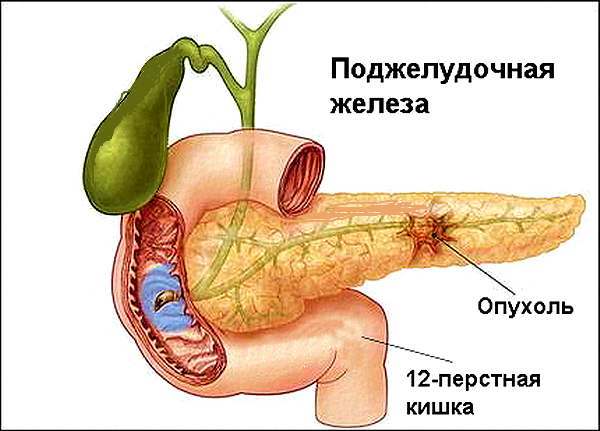
Pancreatic oncology: symptoms
Content
- 1 What is adenocarcinoma?
- 2 Causes and risk factors
-
3 How to recognize cancer?
- 3.1 Discoloration of the skin
- 3.2 Gallbladder enlargement
- 3.3 Pain syndrome and its localization
- 3.4 Chronic constipation
- 3.5 Internal bleeding
- 4 Cancer intoxication: symptoms
- 5 Who should I contact if I have dangerous symptoms?
-
6 Treatment
- 6.1 Video - Pancreatic cancer: causes and symptoms
What is adenocarcinoma?
Adenocarcinoma of the pancreas ranks sixth in the world in mortality among all cancers. The main difficulty in the treatment of this type of cancer is the late detection of the tumor, since on the initial stage, symptoms and signs of pathology may be completely absent or weak pronounced. Even doctors cannot always differentiate pancreatic oncology with an inflammatory process or other types of formations, for example, cysts. The most unfavorable prognosis concerns patients in whom the tumor occupies the entire area of the organ - this is approximately 25-30% of all registered cases of pancreas cancer.

Pancreatic tumors
Most often, the malignant process begins in the head of the gland, but it can also affect the tail and body of the organ. A tumor formation is a dense node with a tuberous structure and indistinct boundaries. On a cut, the tumor is usually white, milky, or light yellow in color.

Pancreatic adenocarcinoma, 4 stages
On a note! Adenocarcinoma is the most common type of pancreas cancer. In some cases, patients may be diagnosed with other forms of pathology, shown in the table below.
Table. Histological forms of pancreatic cancer.
| The form | Characteristic |
|---|---|
 Cystadenocarcinoma |
Epithelial tumor with predominant formation of serous cysts and growths. |
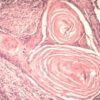 Squamous cell carcinoma (epidermoid tumor) |
Formed on the surface of the mucous membranes lining the surface of the organ. It is considered the most aggressive type of cancer. |
 Acinar cell carcinoma |
The prevalence of this type of tumor is less than 1%. Includes endocrine cell differentiation. |

Pancreatic cancer (PCa)
Causes and risk factors
Experts refer primarily to chronic pancreatitis as precancerous conditions and diseases, especially if cases of relapse are recorded more often 2-3 times a year. A chronic inflammatory process in the tissues of the gland can be both an independent pathology and a complication of acute pancreatitis, therefore, self-medicate if possible symptoms of pancreatic diseases are detected in any case not worth it.

Chronic pancreatitis
Among other pathologies that increase the likelihood of the formation of atypical cells, doctors distinguish the following diseases:
- diabetes mellitus of any type;
- adenoma of the pancreas (benign tumor formed by cells of the glandular epithelium);
- liver disease (hepatitis and cirrhosis);
- pancreatic cyst.
The risk of developing a malignant tumor increases if a person smokes, abuses alcohol, and does not follow the rules of a healthy and balanced diet. The abundance in the diet of spicy, salty foods and fried foods leads to disruption of digestive processes and partial fermentopathy - insufficient production of digestive enzymes (one of the main reasons for the development of pancreatitis).

Alcohol abuse is one of the risk factors
Important! In 2015, British doctors suggested that the composition of the oral microflora may be associated with the likelihood of the growth of atypical cells in the tissues of the pancreas. This theory has not yet been officially confirmed, but some screening tests have confirmed that in almost 65% of patients with this form of cancer on the mucous membranes In the oral cavity, microorganisms Aggregatibacter actinomycetemcomitans and Porphyromonas gingivalis were found - the main causative agents of inflammation of the gum tissue (gingivitis).

Gingivitis - inflammation of the gum tissue
How to recognize cancer?
The symptomatology of pathology in the early stages is very scarce, therefore, it is almost impossible to identify the disease without the use of hardware diagnostic methods. Severe clinical symptoms appear, as a rule, when the size of the tumor reaches two or more centimeters or an atypical process extends beyond the pancreas. The following are the main elements of the symptom complex in cancer of the pancreas, but they can manifest themselves in isolation from each other.
Discoloration of the skin
This is one of the first signs to appear. The skin becomes jaundiced, the sclera of the eye, the mucous membranes of the lips also gradually turn yellow. Obstructive jaundice is usually accompanied by a deterioration in general well-being: the patient often experiences increased weakness, drowsiness, his appetite disappears, and sudden nausea occurs. The majority of patients have a dramatic decrease in efficiency and even good rest does not help to restore energy resources.

Yellowness of the sclera and skin
Severe yellowing of the skin usually occurs already in the later stages, when there is an active process of metastasis or sprouting of the bile ducts.
Note! A dark yellow tint can appear in urine, as well as in fecal matter.
Gallbladder enlargement
At home, it is quite difficult to identify this syndrome, but with a strong increase in the organ, this can be done even without special knowledge in the field of medicine. The gallbladder can increase in size by 2-3 times: the pathology is associated with bile pressure and is accompanied by discomfort after eating and symptoms of dyspepsia. This sign can be detected by palpation of the left quadrant in the upper abdomen.

Pancreatic cancer diagnostics
Pain syndrome and its localization
Pain in cancer of the pancreas rarely appears at an early stage - usually this symptom becomes quite pronounced when the cancer progresses rapidly and metastases to internal organs have already appeared. The pain is usually aching and mild to moderate in intensity, which can vary depending on the level of physical activity or body position.
Important! In some cases, epigastric pain can radiate to the lumbar vertebrae, sacrum and coccygeal area. If for a long time the patient is worried about pain in the upper abdomen on the right, which intersects with aching sensations in the lumbar spine, you should immediately consult a doctor.

Pancreatic pain
Chronic constipation
Constipation in pancreatic cancer is caused by a partial bowel obstruction. The chair may be absent for more than three days, and the feces have a dense and dry structure and come out in separate components. The process of defecation is painful, after bowel movement there is no feeling of relief.

Chronic constipation
Internal bleeding
Gastrointestinal bleeding almost always indicates that the malignant process has reached stage 3-4 of development. Such conditions are possible if the tumor grows into the stomach or colon. It is not always possible to recognize bleeding, since in some cases it may persist satisfactory general health, and pain syndrome - either have a low intensity, or be absent altogether.
Important! A dangerous clinical symptom is the discharge of unformed black feces. With internal bleeding, blood very quickly coagulates under the action of enzymes and leaves the rectum in the form of a liquid jelly-like mass without a pungent odor. Even if the amount of blood in the stool is minimal, it is necessary to go to the hospital, since such a clinical picture is not typical for a healthy person.

Prostate cancer symptoms
Cancer intoxication: symptoms
Cancer intoxication is a set of general symptoms that characterize changes in a person's health and well-being, which occur in response to the growth of atypical cells. The manifestations of cancer intoxication may appear at the initial stage of cancer, but more often become noticeable as the oncological process progresses. These signs include:
- frequent headaches and dizziness;
- unreasonable vomiting and nausea;
- flashing "flies" and black spots in front of the eyes;
- constant sleepiness;
- decreased appetite;
- change in taste preferences.

Strong headache
Most patients lose weight while maintaining the same diet and level of physical activity. During the period of active tumor growth, periodic fluctuations in body temperature are also possible, which remain within the subfebrile range. Basal temperature, which is measured in the rectum, is almost always elevated in pancreatic cancer.
Who should I contact if I have dangerous symptoms?
It is recommended to start the examination with a visit to the local therapist. Given the nature of the pain and other symptoms, the doctor will prescribe a consultation with a gastroenterologist, coloproctologist, endocrinologist. If there are patients with digestive cancer in the family, you can go directly to the oncologist.

Doctor-oncologist
Among the diagnostic measures that allow to identify the tumor, determine its size and the presence of metastases, the following can be used:
- Ultrasound of the hepatobiliary system;
- endosonography (a modern technique that combines endoscopy with ultrasound);
- ERCP (examination of the duodenum, bile ducts and pancreas using an endoscope and radiography using a contrast solution);
- X-ray of the stomach and the initial sections of the intestine with barium sulfate.
The list of compulsory studies also includes a laboratory study of urine and blood. In some cases (if other methods are ineffective), the patient may be shown a laparotomy with a biopsy of biological material for histological examination.

Percutaneous pancreatic biopsy
Treatment
Surgical treatment of pancreatic cancer in the absence of metastatic foci gives quite good results in about 10% of cases. During the operation, the doctor removes not only the part of the organ affected by the tumor and the surrounding tissues, but also part of the gallbladder, stomach and small intestine. After surgery, the patient is prescribed symptomatic therapy (drugs for pain relief), as well as treatment with hormones.

Surgical treatment of prostate cancer
Conservative treatment consists in the use of chemotherapy and radiation. Virotherapy is one of the directions in the complex treatment of patients with various forms of pancreas cancer. It is a biotherapeutic treatment based on oncotropic viruses. They have a powerful immunomodulatory effect and help to activate their own defenses against altered tumor cells.

Chemotherapy for pancreatic cancer
Pancreatic cancer is a severe oncological pathology. The survival rate for this form of cancer is no more than 8-10%, so it is important to carefully monitor your feeling well and seek medical attention if any possible signs occur diseases.


