The pancreas what it secretes
The pancreas is an important organ in the digestive system. Not many people know the main functions and tasks of the body, which highlights how it works.
This part of the human body produces enzymes that are needed for digestive work, metabolism in the body.
In addition, the gland stabilizes the work of other internal organs that are part of the gastrointestinal tract, releasing various types of hormones. The activity of work differs depending on the time of day, food intake in the stomach.

Content:
- 1 The main characteristics of the organ
- 2 Exocrine function
- 3 Exocrine dysfunction
- 4 Endocrine function
- 5 Diseases of the pancreas
- 6 Diagnostics
- 7 Treatment
- 8 Food
- 9 Useful video
The main characteristics of the organ
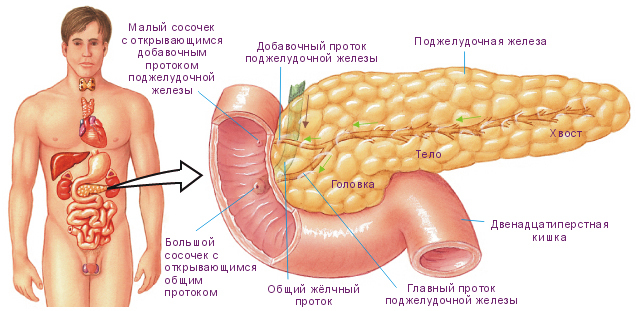
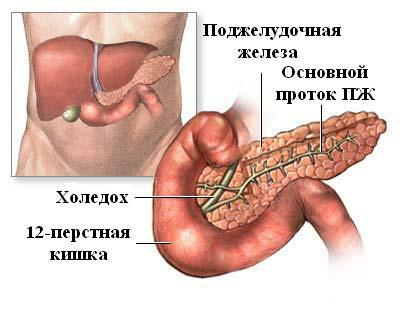
The pancreas is located in the abdominal cavity, namely at the back of the stomach and is closely adjacent to it.
In addition, part of the organ is enveloped by the duodenum. There are 2 main types of tissue in the gland that are required for specific functions.
The main part of the organ includes small lobes that are distant from each other by connective tissues:
- The exocrine part is necessary for the production of pancreatic juice with enzymes that help start digestive process, actively participate in the breakdown and digestion of basic substances: proteins, fats, carbohydrates.
- The endocrine part is responsible for the secretion of hormones, which makes it possible to normalize fat and carbohydrate metabolism.
After the liver, the leading place is occupied by the pancreas, among other organs that are responsible for the secretion of enzymes in the body.
The development of the organ begins from the first weeks of pregnancy, even during the formation of the fetus. The final size of the gland is formed only in adolescence.
As for the size, in a healthy, adult person, the entire organ is 15-22 cm in length, and the weight will be up to 80 grams.
Diagnosing various pathological processes is not always easy, since some are located quite deep in the abdominal cavity.
The most convenient and informative method for assessing the condition of the gland is considered to be ultrasound. Due to such a study, it is possible to identify the size of the gland, its shape, as well as the general condition.
Exocrine function occurs due to the acinus, it is his cells that produce pancreatic juice.
Over the course of 24 hours, iron releases about 2 liters of biological material, the main part of which is water, salts and enzymes.
The endocrine task is performed due to the work of the islets of Langerhans, of which the gland contains a large number.
Such parts have different types of cells, and the quantitative number of islets in healthy people can be about 1 million.
Knowing what the organ secretes, it is important to understand the basic functions, enzymes, hormones and their main tasks.
Exocrine function
When a person begins to eat food, food enters the stomach, the pancreas begins to activate, producing not only enzymes, but bicarbonates are also released.
The tissues of the gland are divided into different parts, which are called acini in medicine. All parts are necessary for the secretion of digestive protein, which accumulates in the main channel, after which it is released into the intestines.
A non-protein part appears in the channels of the pancreas, namely mucus and bicarbonates.
They are necessary to neutralize stomach acid, create an alkaline environment. Such conditions allow the enzymes to start up, which then acquire an active phase.
Many enzymes and their molecules have inactive compounds. After entering the intestines, enterokinase starts their work, due to which the necessary substances are released.
In addition, certain external stimulants affect the secretion of enzymes, as well as the functioning of the entire organ:
- The clinking of dishes.
- Pleasant food aromas.
- Kind of beautiful and delicious food.
The activity of excretion of biological material during the day can change.
Often during the daytime, the organ has an active phase of work, since people eat, they can often smell. At night, the production of enzymes stops, which is why doctors do not recommend eating before going to bed, especially very plentiful.
The activity of the gland can be affected by blood, namely its activity, as well as hormonal substances that are secreted by the stomach and intestines. These include:
- Secretin - is necessary to enhance the release of the liquid base of the juice.
- Cholecystokinin - increases the activity of basic enzymes, stimulates the release of hormones, acids and other substances.
- Somatostatin.
- Glucagon.
The last two substances inhibit juice production. The pancreas secretes several essential enzymes that are actively involved in the digestive system and metabolic processes.
Among them:
- Amylase - This enzyme is essential for the processing of carbohydrate products. Due to the substance, food is broken down, namely complex molecules into simpler ones, starch and glycogen. Such substances can be easily absorbed and assimilated in the intestine. The enzyme is able to be secreted not only by the pancreas, but also by the salivary glands.
- Lipase - an element needed for the processing of fats, the breakdown of fatty foods. This enzyme appears and is secreted by the cells of the organ, the work of which interacts with bile acids in the duodenum.
- Trypsins are necessary for the breakdown of protein foods.
- Elastase - breaks the protein bond.
- Phospholipase - Forms fatty acids.
Knowing the main enzymes for digestive work, you should familiarize yourself with the hormones that are produced by the gland, as well as their main task.
Exocrine dysfunction
Disruptions in the digestive work and functions of the pancreas are not among the most common pathologies of the gastrointestinal tract that are found in medicine.
Due to this, organ diseases appear rarely, as a rule, patients develop pancreatitis, which initially proceeds in an acute form, after which it can turn into a chronic one.
In advanced cases, the disease causes tissue necrosis, destruction of organ cells and the release of active enzymes.
Such substances begin to work without reaching the intestines, independently destroying the pancreas, and the affected area gradually increases.
Acute pancreatitis is diagnosed with high amylase levels in the body. Doctors can see the element in the analysis of urine or blood, even at the earliest stages of the disease.
Amylase quickly loses its effect and activity, begins to be excreted, and after about 5 days, the general analysis takes normal values.
The disease itself causes an increase in lipase. After 3 days, with severe damage to the organ, the amount of the substance increases up to 3 times from the normal range.
An increase in the indicator indicates a severe course of the disease. But if pancreatitis has the simplest and mildest form, but the pathological process does not affect the amount of enzyme.
The acute course of the disease significantly disrupts the work of the gland, therefore, with the observance of the basic therapeutic techniques, stable work can be achieved only after 2-3 weeks.
At this time, the restoration of the organ begins, which requires compliance with strict nutritional vaccinations.
The first day with an exacerbation, it is generally necessary to refuse food, only the use of water is allowed. Due to this, the load and activity of the organ is removed.
Pancreatitis should be treated with replacement methods. For this, doctors recommend using drugs called Creon, Pancreatin or Mezim.
Such pills are taken for a long time, and sometimes for the rest of their lives. The drugs can normalize the exocrine tasks of the organ and improve the functioning of the digestive system.
Endocrine function
The pancreas also secretes hormones. These zones in the organ are called islets of Langerhans, which produce active substances that are necessary for the normal functioning of the gland itself and other internal organs.
The active stage of the production of hormones and enzymes is interconnected, but with a disease like pancreatitis, the endocrine parts may be damaged.
Due to this, patients develop pathologies like diabetes. The reason for this is the necrosis of a large number of tissues of the tail of the gland.
Beta cells cannot then produce the main hormone, insulin, so blood glucose begins to rise to very high levels. In this case, special treatment is required.
Among the main secreted enzymes are:
- Glucagon - appears due to the alpha cells of the gland. The element improves the formation of sugar and is responsible for increasing its level in the blood. Often, the hormone is released at the very end of the meal, it is this substance that stops the exocrine work of the organ.
- Insulin is one of the main hormones that are secreted. It appears due to beta cells, and its task is to eliminate the increased amount of sugar in the blood. Excretion begins after eating. The indicator of the hormone in the blood indicates the development of diabetes. With type 1 of the disease, a person will have low insulin levels, with type 2, it may be normal or slightly increased.
- Somatostatin - produced by delta cells, the substance is necessary to stop the effects of digestive juice and hormones on the digestive tract.
- Polypeptide - secreted by PP cells, which start the stomach and inhibit the functions of the pancreas.
- Ghrelin, a hormone that improves human appetite, is secreted using epsilon cells.
With pancreatitis, the production of one or more hormones is disrupted. If the islets are destroyed, they are replaced by fibrous tissues that cannot function normally.
The release of active substances is reduced, and diabetes develops when a large number of cells die.
This is considered the most difficult and frequent complication that is characteristic of the chronic course of the pathology.
Diseases of the pancreas
The main signs that indicate organ diseases, the development of the inflammatory process are pain in the abdominal cavity and impaired functioning of the digestive system.
As a rule, the main place of pain is under the ribs from the side of the gland. The symptom can pass to other parts of the body, therefore, it is not always possible to independently diagnose the pathology.
With the transition of the disease into the acute phase of the course, girdle pain begins.
Severe pain and discomfort begin to appear after eating junk food, and for relief symptoms, you can use cold compresses, take an inclined position of the body, which gives short-term results.
Failures of the digestive system are accompanied by the following symptoms:
- Heaviness in the abdomen.
- The appearance of nausea and vomiting, which often begins after a meal.
- Bloating and flatulence.
- Violation of the table, namely diarrhea and strong gas.
With the development of a pathological process, metabolic processes may be disturbed, therefore, patients often lose weight and lose their appetite.
Due to the impossibility of normal functioning of the gland, the body is not able to receive sufficient the amount of nutrients and vitamins, in which case the skin changes color, becomes pale, dries up. Possible visual impairment and anemia.
Often, with inflammation, patients are diagnosed with pancreatitis with a different type of course.
But the diagnosis is not 100%, in some cases the problem develops with a cyst or an accumulation of calculi in the ducts, which are large and cause blockage.
The described symptoms can indicate disruptions in the work of any organ of the digestive system.
It is also important to understand that the gland performs external and internal secretion, and with an intrasecretory disorder, a malfunction of carbohydrate metabolism begins.
In this case, the production of insulin and other elements decreases or increases. The person develops the main symptoms of diabetes, including:
- Piuria.
- Intense thirst that cannot be quenched.
- Overdried oral cavity.
- Increased appetite.
In order to accurately establish the disease, a person with any of the described symptoms must be diagnosed.
Diagnostics
If you suspect a malfunction of the gland, a comprehensive examination is carried out. Failures can be determined by the color of the skin and mucous membranes, as well as pain.
At the first examination, the doctor palpates to determine the type and severity of pain, which makes it possible to determine abnormalities in the pancreas.
The patient needs to lie down initially on his back, and then on the left side. During the examination, intense pain will appear.
In the future, doctors conduct blood and urine tests, and examine enzymes. Other diagnostic methods include:
- Abdominal ultrasound.
- Radiography.
- CT and MRI, which allow you to accurately assess the condition of the organ and make a diagnosis.
If you do not make a timely diagnosis, do not start treatment, then pathological processes develop, cause complications and serious consequences that can become a threat to life.
Treatment
Pancreatic therapy is to eliminate the underlying causes that caused the disorder.
During treatment, the task will be to remove the main acute symptoms of the disease, stabilize the intestinal flora, and normalize endocrine and exocrine work.
The following treatments are often used:
- To eliminate pain and spasms, antispasmodic drugs are used, among which Papaverine and No-shpa are used. If the degree of the pathological process is started, then it is possible to use stronger medicines, namely the combination of Atropine and Gastrocepin.
- To normalize the digestive work, it is necessary to use enzymatic agents that help eliminate the disturbances that occur during inflammation and other disruptions. For treatment, doctors advise using Festal, Creon and their analogues.
- In diseases of the pancreas, an increased secretion of gastric juice appears, due to which it needs to be neutralized. To relieve this symptom, you can drink antacids.
- Exocrine insufficiency is removed with the help of Almagel, Maalox and similar drugs.
The pancreas itself belongs to a delicate organ, due to which surgical methods of therapy are rarely used.
Only in emergency and advanced cases, if conservative remedies do not give a positive result.
Surgical treatment is indicated when a cyst or tumor appears, as well as clogging of ducts, calculi in the gallbladder, or when a part of the gland needs to be removed.
Food
For any pathological processes in the pancreas, it is extremely important to monitor the diet, adhere to proper nutrition and strict diets.
It is necessary to abandon all products that can cause a negative effect on the weakened gland and take the load off it. In addition, the correct heat treatment methods will need to be used.
In case of illness, you need to give up frying food; boiling and steaming is considered the ideal cooking method.
The diet consists in the use of protein products of animal origin, but only dietary varieties of fish or meat should be used, preferably cooked.
It is forbidden to eat broths based on animal products for some time, since they can excite the gland, which is undesirable, because it needs maximum rest.
Every day you will need to eat low-fat dairy products. Doctors advise against using carbohydrates.
It is best to prepare all meals after pre-grinding in a blender. In this case, tissue injury is excluded.
It is also forbidden to drink and eat very hot or cold, all food should be warm, the optimum temperature is 25-50 degrees.
If, during the diagnosis of the definition, pancreatitis or other diseases associated with the gland, then the patient needs to minimize the load on the organ.
To do this, on the first day of exacerbations, you need to starve, you can only drink water or a rosehip decoction, and apply cold in the pancreas.
In addition to nutrition, an important component will be compliance with the drinking regime, since you need to consume from 2 liters of water, with the development of the inflammatory process. In addition, doctors may prescribe remedial gymnastics and other treatments.
Folk remedies for diseases of the pancreas have a positive effect, but they can be used only after prior consultation with doctors.
Some of the herbal ingredients from recipes can cause side effects. In addition, folk recipes cannot be used as the main treatment.
They are used exclusively as an adjunct to traditional methods to enhance their effects, quickly relieve symptoms and strengthen the immune system. Some recipes help speed up tissue regeneration.