
Symptoms of pancreatitis in a woman and treatment
The inflammatory process in the pancreas (RV) has certain symptoms that cannot go unnoticed. In the event of the onset of pancreatitis, a lethal outcome is not excluded. Protein foods should be included in the daily diet for diseases of the pancreas.
The beautiful part of humanity rarely complains about pancreatic diseases in comparison with the stronger sex. And yet women also tend to endure all the hardships of this disease. The inflammatory process in the pancreas in the female sex can occur in both acute and chronic forms.
Excessive irritation in behavior, malaise, and nausea are often attributed to premenstrual syndrome.
Content
- 1 Who gets pancreatitis and for what reason?
-
2 Symptoms of various types of pancreatitis
- 2.1 General symptoms
- 3 Acute type of pancreatitis
- 4 Chronic type of pancreatitis
- 5 Pancreatitis and carrying a child
- 6 Inflammation of the pancreas in women over 50
-
7 Diagnostics
- 7.1 Amylase in pancreatitis: normal
- 8 Therapy for women
- 9 Regime and diet for pancreatitis
- 10 Complications
- 11 Further forecast
Who gets pancreatitis and for what reason?
Often women suffer from this condition if they have liver or gallbladder problems. Hepatitis of any type, destruction of the liver, stones in the gallbladder make this organ work to wear and tear. The release of bile into the pancreas often causes the development of acute pancreatitis or aggravates the course of the chronic form. In addition, the period of childbearing is a secondary factor in provoking the disease.
Changes in the hormonal part of the body cause spasm of the gallbladder ducts, which causes a deterioration in the output of bile. Therefore, inadequate bile release can form stones that can damage or block the ducts. Alcohol abuse is the third major provoking factor. Inflammation in the pancreas can result from trauma.
Remember! The appearance of problems with the pancreashas a direct linkwith a way of life.
The normal functioning of the pancreas can also be affected by occasional debilitating diets.
Avoiding protein-rich foods will deplete the pancreas, resulting in improper enzyme production. Uncontrolled consumption of refined foods with a high sugar content will also serve as a destructive factor for the pancreas, ultimately hypoglycemia develops.
The production of insulin is abnormal, and inflammation begins in the pancreas. Try to avoid unhealthy foods such as glazed sweet curd snacks, chocolate bars, long-lasting flour products, and soda.
Symptoms of various types of pancreatitis
Pancreatitis of any type is a dangerous condition and can lead to complications that can even lead to death of a person. If a woman is pregnant, this also adds certain risks to the course of the disease. The symptomatology of the disease can be mistakenly regarded as a rearrangement of hormones in the body.
Usually, on holidays, a person hardly manages to control the volume of alcoholic beverages drunk. Drinking even small amounts of alcohol-containing liquids can exacerbate inflammation in the pancreas.
Signs of pancreatitis in women have a relationship with the type of inflammation occurring in the body. It is difficult to diagnose inflammatory processes. It will be possible to recognize the pathology only in the hospital with a comprehensive examination.
General symptoms
The main symptom that accompanies almost any type of pancreatic inflammation is soreness. Pains of an intense nature are noted - the provocateur of their appearance is the intake of alcoholic beverages or "unhealthy" foods, staying in the cold. The pain originates in the hypochondrium on the right or left, in the lower part of the shoulder blades, in the upper abdomen or in the lumbar region. An attempt to move only aggravates the patient's condition. In addition to pain, other signs of pancreatitis appear over time.
Secondary signs of the course of the disease:
- bloating, accompanied by pain (this happens due to increased fermentation);
- constant nausea after eating or at night;
- paroxysmal vomiting (bile or food particles that have not been digested can be found in the excreted stomach contents);
- Difficulty passing stools (constipation), followed by increased urge (diarrhea);
- an increase in body temperature that occurs periodically (up to 38 ° C);
- partial or complete refusal of food intake (appears due to other physiological inconveniences accompanying the disease, a psychological barrier).
Acute type of pancreatitis
Soreness is felt in the epigastric zone or on the left under the rib. The soreness of a burning character becomes impossible to endure. In some situations, a similar sign may have an abnormal difference.
Symptoms of acute pancreatitis can be confused with heart disease because soreness originates on the left in the chest area, radiating to the right arm or under the rib on the right sides.
Other variations in the symptoms of acute pancreatitis in the female population:
- soreness that resembles renal colic (acute type pain is concentrated in the umbilical zone);
- pain syndrome that originates in the back or lumbar region;
- spasmodic pain of a sharp type in the region of the mandibular region and to the right of the cervical zone.
After 2 hours of pain, the patient begins to develop other symptoms characteristic of acute inflammation of the pancreas. These are vomiting that cannot be suppressed or relieved, persistent nausea, increased heart rate, sweating, filling the abdomen with air and, as a result, frequent belching. On a woman's tongue, a white coating can be noted. Blood pressure drops significantly quickly. In addition to the above, the patient has a loss of strength and pallor of the skin.
Chronic type of pancreatitis
Chronic inflammation of the pancreas often occurs due to other ailments of the biliary system. With the uncontrolled consumption of alcoholic beverages, the risk of developing inflammation increases. In the stage of exacerbation, the disease can be determined by soreness in the lower abdomen of a dull nature.
Other symptoms of chronic pancreatitis:
- due to hormonal changes in the body, women more often than men suffer from pancreatitis. There is a breakdown, dizziness may begin;
- heaviness in the abdomen, which is constant in nature;
- decrease in blood red blood cells;
- frequent urge to use the toilet or difficulty passing feces;
- unpleasant taste in the mouth;
- losing weight;
- refusal to eat;
- "Seizures" in the corners of the oral cavity;
- inflammatory processes in the gums.
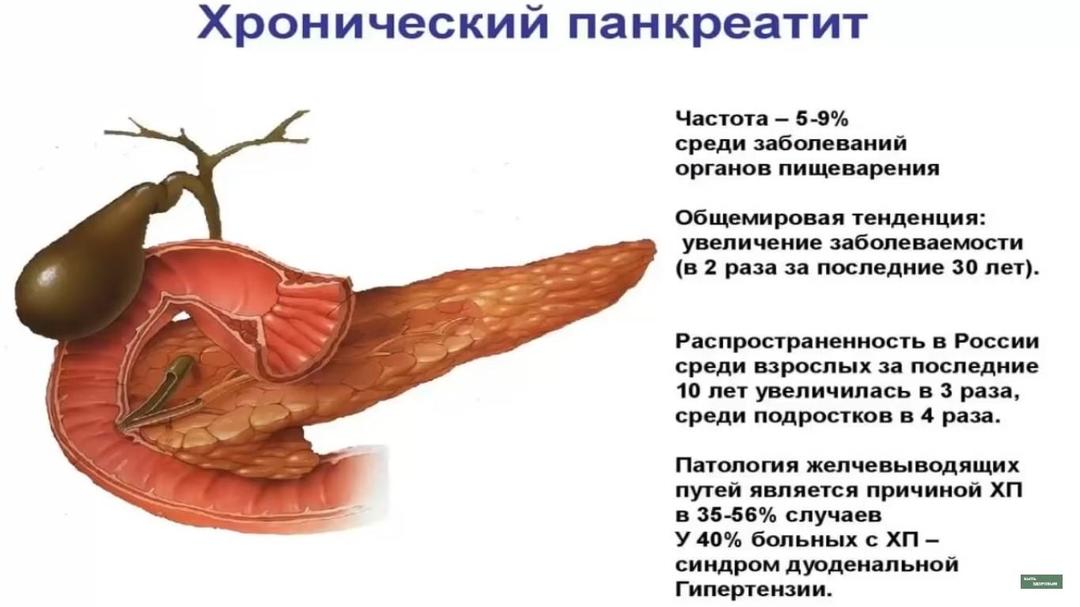
Chronic pancreatitis
Pancreatitis and carrying a child
Most doctors agree that a history of pancreatitis in a woman who plans to become a mother is not a significant contraindication for this. However, you need to take your health seriously and register with a doctor as soon as it became known about the birth of a new life in the body of a woman suffering from pancreatitis. You need to remember about strict adherence to all medical prescriptions that will help keep the disease under control and prevent complications.
As soon as the pregnant woman began to notice symptoms similar to those of pancreatitis, she urgently needs to visit the attending physician to make a decision on hospitalization in the hospital department.
Usually, gentle therapy is effective in getting rid of the inflammatory process and significantly improves the condition of the woman.
In situations where the inflammatory process overtook a woman on the eve of childbirth, the risk of DIC syndrome increases, this condition negatively affects the health of the mother and the newborn. Inflammation of the pancreas often becomes a provocateur of toxicosis during gestation, for this reason a woman often feels unwell. If a woman is overtaken by a severe stage of the inflammatory process, then doctors can offer the patient a radical method - termination of pregnancy.
Pancreatitis is regarded as a disease that poses a serious threat to the health and life of the patient, so treatment should not be postponed. As the most threatening conditions, doctors note peritonitis, the release of blood into the gastric cavity, shock and damage to brain tissue.
In medical practice, there is information that 15% of patients die with the development of acute pancreatitis, and if the disease was started, as a result of which tissue death began to occur, then this indicator increases to 70%.
Inflammation of the pancreas in women over 50
For the most part, pancreatitis is diagnosed in women after forty years. In the beautiful half of humanity, diseases of this important organ may appear due to other pathological changes, inflammation in the gastrointestinal tract, while carrying a child due to changes in hormone levels, as well as during menopause. Often, pancreatitis in the weaker sex makes itself felt after excessive alcohol intake. Regular use of alcohol-containing liquids increases the likelihood of pathologies in the functioning of the liver and other systems and organs, which can serve as a manifestation of pancreatitis.
When a woman experiences a restructuring of the body associated with menopause, then stress and depressive states are frequent for her. Frequent nervousness negatively affects the work of the gastrointestinal tract, spasmodic pains appear, and an inflammatory process of the pancreas may occur.
Diagnostics
Signs of inflammation of the pancreas, diseases of the genitourinary system and pathologies in the gallbladder are similar. To determine an effective method of therapy, a differential diagnostic examination is required (symptoms that are not similar to the course of the disease are eliminated).
The examination is the responsibility of specialists in the gastroenterological, surgical or therapeutic profile. After interviewing the patient, specifying the location of the pain, its type, the specialist initially gives a statement or refutation about the acute form of pancreatitis. Then the patient will be asked whether she is a carrier of the hepatitis virus, whether she has gastrointestinal diseases or cholelithiasis.
Examination of the abdomen is carried out for an initial assessment of the pathology of the pancreas and the establishment of a probable disease. Then you will need to pass tests:
- a complete blood count to detect inflammation;
- biochemical blood test to establish the indicator of glucose and amylase (the latter reflects the inflammatory processes occurring in the pancreas) and liver samples;
- urine test for an indicator of pancreatic enzymes;
- biochemical analysis of feces to detect undigested food inclusions, mucus, or, it happens, a bacterial component.
In addition, ultrasound and computed tomography can be performed. The data obtained will help to establish the level of inflammatory processes in the pancreas and the place in which the pathology is localized. During laparoscopic surgery (removal of the gallbladder), the complex makes a conclusion about the state of the pancreas.
Amylase in pancreatitis: normal
The main baseline for diagnosing pancreatic pathologies is the actual level of amylase. Amylase is an enzyme produced by the pancreas and salivary glands to break down incoming food.
The normal level of amylase in the blood has the ability to change, which depends on the age of the patient, but has nothing to do with his gender.
The normal level of amylase in the blood.
Age |
Indicators, units / l |
Up to a year |
<8 |
1-10 years old |
<30 |
11-20 years old |
<40 |
21-70 |
<125 |
From 71 |
<160 |
Deviation upward from the norm of amylase in pancreatitis indicates the onset of inflammation in the pancreas. When urinating, the enzyme is removed from the body.
Urine analysis for diastasis is the name of a quantitative examination. The normal level of pancreatic amylase in women from 20 to 50 years old is 50-65 U / L.
Therapy for women
The weaker sex manages to get rid of the disease better than the strong, but this is true for women who do not abuse alcohol. Many women have more willpower, try to stick to a healthy diet, and the hospital routine focuses their attention on their health. For this reason, the outlook is quite positive.
The main points in the therapy of the pancreas are fasting and cold. Hunger for treatment is prescribed by doctors for 2-3 days, taking into account the intensity of the disease and its accompanying symptoms. Cold is placed on the abdomen in order to eliminate swelling.
Therapy for pancreatitis at home is permissible only if the disease is chronic. The disease in the acute stage can be overcome only in a hospital under the close supervision of qualified doctors.
Revision of the diet and definition of everyday the menu, taking into account the recommendations of the attending physician and dietary nutritionist. In case of inflammation of the pancreas, the patient must eat according to the diet "Table No. 5" according to Pevzner.
Fasting for medicinal purposes is provided in cases where the chronic form of the disease is exacerbated. If necessary, it is possible to prolong fasting, but then it is necessary to supplement hospital nutrition with electrolytic solutions, amino acids and protein products.
The patient should not consume certain foods: margarine, foods high in calcium (cottage cheese, cheeses), canned foods, spicy, fried and foods with a high acid content. Allowed the intake of vegetable and butter in small quantities (no more than 25 g per day).
You should eat fractionally, food should be taken at the same time at equal intervals, one portion of food should not be more than 260 grams. It is useful to eat baked, boiled and steamed dishes. Viscous cereals, mashed soups, jellies, jelly from natural fruits are very useful. It is better to refuse fresh bread, but crackers and dried bread will be very useful. The concentrated juice squeezed from fruits and vegetables should be diluted with water.
If chronic pancreatitis has worsened, treatment tactics are agreed with the attending physician, which may include taking medications.
Drug therapy is based on the use of such drugs.
- Pain relievers, analgesics that help reduce pain. In order to relieve discomfort, take "Baralgin", "No-shpu", "Dexalgin", "Spazmalgon", "Spazgan" or "Analgin".
- Drugs that enhance the effects of pain relievers. Usually used "Droperidol" and "Fentanyl".
- Products containing enzymes. During the period of therapy, such drugs make up for the lack of the enzyme component, while the quantitative indicator of bile acids is not affected.
- Medicines "Somatostatin" and "Octreotide" are prescribed by a doctor if seizures with dangerous symptoms occur.
- Means that regulate the production of gastric juice. Antacids are used to neutralize hydrochloric acid entering the gastrointestinal tract.
- Semisynthetic penicillin and cephalosporins. They are used if there is a risk of re-spreading the infection.
- Medicines that eliminate vomiting. These drugs include "Cerucal", "Metoclopramide". Their action is based on regulating the movement of food through the gastrointestinal tract, which prevents reverse flow.
- Preparations for eliminating constipation. "Normase", "Duphalac", "Senade", "Guttalax", "Guttasil", "Goodluck" are used. As a result of the intake, the absorption function of the gastrointestinal tract and peristalsis are restored.
- Drugs for the treatment of diarrhea. As a rule, use "Loperamide", "Lopedium", "Diara", "Imodium". Medicines increase the absorption capacity according to the principle of osmosis.
- Funds aimed at normalizing the water and electrolyte balance, and drugs that reduce puffiness ("Furosemide").
- Vitamin complexes, preparations for restoring appetite. The appointment is required to restore the protective functions of the body after undergoing medical hunger or dietary nutrition. Popular are "Duovit", "Multitabs", "Supradin".
Medicines to reduce toxins in the patient's body.
- beans, peas (including chocolate);
- sparkling water;
- cabbage, radishes, greens with a high acid content;
- spices;
- freshly baked bakery products;
- fatty meat products, poultry, fish, cheeses;
- fruits and berries with a high acid content;
- canned foods;
- mushrooms.
If the acute form of the disease is associated with the patient's psychosomatic state, the doctor prescribes sedatives.
Regime and diet for pancreatitis
At one time, the patient should consume no more than two hundred grams of food. For the day, about 5-6 meals are provided with an interval of 2.5-3 hours.
Diet food "Table No. 5" takes into account all the needs of a patient suffering from inflammation of the pancreas. The energy value per day should be 2500-2600 kcal. The amount of fatty foods and carbohydrate-containing foods is reduced, the volume of proteins is increased.
In the acute form of pancreatitis, a healthy diet should include liquid cereals, steam dishes.
Porridge made from barley, millet, corn and pearl barley will additionally load the digestive tract, so they should be excluded. It is also better not to use soups with milk or steep meat / fish broth - vegetable soup will be much healthier. You can add sour cream or a small amount of butter to cooked food. Do not add fat during cooking.

Herbal tea for pancreatitis
In pathological conditions of the pancreas, it is forbidden to eat:
- beans, peas (including chocolate);
- sparkling water;
- cabbage, radishes, greens with a high acid content;
- spices;
- freshly baked bakery products;
- fatty meat products, poultry, fish, cheeses;
- fruits and berries with a high acid content;
- canned foods;
- mushrooms.
Food that causes the gallbladder to work with excessive stress can cause the manifestation of an acute form of pancreatitis.
Attention! Pancreatitis and alcohol consumption are incompatible. Pathological processes in the pancreas can cause death of the patient!
If you follow the appointment of a specialist, do not ignore the diet and exercise moderately, it is quite possible to live a long, normal life. A complete rejection of alcoholic beverages will help reduce the risks of inflammation of the pancreas and no longer remember the unpleasant symptoms accompanying pancreatitis. It is important in any stressful situations to remain calm, not to succumb to emotions in the moment of negativity, not to worry in vain.

Fatty foods with pancreatitis
Complications
It is impossible to start an ailment - this can deplorably affect the patient's health or even his life. There are a lot of life-threatening conditions that have become a consequence of the death of the tissues of the gland:
- the appearance of diabetes due to a failure in the production of insulin;
- purulent inflammation of the gland;
- weakening of the body due to the action of toxins;
- accumulation of fluid;
- inflammatory processes in the gallbladder, the appearance of ulcers;
- cystic tumors in the gland, obstructive jaundice;
- due to persistent inflammation, there is a risk of secondary infection.
Further forecast
Inflammation of the pancreas significantly impairs the usual way of life and can be fatal. Timely diagnosis and correct therapy will allow you to achieve remission for many years.


