Symptoms of pancreatic disease in men
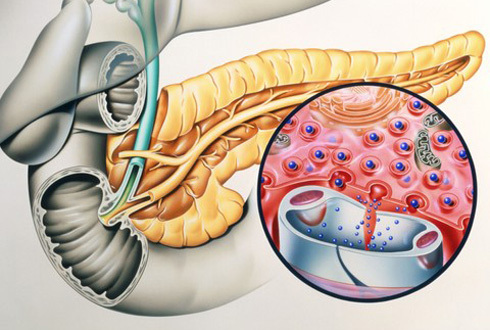
The normal functioning of the pancreas ensures the normal functioning of the digestive system, and also provides the body with the necessary amount of the hormone insulin. Disruptions in the production of insulin can lead to disruptions in metabolic reactions in all tissues of the body, as well as can cause a sharp increase in the concentration of glucose in the blood, which will lead to the development of sugar diabetes.
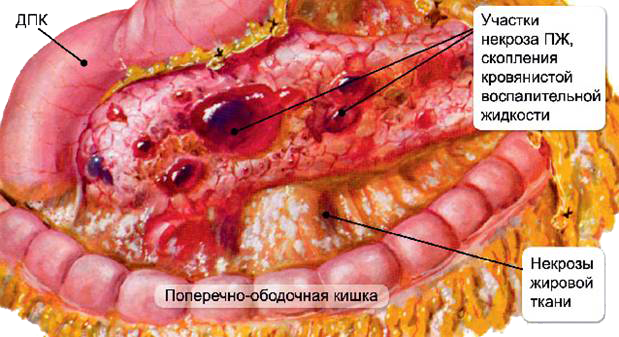
Note! Inflammation of the pancreas can lead to the gradual death of the soft tissues of this organ - necrosis. Also, the inflammatory process can be accompanied by a layer of bacterial infections, the formation of cysts, as well as inflammation of the peritoneal region.

Symptoms of pancreatic disease in men
Content
- 1 The reasons for the development of pancreatitis in men
-
2 Forms of pancreatitis and their characteristics
- 2.1 Video - Symptoms of inflammation of the pancreas
- 3 Symptoms of chronic and acute forms of pancreatitis in men
- 4 Diagnostic measures
-
5 Pancreatitis treatment
- 5.1 Video - Symptoms and treatment of chronic pancreatitis
The reasons for the development of pancreatitis in men
The risk group that can be exposed to pancreatitis includes men over the age of 30. In addition to age, the reasons for the development of inflammation of the pancreas can be:
- alcohol abuse;
- hereditary predisposition;
- complication of gallstone disease;
- the use of excessively fatty as well as spicy foods;
- abdominal trauma resulting in injury to the pancreas;
- surgical intervention;
- long-term use of antibiotics and other "aggressive" drugs;
- previous endoscopy;
- autoimmune and infectious diseases;
- taking medications for too long (some antibiotics, diuretics, glucocorticosteroids, etc.);
- food or chemical poisoning;
- endocrine diseases;
- frequenteatingunnatural products, which contain a large number of additives obtained synthetically.

Reasons for the development of pancreatitis
Forms of pancreatitis and their characteristics
Types of pancreatitis:
- Chronic - characterized by inflammation of the pancreas, in which there is a violation of its exocrine and endocrine functions. The inflammatory process leads to disruption of the blood supply to the cells of the organ and metabolic processes in them. This is the reason for the gradual replacement of the cells of the gland with connective tissue, the organ is reorganized and it loses its functional activity. The chronic form of pancreatitis is characterized by periods of exacerbation and remission.
- Sharp - characterized by severe inflammation of the pancreas, a significant increase in the size of the organ, the occurrence of severe swelling, decay and necrosis of the cells of the gland. As a result, there is a risk of infection entering the abdominal cavity through foci of organ decay. The pancreas completely stops the production of hormones and enzymes that play an important role in digestion.

Pathogenesis of acute pancreatitis
Note! The acute form of pancreatitis can be accompanied by the formation of ulcers and bleeding in the gastrointestinal tract.
Varieties of acute pancreatitis
| View | Characteristic |
|---|---|
| Edematous (interstitial) | It is characterized by edema of the lobules of the gland, as well as the interstitial space. There are no destructive changes. |
| Hemorrhagic | It is characterized by rapidly advancing destructive processes of the parenchyma of the gland, as well as its blood vessels by its own enzymes. As a result, necrosis, toxemia, peritonitis and hemorrhage occur. |
| Purulent | It is characterized by the occurrence of micro- and macro-abscesses in the pancreatic parenchyma. As a result, pseudocysts can occur - cavities filled with necrotic tissue, as well as purulent contents |
| Pancreatic necrosis | It is characterized by partial or complete death of the pancreas, due to the digestion of the organ by enzymes that are secreted in it. Often become the cause of the development of renal, respiratory and vascular insufficiency, which in 30% of cases leads to death |
| Cholecystopancreatitis | It is characterized by simultaneous inflammation of the pancreas and gallbladder. May be accompanied by inflammation of the liver, in which necrotic and dystrophic changes occur in the organ |
Video - Symptoms of inflammation of the pancreas
Symptoms of chronic and acute forms of pancreatitis in men
The chronic form of pancreatitis is characterized by mild symptoms. There is pain on the left, under the ribs. The pain can spread to the right hypochondrium, abdominal cavity, to the heart or lower back. Discomfort in the stomach may be present, as well as a slight enlargement of the liver.

Pancreatitis symptoms
As the above disease develops and flows into an acute form, the symptoms become brighter. More often, pain attacks occur, dispersion disorders appear, characterized by stool disorders (it becomes liquid, mushy, or vice versa, constipation occurs). Mucous discharge may be present in the feces.
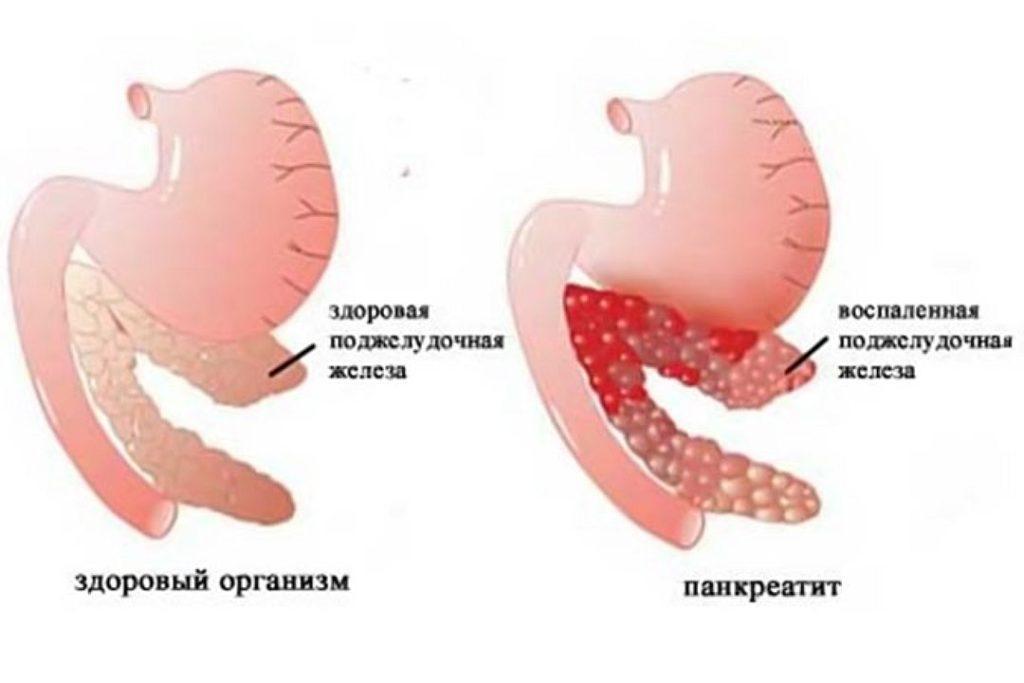
Inflammation of the pancreas with pancreatitis
Also, the symptoms of acute pancreatitis in men are:
- excessive urge to use the toilet;
- diarrhea;
- nausea and vomiting;
- bloating;
- fever;
- rapid weight loss;
- feeling of weakness in the body;
- dehydration;
- rapid pulse and palpitations;
- severe pains around the abdomen and lower back.

5 signals from the body about a malfunction of the pancreas
Note! In the case of advanced forms of acute pancreatitis, in which necrosis of the bulk of pancreatic cells is observed, the pain is so severe that a person may experience painful shock.
Diagnostic measures
It is very difficult to identify pancreatitis in men in the early stages of the development of the disease. Symptoms are too mild, occur irregularly, and frequently occurring symptoms can be explain by a host of other reasons, without thinking about the possibility of having problems with the health of the pancreas glands. Therefore, as a rule, a doctor seeks a doctor only when the symptoms of pancreatitis appear regularly, cause severe discomfort and there is practically no subsiding soreness in the area location of the gland.

Signs and symptoms of chronic pancreatitis
When contacting a specialist, palpation is the first diagnostic measure. The specialist feels and applies light pressure on the left side of the body, at an angle between the ribs and the spinal column. With pancreatitis, a man will feel pain on palpation. The doctor presses under the navel, at a distance of 2 cm from the latter. The patient will also feel sore. A specialist must examine the patient's tongue without fail - on the surface of the tongue with pancreatitis, there is a whitish bloom, and atrophy of taste buds is also observed.
The obligatory and most complete analysis, by which one can judge the presence of pancreatitis and the degree of its development, is a blood test. The specialist looks at the level of leukocytes in the blood, and also checks the level of amylase. Amylase is an enzyme produced by the pancreas and is responsible for the processing of starch as well as glycogen. The norm of its content in the blood should not exceed 65 units. Exceeding the norm by two times indicates the presence of pancreatitis in a man. The critical mark for the amylase content in the blood serum is 1000 units - this is evidence of the critical condition of the patient and speaks of the urgent need for surgical interference.
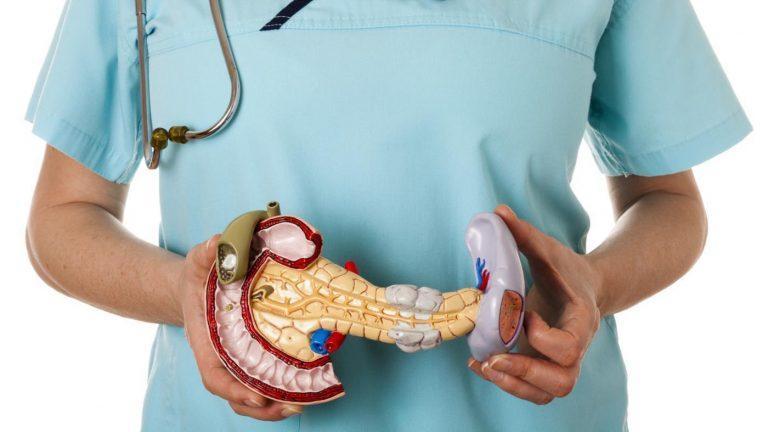
The first diagnostic measure for pancreatitis is palpation
An increased level of leukocytes is evidence of the presence of an inflammation focus in the body. By the number of leukocytes, a specialist can judge how strong the focus of infection is. Also, an important role is played by indicators: ESR, pancreatic enzymes, glucose, hematocrit, lipase, and trypsin.
Note! In addition to the above diagnostic measures, the patient must be prescribed an ultrasound scan of the organs located in the abdominal cavity and a biopsy. For the latter, specialists need to take a biopsy material from the patient. To do this, the patient's skin is pierced in a place located above the pancreas, and the required amount of material is taken.

Causes of pancreatitis
Pancreatitis treatment
Treatment of chronic pancreatitis is possible at home, however, after consulting a specialist and strictly according to his prescriptions. First of all, a patient with a pancreatic disease is recommended a strict diet: it is necessary to give up the use of salty, fried, smoked foods, as well as semi-finished products. It is recommended to drink purified water as much as possible - drinking plenty of water can reduce inflammation in the pancreas. It is allowed to accept not strong tea, it is better if it is green. The patient should stop drinking coffee, energy drinks, as well as all alcoholic beverages.
For treatment at home, a specialist prescribes enzyme preparations for the patient: “Mezim», «Pancreatin». To relieve painful spasms, it is credited: “No-shpu" or "Ibuprofen». In addition, herbal preparations specially designed for the restoration of the pancreas can be prescribed, which can be purchased at pharmacies.

Diet for exacerbation of chronic pancreatitis
Treatment of acute pancreatitis should be carried out strictly in a surgical hospital. The patient should always be under the strict supervision of specialists so that the latter can intervene in a timely manner if an urgent operation is necessary. Treatment, as well as in the chronic form of the disease, begins with adherence to a strict diet and taking the above drugs. But with the development of foci of infection in the pancreas, the patient must be prescribed a course of antibiotics, the purpose of which is to stop the infectious focus. Also, the patient is prescribed antioxidants and antacids, which are necessary to reduce and control the level of acidity in soft tissues. Pancreatic secretion is controlled by giving the patient “Atropine».

Development of inflammation of the pancreas
If pancreatitis has acquired a neglected form, and the patient's pancreas has undergone necrosis, surgical an intervention to get rid of the dead part of the pancreas and prevent further spread foci of necrosis.
Attention! In chronic pancreatitis, as well as after acute pancreatitis, it is necessary to regularly monitor the condition of the pancreas. To do this, it is recommended to take a complete blood count on a monthly basis, and once every six months to undergo an ultrasound of the abdominal organs.