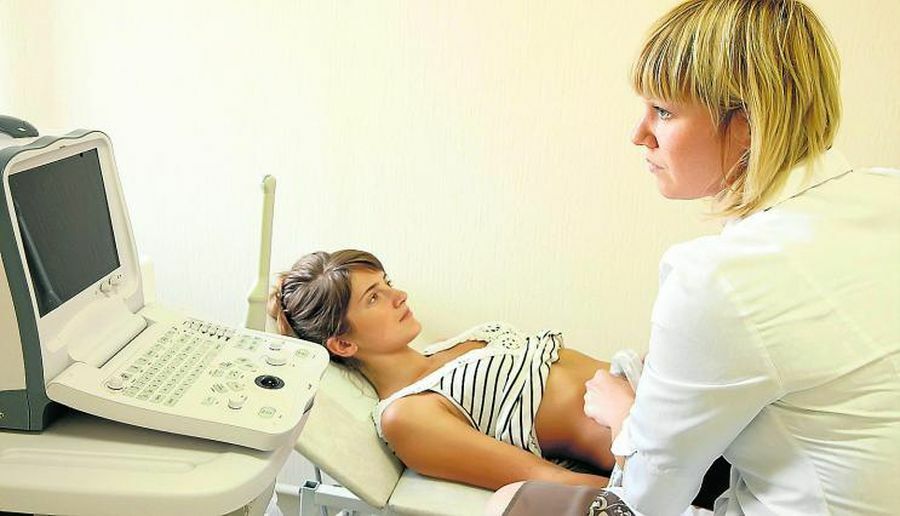
Symptoms, causes, diagnosis and treatment
Pancreatic necrosis is one of the most serious pathologies of the pancreas. The disease develops more often in people younger than 35 years old, about 70% of all patients are younger than 30. The likelihood of pathology does not depend on gender. The chances of recovery, even with timely diagnosis and treatment, range from 30 to 60%.
Pathology is characterized by a violation of the functionality of the pancreas against the background of tissue necrosis of the affected organ. Against the background of cell death, an inflammatory process also develops. As a result, the pancreas is unable to perform its tasks due to destruction. Pancreatic necrosis is considered one of the final stages in the development of pancreatitis. This pathology develops rapidly and is characterized by a clinical picture that is dangerous to the patient's health and life.
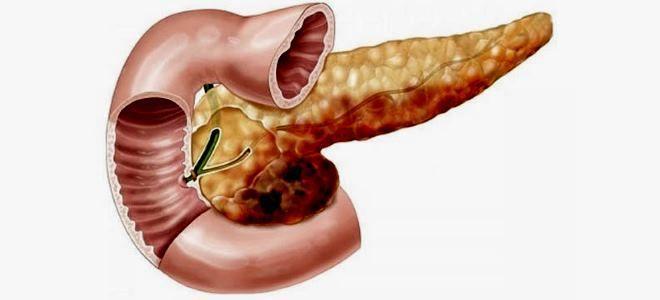
Pancreatic necrosis symptoms
Content
- 1 Varieties
-
2 Causes of occurrence
- 2.1 Video - Pancreatonecrosis
- 3 How is it developing
- 4 Clinical signs
- 5 How is the diagnosis made
-
6 Treatment
- 6.1 Conservative
- 6.2 Operative treatment
- 7 Forecast
- 8 What to do if symptoms occur?
- 9 Duration of the diet
Varieties
In medical practice, pancreatic necrosis is divided into several types, depending on the location and extent of distribution:
- Limited form of pancreatic necrosis. It is characterized by the defeat of only one area of the pancreas.
- With a common type of disease, the pathological process affects more than 80% of the organ.
- The total type of the disease involves the spread of tissue necrosis throughout the pancreas.
Also, pancreatic necrosis is subdivided depending on the presence of a concomitant developing infection:
- A sterile type of pathology, when there is no infectious process in the body.
- Infected pancreatic necrosis, accompanied by the development of an infectious process.
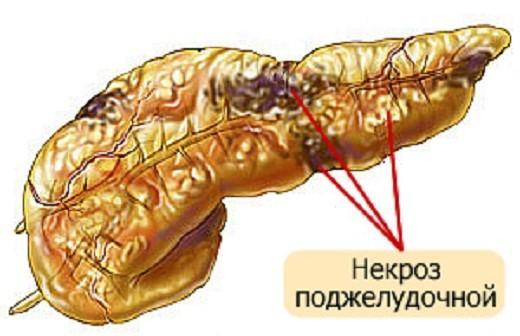
Image of pancreatic necrosis of the pancreas
The sterile type of the disease is divided into several clinical forms:
- Fatty variety. It is characterized by a slow pace of development of pathology (within 3-6 days). The prognosis is most favorable in comparison with other types.
- The hemorrhagic type progresses more rapidly, often a clinical sign is an internal hemorrhage.
- The most common form is mixed. It is characterized by the presence of signs of fatty and hemorrhagic types of the disease at the same time.
To accurately determine the type of pathology, a number of diagnostic procedures are required.
Causes of occurrence
The main provoking factor in the onset of pancreatic necrosis is the use of alcoholic beverages, as well as disturbances in the diet. In most cases, it is diagnosed in people who often drink or eat fatty foods in large quantities. The largest part of exacerbations of pathology is observed on holidays due to abundant feasts with the consumption of unhealthy food and alcoholic beverages. Clinical signs of developing pathology become noticeable the very next day after the holiday.
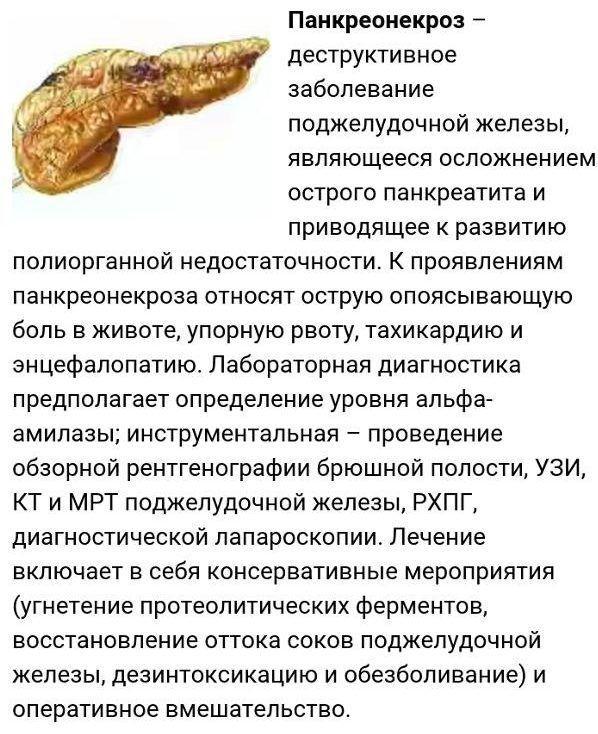
What is pancreatic necrosis
Another provoking factor is the developing pathology of the gallstone type. It is characterized by clogging of the channels of the pancreas, as a result of which the pressure inside the vessels rises, which leads to the process of melting the tissues of the organ.
Pancreatic necrosis can also develop as a complication after surgical treatment in the gastrointestinal tract. Under the influence of alcoholic beverages or fatty foods, bile is thrown into the pancreas, enzymes are activated and trigger enzymopathic reactions in the human body.
The development of necrosis of the tissues of the pancreas is also explained by the deterioration of the local immune system of the organ. Frequent consumption of fatty foods and alcohol weakens the protective structure, stimulates the work of external secretion. As a result, there are violations in the outflow of fluid, the ducts of the pancreas are stretched.
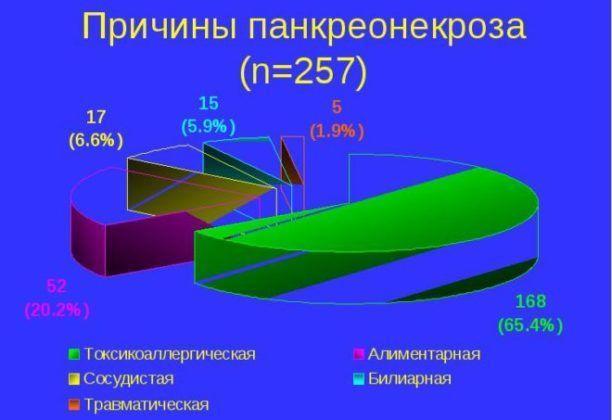
Causes of pancreatic necrosis
Against the background of increased vascular pressure, edema of the parenchyma develops, the acini of the gland are affected. All this leads to the death of the cells of the affected organ, which is explained by the process of self-digestion. In case of penetration of enzymes into the affected area, intoxication of the body occurs. New foci appear in the area of the cardiac and renal systems, there is a risk of necrosis in the area of the brain.
It is impossible to completely exclude the likelihood of developing pancreatic necrosis. However, doctors distinguish a risk group, which includes people who often consume alcoholic beverages, patients suffering from gallstone pathologies or diseases of the renal system. At risk and patients with impaired function of the gastrointestinal tract, for example, having an inflammatory process in the mucous membrane. The risk of pancreatic necrosis is also increased in people with an abnormal structure of the pancreas or other organs involved in the digestive process.
Video - Pancreatonecrosis
How is it developing
Pathology begins to develop long before the first clinical signs appear. The basis of the mechanism of disease progression is considered to be the malfunctioning of the local protection of this organ.
The further development of pathology occurs in several stages:
| Stage | Description |
|---|---|
| Toxemia | After exposure to a provoking factor, there is an increase in the secretion of the affected organ, as well as stretching of the pancreatic ducts. The process of death of cells of the affected organ begins. With active lipase, adipose tissue necrosis is observed. In the case of active work of elastase, doctors note the destruction of the channels, which is a clinical sign of the development of a hemorrhagic form. Regardless of the type of developing pathology, a multiple organ failure is formed, all vital systems of the body are affected |
| Abscess | At the second stage, an inflammatory process develops in the pancreatic region, which subsequently spreads to other vital organs of a person. As the inflammation develops, cavities with purulent contents are formed. |
| Formation of abscesses | In order to maintain a relatively favorable prognosis, it is necessary by all means to avoid the beginning of the third stage - the appearance of foci with purulent contents. Even with modern methods of treatment, there is no guarantee of patient recovery |
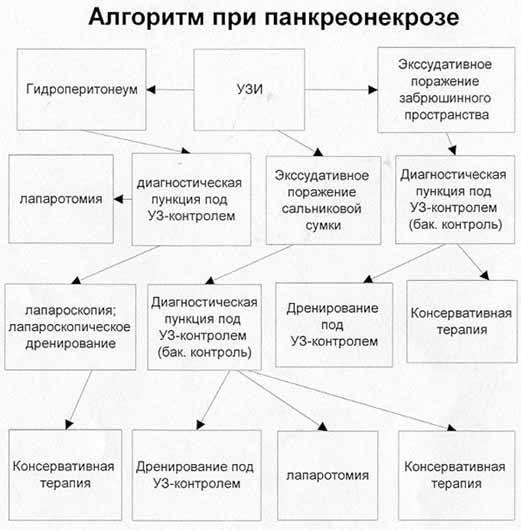
Pancreatic necrosis algorithm
Clinical signs
The symptoms of pancreatic necrosis are easily distinguished from the clinical signs of other diseases. The manifestations of this pathology, first of all, are characterized by sharp painful sensations in the region of the upper left part of the gastrointestinal tract. The pain syndrome also extends to the lumbar region or groin area. It is difficult for the patient to independently establish the location of the pain focus, more often the pain is characterized as encircling.
The severity of painful sensations depends on the stage of development of the disease. The more serious the stage of the pathology, the less pronounced the clinical signs of the disease. Experts explain this by the death of the nerve endings of the affected organ.
For this reason, relief of symptoms is a negative sign. With a decrease in painful sensations, immediate treatment is required. To eliminate pain at the initial stage of the development of pathology, you need to take a position on the side on the bed, slightly bending the lower limbs in the knee area.
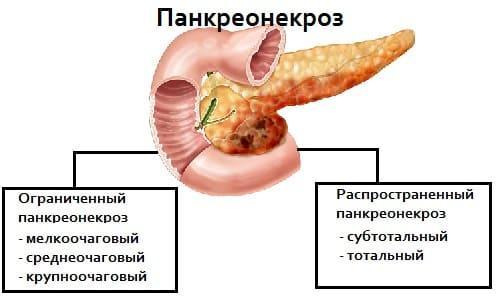
Classification of pancreatic necrosis
Another clinical sign of developing pancreatic necrosis and an inflammatory process in the pancreas is nausea and vomiting. Symptoms do not depend on the amount and type of food taken. Patients complain of constant vomiting. At the second and subsequent stages of the development of pathology, impurities of blood and bile are noted in the vomit. Even in the absence of food in the gastrointestinal tract, vomiting will produce bile with blood, which is a sign of the development of hemorrhagic type of pancreatic necrosis and vascular destruction.
After vomiting, dehydration begins. The skin becomes extremely dry, plaque forms in the oral cavity, and patients complain of dry mouth. The amount of excreted urine decreases. The urine takes on a dark yellow hue. The patient constantly wants to drink, but it is impossible to quench his thirst due to constant vomiting.
Dysfunction of the stomach and esophagus is considered another clinical manifestation of pancreatic necrosis. Due to malfunctions in the work of the pancreas, the functioning of the entire digestive system suffers. Symptoms such as a feeling of bloating and fecal congestion develop.
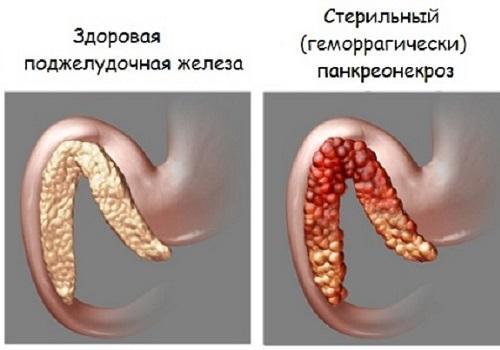
Sterile pancreatic necrosis
As the disease progresses, clinical signs of intoxication develop:
- Temperature rise (from 38 degrees Celsius).
- The heart rate increases significantly, there are failures in the respiratory system.
- The patient develops shortness of breath.
- There is a lowered level of blood pressure.
- A feeling of general weakness develops, bone tissue begins to ache.
Against the background of the spread of substances toxic to the body in the region of the brain, the development of encephalopathy begins. Clinical signs of the pathological process are lethargy, loss of orientation in space, the patient's consciousness becomes confused. Coma is considered the most serious consequence of the penetration of toxins into the brain.
A clinical sign of actively developing pancreatic necrosis is also a change in the shade of the skin. At the initial stages of progression, the patient's blood vessels dilate, which leads to reddening of the skin. As the intoxication of the body develops, the skin turns pale, then its color becomes yellowish. In some cases, the patient had hemorrhages under the skin, purple spots appeared, initially in the area of the gastrointestinal tract, gradually spreading to other areas body. Regardless of the ongoing therapeutic procedures, the stage of toxemia is observed for 4 days with gradually increasing clinical signs.
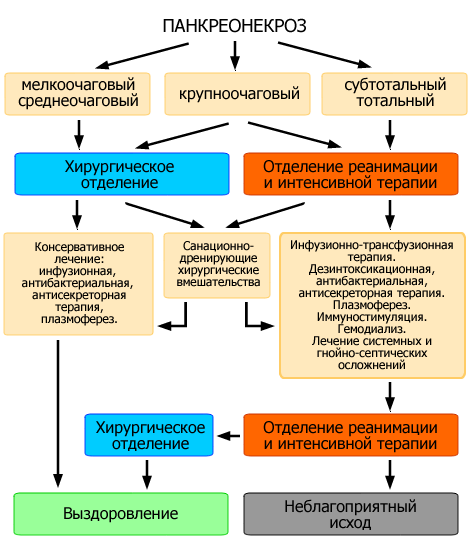
Types of pancreatic necrosis
At the stage of formation of purulent foci in the affected organism, which are explained by the death of tissues pancreas, there are disturbances in the work of the entire digestive system and other vital organs. In addition to general clinical signs of actively developing pathology, there is a risk of complications, the following are considered the most dangerous for the patient's health:
- internal hemorrhage;
- deficiency of the enzyme type;
- an abscess formed in the area of the gastrointestinal tract;
- blood clots begin to appear in the blood vessels;
- there is a risk of developing pain shock.
Any of the complications significantly increases the risk of death.
How is the diagnosis made
Pancreatic necrosis is diagnosed on the basis of the patient's anamnesis, his complaints about the developed clinical signs of the disease. Also, on the basis of the patient's complaints, they are sent to undergo additional diagnostic procedures.
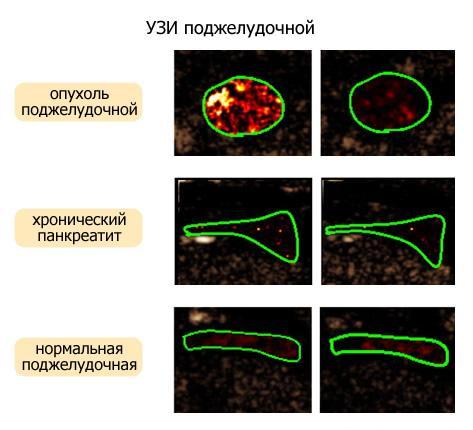
Pancreas ultrasound
First of all, laboratory diagnostics are carried out, which consists in collecting and analyzing blood for the concentration of leukocytes, sugar and other components. Also, a urine test is performed for the amount of trypsin. Research is being carried out to increase liver enzymes. After that, the patient needs to undergo instrumental diagnostic procedures:
- An ultrasound examination of the area of the gastrointestinal tract, in particular of the bile ducts, is performed. This makes it possible to determine the possible formation of abscesses and their exact location.
- The patient will need to undergo computed tomography, based on which the size of the affected organ is determined, and also the ducts of the pancreas, possible foci of tissue death, the presence or absence of inflammatory process.
- For more accurate information, an MRI is prescribed.
- X-rays of the gastrointestinal tract are also taken.
- In the presence of a lesion, a puncture is performed from the affected area for bacterial culture analysis.
- Angiography of the vessels of the affected gland is also performed.
- If it is necessary to obtain information about the state of the pancreatic ducts, the patient is assigned a laparoscopy.
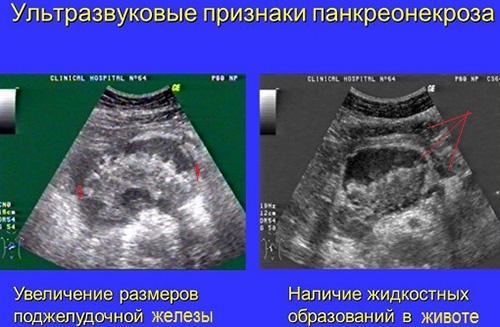
Imaging of pancreatic necrosis on ultrasound
To get an accurate picture, you need to go through all the above diagnostic procedures. High-quality execution of each of them will provide maximum information content. The doctor has no right to ignore at least one of the diagnostic procedures, otherwise the clinical picture of the pathology will not be 100% reliable.
Treatment
If pancreatonecrosis is suspected, patients are urgently sent to the hospital. Complex treatment of the disease is carried out, aimed at preventing the further development of the necrotic and inflammatory process of tissues in the pancreatic region. The prevention of the development of purulent foci is carried out, the clinical manifestations of toxemia are eliminated. The earlier treatment was started, the more favorable the prognosis. There are conservative and surgical methods of treatment.
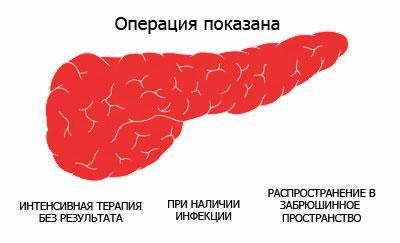
Indication for surgery for pancreatic necrosis
Conservative
First of all, the patient is prohibited from any physical activity. Eating food is also prohibited. The delivery of nutrients is carried out parenterally for a week. There are no restrictions on the drinking regime, alkaline water is recommended.
Pain relief occurs. The patient is parenterally administered No-Shpa. The dosage is determined by the attending physician. In severe cases, prescription drugs are used (Diphenhydramine with addition Novocaine).
To suppress the activity of pathogenic bacteria in the septic form of the disease, antibacterial medications are used. The type of drug and dosage are also determined by the doctor depending on the stage of development of the pathology, the spread of the focus and the individual characteristics of the organism.
Operative treatment
In most cases, surgery is required to treat pancreatic necrosis. Surgical treatment is required to remove the inflammatory and necrotic focus, as well as to stop internal bleeding. If necessary, drainage of the retroperitoneal region is performed, the outflow of secretion of the affected organ is normalized. In this case, surgical treatment is postponed for 5 days until the complete relief of the exacerbated process.
Emergency surgical intervention is carried out with a total type of necrosis, as well as with the development of purulent peritonitis. Laparotomy technique surgical intervention provides wide access to all organs of the gastrointestinal tract. Often there remains a need for repeated surgical treatment, which is explained by the continuing self-destruction of the affected organ. A radical method of surgical treatment involves the resection of a part of the pancreas.
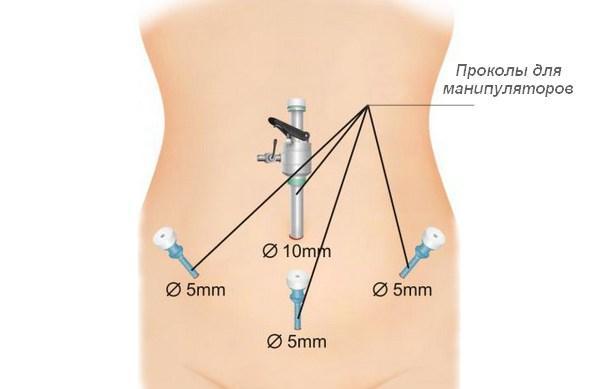
Laparoscopic surgery
Forecast
The positiveness of the prognosis depends on a combination of factors: on the timeliness of diagnosis and the beginning of the course of treatment, on the methods of therapy and the level of surgical intervention, the accuracy of the patient's compliance with the doctor's recommendations during the rehabilitation period, the individual characteristics of the organism, concomitant diseases and age the patient.
Every fourth patient who underwent pancreatic tissue necrosis developed diabetes mellitus in the future. There is a high probability of the formation of cysts that provoke the development of chronic pancreatitis. Pathology is characterized by a high risk of death. With the development of aseptic necrosis, the mortality rate is about 30%, with an infected nature of the disease - 60%.
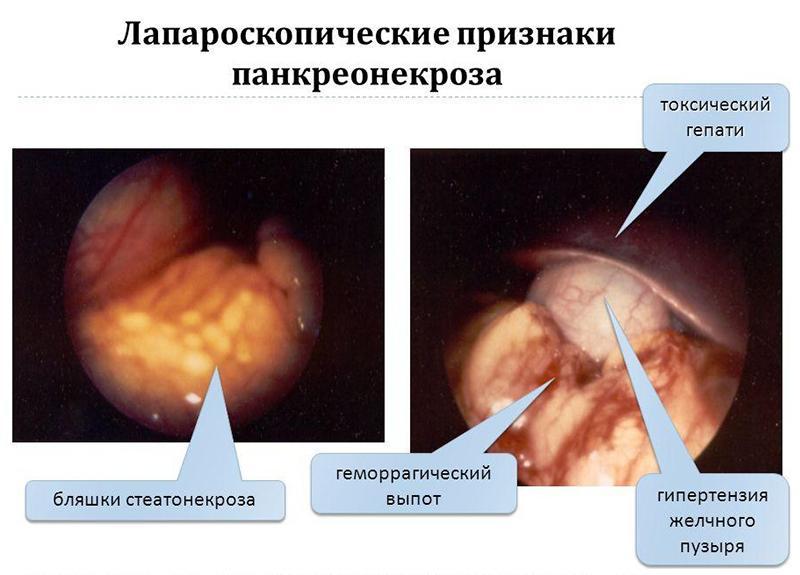
Laparoscopic signs of pancreatic necrosis
What to do if symptoms occur?
First of all, the patient should be put to bed, ice should be applied to the area of the gastrointestinal tract. Consumption of food or water is categorically contraindicated. Taking analgesic medications also increases the risk of death. In order to alleviate clinical signs, intramuscular injection of No-Shpa is allowed. When the first symptoms of pancreatic necrosis occur, an ambulance team must be called.
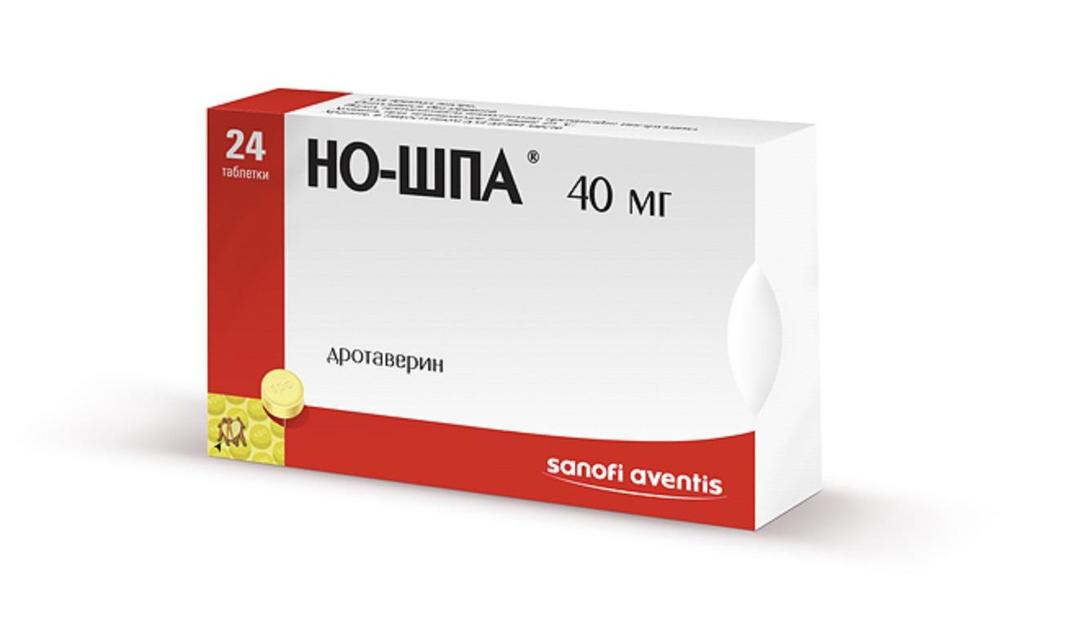
Drug No-Shpa
Duration of the diet
The patient will have to adhere to a diet specially prescribed by a doctor for the rest of his life, stop smoking, take alcohol-containing drinks and fatty foods.
Doctors categorically prohibit the use of any methods of traditional medicine in the development of pancreatic necrosis - it is dangerous to the patient's life. The use of various decoctions will entail a deterioration in the overall clinical picture.
Smoking or the consumption of fatty foods and alcoholic beverages can lead to a repeated exacerbation of pancreatic necrosis. Relapse can also be triggered by a developed pathology of the digestive system, for example, ulcerative erosion of the esophagus.