The left side hurts and feels sick: what it can be, causes, treatment
Painful sensations of a different nature, localized in the abdomen or left hypochondrium, may be the first signs of serious pathologies. If, with intense, prolonged pain in the left side, nausea is added, it is worth contacting a specialist, and in severe cases, call an ambulance.
Content
-
1 Causes associated with pain in the left hypochondrium
- 1.1 Pancreatitis
- 1.2 Spleen malfunction
- 1.3 Exacerbation of gastric ulcer
-
2 The most dangerous consequences
- 2.1 Gastrointestinal bleeding
Causes associated with pain in the left hypochondrium
Acute gastritis - occurs with the development of the inflammatory process of the gastric mucosa. It manifests itself in the case of poisoning (food, acid, alkaline) or due to improper nutrition.
The characteristic symptoms of the disease are:
- Feeling of heaviness and distention in the stomach associated with food intake.
- The pain is constant, aching in nature, increases with physical exertion. It is localized throughout the epigastric region, but the left side may hurt and give to the left hypochondrium.
- Nausea and repeated vomiting.
- Belching due to increased pressure inside the stomach.
- Dyspeptic disorders of stool (diarrhea).
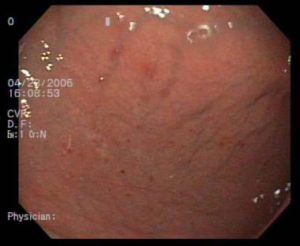
Acute gastritis
Only a doctor can diagnose a disease, he also decides whether it is worth treating a patient in a hospital or whether you can recover at home on your own. Treatment of acute gastritis is aimed at eliminating the causes of the disease, relieving pain and removing dyspeptic disorders:
- Flush the stomach. You can use plain warm water or add 5 to 6 dissolved crystals of potassium permanganate to it. Washing is carried out to clean waters.
- Appointment of sorbents for the rapid elimination of toxins from the body (activated carbon, Enterosgel).
- Antispasmodics for severe pain syndrome (No-Shpa, Pentalgin).
- Rehydration salt solutions to prevent dehydration of the body with vomiting and diarrhea (Rehydron, Oralit).
- A sparing diet (vegetable broths, pureed cereals, dairy products).
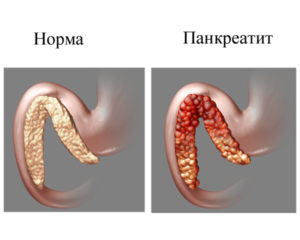
Pancreatitis
Acute inflammation associated with impaired pancreatic secretion and the production of digestive enzymes. In a healthy person, bile and toxins secreted by the pancreas are released into the large intestine. With pancreatitis, the outflow of all fluids is disturbed, the organ cannot cope with the load and begins to throw them into the coronary bloodstream. The person needs emergency hospitalization, as the disease can be fatal.
Symptoms:
- Sharp piercing pain in the gastric region radiating to the left side. It is localized 4-5 centimeters up from the navel and gradually spreads throughout the epigastrium.
- Repeated vomiting.
- Persistent nausea.
- Stool staining light, and urine dark.
- Yellowness of the sclera of the eyes and skin.
- Resurrection symptom. With intense pressure on the abdomen, the pulsation of the aorta passing in the abdominal region is not detected.
- Mayo-Robson's symptom. When pressed in the region of the left vertebral angle, the tension of the muscles in the front of the abdominal wall is determined.
- Kacha's symptom. On palpation of the peritoneum, a sharp pain occurs, radiating under the left rib.
Pancreatitis is treated in a hospital with cephalosporin antibiotics to prevent the development of complications (Ceftriaxone, Cefazolin), which are administered intravenously or intramuscularly, depending on the severity diseases. If there is a complete blockage of the ducts with gallstones, then surgery is possible.
With uncomplicated pancreatitis, doctors prescribe a strict diet (low-fat soups, cereals, dairy products) and mineral water (Essentuki 17). Antispasmodic (to eliminate pain) and enzymatic (to improve the functioning of the gland) drugs can also be used.
Spleen malfunction
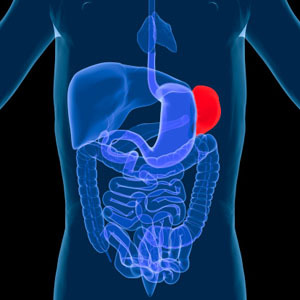
The spleen is a flat, long sphere, part of which is under the left rib and the other half is in contact with the stomach. Performs a protective function of the body, produces bile and promotes blood renewal. The main cause of pain under the ribs is inflammation of the spleen. This is a pathological process that causes infections, viruses, diseases of the hematopoietic system (leukemia), physical trauma (blows, wounds).
Inflammation symptoms:
- an increase in the size of the organ. Determined on an ultrasound machine or by palpation;
- aching, persistent, exhausting pain in the left side. It can occur in the stomach, in the lower abdomen and give under the scapula;
- weakness;
- dizziness;
- subfebrile condition (temperature up to 38.5 degrees);
- lack of appetite and constantly nauseous.
Treatment:
- Antibacterial therapy.
- Pain relief with antispasmodics.
- Strict diet (excluding fatty, salty, sweet).
- Vitamin therapy (B6, B12, vitamin E).
- Physiotherapy (magnets and UHF).
- Splenectomy (removal of the spleen). For severe abscesses and neoplasms. If a child has a hernia at the site of the spleen, then it is also removed surgically.
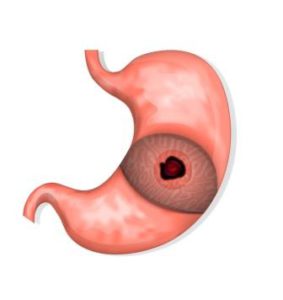
Stomach ulcer
Exacerbation of gastric ulcer
A stomach ulcer is a degeneration of the mucous membrane caused by acid or bile. The main cause of the defect in the stomach wall is the bacterium Helicobacter pylori. But there are many other factors that can cause illness (long-term medication, smoking, alcohol, neoplasms, infections).
It alternates with periods of exacerbation (autumn - spring) and remission. If medical assistance is provided on time, treatment is started and there are no complications, then the prognosis is usually favorable.
Symptoms of a stomach ulcer:
- Cutting, stitching pain to the left of the sternum. Well removed by antispasmodics, passes after eating.
- Slight nausea.
- Belching. May have a bitter or sour taste.
- Abdominal wall tension.
- Loss of appetite.
Peptic ulcer disease delivers a lot of unpleasant and painful sensations, but the most dangerous is the development of complications caused by this disease, which can be the cause of human death.
The most dangerous consequences
Perforation of a stomach ulcer - the ulcerative defect destroys the wall of the stomach, and all contents seep into the peritoneum. Peritonitis occurs. It is characterized by paroxysmal cutting pains in the lower abdomen, aggravated by lying on the left side, symptoms of body intoxication, severe weakness, increased heart rate, sticky sweat. Emergency hospitalization and immediate treatment are indicated.
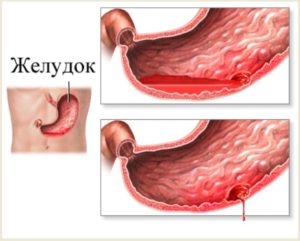
Perforation of a stomach ulcer
Gastrointestinal bleeding
It is characterized by a sharp pain of a different nature, dark brown vomit, staining the stool black, a sharp decrease in hemoglobin, pallor of the skin, sweating, loss of consciousness. Before the arrival of an ambulance, the patient must be in a state of complete physical rest, do not eat or drink anything. With a quick and correct diagnosis, assistance and treatment, the disease usually goes into remission.
In about 5% of cases, the ulcer is capable of transforming into cancer.
Stomach ulcer treatment:
- Antibacterial drugs of a narrow spectrum of action (Amoxicillin, Clarithromycin), aimed at eliminating Helicobacter pylori. Usually several courses are prescribed to achieve maximum effect.
- Drugs that reduce the production of hydrochloric acid (Maalox, Phosphalugel).
- Drugs that improve the work of the gastric mucosa (Venter, Imodium).
- Antacid medicines (Rennie, Gastal, Almagel).
- Alginates (Natalsid, Laminal).
- Reparative drugs promote the healing of damaged tissues and have regenerative properties (Gastrofarm, Acemin).
Frequent, non-stop antispasmodic pain in any part of the epigastrium should alert and serve as a good reason for contacting a specialized doctor.