The back of the head hurts and nausea: the reasons that this may be
When the back of the head hurts, it brings a lot of inconvenience to a person. Headache is a rather unpleasant symptom in itself, which occurs for many reasons. An unpleasant sensation in the back of the head is most often combined with nausea, dizziness. By the nature of the sensations in the back of the head, there are pulsating, aching, squeezing and dull sensations.
Content
-
1 Causes
- 1.1 Possible diseases
- 2 Diagnostics
-
3 Remedies
- 3.1 Traditional medicine
- 3.2 Folk remedies
- 4 Prophylaxis
Causes
An unpleasant set of manifestations in the occiput, pain can appear for various reasons. Common causes of pain in the neck and back of the head are overstrained muscles due to improper positioning of the head during sleep. A concomitant manifestation is nausea. Painful aching, interfering with the normal functioning of a person.
Loads on the cervical spine are provoked by the specifics of work, exercise. Even in a calm position, the symptoms remain. The pain is not like a migraine, not throbbing. Often with the back of the head, the area of the temples of the head and forehead is worried. Any movement causes intensification of manifestations.
Unpleasant sensations in the occiput, cervical spine, bothering the ears, eyes with spondylosis. This condition cannot be treated at home. You can eliminate the symptoms with the help of a specialist. The disease is characterized by the formation of osteophytes along the edges of the vertebrae. Symptoms appear even in a calm state.
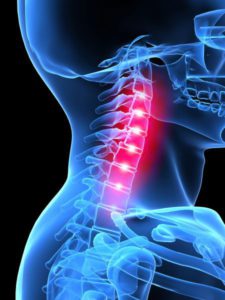
A sensation in the back of the head along with possible loss of consciousness, dizziness with nausea is not just a one-time syndrome. A complex of manifestations can be the cause of cervical osteochondrosis.
Possible diseases
- Painful sensations in cervical osteochondrosis are caused by a change in the structure of the disc vertebrae. With an ailment, the patient has a pain in the back of the head, presses in the temporal region, periodically feels sick, dizzy. The appearance of the back of the head is sharp. Often there is a lack of coordination of movement, noise in the ears, a "veil" appears on the eyes.
- Cervical spondylosis is a serious ailment characterized by ossified growths in the vertebral discs of the neck. Manifestations affect the cervical region, the back of the head. Turns, head movements provoke them.
- Weakness, severe bouts of nausea, vertigo and rapid heartbeat, together with pulsating manifestations affecting the occipital region, are the consequences of hypertensive illness. In addition to the listed symptoms, vomiting often occurs.
- Cervical myositis can occur due to hypothermia, injury, in a long period of time in a position that is uncomfortable for the neck. A characteristic feature of myositis is the asymmetry of pain. One side hurts more than the other. Bending turns are provocateurs of unpleasant symptoms that occur not only in the neck, back of the head, but also in the shoulders, between the shoulder blades.
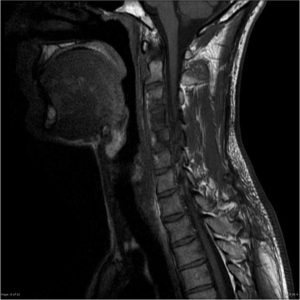
Myositis in the neck
- Compaction in the muscle tissues of the cervical spine is a consequence of myogelosis. Unpleasant symptoms in the back of the head, vertigo are characteristic of the described disease.
- Shooting painful sensations in the back of the head, having the character of seizures. The unpleasant symptoms intensify with every sneezing, coughing, and turning the head. Severe pain radiates to the spine, lower jaw, and ears. The listed symptoms are a sign of neuralgia of the nerve of the occipital head.
- Periodic symptoms in the back of the head, "chills" on the head, arising from activity, physical stress character, and calming down in an inactive state, a possible cause of which may be pathology vessels.
- A frequent manifestation of pain is a person's professional activity. Unpleasant sensations in the back of the head, in the neck, and sometimes nausea are typical consequences of sedentary work. Drivers and office workers are at risk.
- With pressure inside the skull, the neck aches, the discomfort of which spreads over the head, there is a cutting pain in the eyes, provoked by bright light. All this is accompanied by nausea, vomiting.
- A less common cause for which the back of the head makes itself felt is malocclusion.
Diagnostics
Diagnostics requires care. First of all, the specialist conducts a conversation in which the patient talks about the symptoms. Frequency, location, nature of sensations are important.
In the presence of pronounced symptoms, which include an unpleasant symptom of the back of the head, vomiting, fear of light, sounds, you should immediately go to a neurologist.
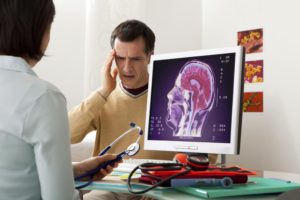
Diagnostic methods used to diagnose nausea, occipital pain:
- Magnetic resonance imaging (MRI) helps check the brain for growths.
- With the help of tonometry, a specialist determines blood pressure.
- The pressure inside the skull is measured by transcranial Doppler sonography.
- Echoencephaloscopy helps to assess the displacement of cerebral structures.
- Electroencephalography is done to diagnose migraine attacks.
Remedies
Depending on the cause of the disease, the method of treatment changes. With cervical osteochondrosis, stress, neuralgia of the occipital nerve, massage is suggested. Do not use manual therapy for high blood pressure.
Experts consider physiotherapy, which includes laser treatment, electrophoresis with magnetotherapy, to be a common, effective remedy. It is prescribed for osteochondrosis of the cervical spine, high pressure inside the skull. Physiotherapy exercises are used for some of the listed ailments.
Traditional medicine
Medicines are prescribed only by a specialist, depending on the diagnosis. If you feel sick and the occipital part hurts due to high blood pressure, Hypothiazide, Captopril with Cordipin are prescribed.
Sibelium, Pirroxan and Redergin are prescribed for headaches due to vascular pathology.
Headache involves an integrated approach, where medications are combined with manual therapy. From medicines, antidepressants are prescribed, as well as muscle relaxants, designed to relieve tension from the muscles of the neck.

Folk remedies
Alternative medicine methods are not effective in this case. Folk remedies for pain in the back of the head, which are of a different nature, require individual consultation. The presented methods should be used as prophylactic or additional to medicines, manual therapy. If a person has a serious problem, alternative therapy methods will be ineffective.
For mild pain in the back of the head, a hot compress is made. It is used in tandem with drinking hot drinks. A common version of a compress for neck discomfort is a cabbage compress. To do this, you need a cabbage leaf, crumpled with your hands. It should be applied to the sore spot. A compress made from a mixture of two components is considered effective: onion and horseradish. Mix the grated horseradish with chopped onions, and put the resulting mixture on a cotton cloth, roll up and attach to the neck.
To improve the condition, eliminate unpleasant symptoms, including nausea, pain, it is worth using a decoction of herbs. Linden tea or a mixture of mint, sage and meadowsweet is often used.
Prophylaxis
Severity in the neck, nausea will decrease, provided that the actions prescribed by a specialist are observed: the use of medications, a massage and an independent exercise therapy. For a particular disease, separate recommendations are assigned.
The first thing to do to eliminate symptoms is to give up alcoholic beverages and cigarettes for the reason that they cause increased pain. If the cause is the consequences of sedentary work, it is worth rebuilding the workplace so that it becomes comfortable. It is worth revising the schedule, correcting it. A person with this diagnosis should spend outdoor recreation.
To achieve a positive effect, to improve sleep, you can use an orthopedic pillow, which will help to relax the muscles of the neck and head during sleep.