Aching abdominal pain: causes and treatment
Gastrointestinal problems are common in humans. Aching abdominal pain is a sign of the development of a serious pathology in the body. The causes of pain are calculated according to various criteria: location, length of pain sensations, constancy and frequency, sensations after eating, an approximate area of unpleasant sensations. The cause ranges from common overeating to chronic serious illnesses (gastritis, ulcers).
Content
- 1 Location and nature of pain
- 2 Possible diseases
- 3 Contraindications
- 4 Diagnostics
- 5 Medication method
- 6 Home treatment
- 7 Prophylaxis
Location and nature of pain
Localization of the focus of unpleasant sensations will help to specifically find out the affected organ:
- In the area of the liver, it is concentrated on the top in the right side under the ribs. The main problem is damage to the liver, biliary tract. It occurs after eating for two hours. Given under the scapula, collarbone. Bloating, the appearance of jaundice and temperature (with hepatitis), the presence of parasites and kidney failure are detected. Symptoms: nausea, diarrhea, constipation, belching, bitterness in the mouth.
- The left side of the abdomen has a dull character. It spreads to the entire abdomen, does not have a specific focus. Localized in the hypochondrium. The sensations intensify after eating fatty fried foods. After that, nausea, vomiting, lack of appetite, thick stools appear. Sign of an enlarged spleen.
- A dull pain aching in the lower abdomen is a bowel disease. It intensifies after eating food rich in fiber, spicy, dairy, after physical activity, defecation. The chair is accompanied by the presence of blood, mucus, pain, constipation. In women, these are gynecological diseases. Usually in men, the rectum, external genitals, sacrum are affected, while itching of the anus and urethra occurs. Symptoms: high fever, lethargy, lethargy, painful frequent urination.
- Spasm occurs when performing physical movements - when sneezing, coughing. It occurs due to irritation of the nerve endings of the mucous membrane of the abdominal wall. Surgery is often required.
- Visceral, caused by contraction of the muscles of the stomach, intestines, biliary tract, urinary tract, usually subsides immediately, then reappears.
- Absence of pathologies is possible. Fermentation can be caused by an abundance of fresh fruits and vegetables. Beet juice causes chronic intestinal pain. Excess gas causes discomfort in the colon.
- Above the navel - the presence of appendicitis.
- Left - a sign of malignant neoplasms, polyps.
- Sharp persistent symptoms are caused by changes in body position. The reason is poor circulation.
- Cramping pain bothers at night, a few hours after eating - a sign of an ulcer.
- Burning is a symptom of an ulcer, chronic or initial gastritis. Appears immediately after eating, long hunger.
- Sharp and sudden pain is caused by a serious chemical burn, poisoning.
- The upper abdomen is connected to the stomach, duodenum, biliary tract, and liver.
- On the right in the hypochondrium - problems with the large intestine, gallbladder.
- In the collarbone and lower back, it can burst due to diseases of the kidneys and colon.
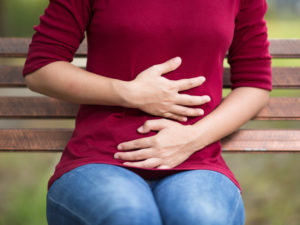
- The upper left part of the abdominal cavity - the origin of the pain is pulmonary, cardiovascular. A symptom of spleen problems.
- Below the navel - pathology of the sigmoid, rectum, transverse colon. Other: inflammation of appendicitis, diseases of the ureters, bladder, female genital organs.
- During pregnancy, aching pain may indicate acute cholecystitis, cystitis, appendicitis, and normal physical changes in the body in the third trimester. Consultation with a doctor is required.
Possible diseases
The most dangerous and common diseases with aching pain are:
- Hyperacid and hypoacid gastritis. Hyperacid is caused by high acidity, hypoacid is caused by low acidity.
- Myocardial infarction. A distinctive feature is that it gives to the left hand.
- Acute appendicitis.
- Inflammation of the ovaries.
- Endometriosis is a gynecological disease caused by the proliferation of endometrial cells.
- Cystitis.
- Cholecystitis.
- Acute chronic heartburn.
- Cancer disease.
- Hypertrophy.
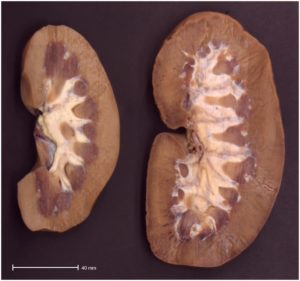
Internal organ hypertrophy
- A strong abscess is an accumulation of abscesses, abscesses on the internal organs as a result of the inflammatory process. May manifest vomiting blood.
- Injury caused by accumulation of blood.
- Hemolysis (destruction) of red blood cells.
- Chronic pancreatitis.
- Cirrhosis, liver failure.
- Hepatitis.
- Pyelonephritis is an inflammatory disease of the kidneys. More common in women.
- Renal colic.
Contraindications
If aching pain is detected, in no case should you do a number of actions:
- Apply a warm heating pad to the area of the painful focus. The possible inflammatory process will worsen. Use a hot water bottle only during cramping.
- It is thoughtless to take medications and pain relievers. Possible side effect, worsening of the condition.
- Complete pain relief with pills. The pain will not stop - call a doctor.
- Take medications to lower acidity without finding out the cause of the problem.
- Do any self-medication.
Diagnostics
Finding out the cause of pain begins with interviewing the patient and palpating the abdomen. Listening to the work of the heart, lungs. Personal biological material is given: urine, feces, blood, analysis of gastric juice. Held Abdominal ultrasound. Special case: X-ray, CT and MRI are done. In case of difficulty, the doctor makes an incision in the hollow organs by inserting a micro-camera on the probe in order to accurately and visually examine the cause of the patient's problem.
Medication method
Depending on the type of pain, the doctor performs various types of surgery.
If the pain is caused by heartburn, then it in turn is caused by cholecystitis, gastritis, ulcers. A complete treatment of diseases is carried out, based on a strict diet with five meals a day in small portions, with the exception of fatty and fried foods. The person takes antacids and antisecretory drugs.
Gastritis is an inflammation of the mucous membrane. The reason may be stress, metabolic and microflora disorders, long-term medication intake, autoimmune diseases. No pain relievers are used in the treatment. A course of antibiotics is required. Absorbents and preparations are used to protect the gastric mucosa. A diet that avoids salty, fatty, sweet, peppery, fiber-rich foods, bloating fruits (grapes), and baked goods is prescribed.
An ulcer can be caused by taking large doses of acetylsalicylic acid. Occurs 3-4 hours after eating. Aggravated by the presence of a stressful condition. It is accompanied by belching, feeling of heaviness and burning. Antibiotics are prescribed to eliminate harmful bacteria, anti-inflammatory drugs, and acidity lowering agents. The stomach is protected from negative influences. The diet consists of lean, light food, including grated, chopped foods. Chewing causes the production of gastric acid, which aggravates the disease.
Home treatment
For aching pain, massage with special oils, warm compresses, baths with essential oils will help. With severe pain, these procedures are canceled, as they can aggravate the situation.
Herbs that can reduce pain: chamomile, lavender, calendula, meadow clover, birch leaf, marsh creeper, wormwood, yarrow, marshmallow, budra, sage, mint, zopnik, loosestrife, toadflax, gorseous mountaineer, plantain, linden flowers, nettle leaves, St. John's wort, oak bark, celandine, cinquefoil, anise, lemon balm, snake mountaineer, oregano, fireweed.
The main effective recipes for infusions:
- Mix plantain grass and sage grass, pour boiling water over 0.5 liters. Insist hour. The first ten days, drink once a day, after three times a day for half a glass.
- Take herbs yarrow, chamomile, linden flowers, mint leaves. Stir, let it brew for three hours, strain. There is a glass of boiling water for two tablespoons. Drink half a glass three times a day.
- Celandine, St. John's wort, yarrow and chamomile grind, mix. For two tablespoons a glass of boiling water. Insist for three hours and strain. Take half a glass three times a day.
- Take cinquefoil, chamomile flowers, St. John's wort. Mix everything, pour two tablespoons with a glass of boiling water. Insist one hour, strain. Take half a glass twice a day.
- Mix anise seeds, lemon balm, snake knotweed, oregano, calendula, fireweed leaves. One tablespoon of the collection has a glass of boiling water. Insist for three hours, drain. Use a quarter cup after each meal. Take at night if necessary.
Prophylaxis
Stop overeating, learn to eat food in moderation, give up spicy, peppery and fatty foods. Take your time when eating, chew thoroughly. Choose clean and fresh foods and handle properly. Cooked food should be eaten without delay, otherwise microbes will begin to multiply actively. Store carefully, do not leave in the sun and in a humid place, in accordance with the storage requirements of a particular product. Raw and cooked foods should not be in contact. Protect them from insects.
Wash your hands often, keep good hygiene. Keep your kitchen clean by using clean water. Try to prevent the disease by all means in order to start treatment on time. An accurate diagnosis is made only by a doctor.