Pain in the lower abdomen in women: reasons for what to do
Every woman has experienced pain in the lower abdomen. By the nature of the manifestations of pain are: acute or weak, sharp or aching, cramping or pulling, prolonged or short-term. It depends on the etiology. To reliably establish the cause of discomfort in the lower abdomen, doctors are guided by the patient's complaints and the presence of concomitant diseases, anamnesis. For an accurate diagnosis, an additional examination and tests are required. Normally, nothing should hurt. The localization of the abdominal pains considered in the article is shown in the figure below.
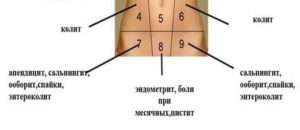
Classification of the causes of pain:
- Gynecological (malfunctions in the reproductive system of a woman, including complications after abortion and operations);
- Obstetric pathology (disorders during pregnancy, including ectopic pregnancy);
- Urological (pathology of the urinary organs);
- Gastroenterological (diseases of the lower intestines, appendicular process).
Regardless of which system is affected, pain syndrome is associated with two types of disorders: organic (trauma, inflammation, tumor) and functional (in the nervous or endocrine regulation of the smooth muscle of organs and vessels). All diseases of the lower abdomen are divided into acute, urgent in treatment, and chronic, accompanied by a moderate manifestation of symptoms.
As can be seen from the classification, lower abdominal pain occurs in women for a variety of reasons. The article discusses the most common, describes the signs and accompanying symptoms. It is important to understand that, compared to the upper parts of the body, the sensitivity in the lower part of the body is much weaker, so the woman thinks that the pain is localized elsewhere. It is worth considering the phase of the cycle, pains are sometimes caused by ovulation and do not indicate the presence of significant deviations in health. The first three reasons are common for men and women; for the subsequent ones, the sex is not important.
Content
-
1 Bladder diseases
- 1.1 Cystitis, urethritis
- 1.2 Bladder stones
- 1.3 Oncological neoplasms in the organ
- 2 Appendicitis
- 3 Bowel obstruction
- 4 Adnexitis
- 5 Endometriosis
- 6 Ovarian cyst
- 7 Ectopic pregnancy
- 8 Spontaneous termination of pregnancy and abortion
- 9 What to do for lower abdominal pain
Bladder diseases
The bladder is an unpaired pelvic organ and is located in the lower abdomen just behind the pubic bone. In women, the organ borders on the uterus, so diseases always affect reproductive health. Pain in the bladder area speaks of diseases of other organs, for example, the kidneys or the urethra. They can even occur in young women.
Cystitis, urethritis
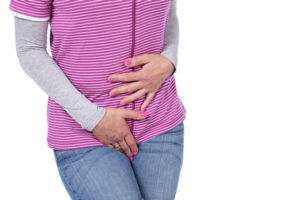
This is a disease of the mucous membrane of the bladder that occurs with inflammation due to a decrease in immunity, hypothermia, hormonal disorders or poor hygiene. The pains are sharp, stitching, urination is difficult, all this is accompanied by a high fever. Cystitis develops against the background of physical inactivity and rare emptying of the bladder. Urethritis is an inflammation of the urethra, often provoked by the reproduction of pathogenic microflora (streptococci, staphylococci, Escherichia coli).
Bladder stones
They appear as a result of metabolic disorders with the subsequent formation of salts (urates, phosphates, oxalates) in the bladder. They are characterized by pain when urinating, and the lower part of the lower back suffers, renal colic. The cause of stones is anatomical features or consequences after surgery, when stones grow on the sutures. The formation of stones is facilitated by eating a large amount of spicy or acidic foods, drinking hard water.
Oncological neoplasms in the organ
Determining the presence of oncological neoplasms is not easy due to the long asymptomatic course of the disease. If the outflow of urine is disturbed, the process of accumulation of dead cells occurs. This gradually leads to irreversible consequences in the form of tumors. In the later stages, pain occurs during urination, up to an acute burning sensation. This is facilitated by the following factors:
- Bad habits (alcohol and especially nicotine);
- The presence of hereditary diseases;
- Chemotherapy (other organs);
- Chemical contamination of the body (paintwork, arsenic).
Appendicitis
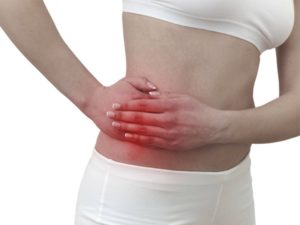
This is an acute form of inflammation of the appendage of the cecum, as a result of which there is a sharp pain, accompanied by an increase in temperature and often vomiting. In the first 2-4 hours, painful sensations cover the entire abdomen or lower stomach, then concentrate on the right side of the lower abdomen. Unpleasant sensations grow rapidly and have a cramping character, but after 3-4 hours they become constant, bursting and pressing.
Bowel obstruction
There is a sharp pain below the abdomen in women, radiating to the rectum and passing to the lumbar region. In addition, bowel ailment leads to severe weakness and nausea, difficulty in defecation. Nodes or loops of the intestinal walls are formed, tissue death occurs due to a violation of the blood supply. With irritable bowel syndrome (frequent urge to empty the bowel), spasms of varying degrees of intensity and level of pain occur.
Adnexitis
The inflammatory process in the uterine appendages (ovaries and fallopian tubes) causes great discomfort to a woman. It intensifies in the middle of the cycle. Depending on whether the right or left ovary has suffered as a result of the development of adnexitis, the discomfort is localized in the lower abdomen on the right or left. In the chronic form of the course of the disease, the pain is felt in the middle, constant, aching, dull, in the acute course of the disease - sharp, often unbearable. The intensity of manifestation correlates with the neglect of the process. At the same time, the menstrual cycle is disrupted: algomenorrhea (menstrual pain), menorrhagia (severe blood loss) and even amenorrhea (absence of a monthly cycle). Not uncommon with adnexitis is the accumulation of fluid in the fallopian tubes (hydrosalpinx), which causes an adhesive process in the pelvic organs and a feeling of heaviness. This is a fairly common case.

Endometriosis
Excessive growth of the endometrium of the uterus inside and outside of it leads to pain during menstruation, which becomes protracted. At the same time, the discharge becomes abundant. Shingles pain, spasmodic in nature, localized in the lower abdomen, affects all organs of the small pelvis. The cause of endometriosis is considered to be hormonal imbalance in the immune system. An increase in the level of androgens (male hormones) in women is triggered by improper diet and excessive exercise, especially during menstruation.
Ovarian cyst
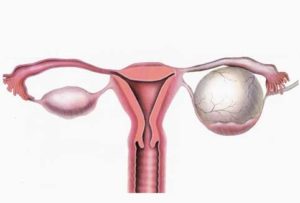
This is a benign growth on the pedicle, containing fluid inside and prone to overgrowth. The danger of cysts is a sharp increase in the volume of the ovaries up to 15-20 cm. Depending on the provoking reasons, they are follicular, endometrioid, hemorrhagic, dermoid, mucinous and corpus luteum cysts. There are three main reasons for the appearance of cysts:
- Hormonal disruption (menstrual irregularities);
- Deviations in the work of the endocrine glands;
- Lifestyle (physical inactivity, the presence of bad habits).
Ectopic pregnancy
This is a serious pathology in the development of pregnancy, accompanied by pain in the pelvic area. All three localizations are dangerous: tubal, ovarian, abnormal uterine, since it often ends in rupture of the organ with subsequent removal. The severity of the pathology should not be underestimated; in case of untimely surgical intervention, a lethal outcome is possible. Discomfort occurs at the site of attachment of the ovum and is pulling, gradually increasing. At the same time, engorgement of the mammary glands occurs, accompanied by a complete lack of appetite, nausea and even vomiting.
Spontaneous termination of pregnancy and abortion
Any irregularities during pregnancy are immediately detected by pain in the lower abdomen of varying intensity. Spontaneous termination of pregnancy is a pathological condition, it does not always end on its own without the intervention of a doctor. More often, an unhealthy pregnancy ends in abortion, and discomfort inevitably appears after surgery. After the completion of the process, painful sensations are disturbed for 1-2 weeks.
What to do for lower abdominal pain
It is more correct for a woman to make a decision on how to act when pain in the lower abdomen occurs, based on the cause of the occurrence. If it is determined by the presence of specific symptoms and eliminated on its own, consultation is not required. It is best for a doctor who specializes in treating organs in the area to make the decision about treatment. If you have the slightest doubt, it is appropriate to seek help. It is imperative that you describe your complaint in detail. "Sharp stomach" does not require any delay and involves an urgent call for an ambulance.
If the pain is not acute, is of a periodic nature and continues for a long time, it is better to use the entire range of available diagnostic measures. It is forbidden to let such things go by themselves, because the pain syndrome is a clear signal from the body about the pathological process taking place in it.
Do not self-medicate so as not to get a disastrous result. At best, this will not harm, and at worst, it will lead to even greater violations. Heating procedures should be performed with great care, taking into account the possible risk of enlargement of tumors.
A preventive measure for recurrent pain in the lower abdomen will be following a gentle diet - exclusion of all fatty, fried and smoked foods, increasing the proportion of vegetables and fruits in the diet, drinking clean water.
Sometimes it is impossible to do without surgical intervention. Timeliness of responding to the signals of your body and referring to doctors preserves the health of a woman.