Pain under the left rib in front near the stomach: reasons for what to do
Unpleasant sensations, localized in the upper left abdomen, signal various lesions of the internal organs. In the abdomen on the left are located: the pancreas, the left side of the stomach, diaphragm, intestines, the left kidney and the spleen. This means that the cause of pain symptoms should be sought in them.
The reason for the appearance of pain in the left hypochondrium can be not only in the disease of the digestive system, but also in the problems of other organs that give off painful symptoms.
Content
-
1 Types of pain
- 1.1 Stitching pain in the left hypochondrium
- 1.2 Dagger, cutting, sharp pain
- 1.3 Sharp and severe trauma pain
- 1.4 Dull pain under the left rib
- 1.5 It's a dull pain
-
2 Pathology
- 2.1 Gastritis
- 2.2 Pancreatitis
- 2.3 Cholecystitis
- 2.4 Ulcer
- 2.5 Colitis
-
3 Treatment
- 3.1 Drug treatment
Types of pain
The nature of the pain, location and previous events will tell the doctor in which organ to look for the cause, diagnosis and treatment.
Stitching pain in the left hypochondrium
During sports and physical activity, it can hurt in the left side of the abdomen. Running, jumping, fitness will cause discomfort even for a healthy person. No medical attention needed. Constant warm-up and the absence of sudden movements will help relieve pain. The body is unable to cope with the increased blood circulation during sports activities. It is important to remember that such pain is not terrible if it occurs during exercise.
Do not overload a healthy heart. Rest and relaxation breaks are needed. Breathing is deep. With superficial frequent inhalation of air, a small contraction of the diaphragm is observed. Acute and stabbing pain syndrome occurs if you start jogging without a warm-up or after eating.
Dagger, cutting, sharp pain
A sharp unexpected pain syndrome under the ribs indicates a serious pathology that requires urgent medical attention. Symptoms indicate a possible rupture of the kidney, spleen. Signs indicate the penetration of the walls of the left loops of the intestine or stomach with ulcers. Myocardial infarction and acute pancreatitis are given to the left hypochondrium.
Sharp and severe trauma pain
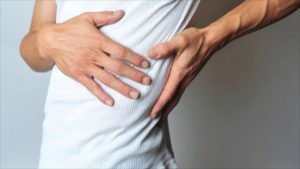
Diseases are not the only ones that create discomfort. Mechanical injuries after a fall, impact, bruise are a sign of damage to internal organs that pose a threat to human life. There is a risk of internal tears and bleeding. External signs of dangerous traumatic phenomena do not appear immediately, which does not allow providing timely assistance to a person.
Dull pain under the left rib
Pain, characterized as dull, with a spill effect, periodic signals a serious pathology of the digestive system. Consultation of a gastroenterologist is required. Cholecystitis, pancreatitis, gastritis and other inflammatory processes lead to unpleasant sensations in the hypochondrium. Testing and examination will give the doctor an accurate diagnosis.
Blood disease, systemic diseases, sepsis, chronic infections provoke aching and dull pains under the left rib.
It's a dull pain
Duodenitis and colitis in a sluggish form cause aching unpleasant feelings. If nausea or vomiting is added, stomach ulcer is suspected.
The aching sensation may not be a symptom of gastrointestinal pathology. Preinfarction state, ischemic heart disease, angina pectoris are given to the left hypochondrium.
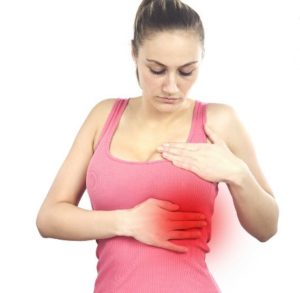
To correctly determine the source of pain, it is necessary to distinguish between the mechanism of discomfort:
- Reflected. Pain not touching the organ in which it is felt. This is a radiating symptom from other internal causes: heart attack, pleurisy, pneumonia.
- Visceral. Abrupt stretching or constriction of the intestines or stomach leads to acute syndrome. Intestinal colic, bloating lead to visceral pain symptoms. Dull, aching, cramping sensations are given to nearby organs.
- Peritoneal. Constant pain syndrome, you can clearly show where it hurts, appearing with constant irritation of the nerve endings of the peritoneum. With a perforated stomach ulcer, the phenomena of peritoneal pain are observed. Strengthening occurs when breathing, changing the position of the body. It is cutting and sharp.
Pathology
Diseases that cause pain syndromes on the left, under the ribs or below the ribs require treatment. Lack of fight against ailments leads to complications, and in some cases to death. An examination, testing is mandatory, after which the doctor prescribes adequate treatment and diet.
Gastritis
A disease affecting not only adults but also children. Modern ecology, lack of quality products, bad habits lead to irritation of the stomach walls and gastritis. Inflammatory processes caused by Helicobacter pylori infection provoke the destruction of the protective layer of the gastric mucosa. Subsequently, non-healing painful wounds may appear. Symptoms accompanying the disease:
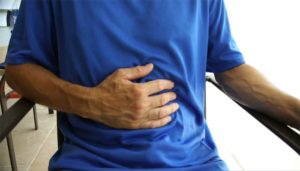
- Belching with a sour taste;
- Nausea and vomiting;
- Feeling of heaviness in the abdomen;
- Feeling of pressure inside.
Sensations appear immediately after eating.
The disease may be accompanied by: weakness, irritability. Dry mouth, burning sensation in the chest, diarrhea, or constipation occurs.
Pancreatitis
Inflammation of the pancreas provokes discomfort below the ribs, in the left side, is characterized as shingles. The pancreatic juice and the enzymes produced do not enter the intestines to process food. Remaining in the gland, they begin to digest the tissues of the organ, which leads to inflammation. The following discomfort with pancreatitis is observed:
- Nausea;
- Vomiting, content of bile in the vomit;
- Bitter taste in the mouth;
- High body temperature;
- Darkening of urine and clarified color of feces.
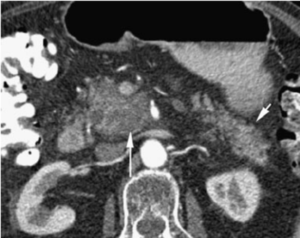
The onset of pancreatitis
Pancreatitis is acute and chronic. The acute period of the disease is characterized by severe, intense pain that causes the person to bend. The chronic stage is not so pronounced, but there is a aching, dull pain syndrome that accompanies a hearty meal.
Cholecystitis
A gallbladder with inflamed walls can cause pain in the left side of the abdomen. Urine accumulates in the organ, causing the development of infection and produces unpleasant symptoms. Sensations can appear below the ribs on the right, in the stomach area, in the navel, give to the right shoulder, collarbone and jaw.
At a doctor's appointment, if cholecystitis is suspected, palpation is performed with provoking pain:
- At the location of the gallbladder with pressure and inhalation.
- In the upper right corner of the abdomen, light blows with the fingers or the edge of the palm on the right ribs.
- In the abdomen, inhaling and pressing on the gallbladder.
Ulcer
Disease of the stomach and duodenum. Destruction of the mucous membrane of the organ walls leads to the formation of wounds. Duodenal ulcer can cause pain not only after eating, but also on an empty stomach. The destruction of the walls of the stomach itself produces pain immediately after food enters the organ. Accompanying symptoms: nausea, vomiting, heartburn. A person loses his appetite, his body weight decreases rapidly.
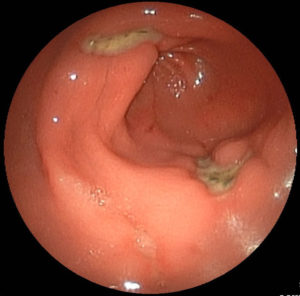
Stomach disease
A perforated ulcer is a disease that forms a hole in the wall of the stomach (organ tissue corroded by hydrochloric acid). Blood and contents seep into the abdominal cavity, creating a risk of peritonitis. The pain is sharp, dagger-like, and may occur unexpectedly. The intensity of the pain syndrome can lead to loss of consciousness.
The patient may experience nausea, heartburn, and vomiting. Appetite decreases and there is a sharp weight loss.
Colitis
Food, stagnating in the intestinal canal, provokes the formation of excess gas, inflammatory processes and infectious diseases. The abdomen swells up, leading to cramping in the intestines and stomach.
Treatment
Pain on the left in the intercostal space signals a serious pathology of internal organs. The reasons are so different that consultation with more than one specialist is necessary.
- Gastroenterologist. It will help with diseases of the gastrointestinal tract.
- Neuropathologist. Diseases are provoked by the psychoemotional state of a person. Failures in the central nervous system lead to malfunctions of the internal organs.
- Cardiologist. Left-sided pains may indicate heart problems.
- Traumatologist. Outwardly not manifested trauma of the viscera, in the absence of treatment, lead to disastrous results.
- Infectionist. Many diseases are triggered by infections and pathogenic microorganisms.
Drug treatment
For pain on the left, two types of treatment are used. Surgery and the use of drugs.
The need for an operation arises when a person's life is threatened:
- Acute form of pancreatitis.
- Perforated gastric ulcer.
- Internal tears as a result of trauma.
- Malignant tumor in the gastrointestinal tract.
The pathology of other organs is treated with the help of pharmacy products:
- Analgesics for pain relief. The use of these funds is possible only after consulting a doctor.
- Antispasmodics. Promote the expansion of blood vessels, reduce muscle tone, relieve spasmodic phenomena. No-shpa, Duspatalin, Drotaverin.
- Anti-inflammatory. The action is aimed at destroying pathogenic microflora. Use under the supervision of a doctor - possible intoxication of the body.