Stomach hurts after eating: reasons for what to do
Each person complained of pain in the stomach. This happens more often after eating. The place where food processing begins and the most crucial stage of preparation for digestion passes is irritated. Unpleasant sensations arise from poor-quality food, bad water, bad habits, stressful situations, this also includes uncontrolled intake of medications.
When the stomach hurts after eating, this indicates a serious illness.
A person eats, thoroughly chewing food, swallows, and the food enters the esophagus, from there into the stomach. Here juice and hydrochloric acid are released, thanks to the motor activity, the food lump moves into the duodenum. If this process is violated, a pain symptom occurs. The occurrence of discomfort is associated with the effect of hydrochloric acid or food debris on the damaged area of the mucous membrane or a violation of the diet:
- Eating before bed.
- Dry food.
- Starvation.
- Snack on the run.
After spicy and fatty foods, fried and sour foods, there is a heaviness in the abdomen, a feeling of fullness, pain.
Content
-
1 Functional reasons
- 1.1 Binge eating
- 1.2 Irritable bowel syndrome
- 1.3 Food intolerances
- 1.4 Food poisoning
-
2 Diseases
- 2.1 Esophageal stenosis
- 2.2 Hernia
- 2.3 Gastritis
- 2.4 Stomach ulcer
- 2.5 Gastric obstruction
- 3 The nature of the pain syndrome
-
4 Medicines
- 4.1 Almagel
- 4.2 Gastal
- 4.3 No-shpa
- 4.4 Spazmalgon
Functional reasons
These are reasons that are not associated with the occurrence of pathologies in the internal organs. Daily activities performed by a person cause pain.
Binge eating
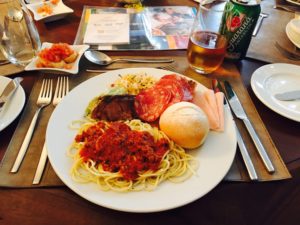
In an empty state, the volume of the stomach does not exceed 0.5 liters. The intake of a large amount of food leads to a sharp stretching, respectively, discomfort and aching pain occur. Overeating is psychological in nature, when the patient eats and cannot stop in time. The way to fight is to split portions and eat less.
Irritable bowel syndrome
It is not a disease. More related to psychosomatic conditions. The human central nervous system is designed in such a way that nerve endings are present in every internal organ. Stress, psychological stress lead to malfunctions of the central nervous system. This is reflected in other dependent systems as well. In the intestines, peristalsis decreases, food moves slowly or stops. As a result, constipation, flatulence, inflammation, pain syndrome. It is accompanied by additional symptoms:
- Belching. It occurs as an attack and lasts 1 hour after eating.
- Nausea and heartburn.
- After going to the toilet, it seems that the bowel movement has not gone completely.
- Insomnia is observed.
- Depression.
- Fatigue.
- The head starts to hurt.
Food intolerances
Allergic reactions to food. External signs appear immediately after eating unsuitable food. To prevent the occurrence of allergies, it is necessary to find the source of the reaction. It is possible to keep a diary with the entry of each meal eaten. After half a month, after reviewing the records, it will be possible to determine the unsuitable food product. Bloating and pain are often due to lactose intolerance.
Food poisoning
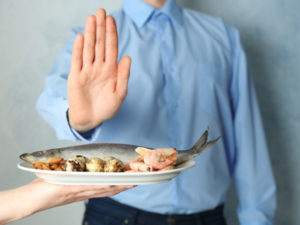
Eating low-quality foods or drinks. A symptom that occurs with food poisoning: nausea, vomiting, diarrhea, abdominal cramps. In case of mild poisoning, it is limited to the indicated manifestations. With severe intoxication of the body, high temperature and possible disorders of the central nervous system are added.
Diseases
The pathology of internal organs can cause a painful sensation before meals, during meals or after. For the treatment of diseases, a doctor's consultation is required. You need to do a medical examination, take tests, this is the only way to identify the true cause of the pain and prescribe the appropriate treatment. If you are worried about pain immediately after eating or within 60 minutes, you should look for difficulty in the esophagus or stomach. Appearance in an hour or two - trouble in the intestines.
Esophageal stenosis
The disease is characterized by painful narrowing of the lower part of the esophagus passage. This is a congenital pathology or develops at an older age. The reason for the appearance of stenosis is considered:
- Damage to the mucous membrane of the esophagus by the release of hydrochloric acid from the stomach.
- Mechanical damage. Chemical burns, ingestion of a foreign body, injury can be caused by medical workers during gastroscopy.
- Esophageal cancer or benign tumor.
- Possible infectious diseases: mycosis, scarlet fever, tuberculosis, diphtheria.
- As a result of squeezing by nearby organs: nearby blood vessels, lymph nodes.
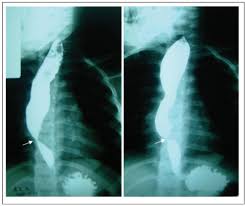
Esophageal disease
Hernia
As a result of too active motor actions on the part of the stomach, part of the gastric tract may come out through the esophageal opening into the abdominal region. This part is impaired, which leads to painful symptoms.
Gastritis
Inflammation of the gastric mucosa is a violation of the protective layer of the walls of the organ, injury and the occurrence of foci with an inflammatory process occur, painful areas appear. The main causative agent of the disease is Helicobacter pylori infection. Once in the stomach, it passes through the mucous layer and is fixed on the epithelium of the organ tissues. It multiplies and releases ammonia, which negatively affects the mucous membrane. At the site of attachment, the wall of the stomach is exposed. The inflammatory process leads to the gradual death of the epithelium. The ongoing process brings a state of discomfort and pain to a person.
Other causes of the disease are stressful conditions. During the period of strong nervous tension in the stomach, excess gastric juice is produced, which, in the absence of food, gradually digests the mucous membrane, the walls of the organ, creating perforation of the walls.
Alcoholic drinks and smoking have a negative effect on the gastrointestinal tract. The destruction of the protective layer is caused by the penetration of liquids over 40 degrees and nicotine tar, toxins and smoking products.
Stomach ulcer
A disease that forms small painful wounds on the gastric mucosa - ulcers. In the absence of treatment for gastritis on the basis of a chronic disease, peptic ulcer disease occurs. Affects not only the upper digestive organ, but also the pancreas, duodenum. It is characterized by the appearance of a wound with a constant inflammatory process and gradual perforation of the organ wall. The disease is dangerous with pain shock.
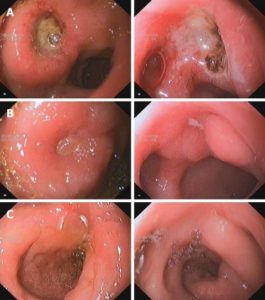
Gastric ulcer
The ulcer can occur on an empty stomach, without food. Unlike gastritis, it is capable of disturbing at night and in the evening.
Gastric obstruction
Emerging polyps or swelling blocks the passage of food between the stomach and duodenum. Food is retained in the upper part of the digestive tract and causes infections, inflammation, and other gastrointestinal ailments.
Pain after each meal is caused by the following pathologies of internal organs:
- Esophagitis. Inflammation of the lower esophageal sphincter as a result of the throwing of hydrochloric acid or food debris from the stomach.
- Peptic ulcer of the esophagus.
- Colitis.
- Pyelonephritis caused by inflammation of the left kidney.
- Urolithiasis disease. A hearty meal can set in motion the stones in the bladder. The pains are strong, cramping, sharp.
- Cholecystitis. Gallbladder disease.
- Pancreatitis Inflammation in the pancreas. Due to blocked ducts leading to the duodenum, pancreatic juice and enzymes for digesting food do not enter the small intestine. The secret begins the digestive function earlier, being in the organ. As a result, the mucous membrane is corroded, perforation and possible overflow of the disease to nearby organs may appear. It is characterized as a dull, cutting pain.
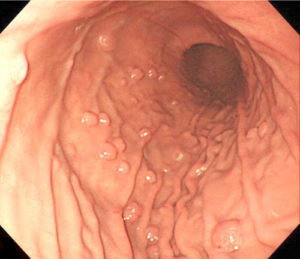
Polyps in the stomach
The nature of the pain syndrome
Drawing unpleasant pain:
- This signals gastritis in a chronic form.
- Malignant tumor or stomach ulcer.
- Binge eating.
- Snack on the run.
- Allergic reactions.
Burning pain in the stomach after eating appears after eating sour or salty foods. Perhaps it is gastritis or pancreatitis.
Severe acute pain may indicate violations:
- Poor quality food.
- Infection.
- Poisoning.
- Appendicitis.
- Early stage gastric ulcer.
- Gastritis.
- Pancreatitis
Stomach pain associated with the effect of hydrochloric acid on the unprotected walls of the organ. Medicines for relieving cramps and containing enzymes for digesting food are topical. If heartburn is very worried, it is allowed to drink milk.
Medicines
When prescribing a drug, the doctor takes into account the characteristics of the body. Possible allergic reactions, lack of improvement after taking medications are taken into account and corrected.
Almagel
Suspension intended for oral administration. The action of the drug is aimed at adsorbing toxins and other substances that poison the body. Once in the stomach, it neutralizes hydrochloric acid and creates an additional protective layer on the walls. Thanks to spreading, it is possible to better distribute medicinal components to damaged areas. The pain goes away in 3-5 minutes.
When taken orally, you must strictly follow the doctor's recommendations and carefully read the instructions. Forbidden for use by children under 10 years of age and pregnant women.
Gastal
Pharmacological form of release - tablets. The specified adsorbent acts on the acidity of gastric juice, reducing it. The active substances are aluminum and magnesium. Substances that help neutralize hydrochloric acid and restore normal acid-base balance.
No-shpa
Popular antispasmodic drug. It acts on the blood vessels by expanding them. Reduces the tone of the muscle tissue of organs. Does not affect the human nervous system. It stops hurting 3-5 minutes after taking it.
Spazmalgon
Medication in the middle price group. Counteracts the occurrence of spasms. Expands blood vessels. There is no manifestation of the effect on the nerve endings.
To replenish the body's enzymatic reserves, medications are taken:
- Mezim. A preparation containing special substances that help to process food efficiently and absorb useful elements. The tablets are coated with a special coating that protects against the effects of hydrochloric acid and helps the active substances to reach their destination. Can be taken before meals.
- Omeprazole. Available in capsules. The drug doesn't just save the digestive tract. Doctors prescribe it for the treatment of gastric ulcer and other gastrointestinal pathologies. When it enters the stomach, the gelatinous membrane dissolves, and the active substance removes acidity, normalizes the production of secretions. The peculiarity of the drug is the ability to acquire beneficial properties only in hydrochloric acid. This means that the active effect takes place directly in the organ.