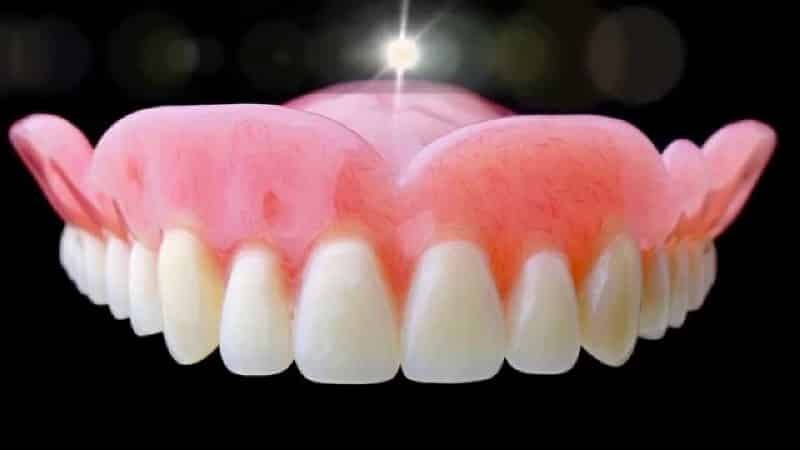
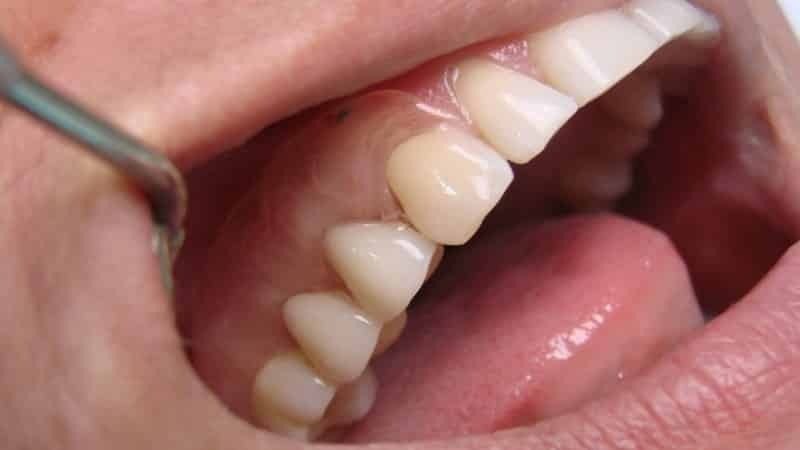
Removable dentures of a new generation without a palate
If you do not comply with hygienic rules, do not clean the structures, the products will quickly lose their aesthetic appeal.In addition, accumulated plaque can provoke inflammation in the mouth.
Care of attachments is carried out according to a certain scheme.In any case, you should follow all the care instructions that are very different from the standard cleaning.
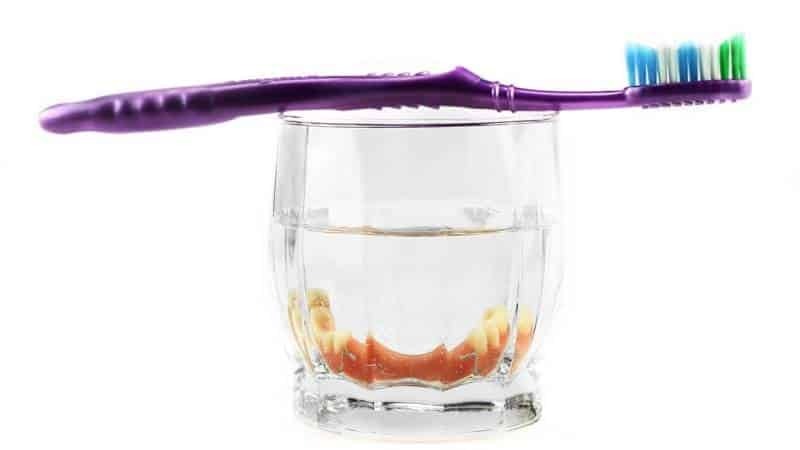
Care of the prosthesis is carried out according to a certain scheme, which is very different from the standard cleaning
So, quality care includes four main points:
- Choosing the right tools;
- Systematic care;
- Observance of the precautionary rules;
- Constant visits to a professional.
Care implies proper hygienic handling:
- Clean the structure twice a day.It is necessary to use a brush with a soft bristle and a special paste for cleaning.It is necessary to focus attention on the area where the prosthesis touches the gums.What remains is to be washed off with running water.The same must be done before you go to sleep.
Do not use potassium permanganate or hydrogen peroxide, as these products are very capable of damaging the texture of matter.
- After the meal, you need to get the device and rinse underwater.
- Every day it is necessary to use a disinfectant to suppress the infection that has accumulated on the structure during the day.
- Annually do a high-quality cleaning of the device at the dentist.
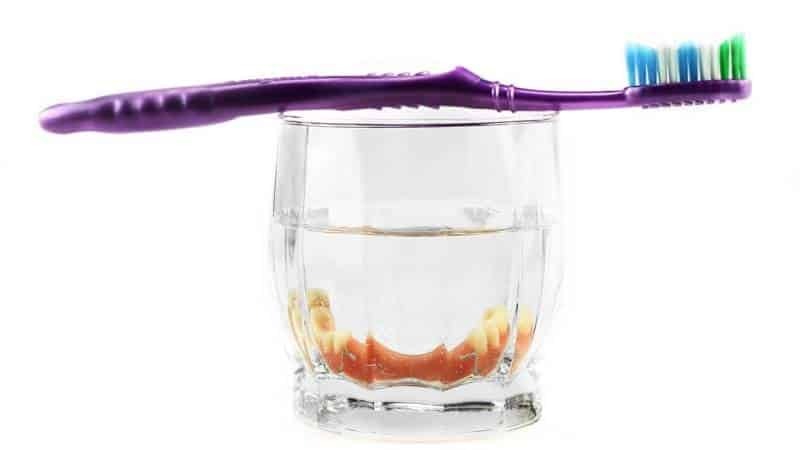
- Innovative systems are not damaged, do not burst and do not lose their aesthetic data, so do not put them in a glass of water for the night.The dentist will tell you how to properly store a thing.
- If necessary, use strengthening means to firmly hold the device in your mouth.
Which products will help to keep the prosthesis in perfect condition
To care for the construction, you should buy special tools that you can clean the attachments every day.Such designs are classified into two types: for holding in the mouth and for cleaning.The first is required for those who use removable-type prostheses. They help to firmly hold the structure:
- Holding powder. Used for minor salivation by spraying a small layer on the prosthesis, which is pressed against the surface of the gum for a while.This is a fairly reliable method of attachment;
- Fixing strips. They are made from special material, if it is difficult for a client to get used to a new foreign body.These strips reduce the pressure of the structure on the gums;
- The cream is applied with a small layer or dots on the edges. Apply a minimum of funds, otherwise its surpluses will be very harmful to your health.
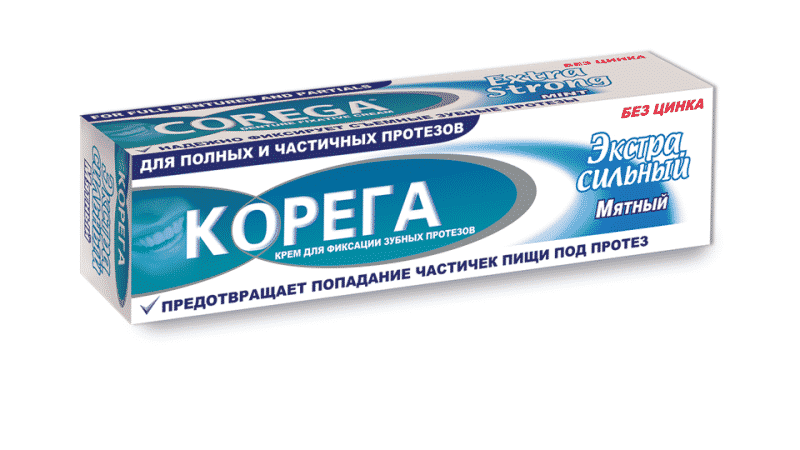
The cream for fixing the prosthesis is applied in a small layer or points on the edges
The glue not only reliably affixes the adaptation to the mucous part, but also creates a special padding to protect the gums from unnecessary exposure.The cream acts during the day, gradually dissolving in the saliva.
You must have at your fingertips special tools for the care of the product.The dentist will tell you what is required specifically for your adaptation.
Attention should be paid to places of high concentration of plaque.These are areas of close interaction of teeth on their masticatory zone, near the ducts of the salivary glands, between the teeth, in the tongue and gums.
Do not attempt to repair the product yourself if it has broken.Take it to the dental clinic, after removing from the mouth.Do not use bleaching agents or abrasive products during cleaning.
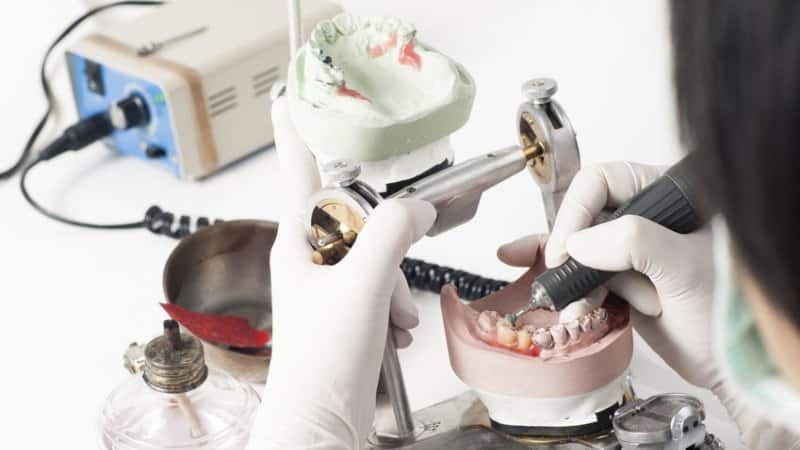
If the prosthesis has broken, do not attempt to repair it yourself
The first correction procedure should be carried out the day after the installation of the structure.After this, it will be necessary to conduct about three similar manipulations, if necessary.The point is that the prosthesis after installation will settle on the gums, which causes pain and discomfort.The doctor will see where the design rubs the gum and corrects this patch.