
Severe diarrhea with water in an adult: what to do? Find out from our article!
If an adult has profuse diarrhea with water, this indicates an intestinal disorder. The causes of the disease can be different - from infections to chronic diseases of the gastrointestinal tract. In this case, you should pay special attention to those cases when the diarrhea does not stop for more than 2 days, even after taking the medication. In addition, if it is accompanied by a sharp weakening of the body and other dangerous symptoms, it is necessary to undergo an examination as soon as possible.

Severe diarrhea with water in an adult: what to do?
Content
- 1 Causes of the phenomenon
-
2 External signs of the disease
- 2.1 Discharge color
- 3 What you should pay attention to
- 4 What to do: first aid for diarrhea
- 5 Diagnosis and treatment of diarrhea
-
6 Diet with profuse diarrhea with water
- 6.1 Video - Why is diarrhea
- 6.2 Video - Persistent diarrhea: causes and effects
Causes of the phenomenon
Abundant diarrhea can occur for various unrelated reasons. This is an intestinal disorder, infectious pathologies, the use of low-quality food products, as well as drinks. A complete list of the most likely causes is presented in the table.
| Disease group | Description |
|---|---|
| Infections caused by bacteria: dysentery, escherichiosis, salmonellosis | A disorder of the intestinal microflora, leading to profuse diarrhea and signs of poisoning |
| Viral infections - adenoviral, enteroviral | Fever, signs of poisoning |
| Fermentopathy - gallstones, pancreatitis, individual congenital features | Insufficient production of digestive enzymes, resulting in indigestion |
| Tumors, benign and malignant | Intestinal polyps, carcinomas, leading to complications in the form of inflammation, digestive disorders, etc. |
| Allergic reactions | They arise due to the individual intolerance of the body to certain substances (for example, gluten, pigments in berries, fruits, etc.) |
| Poisoning (intoxication) | Poisoning with harmful impurities, toxic substances, nitrates (symptoms are typical - nausea, diarrhea, vomiting, weakness, etc.) |
| Side effects of medicines | Complications are usually observed as a result of prolonged use of antibiotics, an overdose of laxatives, the use of cytostatics, drugs for gastrointestinal diseases, etc. |
| Bleeding in the stomach and various parts of the intestine | Accompanied by dark red diarrhea with water, black discharge (especially likely with open stomach and duodenal ulcers) |

Possible causes of diarrhea
Very often, infection occurs due to typical poor personal hygiene. Therefore, if there are doubts about the purity of the product, it is better either to refrain from using it altogether, or carefully process: raw vegetables and fruits are washed under water, and meat dishes are better again warm up.
External signs of the disease
Liquid stool is a normal physiological phenomenon that is sometimes observed in a healthy person (after taking fermented milk products, carbonated drinks, vegetables, fruits, etc.). However, profuse diarrhea of an almost liquid consistency clearly indicates an intestinal disorder. To determine the difference between conditionally "normal" diarrhea and profuse diarrhea with water, you can conduct independent observations using such data.
| Compared feature | "Normal" diarrhea | Profuse diarrhea with water |
|---|---|---|
| Bowel frequency | 1-2 times a day | More than 3-4 times (approximately every 1-2 hours) |
| Consistency | Like a liquid porridge, a homogeneous mass | Watery, heterogeneous mass (foamy, with different fractions, etc.) |
| Colour | Typical - brown, orange-brown, dark yellow | Various shades - light, yellow, greenish, black, burgundy, brown, wine red |
| Smell | Typical, not fetid | Offensive, very unpleasant, sour, or even odorless |

Symptoms of diarrhea in an adult
Discharge color
Diarrhea is not always the usual brown color. Often, the appearance of different shades is observed, which can also speak of the development of specific diseases, as shown in the table.
| Colour | Image | Possible reason |
|---|---|---|
| Light shades |  |
Hepatitis, dysfunction of the gallbladder (insufficient amount of bile) |
| Greenish |  |
Severe poisoning, infectious bowel disorder (dysentery, dysbiosis) |
| Black |  |
Bleeding in the upper parts of the stomach and intestines, the effect of certain drugs containing bismuth (for example, "Vikair", "De-Nop" and others) |
| Yellow |  |
Upset stomach and intestines, indigestion |
Note!It is impossible to diagnose by color and other symptoms in most cases. Therefore, if profuse diarrhea with water does not stop, it is necessary to be examined by a doctor as soon as possible.
What you should pay attention to
If such a phenomenon occurs only once or lasts only 1-2 days, and the reason is obvious (for example, the use of raw water), there is no cause for concern.

Intestines with diarrhea
However, in some cases, severe diarrhea with water continues for several days in a row and is accompanied by other symptoms:
- retention of urine (more than 3 hours);
- signs of poisoning (loss of appetite, abdominal pain, vomiting, etc.);
- general weakening of the body, malaise, dizziness;
- blood pressure surges;
- temperature jumps, chills;
- semi-faint state;
- blanching of the skin (especially on the limbs), their cooling;
- unexplained anxiety, irritability;
- a strong feeling of thirst that occurs for no apparent reason.
If one or more of these symptoms occurs, you should immediately consult a doctor. It should be especially alert that the diarrhea does not stop for several days, and the symptoms of the disease do not disappear even when taking fixative, activated carbon, "Smekta" and other drugs.

Signs of diarrhea
It is important to understand that the main danger with this type of disorder is that the body is losing large amounts of water. Accordingly, dehydration may occur, which will negatively affect the work of all internal organs. Therefore, treatment must be started as soon as possible.
Note!If the shades of diarrhea are blackish-burgundy, the diarrhea contains blood particles, urgent measures should be taken and emergency help should be called. This symptom may indicate the onset of internal bleeding.
What to do: first aid for diarrhea
First aid can be provided on your own. If profuse discharge is observed, the following measures should be taken immediately:
- Temporarily stop taking any food. On the first day, it is allowed to use only fixing products (boiled rice and a decoction for it based, black and ginger tea, quince and blueberry compotes, cocoa, dark chocolate, green bananas and other).
- Purchase non-carbonated mineral water from pharmacies - for example, “Oralite" and "Regidron». It is not allowed to drink raw tap water.

The drug Regidron
- Apply fixing drugs according to the instructions - "Loperamide», «Phthalazole», «Imodium».
- Apply sorbents - Activated carbon, «Smecta».

Anti-diarrhea drug Loperamide
Note!You should not use a large number of antibiotics - only a doctor can prescribe them, and self-medication can lead to complications.
Diagnosis and treatment of diarrhea
In most cases, the onset of profuse discharge disappears within a few days or even a few hours. To do this, you just need to adjust the diet and use fixing agents, as well as activated carbon. However, if these measures did not lead to results, and severe diarrhea with water repeats, you need to see a doctor as soon as possible and get diagnosed.

Types of diarrhea
The doctor analyzes the complaints and medical history, paying attention to the following questions:
- how long the diarrhea lasts;
- whether the patient is taking any medications (one-time or in a course);
- what is the diet of a person;
- how often the discharge appears;
- external signs of discharge (color, consistency, smell, and others).
In some cases, to clarify the diagnosis, it will be necessary to carry out instrumental diagnostics - for example, ultrasound of the abdominal cavity, electrogastrography, X-ray of the stomach and others. Treatment directly depends on the identified causes and the diagnosis. Most often, drugs are prescribed, which are described in the table.
| The cause of the disease | Types of drugs |
Image |
|---|---|---|
| Infectious | Antibiotics ("Furazolidone", "Tetracycline", etc.); sorbents (activated carbon, "Smecta"); antiseptic preparations ("Sulgin", "Metronidazole", "Levomycetin", "Gentamicin", etc.); fixing agents ("Loperamide") |
 Metronidazole |
| Fermentopathy | Enzyme preparations (Panstal, Festal, Pankral, etc.) |
 Festal |
| Chronic bowel disease | Antibiotics; anti-inflammatory drugs (Pentasa, Dipentum, Asakol); hormonal drugs (glucocorticoids) |
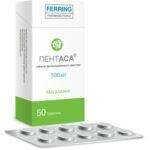 Pentasa |
| Internal bleeding | Antiulcer drugs ("Gistodil", "Antacid", "Kvamatel"); hemostatics (drugs to increase blood clotting - aminocaproic, aminomethylbenzoic acids, cortical, etc.) |
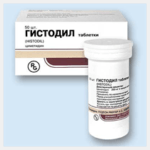 Histodil |
| Poisoning with food, drinks, hazardous substances | Sorbents (more often - activated carbon); also often perform gastric lavage with enemas |
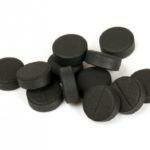 Activated carbon |
| Diarrhea while taking antibiotics | Sorbents; probiotics (Linex, Laktovit); antifungal drugs (Levorin, Ketoconazole, Diflucan) |
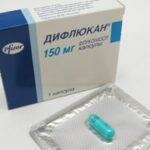 Diflucan |
Diet with profuse diarrhea with water
In the first hours after the onset of severe diarrhea, it is better to abstain from food altogether, or at least eat foods that are easily digested:
- chicken bouillon;
- boiled rice;
- lean beef broth;
- boiled buckwheat.
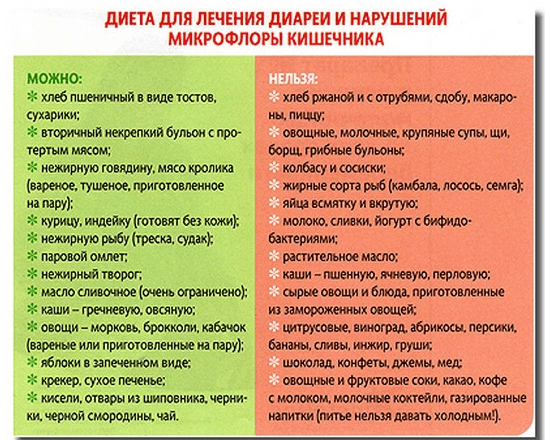
Products for diarrhea
With regard to nutrition in the weeks following diarrhea, it is best to follow a specific diet during the course of treatment. A specific list of permitted and prohibited products is prescribed by a doctor. The most common of them are presented in the table.
| Allowed to eat | Types of products | Not allowed to eat |
|---|---|---|
| Biscuit biscuits, black bread |  Flour products, bakery products |
White bread, all types of confectionery and yeast dough products |
| Chicken breast, rabbit meat, turkey breast, doctor's sausage |  Meat and products based on it |
All types of pork, beef, especially fatty meats, all types of smoked sausages |
| Sour milk, low-fat yogurt, cottage cheese without sour cream |  Dairy products |
Milk of any fat content, fatty sour cream (more than 20%), cream of any fat content |
| Lemon juice, all berries, baked apples, potatoes in any form |  Berries, vegetables, fruits |
Tomatoes, any cabbage, banana, cucumbers, plums |
| Rice porridge, oatmeal, buckwheat |  Porridge |
Semolina |
| Dried apples, rose hips and blueberries |  Nuts, dried fruits |
All types of nuts, including roasted and salted |
Note! All legumes (peas, chickpeas, beans, beans) are prohibited for use in any form, including canned ones.

Sample menu for diarrhea
Thus, in general, profuse diarrhea does not indicate the development of any serious diseases. If, after taking first aid measures and correcting nutrition, the symptoms have completely disappeared, then the body is healthy. In case of complications and persistent discharge, you should consult a doctor as soon as possible.


