
Bowel prolapse: symptoms and treatment, diet, prevention
Bowel prolapse, scientifically called colonoptosis, refers to severe conditions and can cause acute and chronic diseases of the digestive system. In most cases, pathology is detected at a late stage, when it is already difficult to cure the patient. Therefore, it is important to know what causes intestinal prolapse, what are the symptoms of the disease and what treatment methods exist.

Bowel prolapse: symptoms and treatment
Content
-
1 General description of the disease
- 1.1 Causes of colonoptosis
- 1.2 Signs of bowel prolapse
- 2 Danger of intestinal prolapse
- 3 Diagnosis of the disease in patients
- 4 Diet-based bowel prolapse therapy
- 5 Physiotherapy for colonoptosis
- 6 Bowel prolapse surgery
-
7 Traditional methods of treatment
- 7.1 Zhostera herb
- 7.2 Senna officinalis
- 7.3 Buckthorn
- 7.4 Caraway seeds
-
8 Preventive methods
- 8.1 Video - Descent of the internal organs of the abdominal cavity
General description of the disease
The prolapse of the intestinal section can be congenital and acquired. In a normal state, all organs of the abdominal cavity are protected from displacement with the help of the muscular and ligamentous apparatus, the intestinal section is kept on the mesentery. As soon as the slightest weakening of muscle and ligament tone is observed, intestinal displacement begins. Muscles can weaken due to malnutrition, gastrointestinal diseases, increased body weight and other reasons.

The structure of the human intestine
A change in the position of the intestine immediately provokes a displacement of the stomach, after which changes begin in all internal organs. The disease can develop rapidly or over several years. It is impossible to predict the rate of bowel prolapse complications.
Causes of colonoptosis
Most experts believe that the problem of intestinal prolapse is congenital. It is possible to acquire pathology during life due to improper build, when the patient has a small chest, excessive thinness and small shoulders.

Prolapse of internal organs
In other cases, the following factors may contribute to the development of the disease:
- multiple births and multiple pregnancies, which negatively affect the muscular system and the gastrointestinal tract;
- difficult childbirth and complications after them, usually if prolonged straining is necessary;
- surgical interventions of the abdominal type on the digestive tract;
- rapid loss of body weight, including due to improper nutrition;
- eating a lot of fatty and fried foods;
- increased body weight and obesity;
- mechanical damage to the abdominal and gastrointestinal tract.

If intestinal prolapse occurs, then in the future there will be a displacement of all digestive organs.
Attention! In exceptional cases, a violation can be triggered by pulmonary dysfunction. Usually, the triggering factors are pleurisy and eczema of this system.
Signs of bowel prolapse
With the appearance of problems with the functioning of the intestine and its displacement, most often failures are detected in the large intestine, the colon often suffers.

Colon
Most often, the disease manifests itself with the symptoms described below:
- severe problems in the motility of the gastrointestinal tract, which is manifested by constipation and bloating;
- the patient has a heaviness in the abdominal cavity and an unstable appetite;
- due to the displacement of the stomach and intestines, rapid saturation is noted, since the lumen in the organs becomes minimal;
- painful syndrome, which at the initial stage of the pathology has an unstable aching character, taking into account the complications of the pain, they become more intense and constant;
- attacks of nausea often occur, then vomiting opens;
- due to insufficient saturation and disturbances in the breakdown of food due to displacement of the gastrointestinal tract, discomfort in the head and dizziness are noted;
- due to constipation, abnormal pressure on the organs of the urinary system increases, which can lead to an inflammatory process in them.

The main symptoms characteristic of intestinal prolapse are flatulence and problems with the evacuation of feces
If timely treatment is not started, the symptoms of pathology begin to increase, several times worsening the patient's condition. Due to pain in the peritoneal region and a painful act of defecation, the patient may encounter hemorrhoids, anal fissures and bleeding from this area. The pain syndrome may increase due to the slightest movement.
Danger of intestinal prolapse
Due to persistent constipation, the risk of partial or complete intestinal obstruction increases. Also, prolapse of the organs leads to lengthening of the mesentery, on which the intestines are held. Due to this lengthening, there is a risk of intestinal volvulus, as the bowel sections become more mobile and can twist. This condition can be cured only by an operative method, and the patient's life is in real danger.

Bowel obstruction symptoms
Attention! The prolapse of the gastrointestinal tract also leads to strong surges in blood pressure due to impaired circulation. Displacement of the intestine is the cause of the displacement of other internal organs, and it is almost impossible to return them to their previous position.
Diagnosis of the disease in patients
The patient can suspect organ prolapse by the presence of the symptoms described above. But only a specialist can make an accurate diagnosis after collecting all complaints and prescribing laboratory manipulations. During a visit to a therapist or gastroenterologist, a preliminary diagnosis will be made after an internal examination.

A combination of two or more symptoms is a reason to visit a gastroenterologist or therapist
Such control is as follows:
- the patient is diagnosed with a saggy stomach, even with a normal weight;
- putting the patient on the couch, the doctor notices that he has clear blows of the abdominal aorta, which indicates a retraction of the intestines in the upper part of its base;
- if the doctor slightly pulls the abdominal cavity up, it completely disappears or the pain in the digestive tract subsides;
- the patient is accompanied by prolonged pain, which can increase after physical exertion and after eating food;
- when palpating the peritoneal area, the doctor determines a clear displacement of the gastric pylorus and gropes for a bulge in this area.

Intestinal irrigoscopy
After a face-to-face examination, the manipulations described in the table are assigned.
Table 1. Diagnostic methods
| Diagnostics | Its essence | How do they do it? |
|---|---|---|
| Analysis of stomach juice | Determines the amount of hydrochloric acid in the stomach. When problems arise, reduced acidity is observed. | On an empty stomach, using a 4-5 mm soft tube. It is left for 1-2 hours right in the stomach and fences are made every 15-20 minutes. The probe can be inserted through the mouth or nose with a pronounced gag reflex. |
| Irrigoscopy | It is done to determine the degree of intestinal displacement and to identify the violations that have occurred because of this. | The patient is injected with a contrast through the rectum and a photo is taken in the position on the side, lying abdomen. At the end, a double contrast is made using the previously introduced substance and air to detect ulcers and neoplasms. |
| Colonoscopy | It is used to assess possible disorders and the current state of the mucous membrane, to determine the intestinal lumen and take material for biopsy. | The patient lies on his left side with legs tucked in. The doctor lubricates the patient's anal area and inserts the endoscope, slowly moving it along the intestines to assess his condition. |

Preparation for sigmoidoscopy
Attention! If the patient has contraindications to colonoscopy, sigmoidoscopy is used to assess the performance of the intestine.
Diet-based bowel prolapse therapy
In patients with colonoptosis, no drug therapy is performed. The exception is cases when the patient develops a severe pain syndrome. In this state, he may be prescribed analgesics or antispasmodics. Bowel prolapse is treated only with sports activities and proper nutrition. Nutrition for colonoptosis does not have serious restrictions. The main condition of the diet is the intake of foods that enhance intestinal motility, improving its functioning and eliminating the symptoms of pathology. Usually, with a disease, it is forbidden to starve, but in individual cases, the doctor can develop a diet that provides for several fasting days during the month.

Large quantities of raw vegetables and fruits should be included in the menu, which will help restore the level of vitamins and minerals
Meals should be high in calories and consist exclusively of easily digestible foods. Patients are advised to refuse fried foods containing a large amount of fat, rice and semolina in any form are harmful. Bread and baked goods are also prohibited, it is advisable to abandon a large number of seasonings and gas-forming products.
Raw vegetables and fruits should be present in sufficient quantities in the diet, they can improve motor skills and vitamin and mineral balance. It is advisable to develop a meal plan so that the patient ate at the same time in small portions.

In no case should you overeat.
Table 2. Sample meal plan
| Breakfast | Snack | Dinner | Snack | Dinner | |
|---|---|---|---|---|---|
| Monday | Buckwheat on water, banana and tea | Several nuts, yogurt | Vegetable soup, millet with chicken cutlet, compote / tea | Apple | Vegetable casserole, tea / kefir |
| Tuesday | Millet on the water, pear, bread with cheese | Orange | Chicken or beef soup, boiled potatoes with vegetables, compote / tea | Yogurt | Steamed fish, green vegetable salad, tea |
| Wednesday | Oatmeal with dried fruits, bread with cucumber and cheese | Apple, a glass of kefir | Potato noodle soup with chicken broth, vegetable salad with sour cream | Zmenya nuts | Baked beef with beet salad, tea |
| Thursday | Barley porridge on water with butter, bread with cheese, tea | Nuts, yogurt | Beetroot borsch with sour cream, baked chicken, tea / compote | Orange | Cheesecakes steamed or in the oven with yogurt, tea |
| Friday | Barley on water, yogurt, bread, tea | Raisins, grapefruit | Vegetable soup with turkey, buckwheat with a steamed ball, tea | Yogurt | Steamed fish, green vegetable salad, tea |
| Saturday | Millet on the water, bread with cheese, pear, tea | Banana | Buckwheat soup with chicken, green vegetable salad with sour cream, tea | A glass of kefir, an apple | Steamed vegetables with beef, tea |
| Sunday | Oatmeal with prunes and dried apricots, bread with cucumber, tea | Nuts, yogurt | Beetroot borsch with sour cream, baked chicken, tea / compote | Grapefruit | Cheesecakes from the oven or steamed with sour cream, tea |

After eating you need to lie down
Attention! After eating, when the intestines are lowered, it is forbidden to immediately begin to perform any work, physical activity is especially dangerous. You should rest for 30-40 minutes and only after that start vigorous activity.
Physiotherapy for colonoptosis
The main reason for organ prolapse is the patient's lack of mobility. The muscles of the press, the ligaments in the abdominal cavity begin to weaken, which leads to disorders. It is important to start treatment right away, which also includes physical therapy.

Exercises for bowel prolapse
Exercises for bowel prolapse:
- The patient is placed on a hard surface, and a 30 cm high roller is placed under the back. It takes 5 minutes to be in this position to return the intestines to the desired state.
- Useful for such a pathology are exercises in the form of raising straight legs, a bicycle, bending the legs with tension in the press and pulling the lower limbs to the stomach.
- Stretching should also be done. When the stomach is pushed down, the best option is an exercise in which the patient sits on the floor, brings his straight legs together and tries to reach the fingertips by bending the back. 3-5 of these stretches are performed.
- To train the ligaments and strengthen the abdominal muscles, you need to perform rotations with your legs while lying on your back. The legs are raised at right angles and rotated together 10 times in one direction and the other.
- You should move on to lifting the torso to strengthen the press only after 5-6 weeks of regular exercise.
- The first time charging should take no more than 10 minutes. Its duration can be increased by one minute every day until its duration reaches 20 minutes.
- Within 12 weeks, the patient should not do more than 1-2 sets of exercises. You can switch to three approaches only after three months.
- After completing therapeutic exercises, you need to rest for at least 30 minutes, ideally lie on a horizontal surface, completely relaxing your arms and legs.

Exercise takes a lifetime
Attention! After the start of therapy, any physical exercises for the first 5-7 days are performed in a horizontal position. Then you can do vertical exercise.
Bowel prolapse surgery
Such treatment is resorted to only in severe cases, when physical education and diet do not give the desired result, and the patient's condition is rapidly deteriorating. The operation is complex and is performed by the abdominal method. Due to the extensive incision of the abdomen, there is a high risk of infectious complications, acute pancreatitis, prolonged healing and decay of the surgical suture may develop.
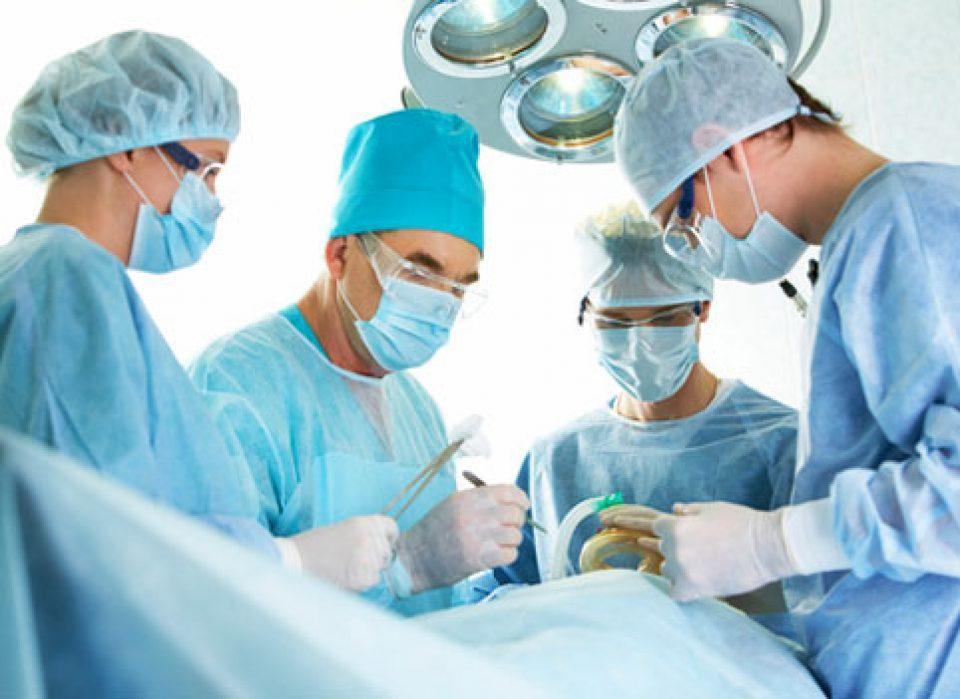
Even the operation cannot guarantee that the prolapse does not recur in the future.
During the operation, using surgical threads, the specialist creates several additional loops. With these loops, he fixes the intestines to the strongest places that can be found in a particular patient in the abdominal cavity. The surgeon tries to raise the organs to their normal position as much as possible. Such strengthening of the intestine does not always bring the desired result, since the organ often descends again if the patient does not monitor his diet and does not exercise.
Attention! Before the operation, you should make sure that the blood is clotting well. Abdominal surgery involves the loss of a large volume of blood, which, if the number of platelets is insufficient can lead to death of the patient directly on the operating table or within a short time after interference.
Traditional methods of treatment
Home treatment is not aimed at raising the intestines to the correct position, but at eliminating the unpleasant symptoms that provoked such a condition. Folk recipes help fight constipation, bloating and flatulence.

Treatment with folk remedies
Zhostera herb
For treatment, you need to take 5-10 g of medicinal herb and pour 250 ml of boiling water over it. The mixture is brought to a boil and boiled for five minutes. After boiling, the joster is kept in a thermos or under a lid for another two hours. After the allotted time, the thick is removed and the joster is taken daily before going to bed. The dosage is 100 ml of the finished solution. Treatment continues for 2 weeks.

Joster - the main active ingredients of Joster are laxative anthraquinone derivatives
Senna officinalis
Has a mild laxative and calming effect on the gastrointestinal tract. A tablespoon of the herb is required to pour 250 ml of boiling water and hold the hay for two hours under a lid. After straining, the solution is taken in small sips 1-2 hours before bedtime. You can take the drug for up to two weeks.

Senna is the best herb for constipation
Buckthorn
For treatment, you need to grind the bark well and pour 250 ml of water over it. The mixture is put on low heat to evaporate half of the solution. As soon as the drug cools down, you need to add so much boiled water to the container to make 200 ml. Treatment is carried out for 1-2 weeks, taking 100 ml of the drug before breakfast and after dinner.

Buckthorn broth helps with many diseases of the digestive system
Caraway seeds
Treatment involves the use of 5 g of caraway seeds per 250 ml of boiling water. The seeds are steamed for at least two hours, after which the infusion is carefully filtered. It takes 2-3 days to drink this amount of water, taking small sips of infusion every 2-4 hours a day. It is best to take cumin seeds between meals.

Cumin seeds fight flatulence well
Preventive methods
If the problem of bowel prolapse is associated with congenital anomalies, preventive measures are already useless and can only be used as a means of avoiding complications and further lowering organs.

Sports and proper nutrition are the best prevention
It is possible to prevent the development of acquired colonoptosis by observing the following recommendations:
- It is important to maintain good tone of the abdominal muscles, which support the intestines and other internal abdominal organs.
- Heavy objects must not be lifted. If such actions are necessary, safety precautions should be followed and weights should be lifted without placing a heavy load on the abdominal region.
- Prevent the development of diseases of the digestive tract. When diagnosed, take timely courses of treatment and avoid severe bouts of exacerbation.
- It is required to establish a healthy diet that will not cause bouts of heartburn, vomiting, nausea, and heaviness in the abdomen. The correct diet will also be the prevention of gastrointestinal diseases, which can become an indirect cause of intestinal prolapse.
Attention! During pregnancy, a woman needs to wear a special support band that will protect her from colonoptosis. To exclude the development of pathology after childbirth, it is recommended to wear supporting corsets for 2-8 weeks until the uterus returns to its previous state.

Prenatal and postpartum brace
With congenital pathologies, it is quite difficult to do something to prevent complications. The patient is forced to resort to physical activity all the time; in severe pathologies, surgical intervention is performed. In other cases, it is enough for the patient to lead a healthy lifestyle, maintain good physical shape and periodically visit a doctor for early diagnosis of the disease.


