
Diarrhea in children with teething: causes and treatment
Many mothers and pediatricians question the relationship between the "exit" of the first tooth and diarrhea. But experience and observations suggest that diarrhea in children with teething is quite common. Let's try to figure out how to distinguish the symptoms accompanying the appearance of teeth from the symptoms of serious disorders in the child's body, because writing off many manifestations of the disease on the "first tooth" can lead to severe consequences.

Diarrhea in children with teething
Content
-
1 Symptoms of the appearance of teeth
- 1.1 Profuse drooling
- 1.2 Swollen gums
- 1.3 Anxiety and nervousness of the child, insomnia
- 1.4 The desire to gnaw everything
- 1.5 Temperature, cold symptoms
- 1.6 Digestive disorders
- 1.7 Video - First teeth in children: what to do
- 2 Causes
-
3 How many days does feeling unwell last?
- 3.1 When should I call a doctor?
-
4 Treatment
- 4.1 Pain relievers
- 4.2 Diarrhea medications
- 4.3 Remedies for "gases"
- 4.4 Traditional methods
- 5 Dehydration therapy
- 6 Symptomatic therapy
- 7 Drinking regime and diet
- 8 Prevention of the development of complications during teething
- 9 Let's summarize
Symptoms of the appearance of teeth
The appearance of teeth in babies begins in the interval from 3-11 months. But the first tooth can "climb out" in a year.

How many milk teeth should a child have?
If a child has an unreasonable diarrhea, then you need to understand whether it is true that its cause is "teeth". To do this, you need to study the characteristic symptoms of the "first tooth" and relate them to the symptoms of your child. Let's consider the main “bells” of teeth emergence.
Profuse drooling
It develops as a result of activation of the body's defenses, because the appearance of a tooth is accompanied by the formation of a wound and damage to the integrity of tissues. Saliva is secreted to prevent infection and speed up wound healing.
The saliva of living beings contains a natural bactericidal component - lysozyme, it acts as an antiseptic and completely disinfects the oral cavity.

Do not worry that "drooling", in 99% of cases, they talk about the beginning of teething
Swollen gums
It occurs as a result of the resulting inflammation, because bone tissue grows from the inside and is forced to push the gums in order to get out. Swelling and local redness of any area of the gums in a child is as sure a sign of teething as salivation. It is especially significant if these two symptoms appear at the same time.

Swollen gums
Redness is always accompanied by the appearance of a white bubble - the precursor of a milk tooth. If the bubble has already appeared, then it means that in 2-3 days the tooth contour will already appear, and all the unpleasant symptoms that accompany the eruption will go away.
Anxiety and nervousness of the child, insomnia
When the tooth just begins to emerge inside the gum, the baby has painful sensations in the mouth, similar to severe itching. They are very disturbing to him and cause a change in behavior. A calm child suddenly begins to be constantly capricious and does not sleep at night. By the way, it is at night that the manifestation of all these symptoms is activated.

The closer the tooth comes to the surface, the more pain becomes stronger, and, as a result, the child's anxiety
After the contour of the tooth has already come to the surface, the anxiety should go away.
The desire to gnaw everything
It occurs due to severe itching and pain. The kid chews toys and other objects, because when pressing on the gum, the pain subsides. This is a temporary relief from discomfort.
Temperature, cold symptoms
Any local inflammation and violation of the integrity of tissues is always accompanied by a general reaction of the whole organism - an increase in temperature and malaise. With the normal course of teething, the temperature will rise no more than 38 ° C. It can also be accompanied by the appearance of skin rashes and nasal congestion, which can also disrupt the child's sleep. In rare cases, colds join (more often this happens when eruption is associated with a period of activation of a viral infection).

Temperature may rise during teething
Digestive disorders
These include regurgitation of the "fountain", flatulence, "gurgling" in the tummy and liquefied stools. It will last no more than 3 days (for the release of one tooth), and the number of "cleansing" should not be more than three to four times a day.

Digestive problems can result from teething
After analyzing all the symptoms and objectively assessing the baby's condition, you can decide whether to call home doctor, or simply in all possible ways try to alleviate the child's condition and survive these difficult three days of his life.
The main task is to understand whether the cause of the ailment is really the “first tooth”.
Video - First teeth in children: what to do
Causes
Table 1. Causes of teething diarrhea
| Cause | The mechanism of influence on the gastrointestinal tract |
|---|---|
| Profuse drooling | Large volumes of saliva formed go directly to the stomach and intestines. Saliva significantly liquefies feces, which causes the development of diarrhea. |
| Desire to chew everything | Microbes can enter the baby's body. Diarrhea is a way for the intestines to move them out and cleanse as quickly as possible. |
| New foods in the baby's diet | The often described period coincides with the introduction of complementary foods. It is possible that the cause of diarrhea is indigestion, a period of adaptation. Especially "dangerous" products in this regard: various juices (especially "dangerous" in this case apple juice), vegetable purees or meat dishes. The child's body may well react to meat dishes with diarrhea, because meat is a heavy food, and at first there may be problems with its digestion. Introducing whole cow's milk before 1 year of age can also cause diarrhea. It's all about the specific milk proteins of this product. |
| The acceleration of metabolism under the influence of stress | The "exit" of a tooth is always a stress factor: there are pains and a violation of the integrity of tissues. It is possible that diarrhea is a response to stress. |
How many days does feeling unwell last?
The baby's poor health when one tooth comes out can last about three days. But less often, due to the temporary weakening of the immune system, the child "picks up" a virus or catches a cold. Then the symptoms will drag on for an indefinite period until the small organism overcomes the infection. You can't do without a pediatrician.
It is strictly forbidden to take antiviral and immunomodulatory drugs on your own. Any drug intervention for a child under the age of 1 year should be strictly discussed with the doctor.
It is very important to learn to distinguish between fever and nasal congestion, which are the main symptoms of teething, from those of a cold. So, with a cold, there will be additional:
- the presence of snot in the nose. With simple congestion, which passes after three days, they are not;
- redness of the neck - you can see it yourself at home;
- the temperature rises above 38 ° C;
- the child began to cough.

If at least one of these symptoms appears, an urgent need to call a doctor at home
There is nothing wrong with the baby catching a cold - it is natural in this case. The pediatrician will prescribe the necessary treatment and the illness will go away in a week.
There are other circumstances in which a call to a pediatrician is simply necessary, because we are talking about serious violations in the child's health.
When should I call a doctor?
It is urgent to call a doctor if:
- painful manifestations do not go away for more than three days;
- the baby is "cleansed" more often than five times a day;
- feces of atypical color: with a greenish tint, with dark blotches, etc.;
- foreign inclusions in feces, including blood;
- feces of a watery, foamy structure.
All of the above manifestations can indicate the presence of other diseases, it is impossible to attribute the ailments to the "first tooth".
Treatment
Basic principles:
- maintaining fluid levels in the body;
- obstacle to the development of infection;
- symptomatic treatment.
If the problem becomes serious, then the pediatrician will prescribe an additional course of treatment according to his scheme. Taking antibiotics and other antimicrobial agents is strictly prohibited without a doctor's prescription. Instead of a positive effect, dysbiosis may additionally develop, which not only complicates the course of an intestinal disorder, but can also provoke dehydration. For young children, it is very dangerous and can lead to the most serious consequences in a matter of hours.
Let's consider separately each of the directions of treatment.
Pain relievers
The following are used as pain relievers for teething:
- Dental gels and pastes /
- Suspensions of antipyretic drugs.
The most popular oral pain relieving gels for children. They include anti-inflammatory and analgesic components, or just an anesthetic substance. It is best to buy a gel with a double action, because with the timely removal of inflammation, high fever can be prevented, which causes the baby even more suffering.
The gels are applied several times a day, usually immediately after feeding and drinking (most are washed off with food and liquids). If necessary, the use can be increased, but it is better to coordinate this fact with the pediatrician. At night, dental gels are a great opportunity to fully relax both baby and mother.
At elevated temperatures, suspensions of antipyretic drugs are used:
- Efferalgan;
- "Paracetamol";
- Ibuprofen, Ibufen;
- Nurofen, etc.

Paracetamol

Ibuprofen

Nurofen
All of them have not only antipyretic and anti-inflammatory, but also analgesic effect. Their use can simultaneously "kill two birds with one stone" and give the baby a good rest. But their use must also be agreed with the doctor.
Diarrhea medications
All drugs for diarrhea can be divided into two groups:
- Antimicrobial.
- Adsorbents.
Antimicrobial drugs include local antibacterial agents, that is, they are active only in the intestinal lumen. The most popular suspensions are: Enterofuril, Stopdiar, etc. Their appointment should be done exclusively by the attending specialist.

Enterofuril

Stopdiar
Adsorbents: Smecta, Enterosgel, etc. Are preparations that collect and absorb all the toxins and waste products of bacteria like a sponge. In addition, they thicken the stool and make them look like.
But one of their unpleasant feature should be taken into account: most of the adsorbents "collect" not only harmful substances, but also useful ones: vitamins, microelements, etc. And a decrease in their level can adversely affect the child's immunity.
Smecta
Enterosgel


Remedies for "gases"
For bloating in the abdomen, simethicone preparations are used: "Espumisan", "Sub-simplex" and their other analogues. They relax the intestinal muscles and help to liquefy the formed air bubbles.
There are no serious side effects. And the effect appears quickly and for a long time.

Espumisan

Sub simplex
Traditional methods
These include herbs. Those of them that have a minimal allergic effect can be assigned to the baby. The most popular is chamomile. A tablespoon of dry grass is brewed with a glass of boiling water, infused for fifteen minutes and the child is given one teaspoon of the strained solution up to five times a day before meals.

pharmaceutical camomile
Chamomile has powerful anti-inflammatory properties and plays the role of a mild anesthetic. When bacteria enter the intestine, chamomile also acts in its lumen, showing its bactericidal effect, and to some extent is a natural replacement for antibacterial agents.
In addition to chamomile, the following herbs can be used:
- common blueberries;
- St. John's wort;
- sage;
- bird cherry;
- mint, etc.
Herbs are inherently strong allergens, even those deemed suitable for adoption by children. The connection of any folk remedy to the main therapy must be agreed with the attending pediatrician, otherwise the consequences can be serious.
Dehydration therapy
The key to treating diarrhea will be dehydration therapy. At home, powders can be used to prepare salt solutions. For example, "Regidron", etc. They contain the required amount of ions to restore fluid levels in your baby's body.
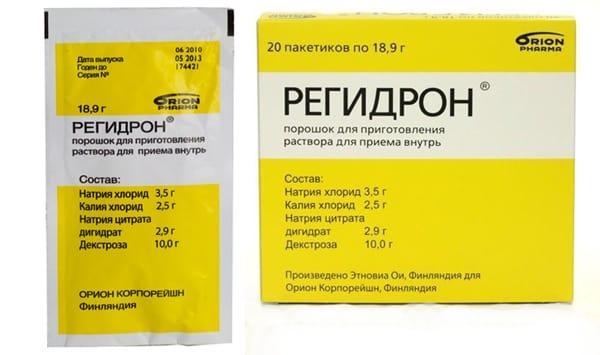
Regidron
One package of "Regidron" is diluted per liter of water and drunk during the day. Preferably warm.
Symptomatic therapy
In addition to treating the main manifestations of digestive disorders and pain in the gums, sometimes it may be necessary to eliminate other symptoms as well. For example:
- If you experience itching and a rash on the skin, panthenol ointment, which is sold at any pharmacy, is perfect. Panthenol has a softening and regenerating effect and quickly relieves any irritation.
- Allergies are treated with antihistamines, which have no contraindications for children under one year of age. You can consult with your doctor, and always keep the drug indicated by him ready.
- For nasal congestion, any baby drops with naphazoline or oxymetazoline can be used. The main thing in them is the dosage that should suit your baby's age.
- If your baby is overly concerned, buy a light soothing syrup with natural ingredients. These syrups are also sold in any pharmacy.
- To prevent the child from pulling anything that gets into his mouth, buy him a teether. These toys are sold in any pharmacies and are specially adapted for pain relief and massage of the gums - they have special pimples that your baby will really like.

Silicone Teether
Drinking regime and diet
One of the serious complications of diarrhea is dehydration. For children, this complication is many times more dangerous than for adults. That is why the main task for digestive upset is the active restoration of fluid balance in the body.
Liquid (water) should be introduced into the baby's body by drip. This means that you cannot drink a lot at once, it is better to give to drink in small sips, but often. A bottle with a small hole for liquid is perfect in this case - it is much more difficult to suck from it and the water will enter the stomach in small portions.

Soldering is necessary throughout the entire period of diarrhea.
To make it easier to navigate, we will present you the main symptoms by which you can independently diagnose dehydration:
- dry skin (especially heels and cheeks), peeling;
- darkening of the lips;
- pallor;
- bluish skin tone;
- lethargy, lifelessness, passive behavior;
- dyspnea;
- increased desire to "eat";
- rare urination;
- dark urine and pungent odor;
- the smell of acetone from the mouth.
If you have any of these symptoms, and especially their combination, contact your pediatrician immediately. In some cases, when dehydrated, young children need a drip of saline or other fluids that restore water and salt balance.
As for the diet, lactic acid products should be completely excluded for diarrhea, and fruits such as:
- bananas;
- pears;
- peach.
Among cereals (if they are already included in the diet), give preference to rice. It has a strong fixing effect and will help you say goodbye to loose stools faster.

Boiled rice is an excellent fixing product
For a nursing mother, there will be the following recommendations:
- there are a lot of nuts and flour (all this causes constipation in the baby under normal situations, and now it will just have the desired effect);
- drink more whole milk;
- do not eat apples, prunes, kefir and other products that have a laxative effect.
Compliance with all these conditions will help prevent dehydration in a timely manner and go through this difficult period as comfortably as possible.
Prevention of the development of complications during teething
If your baby is approaching the period of teething, or you notice the appearance of the first symptoms, then take a number of preventive measures to pass this period painlessly.
- Support your child's immunity so that he is not prone to developing colds.
- Carefully monitor the hygiene of his toys and crib ribs, because he can drag everything into his mouth.
- Give him a gum massage, buy a teether.
- Adjust your diet, exclude foods that have a laxative effect.
- Don't introduce anything new into the diet, at least during the teething period.

Massage your baby's gums to ease teething
Let's summarize
The eruption of the first milk teeth is a very important period in a baby's life. Often, he gives him severe discomfort and pain. Be tolerant and try to help your child get through this stage of his life as comfortably as possible, because with proper care and careful prevention of complications, they simply will not arise. And diarrhea, which is one of the most common signs of this period, will disappear without a trace.


