
Can there be appendicitis a second time: similar symptoms of other diseases
Removal of an inflamed appendix occurs only once in a person's life with a classic anatomical structure. But it is worth noting that there are also abnormalities or diseases of other organs are masked under the ailment. It is necessary to figure out whether it can be that appendicitis will bother a person a second time.
Anomaly in anatomy occurs in 2 people out of 50 thousand. Three types of colon malformations and the occurrence of a double appendicular apparatus have been described:
- Type A. The singular appendix extends from the dome of the colon and branches into two ends.
- Type B. The gut contains two organs in different locations.
- Type C. There is a branching of the blind intestine and, accordingly, two processes are formed.
In the entire history of medicine, only two cases of removal of two organs have been described. In the first case, which occurred in 1966, the appendicitis was removed, and five months later, doctors cut off the second appendix.
In 2014, an obese South American man complained of constant acute pain. During abdominal surgery, an inflamed appendix was found, and during separation of the adhesive tissue located next to the organ, a second appendix was also found, also with signs of inflammatory process. Both were removed, and the patient was discharged from the hospital three days later.
More common are cases where the primary diagnosis is not associated with inflammation in the appendix. The disease can occur in two types:
- Acute form. The inflammation proceeds with pronounced symptoms: pain, nausea, vomiting, fever.
- Chronic appearance. The disease manifests itself periodically.
In this case, symptoms appear in the blood and lymphatic pathways passing through the appendix. By its features, it is similar to the inflammatory process of appendicitis, but removal is not required.
At the beginning of the disease, not only classical diagnostics are carried out, but also differential diagnostics to confirm or deny other diseases. This means that the picture of the disease is considered using additional diagnostic methods:
- Ultrasound examination of the abdominal space.
- Chromocystoscopy.
- CT and others.
Content
- 1 Recurrent appendicitis
-
2 Symptoms of diseases with similar symptoms
- 2.1 Typhlitis
- 2.2 Mesenteric adenitis
- 2.3 Meckel's acute diverticulum
- 2.4 Ovarian appendages
- 2.5 Crohn's disease
- 2.6 Renal colic
Recurrent appendicitis
Insufficient manifestation of signs inherent only to the disease of appendicitis requires additional research - differential diagnosis. The location of the appendix determines the clinical picture of the disease. If the appendix is close to the stomach, then a perforated ulcer located in the upper digestive organ or in the duodenum may affect the diagnosis. Pancreatitis and gastroenteritis have similar symptoms.
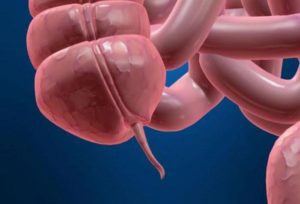
Secondary appendicitis is diagnosed after recurrence of the first attack. It should be noted that the symptomatology does not change. It is possible that pain comes from other parts of the intestine: sigmoid or blind, but this is only due to the close location to the source of inflammation.
Often, secondary appendicitis is detected during the appendectomy by the laparotomy method. The doctor tries to find the source of the unpleasant symptoms.
Symptoms of diseases with similar symptoms
Many diseases have similar symptoms, so it is so important to be able to distinguish inflammation of the appendix from another, no less serious ailment.
Typhlitis
This is the name of the inflammation proceeding inside cecum. The patient suffers from nausea, the body temperature rises. Signs appear after 2-4 hours, when the person ate. It is the temporary manifestation of the symptoms of typhlitis that differs from the ailment in question. The progress of the disease is accompanied by increased diarrhea and vomiting. The pain symptom coincides, with palpation there is an increase in pain syndrome, the abdomen on the right side is swollen.
Typhlitis has two types of complications:
- Perityphlitis. The part of the peritoneum in close contact with the cecum becomes inflamed.
- Paratyphlitis. The inflammatory process occurs on the section of the thick and thin sections of the intestinal tract. Dysfunction of the organ occurs.
The risk of a second case of appendicitis is high.
Mesenteric adenitis
The disease is characterized by an inflammatory process in the lymph nodes.
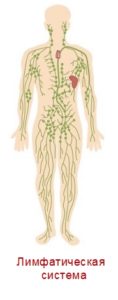
According to the anatomical structure, the peritoneum has a large fold inside. Thanks to it, the intestines are attached to the walls of the abdomen, forming the mesentery. Many blood vessels are concentrated here, including lymphatic channels.
The acute form of the disease resembles the manifestation of appendicitis. There is no clear definition of the source location, characterizing the pain syndrome as dull and constant throughout the abdomen. Any movement leads to an increase in the intensity of pain.
There are minor differences:
- The temperature also rises, but exceeds the indicators of appendicitis by half a degree.
- Heart rate and blood pressure are not pronounced.
- The occurrence of diarrhea leads to an erroneous diagnosis - retrocecal appendicitis.
Meckel's acute diverticulum
The inflammatory process takes place in intestinal cells located at a distance from the appendix.

The main category of patients suffering from diverticulosis is young children; the ailment is slightly less common in adolescence. For a certain period of time, the diverticulum, being a process on the surface of the cecum, does not cause symptoms. The process of suppuration and the occurrence of diverticulosis are confused with appendicitis. During the operation, a section of the intestinal tract with inflamed processes and appendix is cut off, since the inflammation has also affected it.
Sometimes the diverticula become so large that they partially fulfill the functions of the intestine itself. Then the symptomatology is similar to OA: constipation, nausea, vomiting, stool disorder. The patient is shivering. anemia develops.
Ovarian appendages
The affected right appendage of the ovary is capable of producing inflammation on the adjacent organ - the appendix. The specifics of the manifestation of signs are as follows:
- Pain syndrome is located on the right in the pubic part.
- Menstrual flow occurs in the middle of the cycle, and menstruation itself passes with abundant flow. The pain gets worse.
- Pus comes out of the vagina every day.
- During sex, it begins to hurt a lot in the lower abdomen.
- Nausea, vomiting are possible.

Symptoms indicate the development of appendicitis again.
Crohn's disease
The inflammatory process develops in the terminal region of the intestine, located in the iliac pit. The spread of pathology goes to the thick section, then covers the blind section of the intestine and, as a result, reaches the appendix.
But there are distinctive features:
- The skin becomes covered with sores, edema.
- More likely to develop psoriasis.
- Ulcerative phenomena occur even in the oral cavity.
- Arthritis. The patient has limited movement due to intestinal inflammation.
- The phalanges of the fingers thicken if treatment is not received on time.
Renal colic
This ailment, appearing in the kidneys, radiates to the area of the substrate and goes down. It is possible that the pain syndrome spreads to the entire abdomen. The clinic of the disease is supplemented by gases, constipation, inhibition of the motility of the intestinal tract. There is bloating, vomiting.
Further, the inflammation flows into the urinary tract, into the peritoneum, affects the appendix, and peritonitis develops.


