Destructive appendicitis: symptoms of acute complications, treatment
Structural and qualitative changes in inflammation of the appendix cecum varied. Pathological anatomy distinguishes two types of appendix disease: acute and chronic, each of which has a distinct morphological characteristic.
According to the severity of these changes, various periods of the acute form are distinguished: catarrhal, phlegmonous, gangrenous and perforated. In the first case, the pathology is called simple and does not go beyond the mucous membrane, in rare cases it fades out without surgery. In the last three, deformation of the walls of the appendix appears.
Destructive appendicitis is a form of inflammation that has gone beyond the mucous membrane of an organ, which develops depending on the duration of the inflammatory processes: the longer the disease is not treated from the moment the first symptom appears, the more often they develop.
Content
- 1 Phlegmonous
- 2 Gangrenous
- 3 Perforated
-
4 Symptoms of appendicitis
- 4.1 Pathognomonic symptoms
-
5 Treatment
- 5.1 Laparoscopy
- 5.2 Cavity appendectomy
- 5.3 Postoperative treatment
Phlegmonous
The appendix is tense and enlarged. The phlegmonous stage is characterized by a sharp increase in temperature and an increase in painful sensations. Nausea intensifies, dry mouth, headaches, sweating, severe flatulence appear. At this time, the disease has a vivid clinical picture, and it accounts for the maximum number of people who go to hospitals. In this phase of the disease, it becomes difficult to walk or sit.
Gangrenous
At this stage, the entire organ of the cecum is inflamed. Blood clots appear and nerve endings die off. Due to the accumulation of pus inside the organ, inflammation spreads to adjacent tissues and organs of the abdominal cavity. The gangrenous stage is characterized by a sharp cessation of pain syndrome due to necrosis of nerve cells. The clinical picture is unclear, the diagnosis of this destructive handicap is difficult. There is a deterioration in the human condition - tachycardia, discoloration of the skin, bloating, increased sweating. Due to the ingress of infection into the blood, signs of intoxication of the body intensify: chills, impaired defecation, loss of strength, nausea, turning into vomiting.
Perforated
The walls of the cecum organ are destroyed, and all the contents are released into the peritoneum. Several hours remain to take measures, since the penetration of pyogenic microbes into the abdominal cavity leads to poisoning of the whole organism and irreversible processes.
Symptoms of appendicitis
Depending on the degree of morphological changes in the appendix, its location, the age of a person, the clinical manifestations of the disease differ.
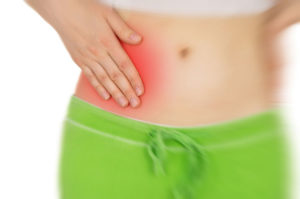
Pain syndrome is the main symptom acute appendicitis. The pain increases with the development of the disease and is most pronounced when the tissues of the appendix are ruptured. Under the influence of pain, the patient takes a position aimed at reducing it. And an attempt to change the position of the body leads to its strengthening and the person returns to the opposite position. Doctors consider the forced situation as a manifestation of the disease. Any physical activity, even minimal, during coughing or sneezing, causes sharp pain.
The tension of the muscles of the anterior abdominal wall is the second most important indicator. This is manifested in the asymmetry of the front of the abdomen during breathing. The strength of muscle tension depends on the degree of reaction of the body to the ongoing inflammatory process. Old age or wasting reduces reactivity and may not be present.
Against the background of inflammation, there is a disruption in the functioning of the digestive system - delayed bowel movements, gas formation in the intestines. Nausea and vomiting, decreased appetite - the first signs of intoxication accompany the development of the disease, but they are not overly tiring, unlike other intestinal disorders. The tongue becomes dry and covered with a white coating. Breathing becomes rapid, tachycardia develops. The body temperature rises to 38 degrees. In rare cases, there is no temperature in the clinical picture, so this is not the main indicator for diagnosis.
A blood test plays a decisive role in the diagnosis. The level of leukocytes and ESR indicate inflammation, and together with the pain syndrome, they make it possible to diagnose pathology with a high degree of probability.
For the localization of painful sensations, general and pathognomonic symptoms are of diagnostic value.
Common symptoms:
- Shchetkin-Blumberg. Increased pain after lowering the pressure in the peritoneal region.
- Razdolsky. Soreness in the right iliac part of the abdomen when the abdominal wall is tapped.
Pathognomonic symptoms
To identify them, special knowledge and skills are required, since careless movements will lead to a breakthrough of the organ. They are not recommended for relatives and friends. They are used to differentiate from such ailments: urolithiasis, pancreatitis, pyelonephritis, perforated ulcer. For this, special pathognomonic indicators are used: Voskresensky, Rovzing, Fomin, Filatov, Petrov.
Treatment
Destructive appendicitis is treated with surgical removal. In the preoperative period, the patient is restricted in movement, and food intake is prohibited. The use of painkillers and laxatives is prohibited. Do not use a heating pad. In practice, two methods of removal are used: laparoscopy and abdominal appendectomy.
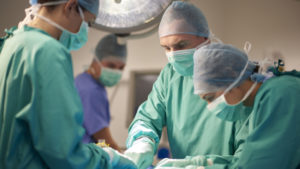
Laparoscopy
This minimally invasive operation is performed using special tubes - endoscopes, which are inserted into the abdomen through punctures in the peritoneal region. Optical instruments record the internal state of the peritoneum, and all this is reflected on the computer.
Surgeons are increasingly resorting to this method, due to a number of advantages of the endoscopic procedure:
- Minimal complications. The absence of bleeding reduces the likelihood of postoperative infection.
- Short rehabilitation period. A minimum of painful sensations, quick healing - and a day after the operation, patients are discharged home.
- Small postoperative scars.
- The risk of developing adhesions is reduced.
Laparoscopy is good when the diagnosis is inaccurate at the early stages of the development of pathology; after examination with an endoscope, another pathology can be established. After confirming the diagnosis, taking into account the exact computer picture, a decision is made on further surgical intervention or on a conservative option.
The general contraindications for laparoscopy include severe cardiac and pulmonary pathologies. Laparoscopy is not used if an advanced form of the inflammatory process is diagnosed, in which it will be necessary to clean the abdominal cavity and install a drain for the release of pus.
Cavity appendectomy
Possible perforation of the appendix and the release of pus forces surgeons to perform a direct appendectomy, which consists in removing it through an incision in the abdominal wall. After the operation, patients have a 10 cm suture. The rehabilitation period lasts three weeks. The choice of the removal method depends on the factors that the surgeon must take into account after examining the patient and the conclusion of laboratory tests. Abdominal surgery is a necessary measure. Complications caused by destructive forms always determine the choice in favor of cavity appendectomy. When complete extraction of pus is required, cleaning of the abdominal cavity, this cannot be achieved by laparoscopy.
Postoperative treatment
Postoperative treatment after removal of the appendix is individual in each case and does not have strict time limits. On average, its duration is 10-30 days. Young children and the elderly take longer to recover than adults and young people. Depending on the method of the procedure, the length of stay in the hospital varies from a few days to a week. Then the patient goes home with the condition of strict implementation of the recommendations of the attending physician, which will allow him to quickly recover and return to his previous lifestyle.
The main prohibition for the recovery period is the prohibition of physical activity in the press. Such loads are minimized until the damaged tissues are completely scarred. In conditions of reduced loads, the patient is prescribed physiotherapy exercises to maintain the tone of the body and prevent the development of negative postoperative deterioration. To reduce the load on the intestines, a gentle diet is prescribed. Food is taken in small portions five to six times a day, solid and tough foods are excluded. For several weeks, sweet, salty, smoked, fried, alcohol and hot spices are not allowed. The return to the usual diet takes place within two months.