Appendicitis scar: photo, how to remove completely
Acute appendicitis, or a condition of inflammation of the appendix, is a disease that in 90% of cases is treated with surgery and removal. The operation to remove is carried out by an incision in the abdominal cavity, through which they penetrate to the inflamed vermiform appendix. After such an incision, a scar from the removal of appendicitis remains in the patient's abdomen. A body with a scar does not look very attractive, sometimes it delivers not only aesthetic irritation, but also discomfort, and even pain. What the seam on the body looks like, the types, is it possible to remove the trace completely after appendicitis - discussed in the article.
Content
- 1 Scar formation
- 2 Views
- 3 Preventive care
- 4 Correction
Scar formation
If the operation to remove the appendix was performed by laparotomy, an incision was made in the peritoneal region. After the removal is complete, the incision is sutured and the body begins to work to reconnect the destroyed tissue. At this point, the walls in the area of the incision begin to inflame. This happens for reasons:
- A microbial environment or infection has got on the area of the incision, at this time the trace of the incision can hurt, sometimes it festers, the ichor is released. During inflammation, the body begins to secrete protective cells, protecting itself from the penetration of pathogenic flora.

- During inflammation, the body produces more collagen, which becomes the basis for scar formation to close the wound.
The inflammation at the incision site lasts for about a week or two. For the entire period, it is important for the patient to carefully monitor the state of the incision, treat it with antiseptic solutions in time, and make sure that dirt, dust, and sunlight do not get on the wound. With proper healing without problems, a small scar remains on the body, at first it hurts a little, it can be bright in color, from red to blue. The scar gives a feeling of discomfort, itching, pain when moving, bending, pressing. Within a year, in most patients, the incision site heals completely, the skin is restored, the brightness disappears. A pale, inconspicuous trace of 1-10 cm in size, convex appearance remains. Pain and discomfort disappear with normal healing.
But not every patient has a smooth scarring process. In women, the incision site heals faster than in men. And in a child it will generally heal in 2-3 months, since the metabolism is several times higher. Depending on the correctness of healing, care and characteristics of the body, the traces after the operation are different and are divided into types.

Views
Patients tolerate the stage of scarring and restoration of the skin in different ways. Therefore, the place from the incision during the operation on appendicitis appears in everyone of a different size and shape, heals for a different period of time in duration.
- Normotrophic - a type of scar: the simplest, palest, inconspicuous. Outwardly, it does not cause irritation, since it does not stand out against the background of the skin. It looks like a thin strip at the incision site, amenable to correction, complete removal is possible using modern methods - laser resurfacing, for example.
- Hypertrophic - the scar is thick, hard, voluminous, rises above the patient's skin, outwardly brighter than the rest of the skin. This type is more difficult to remove. Long-term correction by grinding, therapy with medications, ointments or current treatment can make the site from the operation less noticeable.
- Atrophic - unlike hypertrophic, it does not rise, but, on the contrary, sinks into the integument of the skin. This happens due to a lack of connective tissue during healing or errors in the care of the incision. To add aesthetics, you will have to raise the seam to the surface. More often it is possible to do this with the help of injections, fillers, cosmetic fillers for the volume of the skin, hormone therapy may be required. You cannot completely delete.
- Keloid is an outwardly unattractive, dangerous species. It occurs in the event of a failure during scarring, does not heal for a long time, collagen is secreted in large volumes and does not stop secretion for a long period. It is difficult to correct, because for any manipulations it gives a complication in the form of additional collagen production and again increases in size. It can remain unchanged for a long time. Looks rude, especially for women who do not have the opportunity to wear revealing clothes and swimwear on the beach with such a scar.
Preventive care
The condition of the scar and its appearance depend not only on the course of the operation and the work of the surgeon, but also on how the patient cares for the scar and spends the period of rehabilitation. It is important to look after and properly care for the scar.
Basic actions:
- Refusal from physical activity for 2-3 weeks after removal of the appendix.
- Compliance with a diet and fractional meals to avoid swelling and discrepancy of the incision site.
- Refusal from alcoholic beverages and smoking.
- A large amount of fluid for tissue repair and food that does not require long digestion and does not complicate the act of defecation. Straining is prohibited.
- Thorough care and regular treatment of the seam with antiseptics, rinsing. The incision wound should always be clean and as dry as possible.
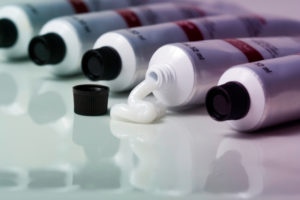
- Medical treatment of the scar, when the surface needs to be smeared with creams, ointments, and in addition to apply injections.
Correction
Scars after appendicitis surgery can and should be corrected. But the adjustment depends on the type of scar, the individual characteristics of the patient's body. Preparations and types of correction are agreed with the doctor and are not used independently. Not every type of correction is suitable for a particular type of appendix scar. The main methods of correction include:
- Make-up is suitable for owners of a thin and pale scar that does not cause discomfort to the owner. Allows you to change the shade and appearance of the scar. Gives a cosmetic effect.
- Tattoo - suitable for those with pale or atrophic scar. Owners with the help of a tattoo on a scar from appendicitis hide external manifestations, give an aesthetic design.
- Dermabrasion is a type of correction in which chemical or mechanical peels are used. The procedure involves exfoliating the upper layers of the skin at the seam, as a result of which the trace becomes thinner and paler. After applying several courses of therapy, the scar becomes thin and pale.
- When the scar is retracted into the skin, regular injection of fillers or adipose tissue is required to lift it. When the incision mark rises to the level, other correction methods are applied to change the shape and pigmentation.
- Laser resurfacing. You can resort to resurfacing 6 months after the operation. The procedure will make the tone of the scar color even and pale, similar to the skin surface. In addition, the surface is smoothed. After 4-5 applications, the scar remains pale or disappears from the skin surface.
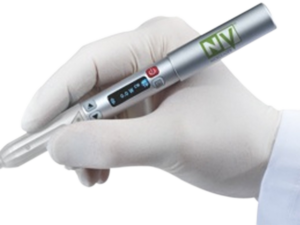
- Surgical manipulation. In difficult cases or with old, outwardly rough and thick sutures, it is possible to dissect the scar, after the surgeon imposes a new, thin cosmetic suture. Sometimes it is necessary to inject fatty tissue to flatten the surface for a smooth and even look. After manipulation, the thick and rough seam disappears, leaving behind a thin, threadlike strip on the skin.
- Physiotherapy procedures. Electrophoresis, magnet, current therapy, ultrasound are often prescribed. The procedures will smooth out the scar, make it smoother and paler.
It is not uncommon for doctors to prescribe medical treatment for the scar using steroids. This is necessary with excess collagen production and the formation of keloid scars. Often vitamins are injected into the scar area, physiotherapy procedures are prescribed, sometimes a surgical type of intervention is required for complications.
Treatment of a scar after appendicitis requires a comprehensive treatment, treatment with medications is used. The result will appear faster, the seam will have an attractive appearance and a less bright shade. But the selection of the means used for scar correction is performed individually based on the indications, the type of scar, and the patient's health.