
Temperature after removal of appendicitis: how long does it take, norms
The body's reaction in the form of an increase in temperature after any surgical intervention is a variant of the norm in most cases. After treatment of acute appendicitis or after appendectomy, hyperthermia is often an immune response of the body and indicates the correct recovery stage. How long does the temperature last after surgery removal of appendicitis, what are the reasons for its appearance, variants of the norm and pathology - discussed in the article.
Content
- 1 Reasons for the rise in temperature
- 2 Diagnosis
- 3 Treatment for pathological processes
Reasons for the rise in temperature
Treatment of acute appendicitis is always a surgery to remove the appendix. Intervention in the body, its integrity is an unnatural process that disrupts the work of organs and cells. The body reacts with an increase in temperature. In most cases, such a reaction is a variant of the norm, since immunity after surgery for appendicitis begins to produce a large number of leukocytes to neutralize possible viruses and pathological states. As a rule, when damaged tissues grow together, a reaction in the form of an increase in temperature is considered normal.
It is not recommended to knock down temperatures below 38C, so as not to disrupt the body's recovery. Moreover, doctors worry when a person's body temperature does not rise. This indicates that the immune system is very weak, which means that side reactions, complications, and inflammatory diseases are possible. The absence of hyperthermia after abdominal surgery can especially lead to serious health problems.
Experts note that overheating in the human body begins at the stage of the inflammatory process in the process of the cecum. This is a symptom indicating an inflammatory process, acute appendicitis. Therefore, after removal, the symptom persists for several days.
But in some cases, a long persistence of fever indicates pathology.
- A strong temperature jump within a short period of time for no apparent reason. Sometimes such a reaction indicates an allergic reaction with the introduction of certain drugs or the ingress of a pathogenic microflora that is actively multiplying.
- Hyperthermia as an immune response to the introduction of a drainage system after surgery. When you go beyond a certain time, it is considered a pathology and requires drug treatment.
- Complications during surgery, resulting in damage to internal organs.
- Profuse blood loss during surgery.
- Introduction of infection during surgery.
- Disease of the patient with ARVI against the background of the postoperative period. The defenses of the patient's body after the removal of the appendix are aimed at recovery. Against the background of reduced immunity, any acute respiratory viral infection is tolerated by the patient harder, longer, longer treatment is required.

- The patient does not adhere to the diet after the appendix is excised. If you ignore the diet prescribed by the doctor, bowel disruptions, and even inflammatory processes are possible.
The rise in temperature after removal of the appendix lasts about a week and is considered normal and part of the recovery phase. But if the time frame is not observed and the fever persists after a week, additional blood, urine and other tests are required, at the discretion of the specialist. Analyzes are necessary to establish the exact cause of the fever, diagnosis, and timely treatment.
Diagnosis
When diagnosing the causes of hyperthermia after removal of the appendix, a blood test is prescribed to determine the presence of an inflammation process. In this case, the number of leukocytes is important. But a blood test is not the only diagnostic method. Health professionals often use:
- Diagnosis using an ultrasound machine. The procedure allows, without additional penetration, to surgically examine the abdominal cavity, to examine whether there is any damage to the internal organs. In the absence of damage, the site of the former attachment of the appendix of the cecum is examined. The site is being examined for the presence of an inflammatory process.
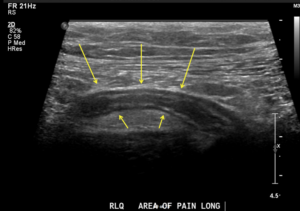
Appendix ultrasound
- The postoperative suture is examined. Sometimes inflammation along the edges of the seam is possible, due to which prolonged fever persists.
- Possible biopsy of material through an open wound after removal of the appendix.
- Taking urine for analysis. The analysis provides information on the presence of leukocytes, possible problems with the organs of the genitourinary system.
The indicated diagnostic methods are enough to establish the exact cause of prolonged hyperthermia; the appointment of additional studies is required in rare cases.
It should be understood that the values in the analyzes for men, women and children have a different range and different variants of the norm.
Women, due to the peculiarities of the body, have a wider range of leukocyte counts than men. It is associated with a specific day of the menstrual cycle. In this regard, after 21 years of age, the test results are divided based on gender.
When analyzing blood in children, the level of leukocytes is higher than normal, not only in pathological conditions such as acute appendicitis, but also in other cases. The immune system of the child, in comparison with the adult organism, is not so perfect. At the same time, infections and a pathogenic environment often enter the child's body, which requires an increase in the level of leukocytes from the immune system.
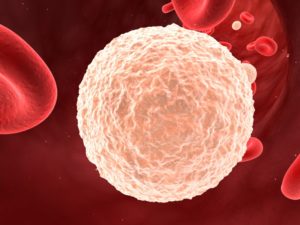
Leukocytes in human blood
This is necessary to protect the body. With appendicitis in a child, the doctor should take blood for analysis not only before the operation, but also after it. The procedure is necessary to control the state of health and the correct healing process.
Treatment for pathological processes
If pathological processes are detected that have served to maintain body temperature for a long time after the operation of the appendix of the cecum, adequate therapy is necessary. In the treatment of pathological conditions, doctors use drug treatment:
- Antibiotic preparations. They are often used when a bacterial infection is detected in a wound after an operation. When diagnosing, the degree of sensitivity of the body to a particular drug is also revealed, after which antibiotic therapy is prescribed.
- Non-steroidal anti-inflammatory drugs. Basic: Nurofen, Ketonal, Ibuprofen.
- Antipyretic drugs. Analgin, Aspirin, Paracetamol.
The patient must remember that if the temperature rises after discharge from the hospital, one should not self-medicate! You should immediately seek help from a doctor, because hyperthermia may indicate a serious pathological course that threatens the patient's health and life.
The increased body temperature after excision of the appendix of the cecum lasts over 37C for 7-10 days, which is a variant of the norm. On day 10, fever is normal in most patients. No doctor will discharge a patient if hyperthermia persists above normal.

If the fever persists beyond the specified time, even 2 weeks after the operation, the course of antibiotic treatment brings the state of health back to normal. But in the absence of an effect from antibiotic therapy, the doctor prescribes a second surgical intervention. The operation is indicated for the purpose of examining the abdominal cavity, to determine the exact cause. Often, ultrasound machines do not allow you to see the cause of the inflammatory process in the abdominal cavity, which causes the fever to persist.
It is important for the patient to monitor the condition after appendicitis, to monitor the recovery and well-being, and in case of the slightest deviations, inform the doctor in time. Correct treatment, proper diagnosis, adequate response to complications will allow you to feel normal after the operation, to maintain health without disturbing the quality of life.
It is important after discharge from the hospital to follow some rules for a speedy recovery and recovery after surgery. Be sure to follow the diet. Disorders in the form of eating spicy, fried, heavy foods in large quantities put a strain on the intestines, contribute to the formation of constipation and the occurrence of inflammation.
Physical activity should be feasible. You cannot immediately go in for sports or start hard physical labor. Muscles and tissues must regenerate properly.
It is necessary to monitor the daily routine and the observance of a full-fledged sleep and rest regimen.


