What is Papaverine for?
- Contents:
- Background
- Pharmacokinetics of the preparation
- Form release, storage and dispensing conditions from the pharmacy
- Indications and dosage regimen
- Contraindications and side effects
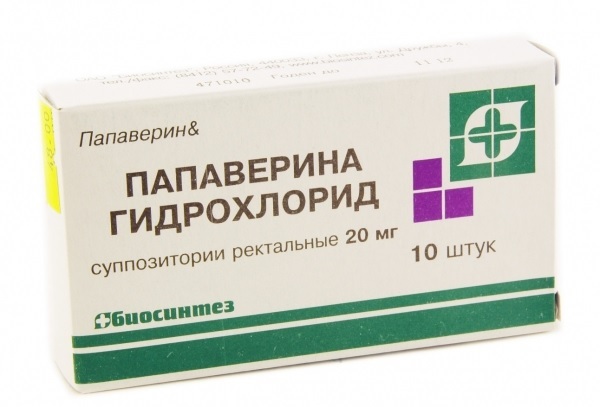 Papaverine is a drug from a group of nitrogen-containing organic compounds of natural origin, an opioid derivative. Reduces the tone and contractility of the muscular membrane of the arteries and internal organs. In this regard, the drug has antispasmodic, analgesic and hypotensive effects. How does Papaverin work, what properties does he have and who is shown?
 Historical background
For the first time papaverine was isolated from opium poppy by German chemist Henrik Merck in 1848.Only 52 years later in Sweden, Ame Pictet synthesized artificial papaverine from methylated vanillin and benzoylglycine.
In the early 10-ies of the last century, the alkaloid revealed spasmolytic properties and it is introduced into clinical practice for the treatment of bronchial obstruction and coronary heart disease. Later Papaverine is prescribed as an antihypertensive agent, as well as for the removal of spasms of internal organs. In 1930, the Hungarian pharmaceutical company "Hinon" began the mass production of Papaverin.
Pharmacokinetics of the preparation
The drug is released only in the form of a hydrochloric acid compound - papaverine hydrochloride. It has a relatively low bioavailability. However, it almost completely binds to blood proteins and is evenly distributed throughout the body. The main functions of antispasmodic and antihypertensive agents papaverine is due to:
- suppression of phosphodiesterase activity;
- increase in the concentration of intracellular cycloadenosine monophosphate;
- decrease in the level of calcium inside the cell.
The alkaloid lowers the tone and relaxes the smooth muscle layer of the internal organs and vessels. Thus, Papaverin is a vasodilator, antispasmodic and hypotensive.
Important! Chronic and acute alcoholic intoxications reduce vasodilating properties of papaverine. Therefore, alcohol intake during treatment with alkaloid is excluded.
Form of release, storage and dispensing conditions from the pharmacy
How quickly acts Papaverin, depends on the form of release of the drug. Papaverine is available as:
- injection solution;
- tablets;
- rectal suppository.
Tablet forms do not act as fast as candles. However, if you need to achieve the maximum result of the drug for a minimum period, injecting forms are often used, for which Papaverin is injected subcutaneously, intramuscularly or intravenously.
The effect of papaverine is usually not prolonged. From pharmacies, the injection solution is dispensed by prescription, tablets and suppositories are over-the-counter. Papaverine is stored in a dry, dark and inaccessible place for children. The temperature regime for tablets varies from 8 to 25 ° C, for injections 17-25 ° C, for rectal suppositories up to 15 ° C.
Indications and dosage regimen
 In clinical practice, a drug is widely used as a spasmolytic, vasodilating, anesthetic and antihypertensive agent. Here are the states from which Papaverin helps:
 - involuntary contractions of the smooth muscle layer( spasms) of the internal organs in cholecystitis, pancreatitis, colitis;
- renal colic;
- spastic endarteritis;
- bronchospasm;
- spasm of cerebral vessels.
In addition, Papaverin is used as part of complex therapy for ischemic heart disease, acute hypertensive crisis, and for premedication before surgery. The use of papaverine in hypertension of the uterus remains a contentious issue. Safety of the drug during pregnancy and lactation is not proven. However, domestic doctors sometimes resort to using Papaverine in case of threat of miscarriage.
Doses are selected individually depending on the purpose of the drug. This takes into account both the characteristics of the disease and the condition of the organism itself. Only a competent specialist can specify exactly how to take Papaverine in a particular case. The maximum single dose of papaverine is:
- for tableted forms - 200 mg;
- for subcutaneous and intramuscular injections - 40 mg;
- for intravenous infusions - 20 mg;
- for rectal administration - 40 mg.
Contraindications and side effects of
The main limitations to prescribing the drug are:
- hypersensitivity;
- pathology of the conduction system of the heart( atrioventricular blockades);
- marked hepatic impairment;
- old age;
- children under 6 months;
- severe renal pathology;
- bronchial obstruction.
Adverse events with papaverine may include:
- headaches;
- nausea;
- drowsiness;
- drop in blood pressure;
- atrioventricular block;
- extrasystole;
- eosinophilia;
- dyspepsia disorder. Acute arrhythmias, double vision, vomiting, profuse sweat may indicate a case of overdose with Papaverin, for which purpose gastric lavage and intake of enterosorbents are prescribed. Warning!An Israeli clinic specialist can advise you -
write the question in the form below: