Rupture of ligaments of the knee joint
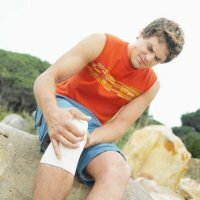
A rupture of the ligaments of the knee joint is a trauma in the locomotor system, in which ligaments in the knee joint are damaged. These ligaments fix the tibia with the femur, they have their own patellar ligament, the inner and lateral ligaments, the posterior and anterior cruciate ligaments.
In this type of injury, the fibers of the bundle are broken partially or completely, or break away from the attached place. More often these injuries occur in sportsmen playing soccer, engaged in mountain skiing and boxing.
Types of rupture of knee ligaments
Depending on the ligamentous lesions, a rupture is revealed:
- of the anterior cruciate ligament;
- posterior cruciate ligament;
- of the lateral ligament;
- of the inner lateral ligament.
If the fibers are damaged, they are:
- 1 degree of rupture - damage to only a part of the fibers, the basic integrity is preserved;
- 2 degree of rupture - a break more than half the fibers, the knee joint in the movements is limited;
- 3 degree of rupture - complete ligament rupture, joint instability, mobility is observed pathological.
Symptoms indicating a rupture of the knee ligaments
Symptoms that indicate a ligamentous knee apparatus is damaged:
- sharp knee pain;
- at the time of injury, there is a faint crackle that results from the rupture of the ligament fibers;
- when injured, a shank dislocated forward or sideways;
- limited movement in the joint or looseness and instability of the knee joint( front and rear drawer);
- impossibility of moving weight to a sick leg while walking;
- mobility of the patella, bordering on pathology, with pressing motion of the fingers, when the knee joint of the leg is straightened - a knee balloting.
Treatment for rupture of knee ligaments
When a patient's condition is assessed, a medical plan is drawn up by the physician, including:
- in the first place - rest. After trauma, all movements must be minimized to reduce pain and swelling, preventing further damage and creating prerequisites for a speedy recovery;
- application of cold by compresses or packets filled with ice. The use of other methods of cryotherapy on the first day after trauma - it narrows blood vessels and reduces edema and hemorrhage in tissues;
- bandage with elastic, bandages and bandages - creating pressure on the knee area, an obstacle for edema formation, stabilization of the knee joint, restriction of pathological movements;
- elevated position of the leg, using improvised means, for example, cushions or special medical equipment to lift the leg above the heart. This causes the difficulty of the inflow of blood into the area of the injury, as a result of which tissue swelling subsides;
- pain relief with non-steroidal anti-inflammatory drugs - ibuprofen, diclofnac, ketorolac, prescribed by the doctor in tablets and in the form of lotions, ointments and creams that anesthetize;
- heat treatment - starts with compresses that heat up, then ointments and warmers on the knee. This type of treatment can begin only a few days after the injury, once the small vessels cease to bleed. These procedures achieve pain relief for the patient;
- physiotherapy treatment - apply paraffin application, UHF, diadynamic current, electrophoresis;
- complex physical exercises - regularity of performance during the rehabilitation period to restore muscle strength and mobility in the joint;
- massage treatment, conducted by its specialist or self-massage is applied - these procedures relieve pain and swelling;
- surgery - when there is a complete rupture of one ligament or several, when there is instability of the joint. In Israel, the treatment of such a problem is mainly done by a minimally invasive operation, in which the operation to restore integrity of the ligament is performed in two small incisions. Applying this procedure, use a special endoscopic instrumentation that allows you to see everything that happens inside the joint cavity on the monitor.
Sometimes autografts are used. The tendons are selected from the patient from any available site or synthetic prostheses are installed to restore ligaments.
The sooner a patient consults a doctor and the correct treatment of ligamentous knee ruptures is prescribed, the better the prognosis for recovery and full recovery of functions will be.