Galactosemia
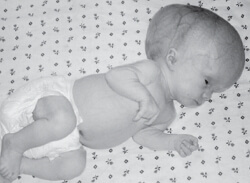
 Galactosemia is a disease with a rare pathology that newborns inherit from their parents. And they, having a certain anomaly in the autosomal recessive gene, are its carriers. Such congenitality is expressed by a failure in metabolism as a result of a certain mutation of the very structure of this gene, which is responsible for the processes of the connection of the enzyme galactose-1-phosphate. And this is evidence of its low level or complete absence in the blood. The newborns that appear with such a genetic disease, according to statistics, one of the 70,000 babies, have a certain number of abnormalities, including mental retardation.
Galactosemia causes
At the moment, scientists have already studied the causes of the appearance of galactosemia and all this is considered at the genetic level. If in a healthy body when using products containing lactose, the processes of its splitting into carbohydrates occur without complications and are normal, then for the sick with galactosemia everything is the other way around. They suffer from the dysfunction of this enzyme. And as a result, numerous toxins accumulate in the human body, which are capable of destroying vital organs. From this pathology, such diseases as kidney failure, ovaries, brain damage develop, liver cirrhosis and cataract develop.
Mainly significant changes occur in certain genes that control the very process of formation of certain enzymes. Because only they and break down carbohydrates: galactose and glucose, which are so necessary for the body to supply cells. Hence, it can be concluded that the only cause of galactosemia is the pathologically altered galactose-1-phosphaturidyl transferase. The gene, which is responsible for the correct function of the enzyme, during mutations leads to the emergence of different types of this disease. These include such species as the Negro type of disease, Duarte and the classical.
Galactosemia Symptoms
Numerous clinical signs indicate the lesion of many tissues. Symptoms of galactosemia manifest themselves immediately, from the first days of life. The first sign of galactosemia is gastrointestinal disturbances. As a result, there is indomitable vomiting, which eventually leads to hypotrophy. Very often this disease affects the hematopoietic organ - the liver. And it shows some signs of galactosemia, namely jaundice( changes in direct and indirect bilirubin), a significant increase and consolidation of the consistency of the liver, hemorrhagic syndrome. And this is reflected in a decrease in the prothrombin complex.
On the part of the eyes, changes begin with the development of cataracts, which can not be determined without the help of an ophthalmoscope. Then the lesion affects the renal tubules and sugar components appear in the urine that restore the sugar, which lead to proteinuria and hyperaminoaciduria.
From the side of the central nervous system, in conjunction with visual impairment, there is a delay in the psychomotor development, which becomes visible after some time after the onset of the disease. All these clinical manifestations differently and differentiate. Theoretically, they can be combined into three clinical pictures.
One of the first, the most dangerous for human life and will be characterized by early signs, that is, from the moment of birth and up to 28 days of life. During this period, doctors observe jaundice, abnormalities from the digestive tract, enlargement of the liver and hemorrhagic syndrome. Other infections can be connected here, but these signs appearing on the 4th-5th day of life should become a signal for the diagnosis - galactosemia.
The second picture does not have such sharp signs of this genetic pathology. Therefore, the diagnosis is made only after several months with full confirmation of cirrhosis of the liver.
And the last picture makes it possible to establish a diagnosis with the erased form of galactosemia, when during the examination the patient will be diagnosed with an isolated cataract or a lag in mental and physical development.
Nevertheless, an important point for the diagnosis is the history of the family, all the symptoms, the conduct of the samples for galactose, in order to detect a deficiency of the enzyme. Also, galactosuria in the assays may suggest galactosemia. Exceptions are those moments when physiological galactosuria is determined on the first days of life, as well as in patients diagnosed with liver-cell insufficiency, regardless of all causes.
Galactosemia in newborns
Sometimes on galactosemia in newborns do not pay attention, taking pathological jaundice, one of the symptoms of galactosemia, for the physiological. But already from the first days of life, when the activity of the enzyme in red blood cells is almost not determined, all the symptoms of the disease progress.
In newborns, galactosemia proceeds in a very severe form, so after breast-feeding, disorders in the body immediately appear in the form of diarrhea and vomiting. As a result, with an increase in the development of excoxicosis and toxicosis, and infants rapidly begin to lose body weight. This leads to the development of children's hypotrophy.
A child born with galactosemia immediately after delivery will experience strong and persistent jaundice, accompanied by a significant increase in the liver. Then, all signs and liver failure may appear. As early as the second or third months of life, these children may develop ascites, splenomegaly and vascular collaterals.
In some newborns, with signs of galactosemia, due to poor blood clotting, various hemorrhages appear on the mucous membranes and skin integuments. Also, almost immediately in such children, the lag of psychomotor development is determined, which with age becomes more pronounced.
On the part of the eyes, the child of the first days of life, can diagnose cataracts of both eyes and loss of the lens. In the terminal phase of galactosemia, cachexia, addition of secondary plan infections and all signs of severe liver failure are observed.
Clinical signs of this disease may not be so pronounced. There are also some forms of the disease, in which the symptoms are manifested separately. It can be either milk intolerance, or cataract, or mental retardation. But, if such a newborn is not provided on time with qualified medical care, then the lethal outcome may occur due to sepsis, which very often accompanies this disease.
Galactosemia Diagnosis
Because the disease galactosemia is mainly given to newborn children, it is diagnosed during screening. This is a special method of actively determining any congenital pathology.
Diagnostics can be done in any clinic with a children's department, a perinatal center or a maternity hospital, where such tests are conducted for genetic pathology.
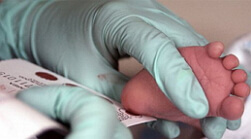
Screening or testing for galactosemia is performed as a result of a blood test. To do this, a few drops of blood are taken from the heel of the newborn. And only then do urine analysis for galactosemia. Then, in the study of these materials, three enzymes that are there are looked at, which must break down lactose into carbohydrates( galactose and glucose).If any of the three enzymes were not found in the study, then these children are diagnosed with galactosemia. And they have an increased index of galactose in both the blood and urine.
Today there are two well-known screening tests - these are Butler and Hill tests. And not so long ago there was another new screening - the test of Florida. All of them with a certain accuracy can diagnose the presence of galactosemia. It is very important to know that surveys should be done with great accuracy. After all, many healthy children who consume large amounts of milk will have a higher level of galactose in their blood, but this is absolutely not related to galactosemia. So you can not make a mistake in diagnosing.
In addition, in a newborn about a week later, galactose will be excreted along with urine, but in premature infants this process will last much longer. For correct diagnosis, doctors can also take liver material for a biopsy and simultaneously make assays for enzymes.
Sometimes a pregnant woman who was examined not with the gene of galactosemia and knows about its presence, is recommended to make a puncture of the amniotic fluid.
Another method for diagnosing this pathology is to inhibit the growth of bacteria. This method involves taking blood from a newborn's finger or his umbilical cord to a special filter paper. With a negative diagnosis for galactosemia, the analysis will show the absence of bacterial growth.
For the quantitative determination of galactose, serum and urine are taken for analysis. With a positive course of the disease, the concentration of carbohydrates in the blood can rise to 11.25 mmol / l. This analysis is very important for determining the diet to the patient.
Already today, there are modern diagnostic methods in the form of special samples that allow measuring the number of enzymes in erythrocytes. Such a study can not only detect an inadequate amount of the enzyme, but also determine the carriers of the altered gene.
Treatment of galactosemia
Treatment of galactosemia begins with the appointment of a diet to the patient. To do this, it is necessary to exclude strictly from the diet all those foods that contain lactose, as well as galactosides, located in the visceral organs of animals.
Children of the first year of life are transferred to artificial feeding. In this case, use different types of diets. For example, a synthetic diet, which includes hyperprotidin, olive or corn oil, sucrose, maltretex, carrot soup in water with vitamins, mineral salts and iron. Or a diet that is based on milk substitutes. In this case, they begin to feed newborns with milk made from soy. It can already be liquid and ready to eat. Such milk completely contains everything necessary for the development of the child, because the growing organism must receive calcium in sufficient quantity. And with its lack, if necessary, prescribe medicinal calcium. Milk synthetic preparation, which does not contain lactose, has a high percentage of caloric content and is identical to industrial milk. This kind of milk does not contain enough vitamins, especially group B, so they need to be replenished. But the content of lactose, on the contrary, has a high index. Among foods for the treatment of children of the first year of life with galactosemia, such mixtures as epithe, nutramigen or soyaval are prescribed.
In the future, to diversify the food table, gradually introduce into the diet green vegetables, meat, flour and all without galactose. The opinions of doctors are somewhat divergent on the issue of the duration of diets. Some recommend interrupting it in 8-10 years of the child's life, while others insist on persistence.
Thus, the diet is the only option for reducing the processes of toxic accumulation of the enzyme in the patient's body. This applies to the classical form of hereditary galactosemia. And in the case of deficiency of UDP-lactose-4-epimerase, a low-calorie diet is used, which allows the maintenance of a small amount of galactose in food products, but constantly monitoring its level in the blood.
In the treatment of galactosemia, it is important to pay attention to preparations that can have lactose. Do not use and alcohol tinctures, slowing the process of excretion of galactose from the liver.
For medical reasons, in severe cases of galactosemia, blood transfusion is prescribed, partial blood transfusions are performed and plasma is poured. Among drugs for treatment may be
Potassium Orotate, ATP, Cocarboxylase, B vitamins.
Diagnostics made in time and properly started treatment with a diet, allows children to develop normally.