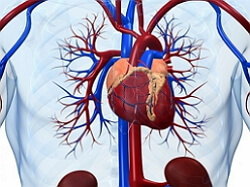
Mitral valve prolapse
 Mitral valve prolapse is a common heart defect that is characterized by the protrusion of one or both valve flaps into the left atrium at the time of contraction of the left ventricle. The prolapse of the mitral valve is observed in 15-20% of people, women are much more likely to suffer. Usually, this pathology proceeds without any special symptoms, so the vice is detected during preventive examinations.
Mitral valve prolapse is diagnosed often at a young and young age( 14-30 years).Specialists distinguish primary and secondary prolapse. The primary is due to genetic defects and pathology of the connective tissue of the heart. Secondary prolapse usually develops against a background of various diseases, with the leading role in the formation of the defect is played by rheumatic diseases, inflammatory processes of the heart muscle, traumatic injuries of the thorax.
Mitral valve prolapse of
cause To understand how and why mitral valve prolapse develops, one must know how heart valves function under normal conditions.
The human heart is a pump that stimulates blood circulation through blood vessels. This process is possible due to the maintenance of constant pressure in each part of the heart. This human body has four chambers, and the valves have special dampers that help regulate blood pressure and movement in the necessary direction. Valves as many as the chambers - four( mitral, tricuspid, pulmonary artery valve and aortic valve).
The mitral valve occupies the position between the left atrium and the ventricle. To each valve leaf, thin chords are attached, which are attached to the papillary and papillary muscles by the second end. In order for the valve to function correctly, synchronous synchronous operation of muscles, valves and chords is necessary. During systole, the pressure in the chambers is significantly increased. When this force is applied, the valve opens its sashes, and the level of opening is controlled by papillary muscles and thread-chords. Blood flows from the atrium through an open mitral valve, communicating it with the ventricle, and from the ventricle through the aortic valve already into the aorta. To reduce the ventricle, the blood does not move in the opposite direction, the mitral valve closes.
With mitral valve prolapse, its bulging is observed at the time of closure. This leads to insufficient closure of the valves, and a small amount of blood is thrown back, that is, into the left atrium. This phenomenon in the scientific language sounds like "regurgitation".In the vast majority of all known cases, the prolapse of this valve is accompanied by very little regurgitation and does not cause serious malfunctions in the functioning of the heart. Prolapse can develop for two reasons: a congenital defect transmitted from the parents by inheritance and prolapse after the transferred diseases.
Congenital mitral valve prolapse in most cases is due to underdevelopment of the connective tissue of the valves. Due to the fact that the connective tissue is defective and weak, the valves are easily stretched and harder to return to the original appearance, that is, become less elastic. For this reason, the chords gradually lengthen. That's why after the ejection of blood the valves can not close until the end, there is a reverse throw of blood. Such a small defect often does not lead to the emergence of unwanted symptoms and unpleasant manifestations. This is why the congenital prolapse of the mitral valve flaps is more of an individual characteristic of the child's body than a pathological condition.
Mitral valve prolapse is much less common, initiated by various diseases. Prolapse, which occurs due to rheumatic damage to the heart muscle, is often found in children of primary and secondary school age. It is caused by widespread inflammatory processes in the connective tissue of valve flaps and thread-chords. In most cases, this prolapse is preceded by a protracted, painful angina, scarlet fever, or influenza. In the period of convalescence, the child has an attack of rheumatism, against which the formation of prolapse begins. That is why it is very important to recognize the onset of rheumatism in time by its characteristic symptoms: high fever, soreness in joints, their increase and stiffness.
Mitral valve prolapse can develop in the elderly. The cause in this case is ischemic heart disease. Myocardial infarction can also provoke the development of this pathology. The main reasons are deterioration of blood supply to the papillary muscles or rupture of the threads. In this case, the mitral valve prolapse is revealed on the basis of the characteristic complaints and symptoms that will be described below. Post-traumatic prolapse is characterized by an unfavorable outcome if the timely treatment of this pathology is not started.
Mitral valve prolapse
symptoms The mitral valve prolapse that is present in a child since birth is almost always combined with vegetative-vascular dystonia. It is this that causes most unpleasant symptoms, rather than prolapse, as is commonly believed.
The child can have periodic short-term pain in the heart, sternum, in the hypochondrium. They are connected not with a vice, but with a violation in the work of the nervous system. Often such unpleasant sensations arise after a nervous shock, a strong experience and very rarely without a provoking factor. They usually last from a few seconds to several minutes. In rare cases, pain can persist for several days. It should be noted that pain with mitral valve prolapse does not intensify with physical activity, is not accompanied by lack of air, dizziness and fainting. If the pain accompanies the above symptoms, you should immediately go to the hospital, because it can be an organic pathology of the heart.
Another symptom associated with increased lability of the nervous system is a palpitations with a sense of "fading".Here too, there is an important feature: tachycardia with mitral valve prolapse begins unexpectedly and just as suddenly ends, without fainting or nausea. Also, prolapse may be accompanied by a number of other symptoms: subfebrile condition in the evening, pain in the thick and small intestine, headache.
People suffering from mitral valve prolapse, resemble each other: often they are asthenics, have thin upper and lower limbs, high mobility in the joints. Connective tissue is present in muscles, skin and tendons. That is why such diagnoses as strabismus, deterioration of visual acuity are often connected with a vice.
Mitral valve prolapse is very often diagnosed when performing ultrasound diagnostics. This method with a high probability makes it possible to determine the degree of prolapse and the level of back-casting of blood.
Mitral valve prolapse degree
Doctors distinguish three degrees of mitral valve prolapse.
Mitral valve prolapse of the 1st degree is characterized by a slight protrusion of valve flaps, not exceeding five millimeters.
With the prolapse of the mitral valve of the 2nd degree, the bulging has already reached nine millimeters.
With the prolapse of the mitral valve of the 3rd degree, the bulging of the valves exceeds ten millimeters.
These degrees are conditional, since they do not affect the level of the dropping of blood, in other words, with the prolapse of the mitral valve of 1 degree, regurgitation can be greater than in the third. Therefore, more attention should be paid to the degree of casting and the level of failure of the valve, which the doctor determines separately during the ultrasound diagnosis.
If the ultrasound diagnosis is not sufficiently informative, the doctor may prescribe other methods of investigation, such as electrocardiography or holter-electrocardiography. The
Halter ECG will allow for dynamic determination of abnormalities caused by a valve failure and determining the degree of prolapse of the mitral valve, as the device will record any changes in the functioning of the heart throughout the day.
In most cases, with hereditary prolapse, neither ultrasound diagnostics nor holter-electrocardiography reveal gross, life-threatening hemodynamic disorders. A doctor who knows the full history of the disease and has the results of all diagnostic methods will be able to determine the degree of circulatory disturbance caused by mitral valve prolapse. If the disease was discovered completely by accident, when examining other organs and systems, and the patient is not disturbed by any manifestations and undesirable symptoms, this deviation is taken for the variant of the norm and does not need therapy.
Mitral valve prolapse in children
In children, the prolapse of the mitral valve flaps is detectable in 2-14% of all cases. It can be both an isolated defect, and can be combined with some somatic pathologies.
Quite often in children, this disease is combined with dysraphic stigma( small heart anomalies).These stigmas speak of the inherent underdevelopment of connective tissue. Isolated prolapses are divided into two forms: mute( that is, when listening to a phonendoscope, no changes will be detected) and auscultatory( the doctor will hear silks and noises).
Mitral valve prolapse in children is most often found up to about fifteen years, but later diagnosis is possible.
The auscultative form is overwhelmingly found in girls. In an early history, a problem pregnancy with prolonged gestosis, a threat of breakdown, is found. Often, the mothers who gave birth to a child who had a mitral valve prolapse had childbirth also complicated. Close relatives of the baby often find diseases ergotropic circle. In such families, prolapse was diagnosed in twelve to fifteen percent of children on the maternal line.
With careful study of the family tree, you can find family illnesses associated with the pathology of connective tissue. These diseases include varicose veins, various hernias, as well as scoliosis. As a rule, a child with mitral valve prolapse very often can find an unfavorable psychosocial environment, that is, in the family and in school there are constant quarrels and conflict situations, which he witnesses.
A child with mitral valve prolapse more often healthy children suffers from acute respiratory illnesses, chronic tonsillitis and tonsillitis.
Children with isolated mitral valve prolapse often present such complaints: a feeling of irregular heart rhythm, pain in the chest, heart region, rapid heart rate, lack of air and slight dizziness in the morning, after psychoemotional shock or stress. As for patients with vegetative-vascular dystonia, they are characterized by headaches, a tendency to fainting.
Heart pain in children suffering from mitral valve prolapse has a number of characteristic features: they are aching or stitching, they do not spread to other areas, short-term, occur after nervous shocks. The child may become dizzy with a rapid change in body position( with a sharp rise) or with a long break between meals. Headaches are most often disturbed in the morning or after a stressful situation. Such children are quick-tempered and nervous, sleep badly at night, often wake up.
In addition to ultrasound and ECG holter, a child with mitral valve prolapse should conduct research on the autonomic functions of the nervous system and psychological tests. When examining such a child, attention is drawn to such signs of dysplastic type of structure as a flattened thorax, asthenia, weak muscle development, high growth, slightly inconsistent with age, high mobility in the joints. In girls, in most cases, blonde hair and eyes. Other stigms may also be detected during examination: muscle hypotension, flattening of the feet, gothic sky, thin long fingers on the hands, myopia. In very rare cases, more serious violations are possible: chest funnel-shaped, multiple hernias( inguinal, umbilical, inguinal and scrotal).In the study of the emotional sphere, one can diagnose a high lability of mood, tearfulness, anxiety, short temper, quick fatigue.
If a child develops a vegetative paroxysm, which happens rarely, he begins to suffer from various fears, often a phobia of fear of death. The mood in such patients is extremely variable, but still the leading role is played by the depressive and depressive-hypochondriacal state.
The study of the functions of the autonomic nervous system is of no small importance. As a rule, sympathicotonia prevails in such children. With a high level of prolapse of the valves, which is accompanied by holosystolic murmurs when listening, symptoms of parasympathetic prevalence may appear along with increased activity of catecholamines. If hypertension of the vagus is combined with hypersympathicotonia and hypervagodynamics, this can lead to tachyarrhythmias that threaten life.
The auscultatory form of mitral valve prolapse is subdivided into three more forms. The criterion is the severity of the course and clinical manifestations.
At the first degree, the cardiologist listens exclusively isolated clicks. Small anomalies of development are either completely absent, or manifest to an insignificant degree. With this pathology, the general adaptive abilities of the vegetative system to mental and physical stresses are violated.
The second type has a number of typical symptoms listed above and an expanded clinic. Echocardiography determines prolapse of late systolic character. The valves bulge moderately - by five to seven millimeters. The status is characterized by sympathicotonic vegetative shifts, the vegetative supply of activity manifests itself in excess.
The third type is characterized by pronounced deviations in the data obtained from instrumental studies. The examination determines a large number of small anomalies, auscultatory - late systolic murmurs. An echocardiogram provides information on the presence of a holo- or late systolic prolapse of a sufficiently large depth. Investigating the vegetative tone, you can identify the prevalence of parasympathetic, but a mixed version also occurs. There is an increase in vegetative activity, providing excess. Such patients are characterized by the highest degree of disadaptation to physical activity.
Based on all of the above, we can conclude that the level of violation of the valve function directly depends on the degree of vegetative-vascular dystonia. The mute variant of mitral valve prolapse is diagnosed with the same frequency in representatives of both sexes. Early history also includes a complicated pregnancy, frequent catarrhal diseases, which contributes to the development of both prolapse and VSD.Clinical symptoms and deviations in instrumental studies are often absent, that is, these children are actually healthy. If the child has complaints of severe fatigue, mood swings, headaches and heaviness in the abdomen, this confirms the accompanying prolapse of dystonia.
Small anomalies may be present, but their total number usually does not exceed five. Small anomalies are combined with satisfactory physical development, which corresponds to all norms.
The nervous system in children with this form of prolapse of the mitral valve is also characterized by some variability, sometimes dystonia occurs, more often in a mixed variant or parasympathetic. In some cases, children with this valve pathology may experience panic attacks. But do not forget that they also occur in perfectly healthy children with increased excitability of the vegetative department of the National Assembly. That is why these attacks do not have a special effect on the life and well-being of the child.
Children with this deviation often have adequate vegetative maintenance, in rare cases it can be slightly reduced. So, with veloergometry, performance indicators in children with mute prolapse do not actually differ from those of physically healthy ones. Deviations with this method of study are noted exclusively in patients with auscultatory type of mitral valve prolapse.
mitral valve prolapse treatment of
If a child has a diagnosis of a congenital mitral valve prolapse that is not accompanied by serious complaints, then no special treatment should be prescribed. In this case, he may need only symptomatic therapy of vegetative-vascular dystonia, which always accompanies the congenital prolapse of the mitral valve. The main method of treating this variant of prolapse is the correct order of the day of the child, the preservation of his safe emotional background( i.e., the calm situation in the family and the school team), an eight-hour night's sleep.
If a child has unmotivated panic or anger, sharp changes in mood, anxiety, it is advisable to designate herbal sedatives, which have a beneficial effect on the emotional background and work of the heart.
The preparations for the congenital prolapse of the mitral valve will be a tincture or a tablet form of valerian or motherwort. Adolescents from the age of twelve can be prescribed combined sedatives Novo-Passit, Sedafiton or Sedavit. The doctor selects the dosage of sedatives individually for each small patient. It depends on the degree of manifestation of symptoms.
Often, valerian is taken one tablet in the morning and thirty-forty minutes before bedtime. Sometimes a triple reception is necessary. The course of treatment is from two weeks to two months. If the child is only disturbed by a dream, and there are no other manifestations, valerian should be given only before bedtime, that is, once. Sedavit should be taken at five milliliters once in eight hours. The intake of the drug does not depend on the time of ingestion, it can be drunk in its pure form, or it can be added to water, juice or warm tea. The tablet form is also prescribed three times, two tablets are taken. In the case of severe manifestations, you can take three tablets in one session. The course of treatment on average is a month, but the doctor can increase the duration of admission on certain indications. Novo-Passit is also available in the form of tablets, and in liquid form. It is taken before meals, every eight hours for one tablet or a measuring cup of sweet syrup. The liquid form of the medicine can be drunk undiluted, and can be diluted in a small amount of cool water. Sedaphyton take one or two tablets every eight to twelve hours. For the treatment of sleep disorders, one Sedaphyton tablet is taken 30-60 minutes before bedtime.
If among the manifestations of mitral valve prolapse associated with VSD, drowsiness, inhibition and depression predominate, it is necessary to carry out therapy with tonic. Well established tincture of Eleutherococcus and Ginseng. They are also recommended for children from the age of twelve. Eleutherococcus tincture is taken once in the morning for twenty to twenty-five drops, diluted in a small amount of cool water. The duration of therapy does not exceed a month. The need for a second course is determined by the attending physician. It is important to know that this medication should be discontinued for the time of acute respiratory illness or high body temperature. Tincture of ginseng is drunk every eight to twelve hours for fifteen to twenty drops. The course of treatment is thirty to forty days.
Children suffering from mitral valve prolapse have weakened immunity, so infectious diseases are most likely to carry others. Precisely to prevent the development of viral and microbial diseases that contribute to the progression of mitral valve prolapse, it is advisable to carry out maintenance therapy with vitamins and immunomodulators. Determine exactly which vitamins and how many are needed for a particular patient, can only be the attending physician. There is an opinion that any vitamins go to the body for good and give only a positive effect. But this is not so. When self-medicated with vitamins and uncontrolled admission, you can find a number of undesirable consequences: hypervitaminosis, urticaria and other allergic rashes, stomach and bowel pains, nausea, stool disorders.
For children with a mitral valve, children can be prescribed vitamins of group B, in some cases there is a need for vitamins A, E, vitamin C can be prescribed during the weakening of immunity to a sick child. Dosages, multiplicity and duration of administration are strictly individual and are prescribed by a doctor. Self-medication with vitamins is unacceptable. Children with this ailment for maintaining immunity should preferably undergo a course of treatment with immunomodulators and immunostimulants. Drugs of choice: tablets or tincture of Echinacea, combined preparation Immuno-tone. To children from seven years the preparation of Echinacea appoint on five-ten drops dissolved in water. Take the drug you need two or three times a day, the duration of admission - four to eight weeks. Adolescents from the age of twelve take ten to fifteen drops of the drug. Multiplicity and duration of treatment is the same. Immuno-tone is allowed for use in persons who have reached the age of twelve. It is taken with any beverages( tea, milk, fruit drinks, juices), adding to them two teaspoons of the drug. Drink Immuno-tone once to twelve o'clock in the afternoon, the course of treatment should not exceed ten days. After two weeks, treatment with this drug can be repeated if necessary. It should be noted that this drug should not be used in patients with diabetes mellitus of both types, in autoimmune diseases, in febrile states and in acute period of respiratory diseases.
Acquired mitral valve prolapse requires therapy only if the patient is concerned about prolonged pains or tachyarrhythmias, severe weakness. The main goal of the treatment is to prevent the progression of prolapse. For this, a person with a pre-acquired prolapse of the mitral valve should limit himself to physical exertion, strength exercises and professional sports activities. Recommended evening walks a few kilometers long, slow running with interruptions. These exercises strengthen the heart. It is also necessary to quit smoking and drinking alcoholic beverages forever, observe the regime of work and rest, sleep at least eight hours a day, avoid emotional overloads and heavy mental work whenever possible. When serious complaints arise, a cardiorevmatologist should be examined. Complementary VSD is treated according to generally accepted rules.
In most cases, with the advice of the attending physician regarding the schedule of the day and the stresses, the prognosis for work and life in general is very favorable when passing the prescribed therapy courses and abandoning harmful habits.
Also in order to prevent the development of serious complications of this pathology, it is necessary to undergo a prophylactic medical examination in a timely manner. Children with mute mitral valve prolapse without any manifestations should visit the cardiologist once a year for the purpose of examining and performing an ultrasound examination or echocardiography. The auscultative form requires a doctor's supervision once every six months.
Only people with extensive clinic and severe course need long-term treatment of the disease with a quarterly control of cardiac performance. Frequent control in this case is necessary for the reason that a person with a heavily proliferating mitral valve prolapse may need surgical treatment at any time, since this pathology variant is dangerous and unpredictable.